
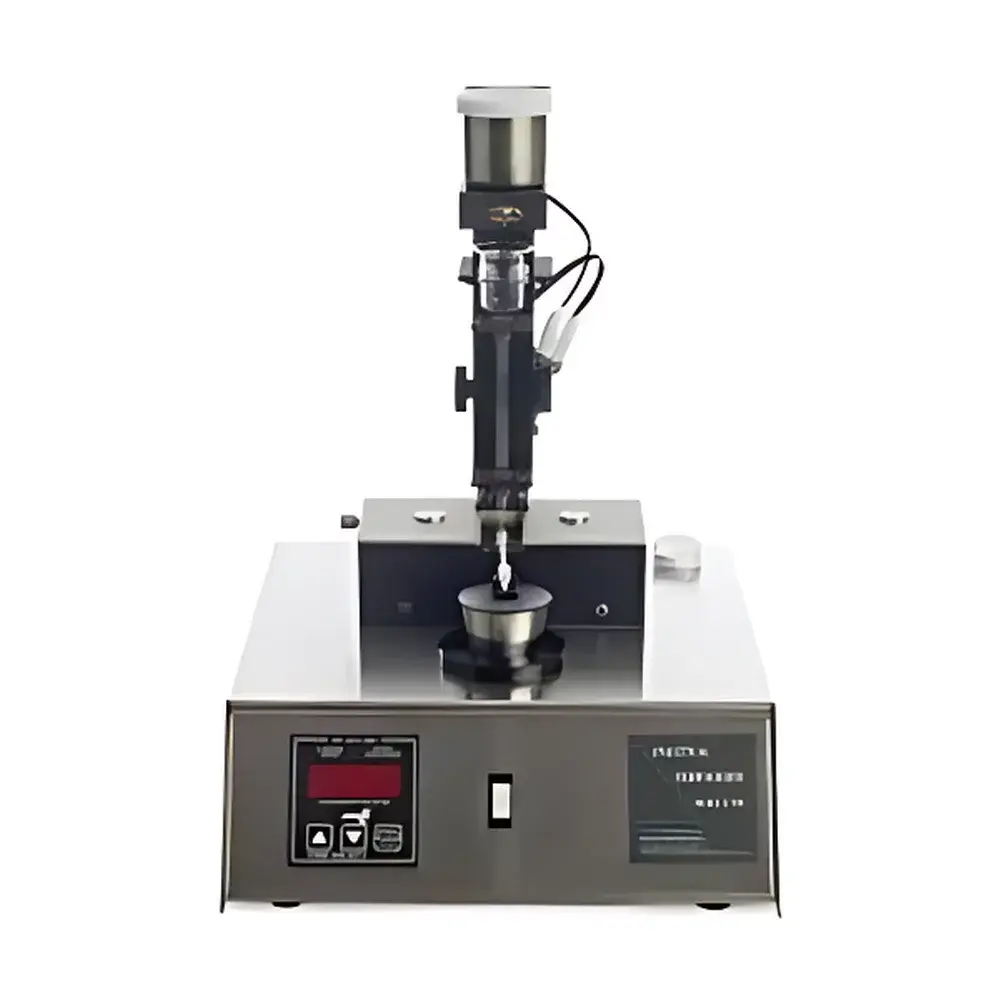
Spectro Scientific T2FM500 Analytical Ferroscope
| Brand | Spectro Scientific |
|---|---|
| Origin | USA |
| Model | T2FM500 |
| Application | Analytical Ferrography for Wear Particle Analysis in Lubricants, Hydraulic Fluids, Coolants, and Fuels |
| Compliance | ASTM D7684, ASTM D7690 |
| Particle Size Range | 0–800 µm |
| Operating Principle | Gravity-fed, Magnetic Deposition Ferrography |
| Sample Preparation Method | Solvent-assisted rinsing and air-drying of ferrogram slides |
Overview
The Spectro Scientific T2FM500 Analytical Ferroscope is a precision-engineered benchtop instrument designed for quantitative and qualitative ferrographic analysis of wear debris and contaminant particles suspended in industrial fluids. It operates on the principle of analytical ferrography—leveraging a controlled, gradient magnetic field to separate ferromagnetic and paramagnetic particles from diluted oil samples under gravity-driven flow. Unlike pressure- or vacuum-assisted methods, the T2FM500 relies solely on gravitational force to deliver the sample across a polished glass ferrogram slide, ensuring minimal mechanical disturbance to particle morphology. This preservation of structural integrity—particularly for fragile lamellar, curled, or fractured wear particles—is critical for accurate source identification (e.g., fatigue spalling vs. sliding wear) and failure mode assessment. The system produces high-fidelity ferrograms suitable for microscopic evaluation per internationally recognized standards, supporting predictive maintenance programs in power generation, aviation, marine propulsion, and heavy-duty machinery sectors.
Key Features
- Gravity-fed sample deposition: Eliminates shear stress, pump-induced fragmentation, or turbulent flow that may distort particle shape, orientation, or size distribution.
- Optimized multi-zone magnetic gradient: Engineered to spatially resolve particles by magnetic susceptibility and size—enabling distinct banding of cutting wear, sliding wear, fatigue debris, and non-ferrous contaminants along the slide axis.
- Integrated solvent rinse module: Programmable flow control ensures uniform removal of residual carrier fluid without dislodging deposited particles, followed by inert-air drying to prevent oxidation artifacts.
- ASTM-compliant workflow: Fully aligned with ASTM D7690 (“Standard Practice for Microscopic Characterization of Particles in Used Lubricating Oils by Analytical Ferrography”) and ASTM D7684 (“Standard Guide for Microscopic Characterization of Particles in Used Lubricating Oils”).
- Robust mechanical architecture: Minimal moving parts and field-proven consumables (e.g., standardized ferrogram slides, calibrated pipettes, and certified solvents) reduce downtime and operator dependency.
- Direct compatibility with optical microscopy: Prepared ferrograms mount seamlessly onto standard metallurgical or polarized light microscopes (10×–1000× magnification), enabling morphological classification using established reference atlases such as Anderson’s *Wear Particle Atlas*.
Sample Compatibility & Compliance
The T2FM500 supports analysis of a broad range of operational fluids—including mineral- and synthetic-based lubricating oils, turbine oils, hydraulic fluids (ISO VG 32–68), engine coolants, and diesel fuel—following appropriate dilution protocols (typically 1:1 to 1:4 v/v with organic solvents such as naphtha or xylene). All procedures adhere to Good Laboratory Practice (GLP) frameworks and are compatible with ISO 17025-accredited laboratories. Data traceability and method reproducibility meet requirements for root cause analysis documentation under ISO 55001 (Asset Management) and MIL-STD-3013 (Condition-Based Maintenance). While not inherently 21 CFR Part 11 compliant, the system integrates with validated LIMS or ELN platforms for electronic record retention where regulatory audit trails are mandated.
Software & Data Management
The T2FM500 is a hardware-centric platform; it does not include proprietary acquisition software or embedded digital imaging. Instead, it is designed for interoperability with third-party image analysis systems (e.g., Olympus Stream, Zeiss ZEN, or open-source tools like ImageJ/Fiji) used in conjunction with calibrated digital microscope cameras. Users maintain full control over metadata tagging—including sample ID, fluid type, operating hours, equipment ID, and analyst initials—within their existing documentation infrastructure. Standardized ferrogram reporting templates (PDF or Excel) can be generated to align with internal CMMS or SAP PM modules, facilitating trend analysis across fleets or asset groups.
Applications
- Early detection of abnormal wear modes in gearboxes, bearings, and hydraulic pumps prior to catastrophic failure.
- Differentiation between mechanical wear (e.g., rolling contact fatigue, adhesive transfer) and environmental contamination (e.g., rust, sand, fiber).
- Verification of filtration efficiency and filter bypass events through comparative ferrogram analysis pre- and post-filtration.
- Supporting OEM warranty investigations and tribological root cause analysis in wind turbine gearboxes and aircraft auxiliary power units (APUs).
- Baseline wear monitoring during commissioning and commissioning acceptance testing (CAT) of new machinery.
FAQ
Does the T2FM500 require compressed air or vacuum sources?
No. It operates exclusively via gravity feed and magnetic deposition—no external pneumatic or vacuum connections are needed.
What slide types are compatible with the T2FM500?
Standard 2.5 × 7.5 cm glass ferrogram slides with hydrophilic coating (e.g., Spectro part #SLIDE-T2FM), supplied pre-cleaned and certified for low background particulate contamination.
Can non-ferrous particles be visualized on the ferrogram?
Yes. While magnetic deposition preferentially captures ferromagnetic material, non-ferrous particles (e.g., copper, aluminum, silica) co-deposit via drag forces and are retained in the “non-magnetic zone” near the inlet end of the slide, enabling simultaneous assessment.
Is operator training required to achieve repeatable results?
Yes. Consistent dilution ratios, timing of rinse cycles, and slide handling are critical. Spectro offers certified instructor-led workshops covering ASTM D7690 methodology, particle morphology interpretation, and inter-laboratory proficiency testing protocols.
How often does the magnetic assembly require recalibration?
The permanent magnet array is drift-free and requires no periodic recalibration. Field strength verification is recommended annually using a calibrated gaussmeter at designated test points per the user manual.




