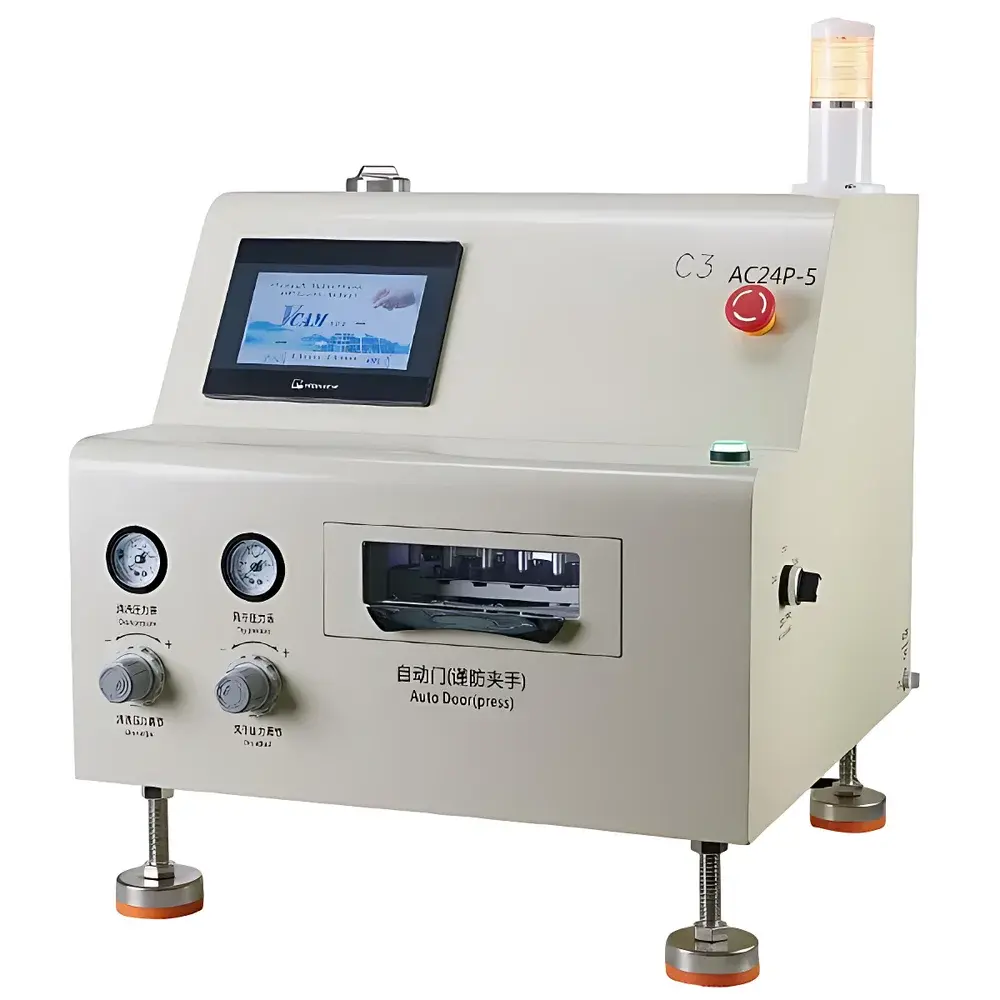
Jiada Xiaotianshe GDYQ-500M Food Additive Analyzer
| Brand | Jiada Xiaotianshe |
|---|---|
| Origin | Jilin, China |
| Manufacturer Type | Direct Manufacturer |
| Product Origin | Domestic (China) |
| Model | GDYQ-500M |
| Price Range | USD 4,200 – 7,000 |
| Function Type | Multi-analyte Detection Platform |
| Sample Compatibility | Universal for Solid, Semi-solid, and Liquid Food Matrices |
| Detection Principles | UV-Vis Absorbance (Transmission/Reflection), Fluorescence Spectrometry |
| Wavelength Accuracy | ±5 nm |
| Wavelength Repeatability | ±1 nm |
| Detection Modes | Transmission, Reflectance, Fluorescence |
| Quantification Method | External Standard Calibration |
| Regulatory Compliance | GB/T 5009.28–2003, GB/T 5009.29–2003, GB/T 5009.35–2003, GB/T 5009.141–2003, GB 2760–2011 |
| Software | Dedicated PC-based Workstation with Chromatogram-like Peak Visualization, Automatic Integration, and Audit-Trail-Ready Data Export |
Overview
The Jiada Xiaotianshe GDYQ-500M Food Additive Analyzer is a benchtop-to-field portable spectrophotometric detection platform engineered for quantitative analysis of regulated food additives in compliance with Chinese national standards. It operates on dual optical principles—UV-Vis absorbance (via transmission and reflectance modes) and fluorescence spectrometry—to deliver selective, interference-resistant measurement of target analytes across diverse food matrices. Unlike conventional HPLC or ELISA-based systems, the GDYQ-500M eliminates derivatization, enzymatic reactions, or colorimetric reagent dependency, enabling direct quantification through external standard calibration. Its optical architecture supports simultaneous multi-wavelength acquisition at user-defined intervals, facilitating concurrent detection of up to 13 regulated substances—including sweeteners (acesulfame-K, sodium saccharin), preservatives (sorbic acid, benzoic acid), and synthetic colorants (tartrazine, sunset yellow, amaranth, carmine, allura red, erythrosine, new red, brilliant blue, indigo carmine)—within a single run. Designed for laboratories operating under GLP-aligned workflows and field-based food safety surveillance units, the instrument meets the metrological requirements outlined in GB/T 5009.x series methods and aligns with the maximum residue limits (MRLs) specified in GB 2760–2011.
Key Features
- Triple-mode optical detection: Transmission, reflectance, and fluorescence—enabling method flexibility for heterogeneous samples (e.g., sauces, beverages, confectionery, dried spices)
- Integrated rechargeable lithium-ion battery with AC/DC dual-power operation—supports ≥6 hours of continuous field use without external power
- USB 2.0 interface with automatic device enumeration and plug-and-play data synchronization to Windows-based workstation software
- On-instrument status self-diagnosis: real-time lamp intensity monitoring, wavelength calibration verification, and detector saturation alerting
- No reagent consumption for primary quantification—external standard curves eliminate batch-to-batch variability associated with chromogenic kits
- Pre-programmed method templates aligned with GB/T 5009.28–2003 (saccharin), GB/T 5009.29–2003 (benzoic/sorbic acids), GB/T 5009.35–2003 (synthetic colors), and GB/T 5009.141–2003 (acesulfame-K)
Sample Compatibility & Compliance
The GDYQ-500M accepts homogenized extracts from solid foods (e.g., meat products, baked goods), clarified liquids (soft drinks, dairy beverages), and semi-solid suspensions (jams, dressings, pastes) following standardized sample preparation per GB/T 5009.x protocols. Extraction solvents include methanol/water mixtures, acetonitrile, and pH-adjusted aqueous buffers—compatible with built-in cuvette holders (10-mm pathlength) and reflective sample trays for opaque matrices. All reported detection limits (e.g., 0.1 µg for acesulfame-K; 10 ng for tartrazine) are validated per ISO/IEC 17025:2017 Annex B guidelines using spiked recovery experiments across three concentration levels (n=6 replicates). Instrument performance verification includes annual wavelength accuracy checks traceable to NIM (National Institute of Metrology, China) certified reference materials. While not FDA 21 CFR Part 11–certified out-of-the-box, audit trail functionality (user login timestamps, method version logging, raw data immutability flags) supports internal GMP/GLP documentation requirements.
Software & Data Management
The bundled GDYQ-Workstation v3.2 software runs on Windows 10/11 (64-bit) and provides full spectral visualization with overlay capability, peak identification via retention-time indexing (not chromatographic but absorbance/fluorescence maxima correlation), and auto-integration with adjustable baseline algorithms (tangent skim, vertical drop). Raw absorbance/fluorescence intensity values, calculated concentrations (g/kg), % recovery, and QC flagging (e.g., “outlier”, “saturation”, “low S/N”) are exportable as CSV or PDF reports compliant with laboratory information management system (LIMS) ingestion schemas. Data files retain embedded metadata: operator ID, instrument serial number, calibration date, method ID, and environmental temperature/humidity logs (via optional external sensor input). All modifications to processed results generate immutable audit entries—including undo history—with timestamped user attribution.
Applications
- Routine QC screening of incoming raw materials (e.g., fruit powders, flavor bases, starches) for undeclared colorant or sweetener adulteration
- Post-process verification in beverage bottling lines to ensure compliance with GB 2760–2011 additive thresholds
- Surveillance testing by municipal food safety bureaus during market inspections of street-vended snacks and packaged condiments
- Method development support for validation of alternative extraction protocols prior to HPLC confirmation
- Educational use in food science curricula for teaching spectrophotometric quantification principles and regulatory limit interpretation
FAQ
Does the GDYQ-500M require daily recalibration?
No—wavelength calibration is factory-performed and stable for ≥12 months under normal use; users perform quarterly verification using supplied holmium oxide or didymium glass filters.
Can it quantify additives in colored or turbid samples?
Yes—reflectance mode compensates for matrix opacity; fluorescence detection further enhances selectivity for compounds like erythrosine and brilliant blue in pigment-rich backgrounds.
Is method transfer possible to other laboratories?
Yes—method files (.gdyq) contain full optical parameters, integration settings, and calibration curve coefficients; cross-laboratory reproducibility studies show RSD ≤8.2% (n=15, inter-lab, same sample batch).
What maintenance is required beyond lamp replacement?
Annual optical alignment verification and detector dark-current profiling; no fluidic or column components to service.
Does the software support electronic signatures for regulated environments?
Not natively—but exported CSV/PDF reports include digital signature fields compatible with third-party e-signature platforms meeting 21 CFR Part 11 Annex 11 expectations.