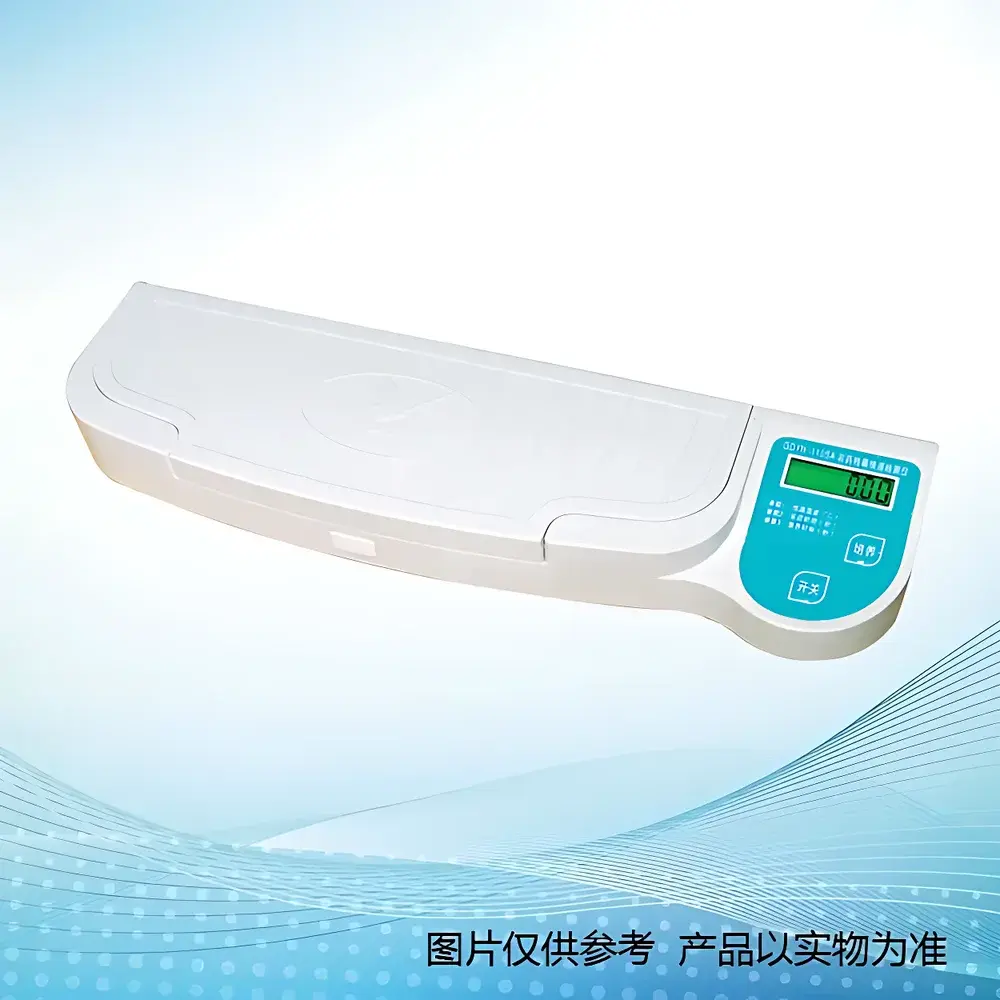
Jiada Xiaotianshe GDYN-110SA Pesticide Residue Rapid Tester
| Brand | Jiada Xiaotianshe |
|---|---|
| Origin | Jilin, China |
| Manufacturer Type | Direct Manufacturer |
| Country of Origin | China |
| Model | GDYN-110SA |
| Detection Method | Enzyme Inhibition Assay |
| Number of Channels | 10 |
| Temperature Display Accuracy | ±0.5 °C |
| Colorimetric Timing Precision | ±1 s |
| Standard Reaction Time | 3 min |
| Input Voltage | 100–240 V AC |
| Rechargeable Battery Runtime | 100–150 min |
| Adjustable Incubation Time Range | 1–99 min |
| Operating Environment | Indoor & Vehicle-Mounted |
| Operating Temperature Range | 0–40 °C |
Overview
The Jiada Xiaotianshe GDYN-110SA Pesticide Residue Rapid Tester is a dedicated benchtop analytical instrument engineered for qualitative screening of organophosphorus and carbamate pesticide residues in fresh agricultural commodities—including fruits, vegetables, tea, and herbs. It operates on the well-established enzyme inhibition principle: acetylcholinesterase (AChE) activity is reversibly inhibited by these pesticide classes; the degree of inhibition correlates with residue concentration. A chromogenic substrate (e.g., indoxyl acetate or 5,5′-dithiobis-(2-nitrobenzoic acid), DTNB) is hydrolyzed by active AChE to yield a measurable color change, quantified via absorbance at 412 nm or 610 nm depending on reagent formulation. This method aligns with GB/T 5009.199–2003, the Chinese national standard for rapid pesticide residue detection, and provides results within 3 minutes per sample under standardized conditions—making it suitable for high-throughput field-deployable quality control in supply chain hubs, mobile inspection units, and decentralized food safety laboratories.
Key Features
- 10 independent optical channels enable parallel processing of up to 10 samples per assay cycle, significantly improving throughput without cross-contamination risk.
- Integrated temperature-controlled reaction block maintains uniform incubation at user-selectable setpoints between 25 °C and 40 °C, with real-time display accuracy of ±0.5 °C—critical for reproducible enzymatic kinetics.
- Precise timing circuitry delivers colorimetric measurement initiation and endpoint detection with ±1-second resolution, minimizing inter-assay variability.
- Onboard rechargeable lithium-ion battery supports uninterrupted operation for 100–150 minutes, enabling full functionality during vehicle-based inspections or temporary off-grid deployments.
- Compact, ruggedized chassis (280 × 220 × 120 mm) and low power consumption (<12 W) facilitate integration into mobile food safety labs, market-side kiosks, and cold-chain monitoring stations.
- Front-panel keypad and backlit LCD provide intuitive navigation, parameter entry, and result visualization without external computing hardware.
Sample Compatibility & Compliance
The GDYN-110SA accepts homogenized aqueous extracts prepared from representative subsamples of produce using standardized extraction protocols (e.g., 2 g sample + 10 mL buffer, vortexed and filtered). It is validated for use with common AChE test kits supplied by certified vendors compliant with GB/T 5009.199–2003. While not intended for quantitative regulatory reporting, its qualitative output meets the performance criteria for initial screening under China’s Food Safety Law (Article 112) and supports due diligence documentation in HACCP-based food safety management systems. Instrument design conforms to IEC 61010-1:2010 for electrical safety in laboratory equipment and incorporates ESD-protected circuitry for stable operation in variable ambient humidity (20–80% RH, non-condensing).
Software & Data Management
The GDYN-110SA operates as a standalone instrument with embedded firmware—no PC connection required for routine operation. All test parameters (incubation time, temperature setpoint, channel activation) are stored in non-volatile memory. Results—including channel ID, timestamp, inhibition percentage, and pass/fail flag—are logged internally and exportable via USB 2.0 to CSV format for traceability. Audit trail functionality records operator-initiated configuration changes with timestamps, supporting GLP-aligned recordkeeping. While the device does not implement FDA 21 CFR Part 11 electronic signature controls, its deterministic response logic and immutable result logging meet baseline data integrity requirements for internal QA/QC and third-party verification audits.
Applications
- Rapid pre-market screening of leafy greens, tomatoes, cucumbers, and apples at wholesale markets and distribution centers.
- On-farm verification of harvest readiness following pesticide application intervals.
- Mobile food safety enforcement during routine inspections by municipal CDC or market supervision bureaus.
- Training and capacity building in rural extension services where access to centralized GC-MS or LC-MS/MS infrastructure is limited.
- Supplier qualification testing in contract manufacturing facilities producing ready-to-eat salads or processed vegetable products.
FAQ
What pesticides does the GDYN-110SA detect?
It detects organophosphorus (e.g., chlorpyrifos, diazinon) and carbamate (e.g., carbaryl, methomyl) pesticides that inhibit acetylcholinesterase. It does not detect neonicotinoids, pyrethroids, or glyphosate.
Is calibration required before each use?
No routine calibration is needed; however, daily verification using a certified negative control (pesticide-free extract) and positive control (spiked at 0.5× LOD) is recommended per GB/T 5009.199–2003 protocol.
Can results be integrated into a LIMS?
Yes—CSV exports are structured for direct ingestion into most Laboratory Information Management Systems (LIMS) via automated file polling or manual upload.
What is the limit of detection (LOD) for this instrument?
LOD is method-dependent and determined by the sensitivity of the AChE reagent kit used; typical values range from 0.01 mg/kg to 0.5 mg/kg across target analytes, consistent with national screening thresholds.
Does the instrument support multi-language UI?
The current firmware supports English and Simplified Chinese interfaces; firmware updates may extend language options based on regional deployment requirements.