
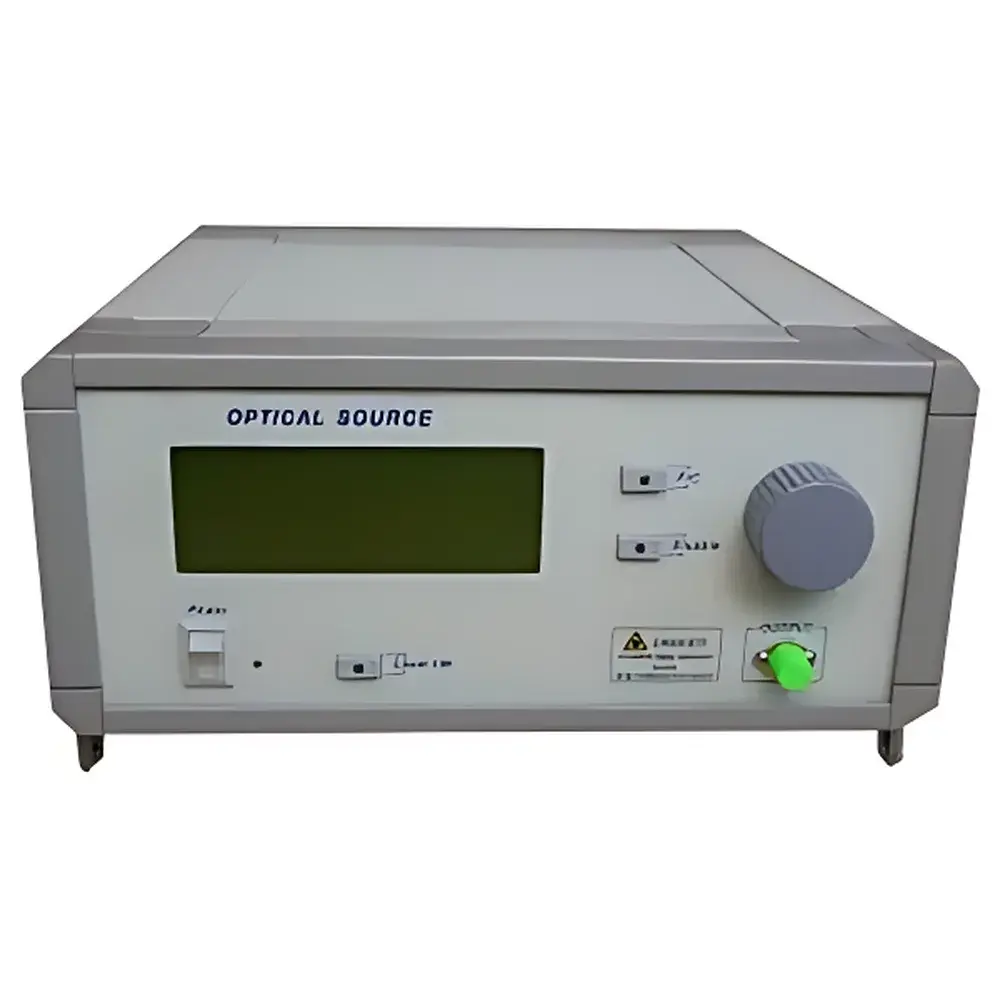
AOE Tech JF8146 Multi-Mode Pump Laser Source
| Brand | AOE Tech |
|---|---|
| Origin | Shanghai, China |
| Manufacturer Type | Authorized Distributor |
| Product Category | Domestic |
| Model | JF8146 |
| Price Range | USD 1,400 – 4,200 (FOB Shanghai) |
| Light Source Type | High-Power Diode Pump Source |
| Illumination Configuration | Internal Irradiation Design |
| Output Power | 1–10 W (adjustable) |
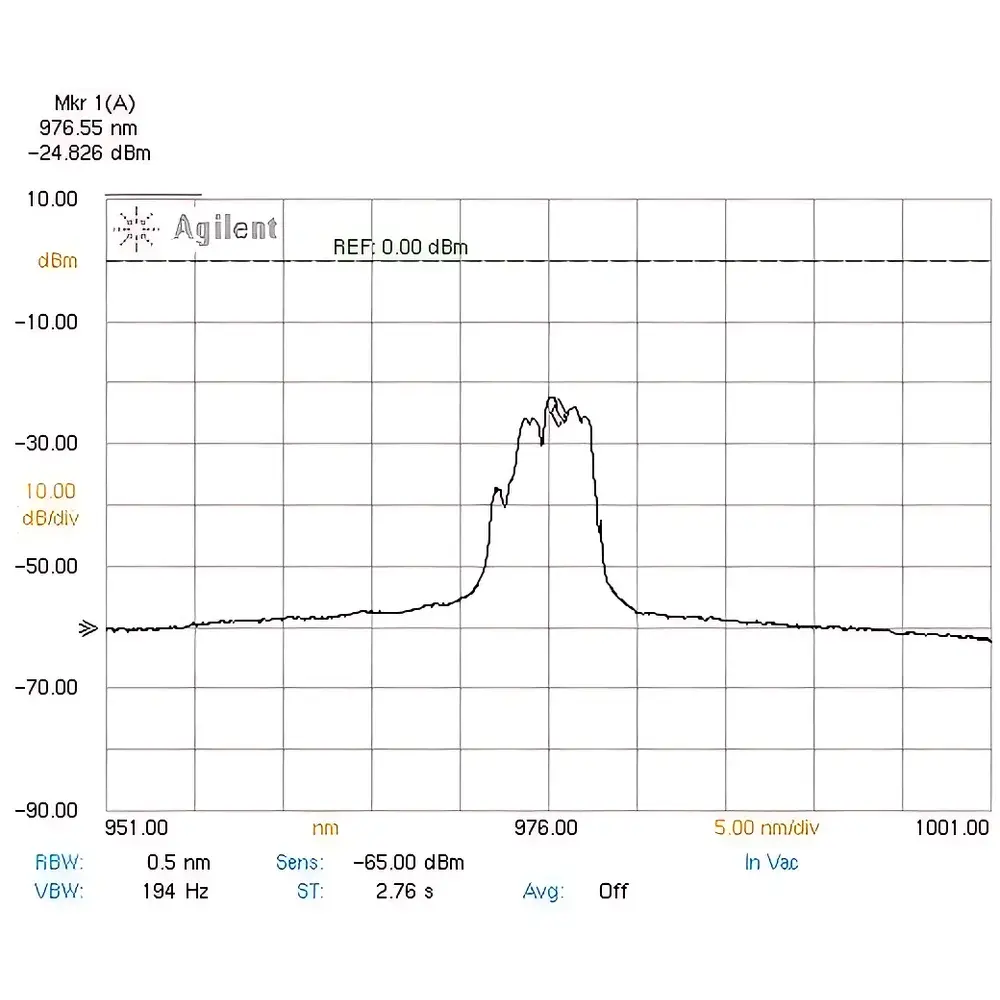
| Wavelength Options | 808 nm, 915 nm, 940 nm, 960 nm, 975 nm |
| Spectral Width (RMS) | ≤ 4.8 nm |
| Output Stability (15 min) | ±0.05 dB |
| Output Stability (8 h) | ±0.2 dB |
| TEC Temperature Stability | ±0.1 °C (typ.), ±0.2 °C (max.) |
| TEC Operating Range | 20–30 °C |
| Input Voltage | 170–260 VAC (system) |
| Power Consumption | ≤ 15 W |
| Operating Temperature | 0–45 °C |
| Storage Temperature | −40–80 °C |
| Output Fiber | 105/125 µm multimode, NA 0.22 or 0.15 |
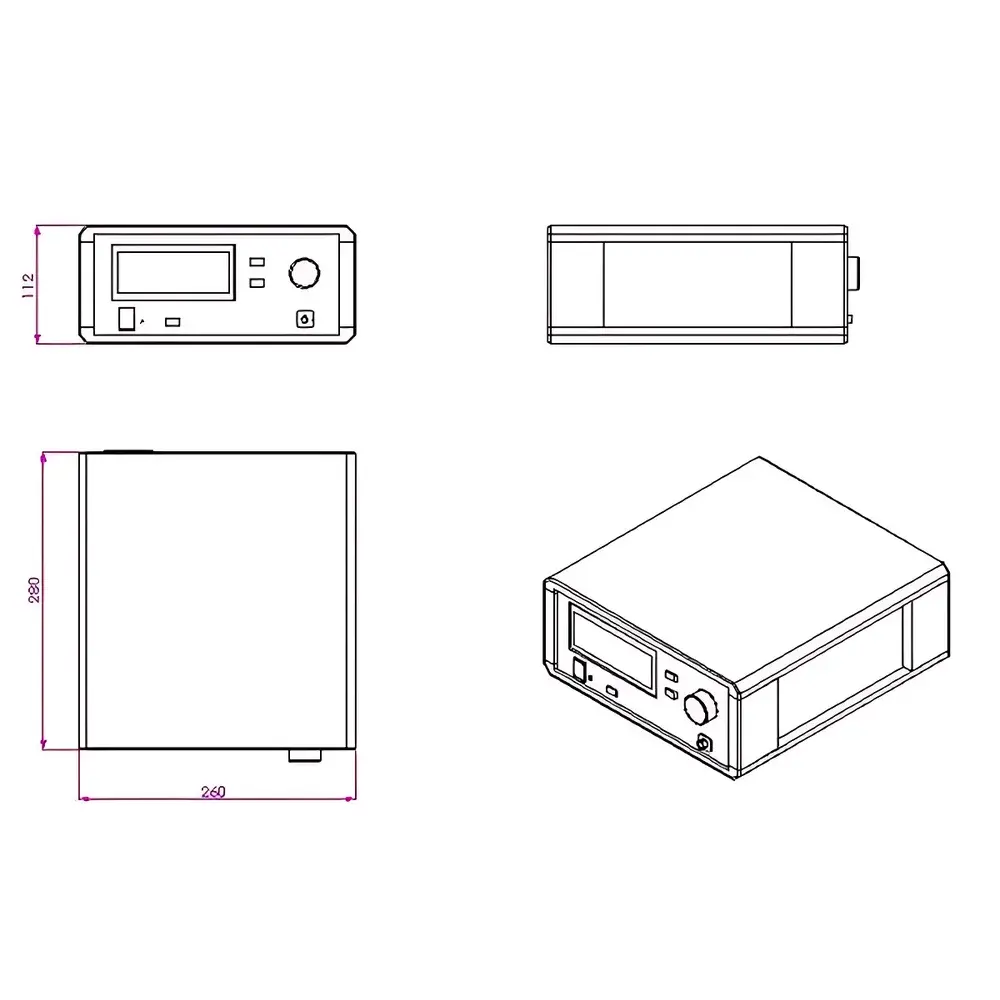
| Dimensions (Desktop) | 280 × 260 × 112 mm |
| Control Interfaces | RS232 (standard), RS485 (optional) |
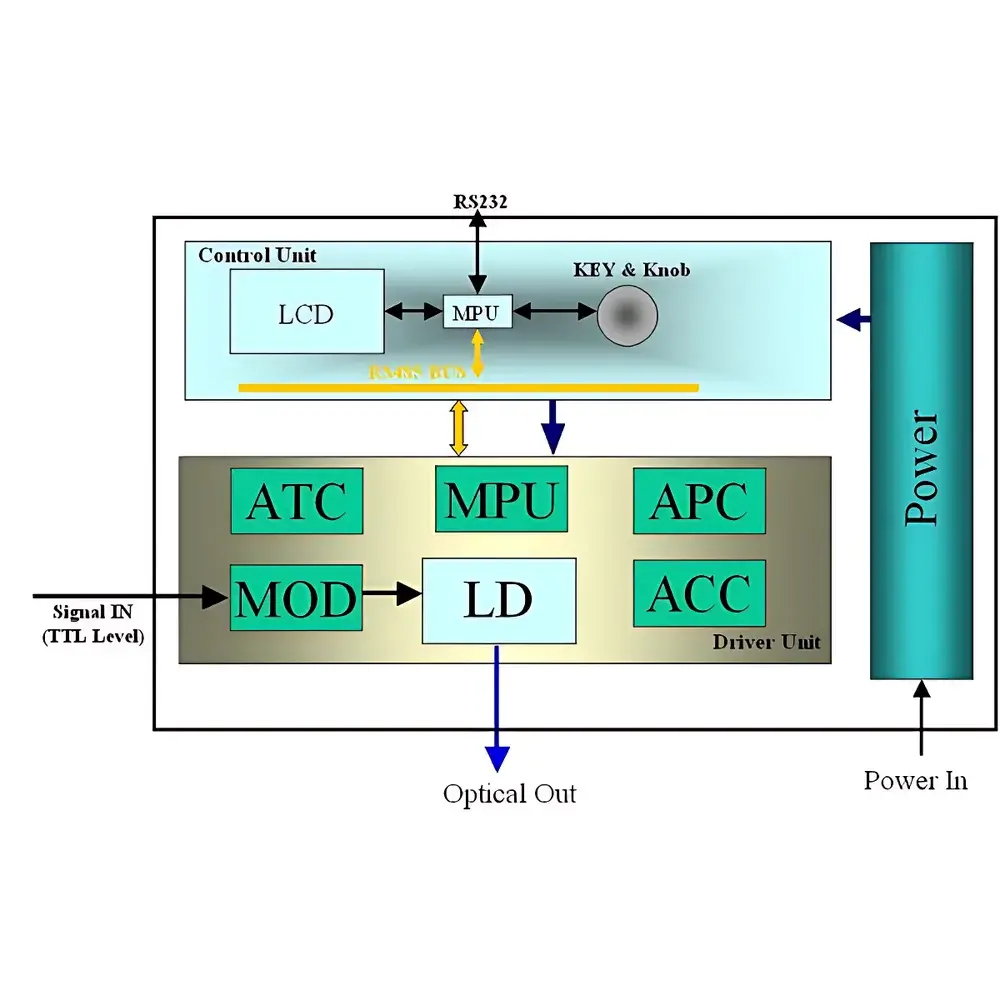
| APC & ATC Circuits | Integrated high-precision analog feedback loops |
Overview
The AOE Tech JF8146 Multi-Mode Pump Laser Source is an engineered solution for high-reliability optical pumping in fiber laser and amplifier development laboratories. Designed around industry-standard multi-mode pump diodes—operating at key near-infrared wavelengths including 808 nm, 915 nm, 940 nm, 960 nm, and 975 nm—the JF8146 delivers up to 10 W of stabilized optical power through a 105/125 µm multimode fiber (NA 0.22 or 0.15). Its core architecture integrates active temperature control (ATC) via thermoelectric coolers (TECs), precision automatic power control (APC), and a dual-CPU embedded control system that separates user interface management from real-time driver regulation. Unlike conventional pump sources relying on passive thermal design or open-loop current drive, the JF8146 employs patented switched-mode current drivers with multi-stage EMI filtering, reducing thermal load by over 60% compared to legacy linear supply implementations. This thermal efficiency enables sustained operation under continuous-wave (CW) conditions while maintaining spectral stability within ±0.1 °C TEC setpoint tolerance—critical for minimizing wavelength drift during long-duration amplifier characterization or manufacturing QC testing.
Key Features
- Adjustable output power from 1 W to 10 W via front-panel potentiometer or remote digital command (RS232/RS485)
- Wavelength fine-tuning capability enabled by integrated TEC-based thermal stabilization (±0.1 °C setpoint accuracy)
- Dual-CPU architecture: one microcontroller handles display and HMI functions; the other executes real-time current, temperature, and feedback loop control
- Patented high-efficiency switching driver with low-noise current regulation (< 0.05 dB short-term power fluctuation)
- Advanced thermal management combining vapor chamber heat pipes (adapted from high-density computing platforms) and forced-air convection
- Comprehensive onboard telemetry: real-time monitoring of diode current, case temperature, TEC voltage/current, and optical output via internal photodiode
- Compact desktop form factor (280 × 260 × 112 mm) with optional OEM module variant (+5 VDC input)
Sample Compatibility & Compliance
The JF8146 is optimized for coupling into double-clad fibers used in cladding-pumped fiber amplifiers and lasers. Its 105/125 µm output fiber matches standard pump combiner acceptance parameters and supports efficient launch into inner claddings with NA 0.22 or 0.15. The source meets IEC 60825-1:2014 Class 4 laser safety requirements when operated above 500 mW, and includes interlock-ready hardware interfaces compliant with EN 61511 functional safety guidelines. While not certified for medical device integration per IEC 62304, its stable APC/ATC performance aligns with GLP-aligned test environments where traceable, repeatable pump conditions are required—for example, in qualification of passive components per Telcordia GR-1221-CORE or fiber Bragg grating reliability testing per ITU-T G.671.
Software & Data Management
AOE Tech provides a Windows-compatible configuration utility supporting ASCII-command protocol over RS232, enabling full parameter scripting—including ramp profiles, power sweeps, and thermal setpoint sequences. All control commands generate timestamped logs with millisecond resolution. The firmware implements non-volatile memory storage for calibration coefficients and user-defined presets. For integration into automated test systems, the device supports SCPI-like syntax and responds to IEEE 488.2-compliant query structures. Audit trails—including operator ID (via external authentication), parameter change history, and error event timestamps—are exportable as CSV for compliance with ISO/IEC 17025 documentation requirements. No cloud connectivity or proprietary runtime dependencies are included; all software operates offline without internet access.
Applications
- Development and burn-in testing of Yb-doped and Er/Yb co-doped double-clad fiber amplifiers
- Pump characterization for high-power CW and Q-switched fiber laser oscillators
- Insertion loss and polarization-dependent loss (PDL) measurement of fused-fiber components (WDMs, couplers, isolators)
- Thermal response evaluation of photonic integrated circuits under controlled optical loading
- Calibration reference source for NIR spectroradiometers operating between 800–1000 nm
- Stable illumination source in industrial thermal printing subsystems requiring consistent radiant flux
FAQ
What fiber connector types are supported on the output port?
The standard configuration uses an FC/PC connector terminated on 105/125 µm multimode fiber. Custom SMA-905 or ST connectors are available upon request with lead-time adjustment.
Is the JF8146 suitable for use in cleanroom environments?
Yes—the unit features sealed internal compartments, low-outgassing PCB conformal coating, and no volatile lubricants. It complies with ISO Class 5 particulate limits when operated outside laminar flow hoods.
Can multiple JF8146 units be synchronized for multi-wavelength pumping experiments?
While the device does not include built-in trigger synchronization, its RS232 command latency is < 5 ms, enabling external master-clock coordination via TTL-gated enable lines or time-stamped script execution.
Does the unit support analog modulation inputs?
No analog modulation interface is provided. Power modulation is implemented digitally via serial command sets at update rates up to 100 Hz.
What is the recalibration interval recommendation for metrological applications?
AOE Tech recommends annual verification against NIST-traceable optical power meters. Factory calibration certificates include uncertainty budgets per ISO/IEC 17025 Annex A.





