
AOE Tech JF8149 DFB High-Stability Tunable Laser Source
| Brand | AOE Tech |
|---|---|
| Model | JF8149 |
| Light Source Type | Distributed Feedback (DFB) Semiconductor Laser |
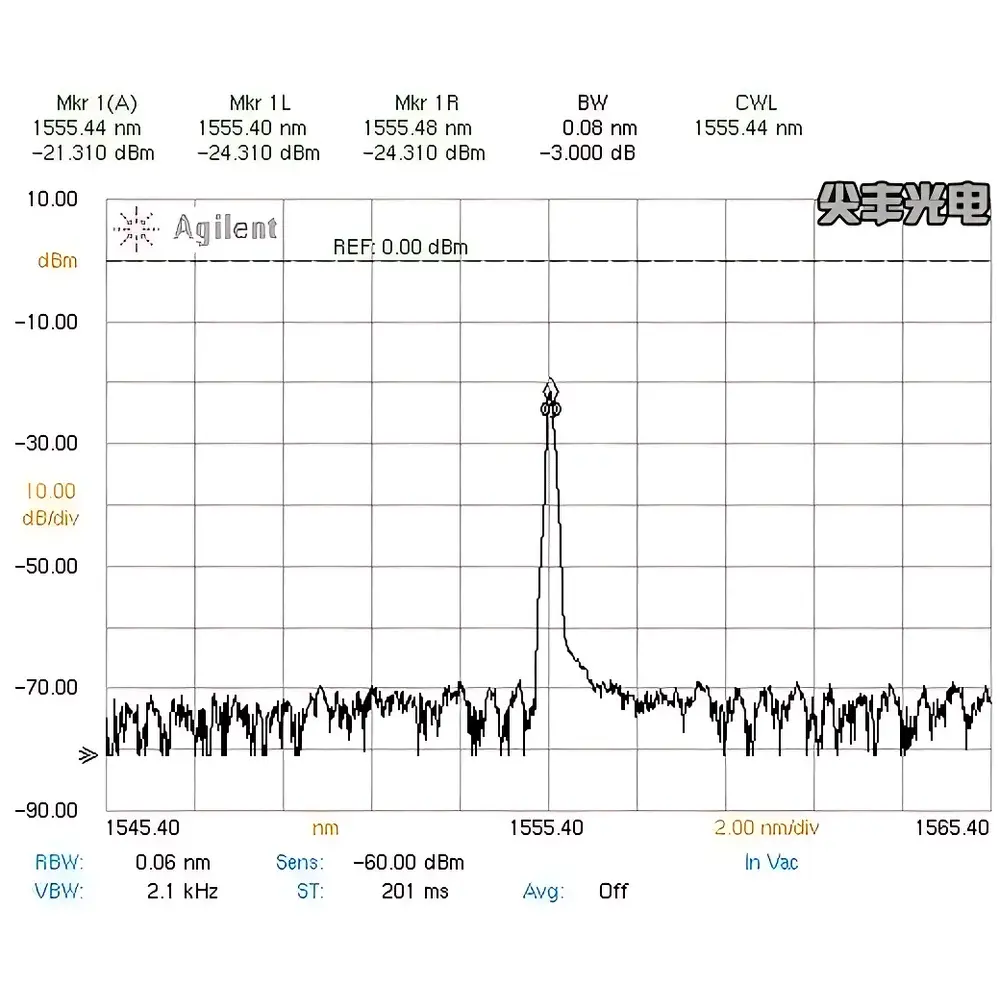
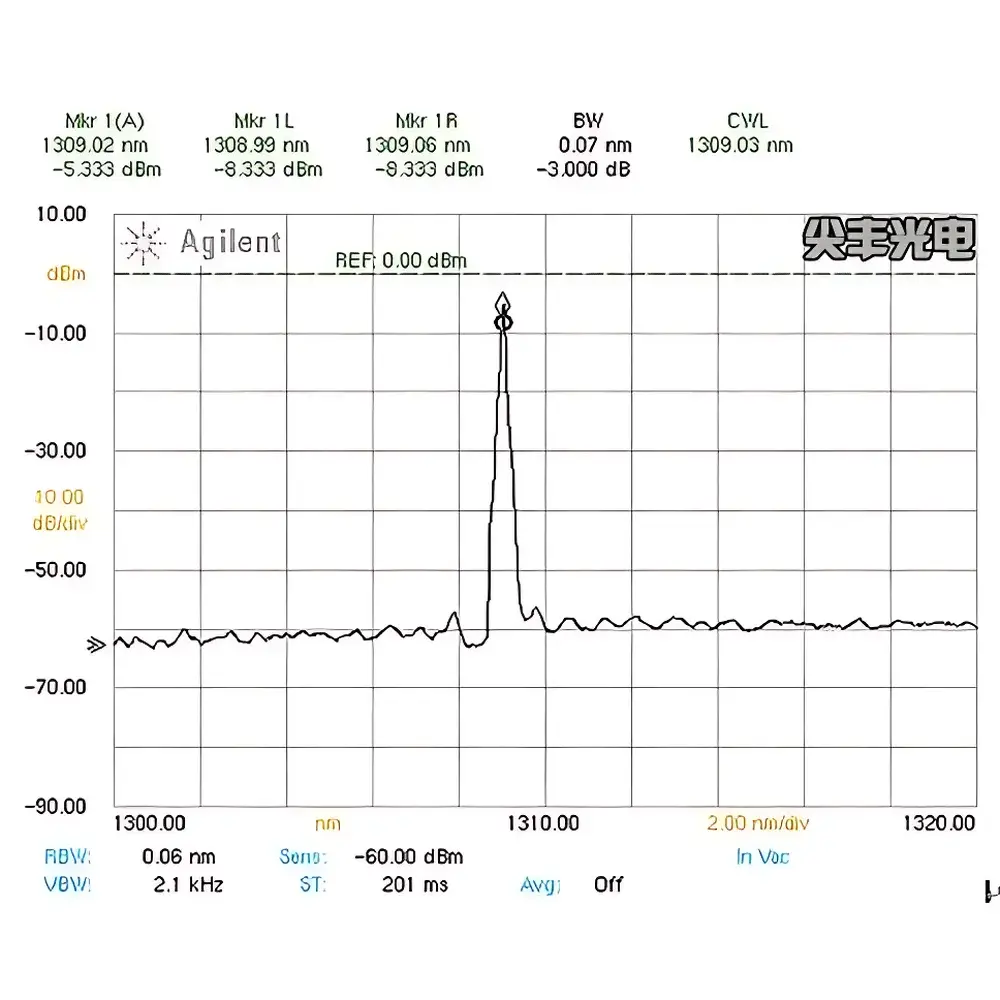
| Wavelength Options | 840–860 nm, 1290–1330 nm, 1530–1560 nm (C/L-band) |
| Output Power | Up to 100 mW (standard), up to 200 mW with integrated EDFA (C/L-band only) |
| Spectral Linewidth | ≤0.1 nm (@ −3 dB), ≤0.5 nm (@ −20 dB) |
| SMSR | ≥35 dB |
| Power Stability | ±0.005 dB (15 min), ±0.03 dB (8 h) |
| Wavelength Stability | ±0.003 dB (short-term), TEC temperature control accuracy: ±0.1 °C |
| Modulation | Internal (0.2–500 kHz), External (0.5–10 MHz) |
| Interface | RS-232 |
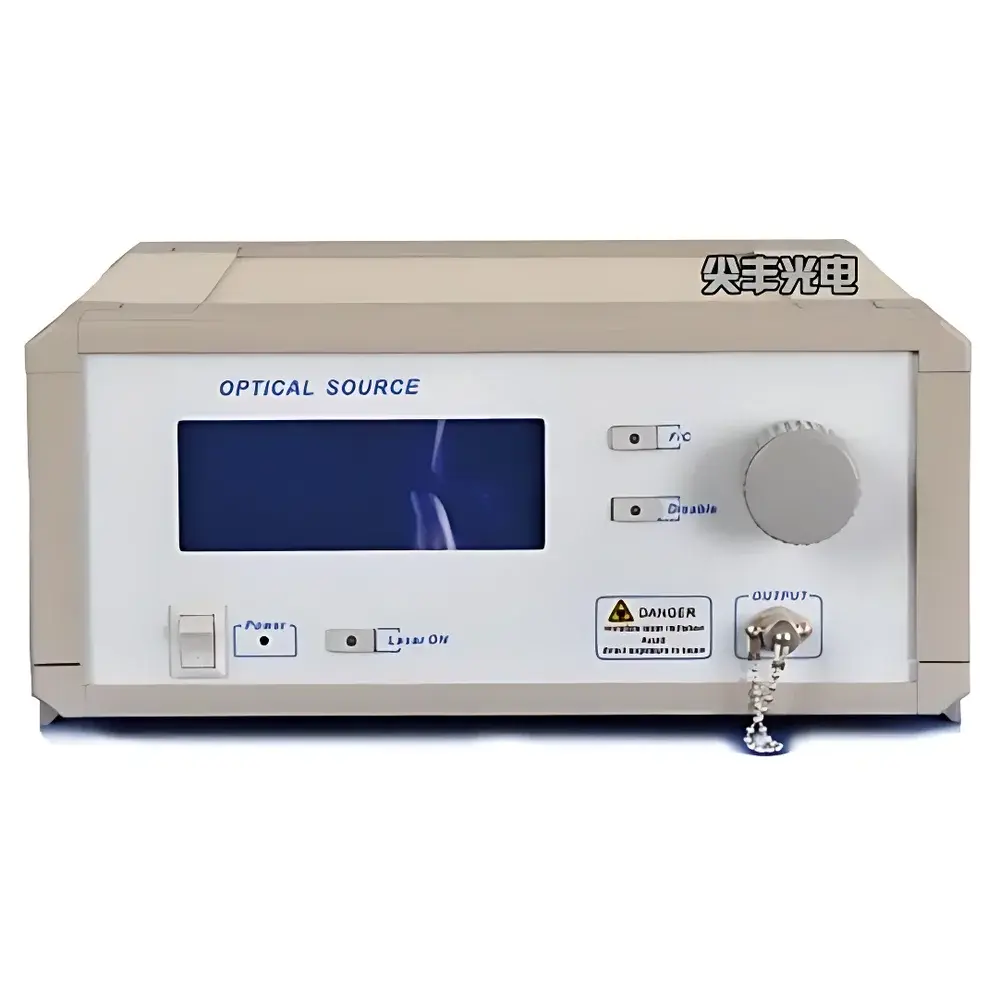
| Display | Backlit LCD showing power, wavelength, TEC temperature, drive current |
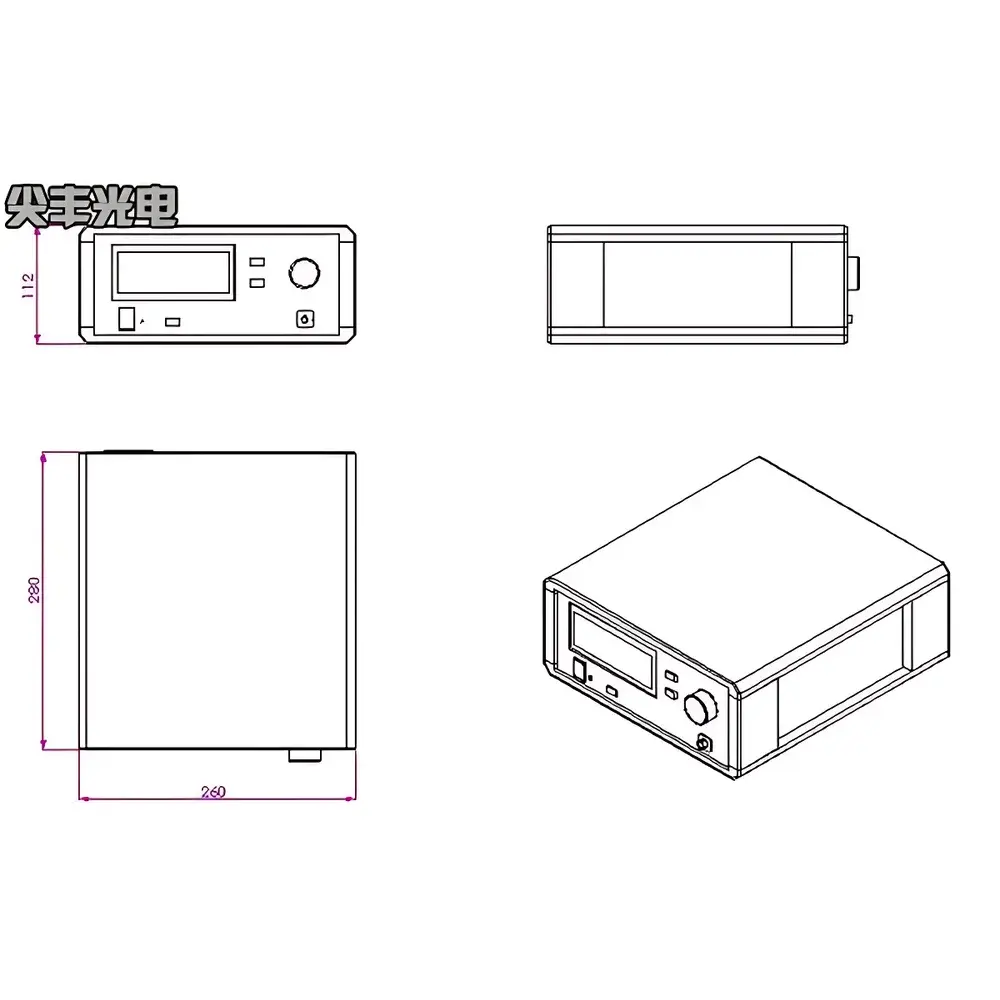
| Dimensions | 280 × 260 × 112 mm |
| Input Voltage | 85–260 VAC |
| Power Consumption | ≤15 W |
| Operating Temperature | 0–40 °C |
| Storage Temperature | −40–80 °C |
| Output Configuration | 1–4 independent wavelengths, 1–4 fiber-coupled FC/APC outputs |
| Compliance | CE-marked, RoHS-compliant, designed for GLP/GMP-aligned lab environments |
Overview
The AOE Tech JF8149 DFB High-Stability Tunable Laser Source is an engineered solution for precision optical testing in R&D laboratories, fiber optic component manufacturing, and metrology-grade calibration workflows. It employs temperature-stabilized distributed feedback (DFB) semiconductor lasers—selected for narrow spectral linewidth (<0.1 nm @ −3 dB), high side-mode suppression ratio (≥35 dB), and intrinsic wavelength reproducibility. Unlike broadband or arc-based sources (e.g., Xe/Hg lamps), the JF8149 delivers coherent, single-longitudinal-mode output ideal for interferometric measurements, WDM channel characterization, and insertion loss / return loss validation. Its core architecture integrates active temperature control (ATC) and automatic power control (APC) circuits with thermoelectric cooler (TEC) modules, ensuring sub-millidegree thermal regulation and drift-compensated optical power delivery over extended operational periods.
Key Features
- Multi-wavelength platform: Configurable with 1–4 independently controlled DFB laser modules within a single 19″ rack-mountable chassis—supporting simultaneous operation at discrete wavelengths across 850 nm, 1310 nm, and C-band (1530–1560 nm) windows.
- High stability performance: Achieves ±0.005 dB short-term (15-min) and ±0.03 dB long-term (8-hr) optical power stability—validated under constant ambient conditions per IEC 61290-1-3.
- Integrated EDFA option: For C/L-band variants, an internal erbium-doped fiber amplifier enables up to 200 mW continuous-wave output while preserving spectral purity and polarization extinction ratio (>20 dB).
- Intelligent control interface: Real-time parameter monitoring via backlit LCD (power, wavelength, TEC temperature, bias current); dual-mode adjustment (coarse/fine) via rotary encoder; one-button laser enable/disable function.
- Modulation flexibility: Supports both analog internal modulation (0.2–500 kHz) and TTL-compatible external modulation (0.5–10 MHz), facilitating dynamic response testing of photodetectors and optical receivers.
- Robust mechanical design: Modular driver and cooling subsystems minimize cross-talk between channels; all optical paths are factory-aligned and hermetically sealed to maintain alignment integrity during transport and thermal cycling.
Sample Compatibility & Compliance
The JF8149 is optimized for use with single-mode fiber (SMF-28, G.652.D), polarization-maintaining fiber (PM1550), and specialty fibers used in fused biconical taper (FBT) coupler fabrication. Its FC/APC output connectors ensure low back-reflection (<−60 dB), critical for high-finesse cavity measurements and reflectometry applications. The instrument conforms to IEC 61326-1 (EMC for laboratory equipment), IEC 61010-1 (safety requirements), and RoHS Directive 2011/65/EU. Firmware supports audit-trail logging and user-access-level configuration—enabling compliance with FDA 21 CFR Part 11 when deployed in regulated QC/QA environments requiring electronic record integrity.
Software & Data Management
Remote operation is enabled via RS-232 serial interface using ASCII command protocol (SCPI-compatible). A Windows-based PC application provides graphical real-time monitoring of all operational parameters, automated sweep routines for wavelength/power mapping, and CSV export for traceable data archiving. All settings—including setpoints, modulation profiles, and safety limits—are stored in non-volatile memory with write-protection options. Firmware updates are performed via secure UART bootload, preserving calibration constants and channel-specific compensation tables. Data logs include timestamps, operator ID fields, and checksum-verified entries—supporting ISO/IEC 17025 documentation requirements.
Applications
- WDM device characterization: Channel isolation, passband flatness, and ripple analysis across CWDM/DWDM grids.
- Fused fiber component testing: Insertion loss, polarization-dependent loss (PDL), and return loss measurement on couplers, splitters, and isolators.
- Optical sensor calibration: Reference source for FBG interrogators, interferometric gyroscopes, and distributed acoustic sensing (DAS) systems.
- System-level linearity verification: Used as stable stimulus in receiver sensitivity and dynamic range validation per IEEE 802.3 standards.
- Research-grade spectroscopy: Seed source for optical parametric oscillators (OPOs) and pump-probe experiments requiring narrow-linewidth, low-RIN excitation.
FAQ
What wavelength options are available without external amplification?
Standard configurations support discrete DFB wavelengths at 850 nm, 1310 nm, and 1550 nm (±5 nm tuning range); custom wavelengths between 1290–1610 nm are available upon request.
Can the JF8149 be integrated into automated test systems?
Yes—the RS-232 interface supports full SCPI-style command control, including power ramping, wavelength stepping, and status polling; LabVIEW, Python pySerial, and MATLAB drivers are provided.
Is the output polarization maintained?
Output is inherently linearly polarized with PER >20 dB; optional polarization controllers or PM-fiber pigtails can be specified at order entry.
How is thermal drift compensated during extended operation?
Each DFB module incorporates a closed-loop TEC controller with PID tuning and real-time temperature feedback—maintaining junction temperature within ±0.1 °C over 0–40 °C ambient.
Does the unit meet regulatory requirements for use in medical device manufacturing?
While not certified as a medical device, its design adheres to IEC 62304 software lifecycle processes and includes full traceability documentation—facilitating integration into Class II/III device production lines under ISO 13485 quality systems.



