
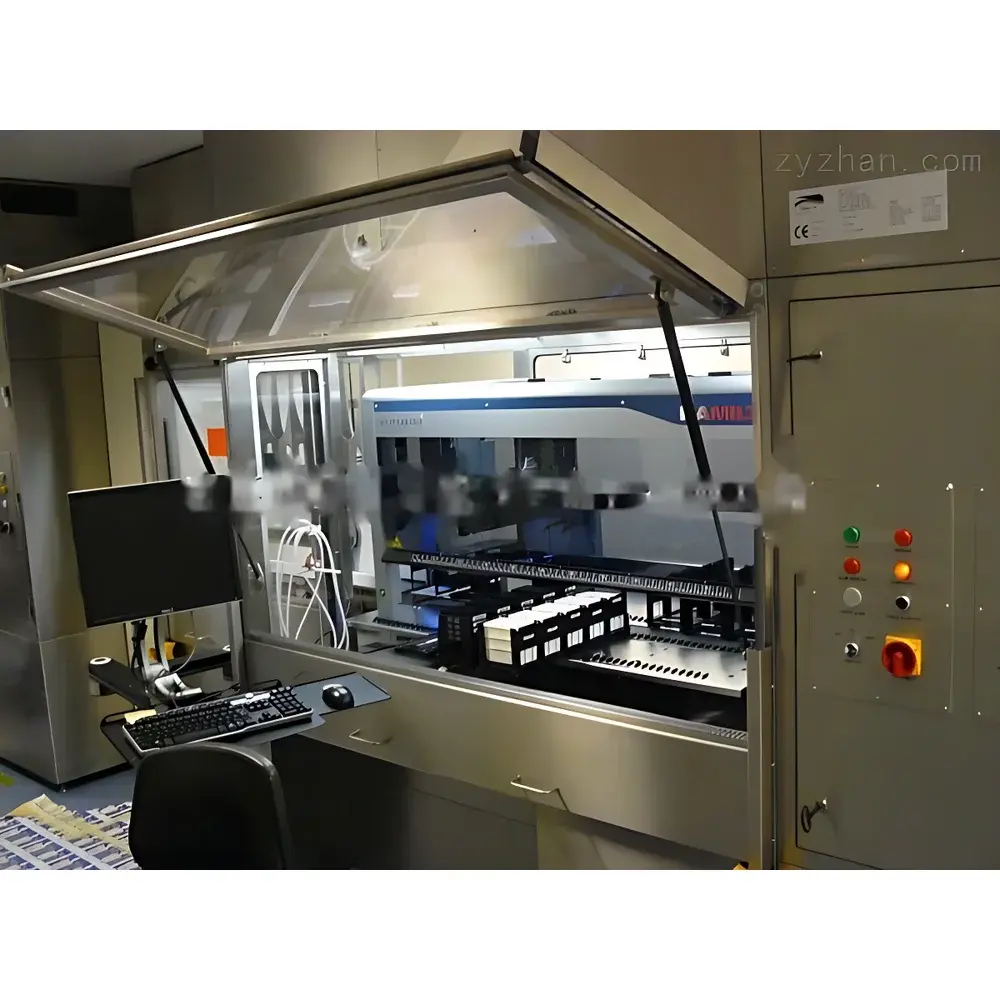
Telstar Custom-Built Class III Biological Safety Cabinet
| Brand | Telstar |
|---|---|
| Origin | Netherlands |
| Manufacturer Type | Authorized Distributor |
| Product Category | Imported Instrument |
| Model | Custom-Built |
| Instrument Type | Class III Biological Safety Cabinet |
| External Dimensions (L×W×H) | Customizable |
| Internal Dimensions (L×W×H) | Customizable |
| Filter Efficiency (HEPA/ULPA) | ≥99.999% at 0.12 µm |
Overview
The Telstar Custom-Built Class III Biological Safety Cabinet is an engineered containment solution designed for maximum personnel, environmental, and product protection in high-containment life science applications. Operating under negative pressure with total exhaust via dedicated ducted ventilation or recirculation through dual-stage ULPA filtration (≥99.999% efficiency at 0.12 µm), this cabinet conforms to EN 12469:2000 and NSF/ANSI 49–2022 standards for Class III biosafety enclosures. Unlike standard off-the-shelf units, the system is fully configurable—mechanically, ergonomically, and functionally—to integrate seamlessly into complex laboratory workflows involving hazardous pathogens (BSL-4 agents), cytotoxic compounds, radioactive isotopes, or sensitive reproductive biology procedures. Its gas-tight welded stainless-steel chassis, glove-port interface architecture, and fail-safe pressure monitoring ensure continuous integrity during extended operation.
Key Features
- Full-body, gas-tight enclosure constructed from electropolished 316L stainless steel with seamless welds and zero crevices—validated for decontamination via vaporized hydrogen peroxide (VHP) or formaldehyde fumigation.
- Dual-stage ULPA filtration: primary intake filter (≥99.999% @ 0.12 µm) and secondary exhaust filter (same specification), both certified per ISO 14644-3 and tested per EN 1822-5.
- Integrated pressure cascade monitoring with redundant digital sensors, real-time alarm logging, and automatic shutdown on loss of negative pressure differential (>10 Pa deviation).
- Glove ports compliant with ISO 10648-2:1994; available in multiple configurations (e.g., butyl rubber, Viton®, or laminated multilayer gloves) with quick-change collars and torque-controlled clamping.
- Modular utility integration: pre-routed conduits for power (IEC 60320 C14), data (RJ45/CAT6), gas (N₂, CO₂, compressed air), vacuum, and liquid waste—each sealed and pressure-tested.
- Customizable interior layout including adjustable shelving, magnetic tool holders, integrated lighting (LED, 500–600 lux, flicker-free), and optional HEPA-filtered laminar airflow zones for critical work surfaces.
Sample Compatibility & Compliance
This Class III cabinet supports a broad spectrum of biological and chemical materials requiring absolute containment: BSL-3/BSL-4 pathogens (e.g., SARS-CoV-2, Ebola virus, Francisella tularensis), oncology therapeutics (e.g., paclitaxel, doxorubicin), radiopharmaceuticals (e.g., ⁹⁹mTc, ¹⁸F-FDG), and human gametes/embryos in IVF environments. All configurations comply with EU Regulation (EU) 2017/745 (MDR) for medical devices, meet GLP/GMP design requirements per OECD Series on Principles of Good Laboratory Practice, and support audit readiness for FDA 21 CFR Part 11 (electronic records/signatures) when paired with Telstar’s validated software suite. Structural integrity testing follows ASTM E1937–22 for glove port performance and ISO 10648-1:2021 for leak rate verification (<1 × 10⁻⁶ m³/s at 250 Pa).
Software & Data Management
The cabinet integrates with Telstar’s CABINET CONTROL SUITE v4.2—a Windows-based, 21 CFR Part 11-compliant platform supporting role-based user access, electronic logbooks, automated calibration traceability, and real-time parameter archiving (pressure differentials, filter delta-P, runtime hours, alarm events). Audit trails are immutable, timestamped, and exportable in CSV/PDF formats. Optional integration with LIMS (e.g., LabWare, STARLIMS) enables bi-directional workflow synchronization—particularly valuable in GxP-regulated IVF labs or vaccine development facilities. Remote diagnostics and firmware updates are performed over encrypted TLS 1.2 connections.
Applications
- Containment handling of high-consequence pathogens in national reference laboratories and CDC-designated BSL-4 facilities.
- Pharmaceutical aseptic processing of potent cytostatic drugs under ISO Class 5 conditions, aligned with USP <797> and <800>.
- Embryo manipulation and micromanipulation in IVF clinics requiring simultaneous thermal stability (±0.3°C), vibration damping, and VOC-free internal atmosphere.
- Integration with automated platforms: robotic arms (e.g., Hamilton STAR, Tecan Freedom EVO), BD FACSAria™ or Beckman CytoFLEX™ flow cytometers—via custom mounting frames, cable management sleeves, and EMI-shielded signal pass-throughs.
- Radiation shielding variants include lead-lined walls (up to 2 mm Pb equivalence) and borosilicate glass viewing windows with α/β/γ attenuation certification per IEC 61331-1.
- Specialized adaptations such as weigh-in safety cabinets (ASTM E899-compliant load cell integration) and animal handling modules with HEPA-filtered exhaust and CO₂ concentration control.
FAQ
What regulatory standards does this cabinet meet?
It complies with EN 12469:2000, NSF/ANSI 49–2022, ISO 10648-1/2, and EU MDR (2017/745); optional validation packages support FDA, MHRA, and PMDA submissions.
Can the cabinet be integrated with existing building management systems (BMS)?
Yes—via Modbus TCP or BACnet/IP protocols; analog 4–20 mA outputs are provided for pressure, airflow, and temperature signals.
Is glove port replacement possible without external service intervention?
All glove ports feature tool-less, field-replaceable collars with visual torque indicators and pre-calibrated tension settings.
How is decontamination verified post-fumigation?
Integrated biological indicators (Geobacillus stearothermophilus spores) and chemical dosimeters are supported; validation reports follow ISO 14644-3 Annex B protocols.
What is the typical lead time for a custom configuration?
Standard customization requires 14–18 weeks from final engineering sign-off; expedited builds (with priority review) are available under contractual agreement.





