
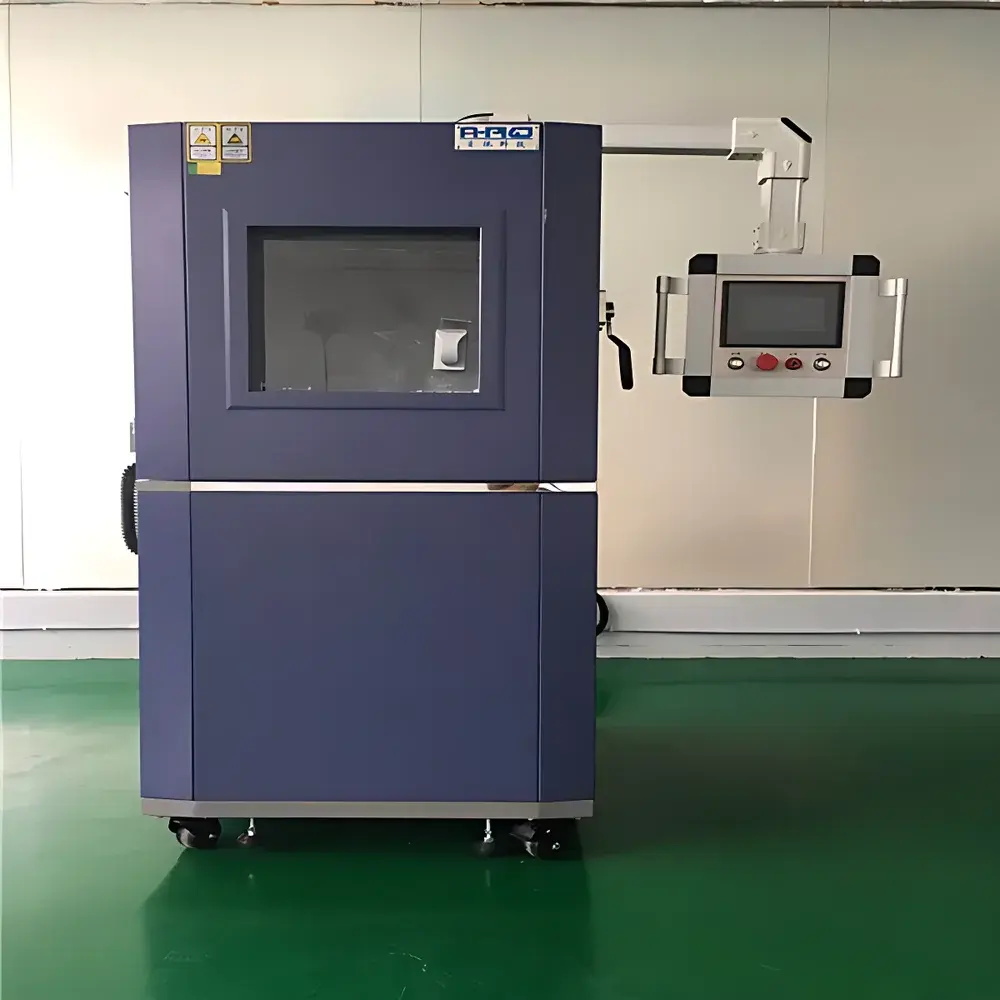
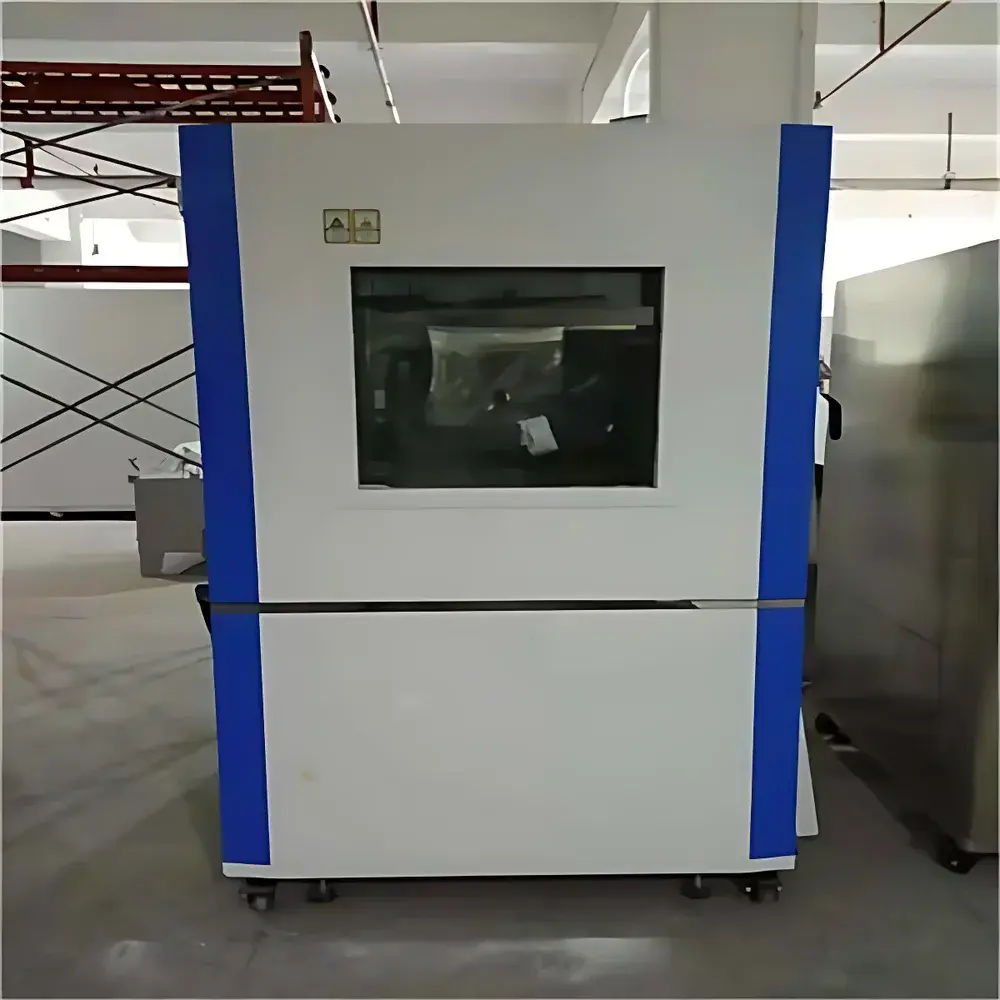
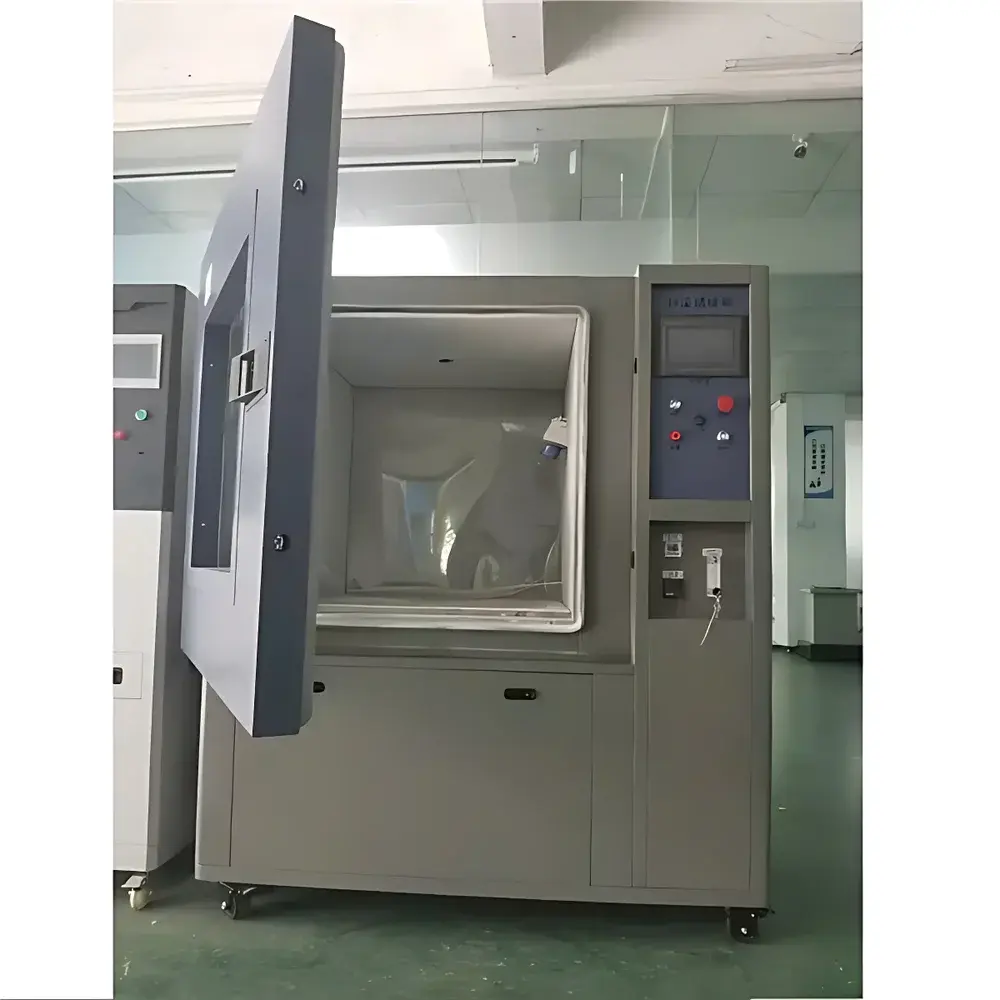
Apkji AP-GD-AP High-Low Temperature Alternating Environmental Test Chamber
| Brand | Apkji |
|---|---|
| Origin | Guangdong, China |
| Manufacturer Type | Direct Manufacturer |
| Country of Origin | China |
| Model | AP-GD-AP |
| Pricing | Upon Request |
| Internal Volume | 1000 L |
| Internal Dimensions (W×H×D) | 100×100×100 cm |
| External Dimensions (W×H×D) | 155×205×150 cm |
| Temperature Range | −70 °C to +150 °C |
| Temperature Control Accuracy | ±0.2 °C |
| Temperature Uniformity | ±2 °C |
| Heating Rate | ~3 °C/min (RT to 150 °C in ~40 min) |
| Cooling Rate | ~1 °C/min (RT to −70 °C in ~100 min) |
| Refrigerant | R404A / R23 (dual-stage cascade system) |
| Compressor | Tecumseh (France) hermetic scroll compressor |
| Insulation | Rigid polyurethane foam + glass wool |
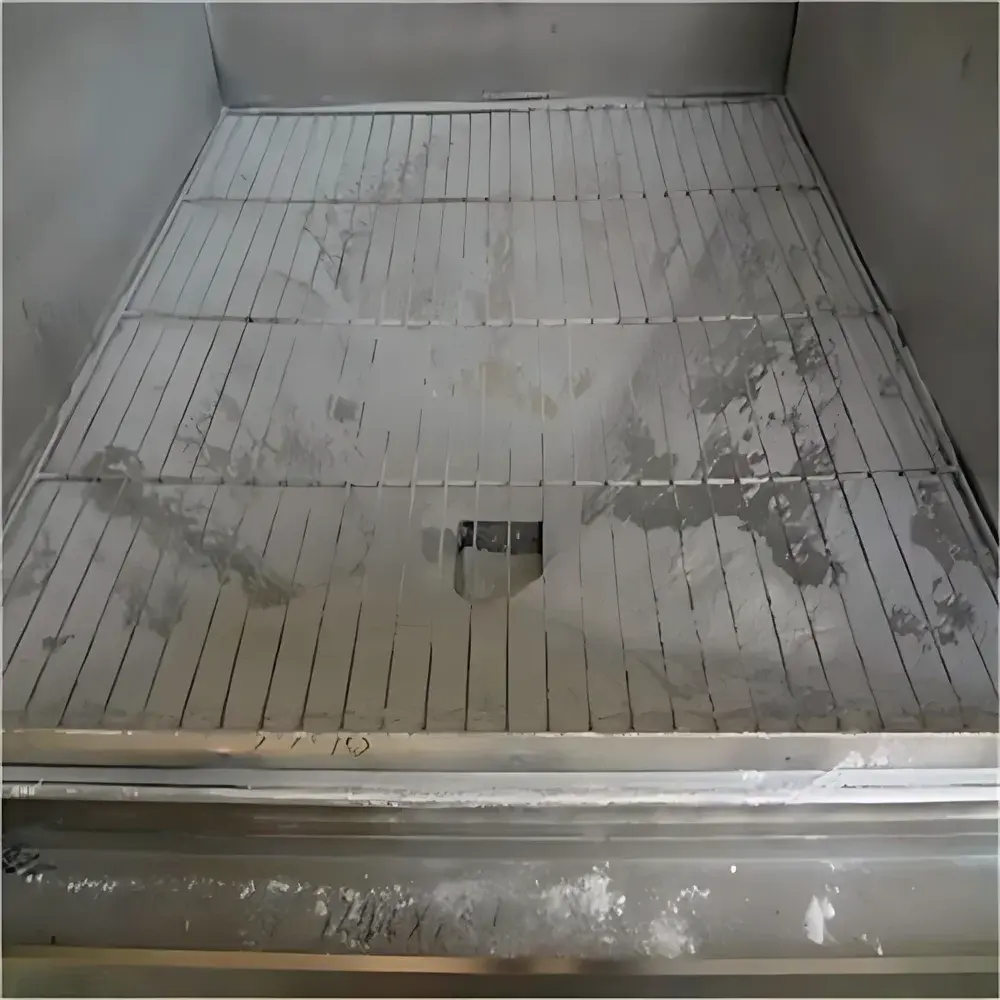
| Interior Material | SUS304 stainless steel |
| Exterior Material | SUS304 stainless steel |
| Power Supply | 3φ5w AC380/415V ±10%, 50/60 Hz |
| Safety Protections | Over-temperature, dry-run, refrigerant low-level, high-pressure, over-current, emergency stop, thermal cutoff |
Overview
The Apkji AP-GD-AP High-Low Temperature Alternating Environmental Test Chamber is an industrial-grade thermal stress testing system engineered for reproducible, long-duration exposure of electronic components, polymer materials, automotive subassemblies, and finished goods to extreme and dynamically cycled temperature profiles. It operates on a dual-stage cascade refrigeration principle—combining high-temperature stage (R404A or R507) and low-temperature stage (R23 or R508B)—enabling stable operation from −70 °C to +150 °C with minimal thermal lag and high thermodynamic efficiency. Unlike single-stage systems limited to −40 °C minimum, the cascade architecture ensures consistent cooling performance at ultra-low setpoints while maintaining compliance with U.S. EPA SNAP program guidelines for refrigerants scheduled for use through 2030 and beyond. The chamber’s forced-air circulation employs a wide-band centrifugal blower with upward discharge and bottom intake, ensuring uniform airflow distribution across the full 1000 L test volume per ISO 16750-4 and IEC 60068-2-1/2 specifications.
Key Features
- Robust structural design with double-wall SUS304 stainless steel construction (interior and exterior), minimizing thermal bridging and corrosion risk in high-humidity or saline environments.
- High-efficiency insulation comprising rigid polyurethane foam (≥100 mm thickness) and layered glass wool, achieving thermal resistance (R-value) > 3.5 m²·K/W under steady-state conditions.
- Lan-enabled programmable controller supporting remote protocol-based operation—including real-time data logging, multi-segment profile editing, machine start/stop commands, and USB mass storage export—compatible with Windows-based lab management systems.
- Comprehensive safety architecture including dual redundant over-temperature cutouts, refrigerant low-level detection, compressor high-pressure and overcurrent protection, dry-run prevention for heater elements, and emergency power-off via front-panel red mushroom button.
- Modular configuration capability: standard models span 80–1000 L internal volumes; non-standard dimensions, extended temperature ranges (e.g., −80 °C), and custom ramp/soak profiles are available upon engineering review and validation.
Sample Compatibility & Compliance
The AP-GD-AP accommodates large-format test specimens—including printed circuit board assemblies (PCBAs), EV battery modules, HVAC housings, and aerospace composite panels—within its 100 × 100 × 100 cm working chamber. Its uniform temperature field (±2 °C tolerance across 90% of usable volume, measured per IEC 60068-3-5 methodology at 1/10 boundary offset) supports reliable qualification testing per MIL-STD-810G Method 502.5 (low temperature), Method 507.5 (temperature shock), and Method 501.6 (high temperature). It meets national and international regulatory requirements including GB/T 10589–1989, GB/T 10592–1989, GB/T 2423.1–2008 (IEC 60068-2-1), GB/T 2423.2–2008 (IEC 60068-2-2), and ASTM D3418 for thermal transition analysis of polymers. Calibration traceability follows ISO/IEC 17025 guidelines, with optional NIST-traceable sensor certification available.
Software & Data Management
The embedded controller firmware supports full audit trail functionality compliant with FDA 21 CFR Part 11 requirements when operated in validated mode—featuring user authentication, electronic signatures, immutable event logs, and change history for all critical parameters (setpoints, ramps, holds, alarm thresholds). Data export is natively supported in CSV and Excel-compatible formats via USB 2.0 interface or Ethernet LAN (TCP/IP Modbus RTU or custom API). Optional integration with LabVIEW, MATLAB, or enterprise MES platforms is enabled through open communication protocols. All logged temperature/time datasets include timestamping synchronized to UTC and metadata tagging (operator ID, test ID, chamber serial number) to satisfy GLP and GMP documentation standards.
Applications
- Accelerated life testing of consumer electronics under cyclic thermal stress to identify solder joint fatigue, encapsulant delamination, or CTE mismatch failures.
- Qualification of automotive ECUs, ADAS sensors, and infotainment units per ISO 16750-4 and AEC-Q200 stress profiles.
- Material stability assessment of lithium-ion battery cells and modules across charge/discharge cycles at sub-zero and elevated ambient temperatures.
- Pre-conditioning of optical components and precision mechanical assemblies prior to dimensional metrology or interferometric inspection.
- Environmental screening of medical device enclosures and sterilizable housings per ISO 14971 risk management frameworks.
FAQ
What is the standard calibration interval for this chamber?
Apkji recommends annual calibration using NIST-traceable reference sensors; however, frequency may be adjusted based on internal quality procedures, usage intensity, and regulatory requirements (e.g., ISO 9001 Clause 7.1.5.2).
Can the chamber operate continuously at −70 °C for 1,000 hours?
Yes—the dual-stage cascade refrigeration system and reinforced insulation package are rated for uninterrupted operation at minimum setpoint under load, provided ambient conditions remain within specified limits (≤30 °C, ≤75% RH) and maintenance intervals are observed.
Is remote monitoring possible without installing third-party software?
Yes—the built-in web server allows secure HTTP(S) access to real-time chamber status, live trend graphs, alarm history, and manual override controls via any modern browser without client-side installation.
Does the system support automated test sequencing across multiple temperature profiles?
Yes—up to 99 programmable segments per profile, with up to 99 profiles stored internally; conditional branching (e.g., “if T ≥ 145 °C for 10 min, proceed to next step”) is supported via advanced script mode.
What documentation is provided for IQ/OQ/PQ validation?
Standard delivery includes Factory Acceptance Test (FAT) report, electrical safety certificate, refrigerant handling documentation, and a complete URS-aligned validation protocol template aligned with Annex 15 of EU GMP and ASTM E2500-13.



