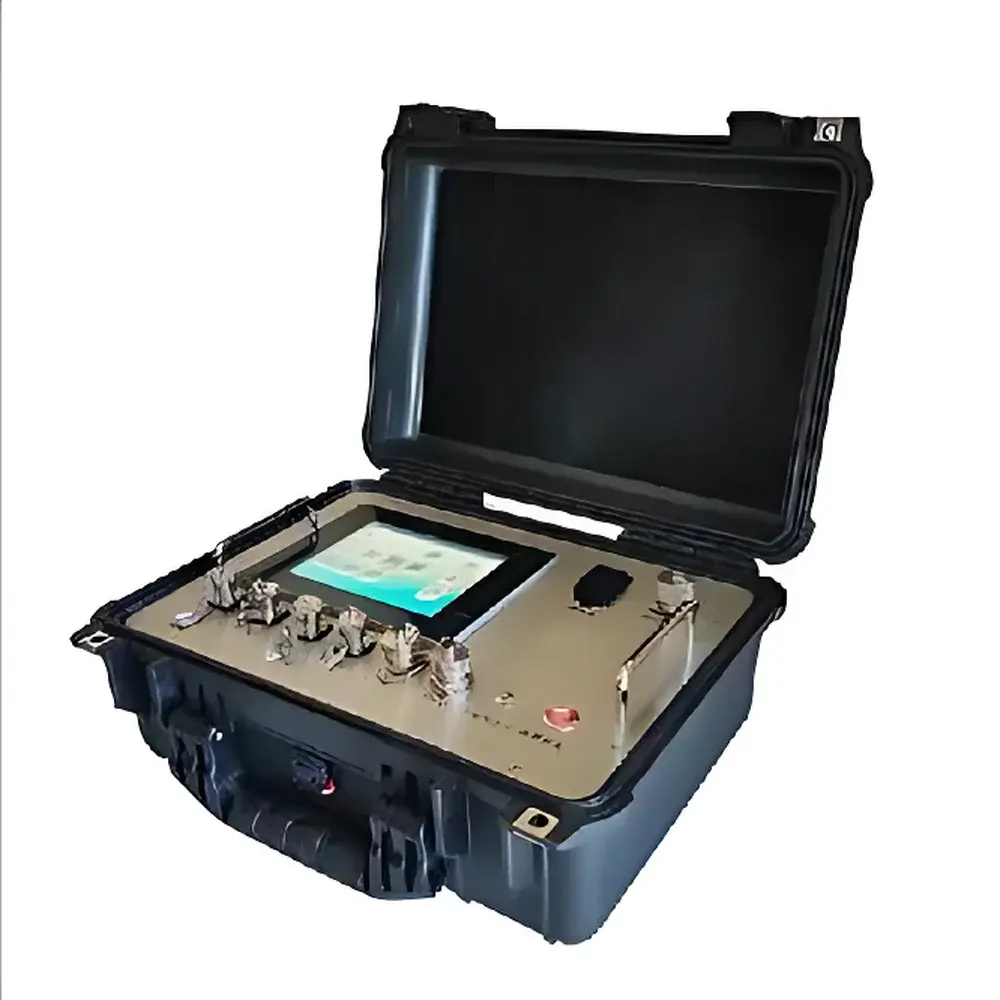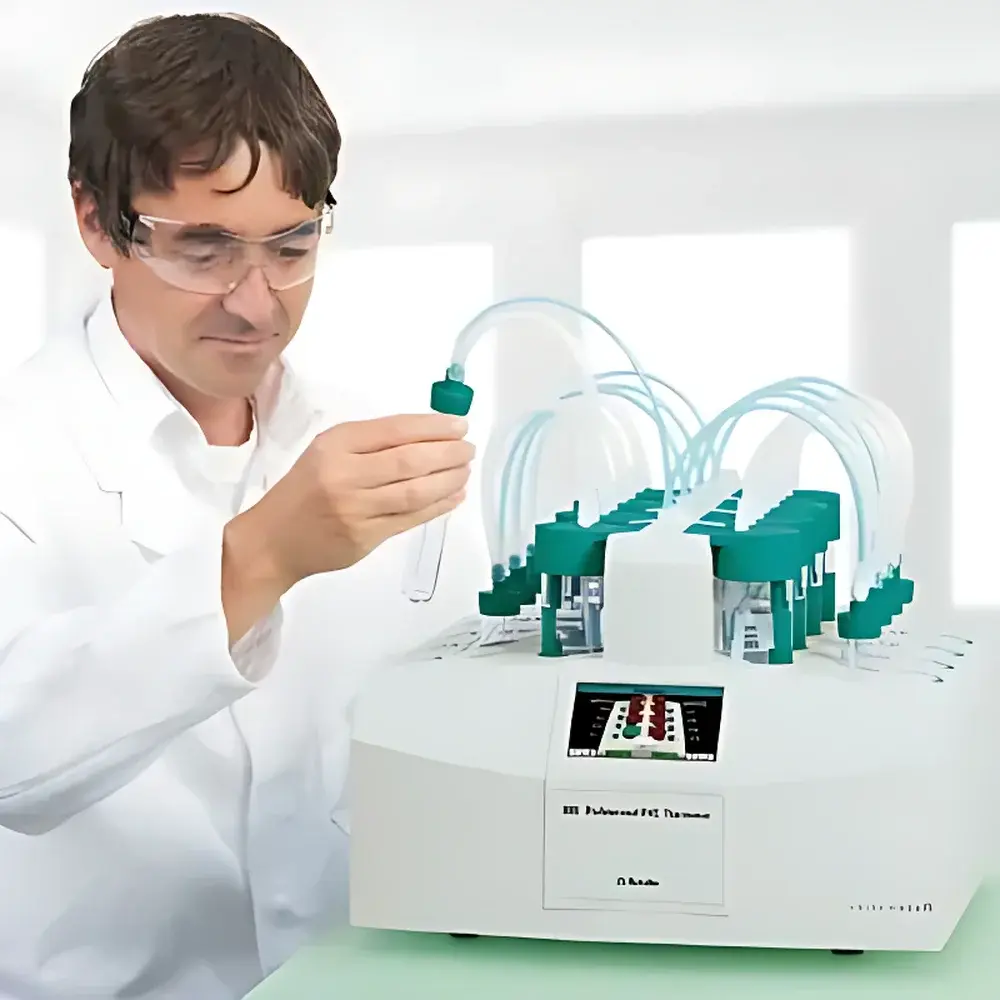
Metrohm 895 Professional PVC Thermal Stability Tester
| Brand | Metrohm |
|---|---|
| Origin | Switzerland |
| Manufacturer | Metrohm AG |
| Origin Category | Imported |
| Model | 895 Professional |
| Pricing | Upon Request |
| Heating Modules | 2 (4 positions per module, total 8 measurement positions) |
| Control Interface | PC-based StabNet software |
| Measurement Principle | Conductometric detection of HCl evolution during thermal decomposition |
| Sample Format | Disposable glass reaction tubes |
| Detection Method | Real-time conductivity monitoring in deionized water trap |
| Compliance Standards | DIN 53381-1, ISO 182-3 |
| GLP Support | Full audit trail, user access control, electronic signature readiness, automatic database backup |
| Max Instrument Network | Up to 4 units controlled by a single PC |
Overview
The Metrohm 895 Professional PVC Thermal Stability Tester is a dedicated, conductometric analytical system engineered for the precise and reproducible assessment of thermal stability in polyvinyl chloride (PVC) and other chlorine-containing polymers. It operates on the well-established principle of hydrochloric acid (HCl) evolution kinetics: when heated under inert nitrogen atmosphere, thermally unstable PVC undergoes dehydrochlorination, releasing gaseous HCl. This evolved HCl is swept by a continuous nitrogen stream into a deionized water trap—integrated as a robust, cup-lid-integrated conductometric cell—where its dissolution induces a measurable increase in solution conductivity. The instrument records conductivity vs. time profiles in real time, enabling quantification of thermal stability via the “stabilization time”: defined as the elapsed time required for conductivity to rise by 50 µS/cm from baseline (per DIN 53381-1 and ISO 182-3). This method is applicable across R&D, formulation screening, quality control, and regulatory stability testing of PVC resins, compounded compounds, and heat stabilizer packages.
Key Features
- Eight independent measurement positions organized across two thermally isolated heating modules (4 positions per module), each with individual mechanical start buttons for manual initiation
- Integrated color LCD display on the instrument front panel showing real-time status (idle, heating, measuring, error) for all eight positions
- PC-controlled operation via StabNet software—enabling full automation of temperature ramping, gas flow regulation, data acquisition, and result evaluation
- Disposable borosilicate glass reaction tubes eliminate cross-contamination and drastically reduce cleaning downtime and labor cost
- Cup-lid-integrated conductometric measurement cell with sealed electrode assembly ensures long-term stability, minimal drift, and high signal-to-noise ratio
- Modular architecture supports networked deployment: up to four 895 instruments can be synchronized and managed from a single StabNet workstation
Sample Compatibility & Compliance
The 895 system accommodates standard PVC powder samples (typically 0.5–2.0 g), granules, or thin films placed in disposable reaction tubes. It is equally suitable for evaluating organometallic stabilizers (e.g., Ca/Zn, Ba/Zn), lead-based systems (historical reference), and emerging non-heavy-metal alternatives. The methodology conforms strictly to DIN 53381-1 (determination of thermal stability of PVC by conductivity measurement) and ISO 182-3 (plastics — determination of thermal stability of PVC compounds — part 3: conductivity method). Instrument design and software functionality meet Good Laboratory Practice (GLP) requirements per OECD Principles and support FDA 21 CFR Part 11 compliance through role-based user management, electronic signatures, immutable audit trails, and automated database backups.
Software & Data Management
StabNet is a purpose-built, client-server database application providing comprehensive lifecycle management of thermal stability data. Its interface features intuitive workflow navigation, customizable method templates, and context-sensitive parameter validation. All raw conductivity curves, processed stabilization times, method metadata (temperature setpoint, N₂ flow rate, sample mass), and instrument configuration logs are stored in a relational SQL database. Advanced filtering, multi-criteria sorting, and statistical summary tools (mean, SD, CV%, trend analysis) enable rapid batch comparison and stability profiling. Data reprocessing is fully traceable: any recalculation triggers a new versioned entry linked to the original dataset and operator ID. Server-side deployment allows secure remote access, centralized administration, and integration into enterprise LIMS environments.
Applications
- Quantitative ranking of PVC resin grades based on inherent thermal lability
- Accelerated screening of heat stabilizer efficacy and synergistic combinations
- Quality assurance of incoming PVC compounds and masterbatches
- Process optimization of extrusion and calendering parameters via correlation with lab-scale stability data
- Regulatory documentation for REACH, RoHS, and food-contact compliance (e.g., EN 1186)
- Failure analysis of discolored or degraded PVC products in field return investigations
FAQ
What standards does the 895 system comply with?
DIN 53381-1 and ISO 182-3 are natively supported; method parameters and reporting formats align directly with these specifications.
Can stabilization time be redefined post-measurement?
Yes—StabNet allows retrospective adjustment of the conductivity threshold (e.g., 30 µS/cm or 100 µS/cm) and automatic recalculation of stabilization time with full versioned audit history.
Is calibration required before each run?
No routine calibration is needed; the conductometric cell is factory-characterized and drift-corrected via baseline subtraction. A daily verification using standardized KCl solutions is recommended for QA/QC.
How is data integrity ensured in regulated environments?
StabNet implements ALCOA+ principles: attributable, legible, contemporaneous, original, accurate, complete, consistent, enduring, and available—with electronic signatures, permission tiers, and encrypted database backups.
What maintenance is required for the heating modules?
Minimal: periodic visual inspection of heater blocks and tube holders; no consumables beyond disposable reaction tubes and deionized water.