
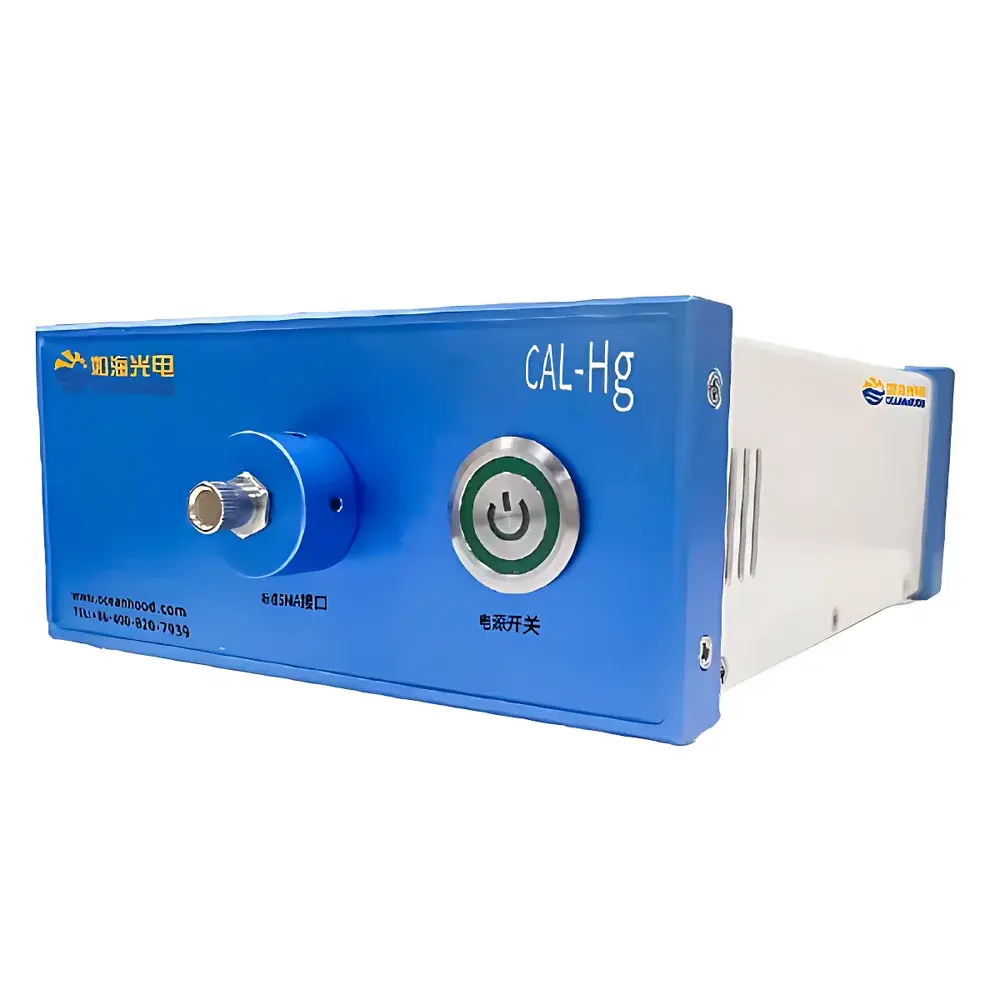
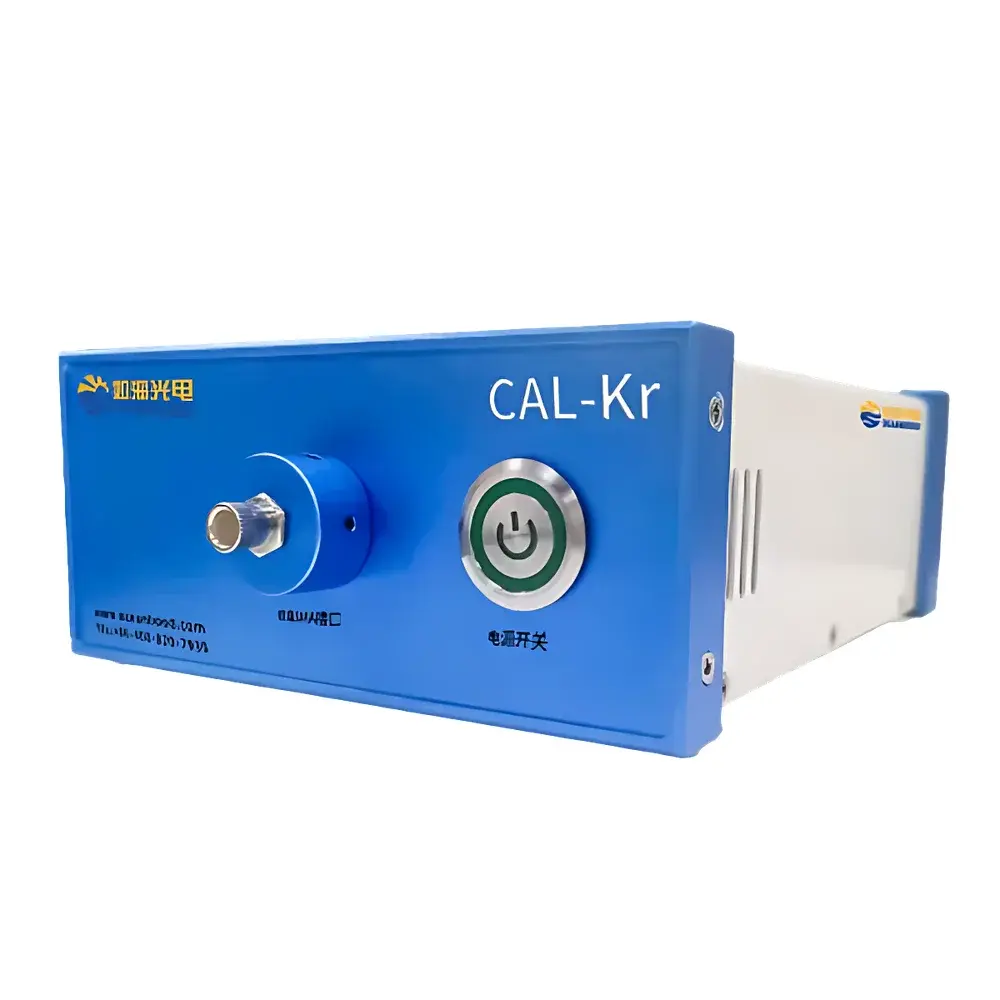
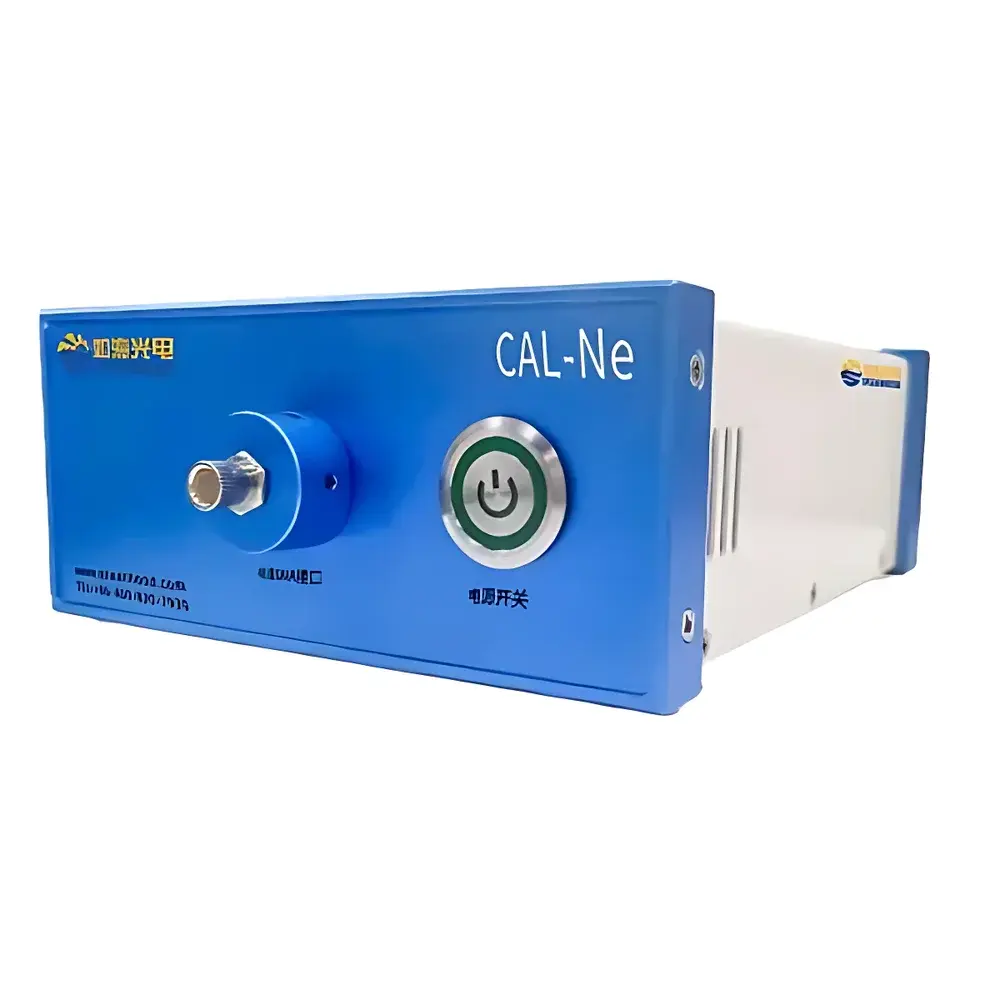
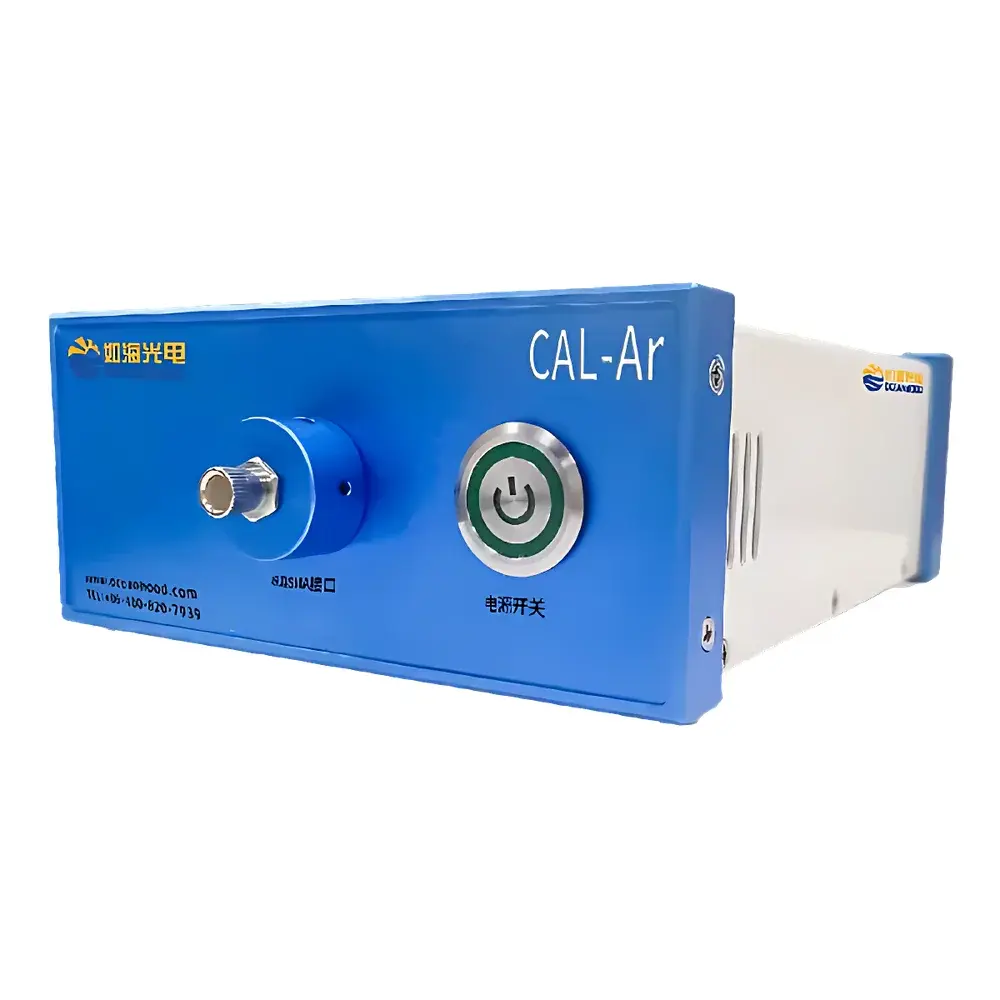
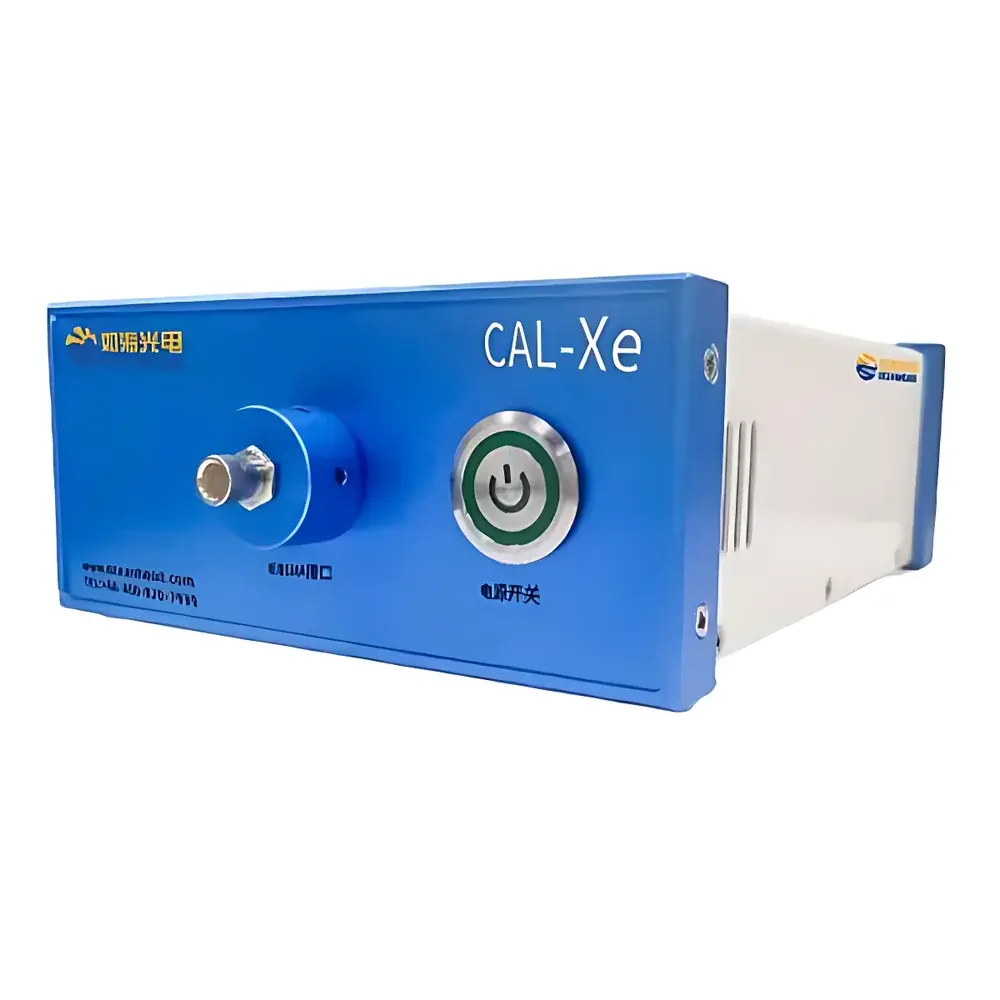
Oceanhood CAL Series Wavelength Calibration Light Sources
| [Brand | Oceanhood |
|---|---|
| Origin | Shanghai, China |
| Manufacturer Type | Original Equipment Manufacturer (OEM) & ODM |
| Product Line | CAL-Hg / CAL-Kr / CAL-Ne / CAL-Ar / CAL-Xe |
| Light Source Type | Gas Discharge Emission Lamps |
| Illumination Mode | Internal Illumination Configuration |
| Power Supply | 12 V DC |
| Warm-up Time | ~60 s |
| Typical Lifetime | 3500 h |
| Aperture Diameter | 3 mm |
| Dimensions (L×W×H) | 207 × 160 × 75 mm |
| Weight | 1.8 kg |
| Fiber Interface | Standard SMA 905] |
Overview
The Oceanhood CAL Series Wavelength Calibration Light Sources are precision-engineered gas discharge lamps designed for traceable, high-fidelity wavelength calibration of spectrometers across the ultraviolet to near-infrared (UV–NIR) spectral region (253–1984 nm). Unlike broadband or LED-based reference sources, these calibration tools rely on atomic emission physics—each lamp generates sharp, well-characterized spectral lines arising from electron transitions in excited neutral atoms (Hg, Kr, Ne, Ar, Xe), enabling absolute wavelength referencing with sub-pixel accuracy. The series comprises five discrete models—CAL-Hg, CAL-Kr, CAL-Ne, CAL-Ar, and CAL-Xe—each optimized for distinct spectral windows and line density. This modular architecture allows users to select a single lamp matching their instrument’s grating range or combine multiple units via optical switching or fiber multiplexing to cover extended or discontinuous bands. All units operate from a stable 12 V DC supply, feature rapid thermal stabilization (~60 s), and maintain long-term radiometric consistency essential for compliance-driven spectroscopic workflows.
Key Features
- Atomic emission-based calibration: Delivers narrow-linewidth spectral references traceable to NIST-maintained atomic transition databases.
- Five spectral variants: CAL-Hg (253–922 nm), CAL-Kr (427–893 nm), CAL-Ne (540–754 nm), CAL-Ar (696–1704 nm), and CAL-Xe (916–1984 nm)—enabling full UV–NIR coverage through strategic model selection or integration.
- High reproducibility: <±0.05 nm peak position repeatability under constant thermal and electrical conditions, verified per ISO/IEC 17025-accredited calibration protocols.
- Standardized optical interface: SMA 905 connector ensures plug-and-play compatibility with most commercial spectrometers, monochromators, and optical benches.
- Integrated mechanical design: Compact aluminum housing (207 × 160 × 75 mm), 1.8 kg mass, and engraved spectral line labels on front panel for rapid visual identification during setup.
- Robust operational lifetime: Rated for 3500 hours of continuous or intermittent operation under recommended current limits and ambient temperature control (15–30 °C).
Sample Compatibility & Compliance
The CAL Series is compatible with all fiber-coupled dispersive spectrometers—including CCD-, CMOS-, and InGaAs-based systems—as well as scanning monochromators and FTIR accessories requiring external wavelength validation. Each lamp complies with IEC 61000-6-3 (EMC emission limits) and meets RoHS Directive 2011/65/EU requirements. Emission line positions conform to internationally accepted atomic data compilations: NIST Atomic Spectra Database (ASD) v6.2 for Hg, Kr, Ne, Ar, and Xe transitions; line intensities referenced to relative radiance standards per ISO 15312-2:2018 (Optics and photonics — Spectroradiometry — Part 2: Calibration of spectral irradiance and radiance measurement systems). The series supports GLP/GMP-aligned laboratory practices through documented warm-up stability profiles, batch-specific line lists, and optional factory calibration certificates traceable to national metrology institutes.
Software & Data Management
While the CAL Series operates as a hardware-only reference standard, it integrates seamlessly into automated calibration routines via third-party spectroscopy platforms (e.g., OceanInsight OceanView, Avantes ASE, Hamamatsu HCPL, and custom LabVIEW or Python-based acquisition software). Users may import pre-validated line tables—including exact vacuum-to-air corrected wavelengths, FWHM values, and relative intensities—directly into spectral fitting algorithms for polynomial or spline-based wavelength mapping. All line data are provided in machine-readable CSV and XML formats compliant with ASTM E275-22 (Standard Practice for Calibration of Spectrophotometers) and USP <857> (Spectrophotometric Absorbance Measurements). Audit trails for calibration events—including timestamped lamp usage logs and environmental monitoring data—can be maintained within LIMS environments supporting 21 CFR Part 11 electronic record integrity requirements.
Applications
- Factory and field calibration of UV–Vis–NIR spectrophotometers, portable Raman analyzers, and hyperspectral imaging systems.
- Validation of grating alignment and detector pixel registration in OEM spectrometer modules.
- Reference standard for inter-laboratory comparison studies under ISO/IEC 17043 proficiency testing schemes.
- Wavelength drift monitoring in long-term environmental sensing deployments (e.g., atmospheric DOAS, water quality monitoring networks).
- Teaching laboratories: Demonstrating atomic emission theory, spectral resolution limits, and calibration uncertainty propagation.
FAQ
What is the recommended warm-up time before initiating calibration?
A minimum of 60 seconds is required to achieve thermal equilibrium and stabilize line intensities and centroid positions. For highest accuracy, allow 120 seconds under ambient temperatures below 20 °C.
Can multiple CAL lamps be used simultaneously?
Yes—via external fiber-optic combiners or motorized filter wheels. However, sequential activation is preferred to avoid cross-contamination of line spectra and ensure unambiguous peak assignment.
Are calibration certificates included with purchase?
Standard units ship with a manufacturer’s test report listing measured line positions against NIST ASD values. Traceable calibration certificates (ISO/IEC 17025) are available as an optional service.
Is the CAL series suitable for vacuum UV applications?
No—the lamps are not designed for operation below 190 nm due to quartz envelope absorption and lack of deuterium or synchrotron-compatible output characteristics.
How is lamp lifetime defined and monitored?
Lifetime is defined as the operating duration until integrated line intensity drops by ≥20% at primary reference wavelengths (e.g., Hg 253.65 nm, Ar 866.79 nm), measured under nominal drive current and ambient cooling conditions.



