
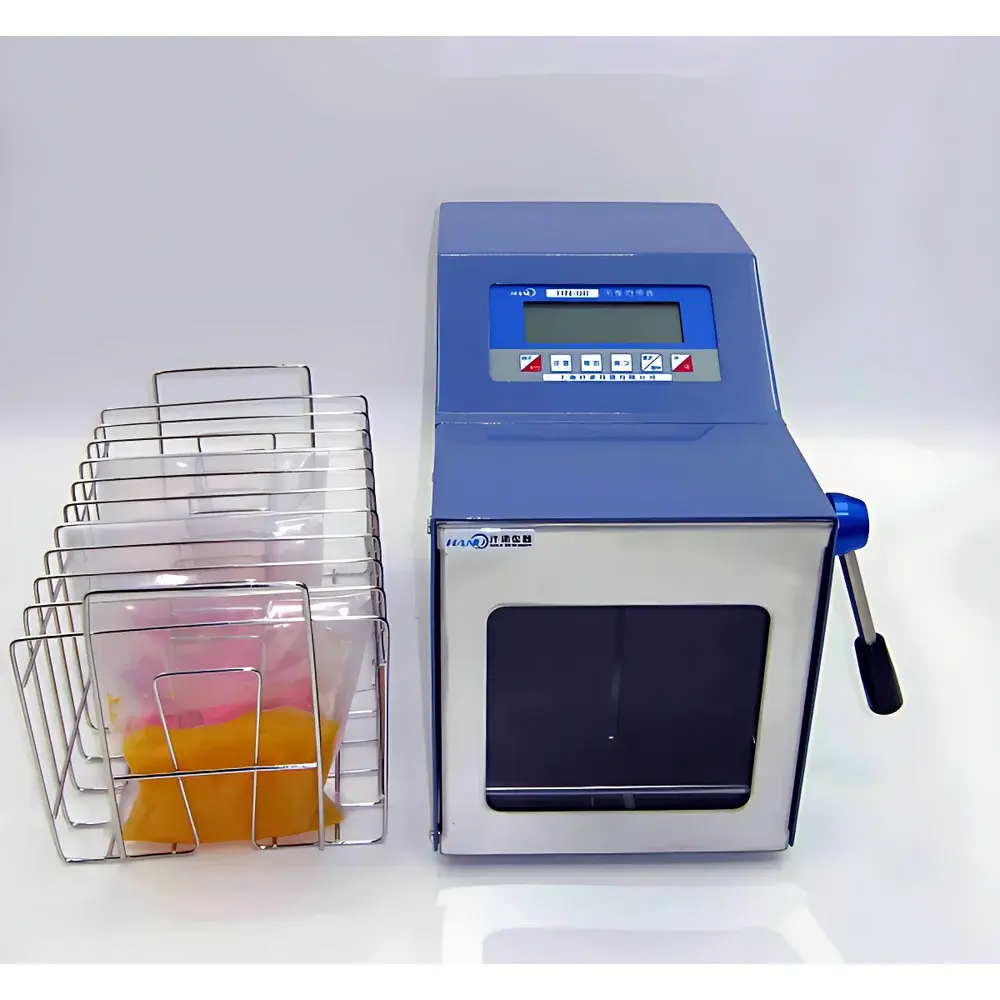
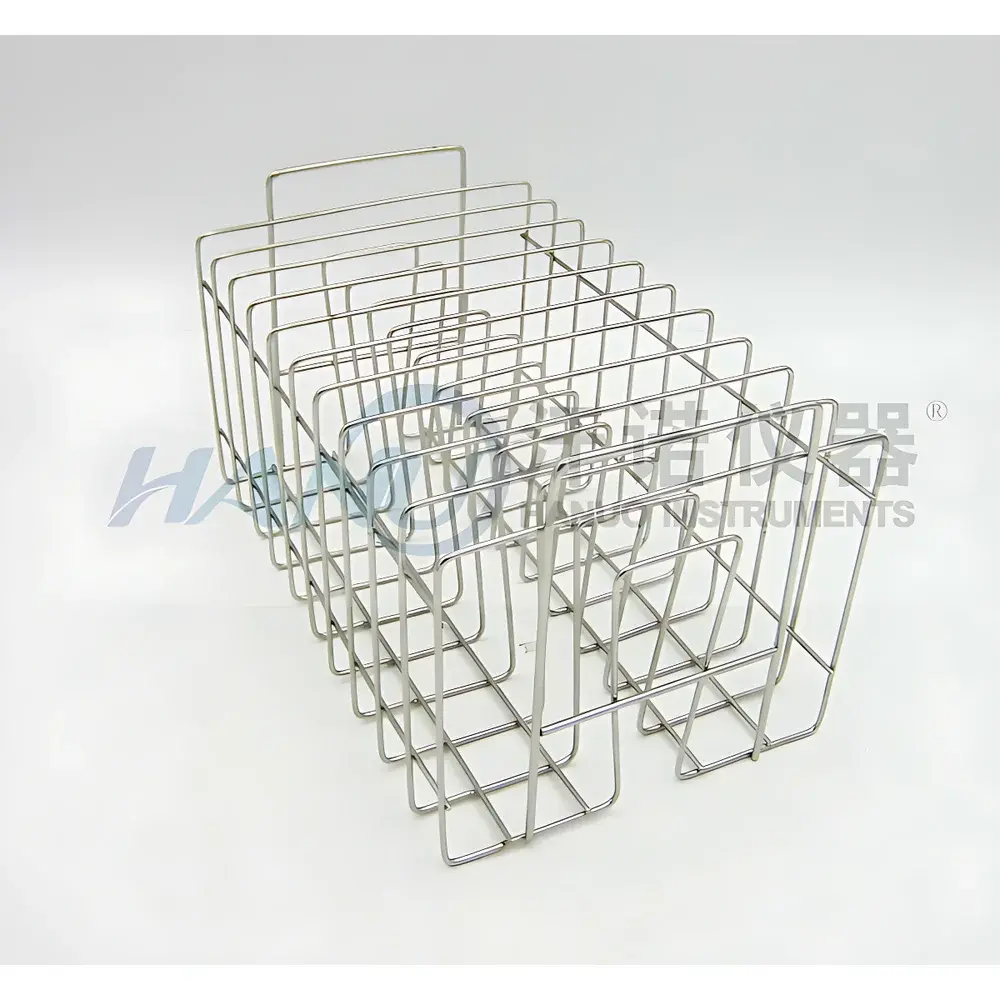
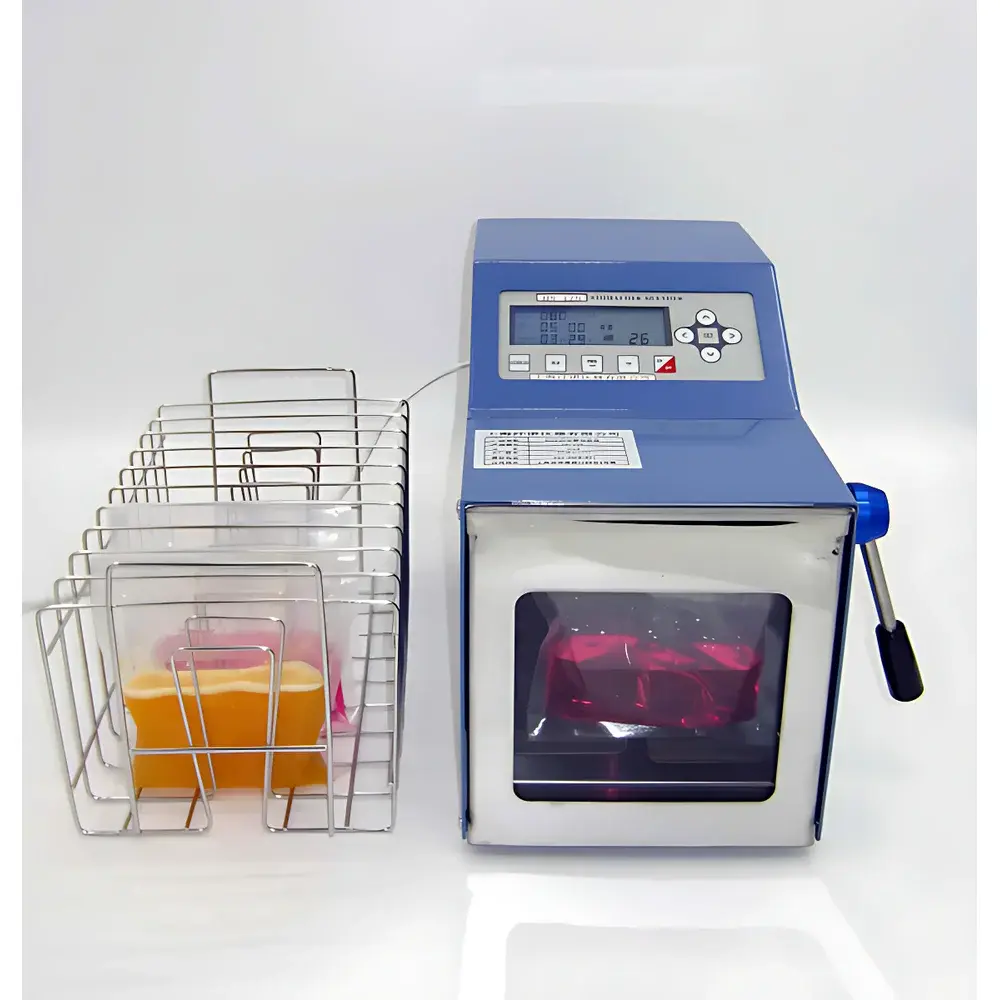
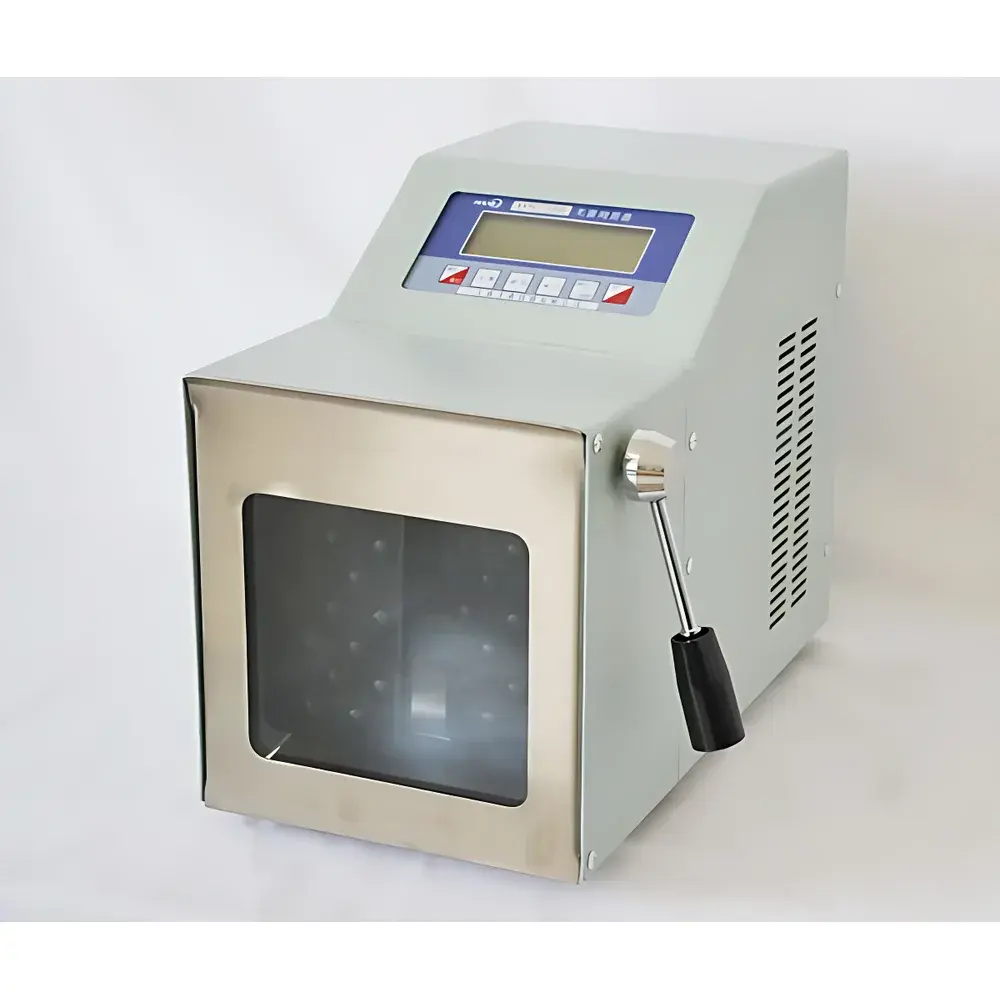
Food-Grade Stomacher Homogenizer HN-10N by Hanuo
| Brand | Hanuo |
|---|---|
| Model | HN-10N |
| Type | Paddle-beater (Stomacher-style) Homogenizer |
| Origin | Shanghai, China |
| Processing Volume | 3–400 mL |
| Dimensions (W×D×H) | 380 × 220 × 330 mm |
| Power | 300 W |
| Beating Frequency | 3–12 beats/sec |
| Beating Time Range | 0.1–99 min |
| Adjustable Beating Gap | 0–50 mm |
| Sterile Bag Size | 17 × 30 cm |
| UV Disinfection Lamp | 253.7 nm, 5-min cycle |
| Programmable Methods | 10 stored multi-step protocols |
| Display | Backlit LCD |
| Chamber Material | Stainless Steel (AISI 304) |
| Door | Full-opening, transparent polycarbonate viewport |
| Compliance | Designed for ISO 6887-1, ISO 7218, FDA Bacteriological Analytical Manual (BAM), and USP <61>/<62> microbiological testing workflows |
Overview
The Hanuo HN-10N Food-Grade Stomacher Homogenizer is an engineered solution for standardized, reproducible sample homogenization in microbiological laboratories conducting food safety, pharmaceutical QC, and clinical diagnostics testing. Based on the internationally recognized stomacher principle—mechanical disruption via controlled reciprocating paddle motion within a sealed sterile bag—the HN-10N delivers gentle yet effective dispersion of microorganisms from solid or semi-solid matrices without thermal denaturation, enzymatic degradation, or cross-contamination. Its design adheres to core principles of ISO/IEC 17025-compliant sample preparation: physical separation of sample from instrument surfaces, elimination of carryover risk, and maintenance of microbial viability throughout processing. Unlike rotor-stator or ultrasonic homogenizers, the stomacher method preserves cell integrity while maximizing recovery efficiency—critical for quantitative colony-forming unit (CFU) enumeration in regulatory microbiology.
Key Features
- Stainless steel (AISI 304) homogenization chamber with full-opening front door and transparent polycarbonate viewport for real-time process monitoring and rapid visual verification of bag integrity.
- Adjustable beating gap (0–50 mm) and programmable frequency (3–12 beats/sec) enable optimization across diverse sample types—from soft cheese and leafy greens to frozen meat and dried spices—without mechanical shearing or localized heating.
- Backlit LCD interface supports intuitive navigation, real-time display of actual beat count, and storage of up to 10 multi-parameter protocols—including time, speed, pause intervals, and disinfection cycles.
- Integrated 253.7 nm UV-C lamp provides automated pre-cycle chamber disinfection (5-minute exposure), reducing bioburden between runs and supporting GLP-aligned workflow hygiene.
- Compatible with standard 17 × 30 cm sterile filter bags (polyethylene with cellulose acetate membrane), ensuring particulate retention while allowing free passage of suspended microorganisms into the eluent.
- No direct contact between sample and instrument surfaces; post-run cleaning limited to external wipe-down unless bag leakage occurs—minimizing downtime and technician exposure risk.
Sample Compatibility & Compliance
The HN-10N accommodates heterogeneous samples ranging from 3 mL liquid suspensions to 400 mL composite food matrices—including raw poultry, dairy products, ready-to-eat meals, herbal powders, and cosmetic emulsions. Its validated performance aligns with ISO 6887-1:2017 (preparation of microbiological test samples), ISO 7218:2017 (general requirements for microbiological examinations), and FDA BAM Chapter 3 (microbiological analysis of foods). The system supports AOAC Official Method 990.12 for aerobic plate count and is routinely employed in laboratories undergoing ISO/IEC 17025 accreditation audits. All operational parameters—including time, speed, and UV exposure—are digitally recorded and exportable, facilitating traceability required under 21 CFR Part 11 when integrated with compliant LIMS environments.
Software & Data Management
While the HN-10N operates as a standalone benchtop instrument, its parameter logging architecture enables integration into laboratory-wide data governance frameworks. Each run logs timestamp, selected protocol ID, actual beat count, duration, and UV activation status to internal non-volatile memory. Export functionality (via optional RS-232 or USB interface) permits transfer of audit-ready CSV files for inclusion in electronic lab notebooks (ELN) or quality management systems (QMS). Protocol locking and user-level access control (via optional password module) support role-based operation in regulated settings, satisfying ALCOA+ data integrity principles (Attributable, Legible, Contemporaneous, Original, Accurate, Complete, Consistent, Enduring, Available).
Applications
- Preparation of homogenates for total viable count (TVC), coliforms, Salmonella, Listeria monocytogenes, and E. coli testing per ISO 11290 and ISO 16649 standards.
- Microbial recovery from low-moisture foods (e.g., nuts, cereals, powdered milk) where conventional blending induces clumping or static charge interference.
- Homogenization of tissue biopsies and swab eluates in veterinary and clinical microbiology labs performing culture-based pathogen isolation.
- QC release testing of topical pharmaceuticals and cosmetics per EP 5.1.4 and USP , where particle-free suspension is essential for membrane filtration and pour-plate methods.
- Environmental monitoring of food contact surfaces using sponge-stick or gauze-based sampling followed by stomacher-assisted elution.
FAQ
What sterile bags are compatible with the HN-10N?
Standard 17 × 30 cm polyethylene sterile filter bags with 100 µm or 200 µm pore-size cellulose acetate membranes are recommended. Custom bag dimensions may be accommodated upon validation.
Does the HN-10N meet FDA or EU regulatory requirements for food microbiology?
Yes—the stomacher methodology is explicitly referenced in FDA BAM, ISO 6887-1, and EC Regulation (EC) No 2073/2005 Annex I, and the instrument’s design supports documented compliance with ISO/IEC 17025 clause 7.2.2 (sample handling).
Can the UV disinfection cycle replace chemical decontamination?
The 253.7 nm UV-C lamp reduces surface bioburden by ≥3-log for common environmental isolates but does not substitute for validated chemical wipe-down procedures following spills or high-risk sample processing.
Is calibration required, and how often?
No routine calibration is mandated; however, periodic verification of beat frequency accuracy (±0.2 beats/sec) and timer precision (±0.5 sec over 60 sec) is recommended every 6 months per internal SOP or accredited lab quality plan.
What maintenance is needed beyond daily cleaning?
Annual inspection of drive belt tension, paddle alignment, and UV lamp intensity (using calibrated radiometer) ensures long-term repeatability. Service logs must be retained per ISO/IEC 17025 clause 6.4.10.



