
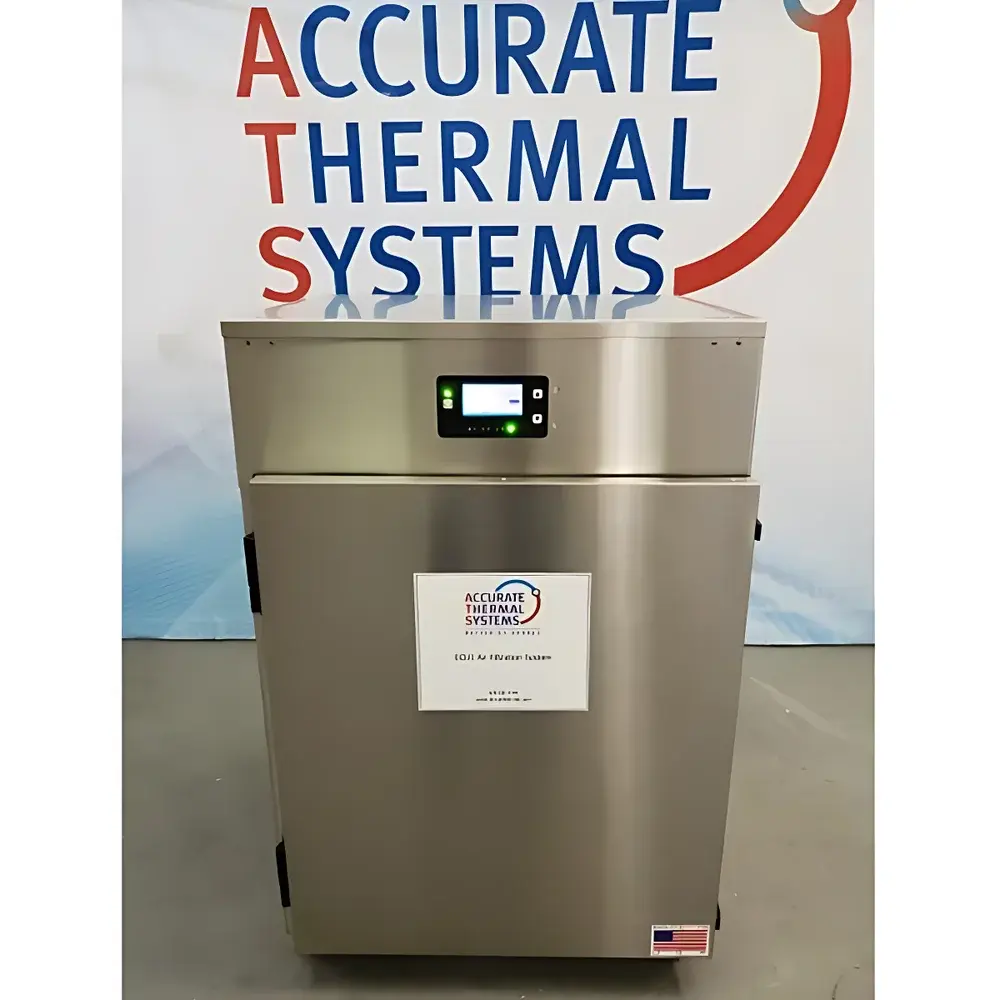
Accurate Thermal Systems ECU1 High-Efficiency Particulate and VOC Air Filtration Unit
| Brand | Accurate Thermal Systems |
|---|---|
| Origin | USA |
| Model | ECU1 |
| Instrument Type | Filter-Based Air Purification System |
| Dimensions (W×D×H) | 23 in × 23 in × 35.5 in |
| Fan Performance | 210 CFM @ 19" w.c. |
| Noise Level | 59 dBA (at full speed) |
| Power Input | 120/240 V AC, 50/60 Hz, 15 A (120 V) or 8 A (240 V) |
| Pre-Filter Efficiency | 99% @ 1 µm |
| HEPA Filter Efficiency | 99.97% @ 0.3 µm |
| Activated Carbon Capacity | Two 30-lb modules |
| VOC Sensor | Calibrated electronic sensor with real-time display feedback |
| Remote Control Interface | 24 V DC start/stop |
| Weight (incl. filters) | 210 lbs |
Overview
The Accurate Thermal Systems ECU1 High-Efficiency Particulate and VOC Air Filtration Unit is an engineered solution for source-capture air purification in laboratory, R&D, and light industrial environments. Designed to address moderate-intensity aerosol and gaseous emissions—such as those generated during polymer extrusion, injection molding, thermal processing, and chemical handling—the ECU1 integrates mechanical filtration, high-efficiency particulate retention, and broad-spectrum adsorption into a compact, self-contained platform. Its operational principle relies on controlled laminar airflow drawn through a three-stage filtration architecture: a high-capacity pre-filter removes coarse particulates; a certified HEPA filter captures submicron aerosols with ≥99.97% efficiency at 0.3 µm; and dual large-mass activated carbon modules adsorb volatile organic compounds (VOCs), odors, and reactive gases. Unlike passive ambient air cleaners, the ECU1 functions as an active extraction system, minimizing operator exposure and preventing cross-contamination by capturing contaminants at the point of generation.
Key Features
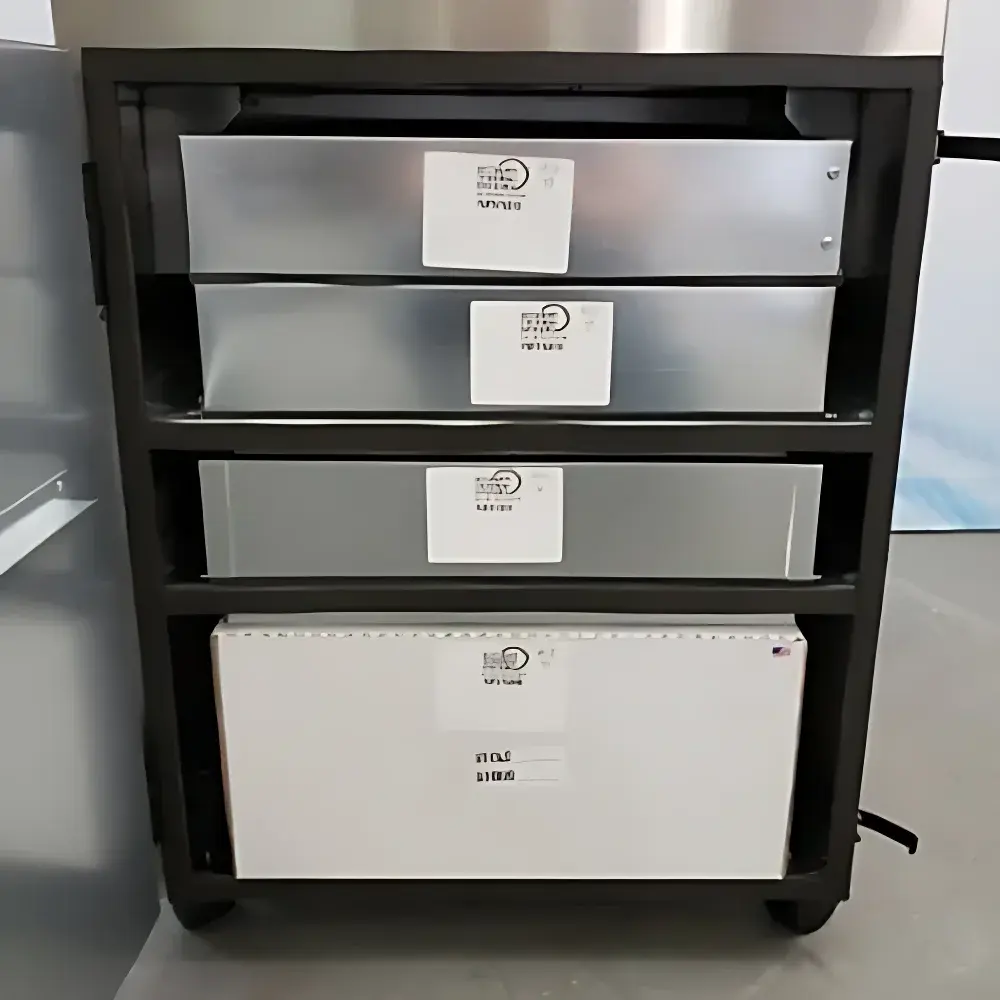
- Three-stage filtration architecture: Pre-filter (99% @ 1 µm), HEPA filter (99.97% @ 0.3 µm), and dual 30-lb activated carbon modules for comprehensive VOC and odor control.
- Integrated centrifugal fan with brushless DC motor delivering 210 CFM at 19 inches water column static pressure—optimized for consistent performance across variable duct resistance.
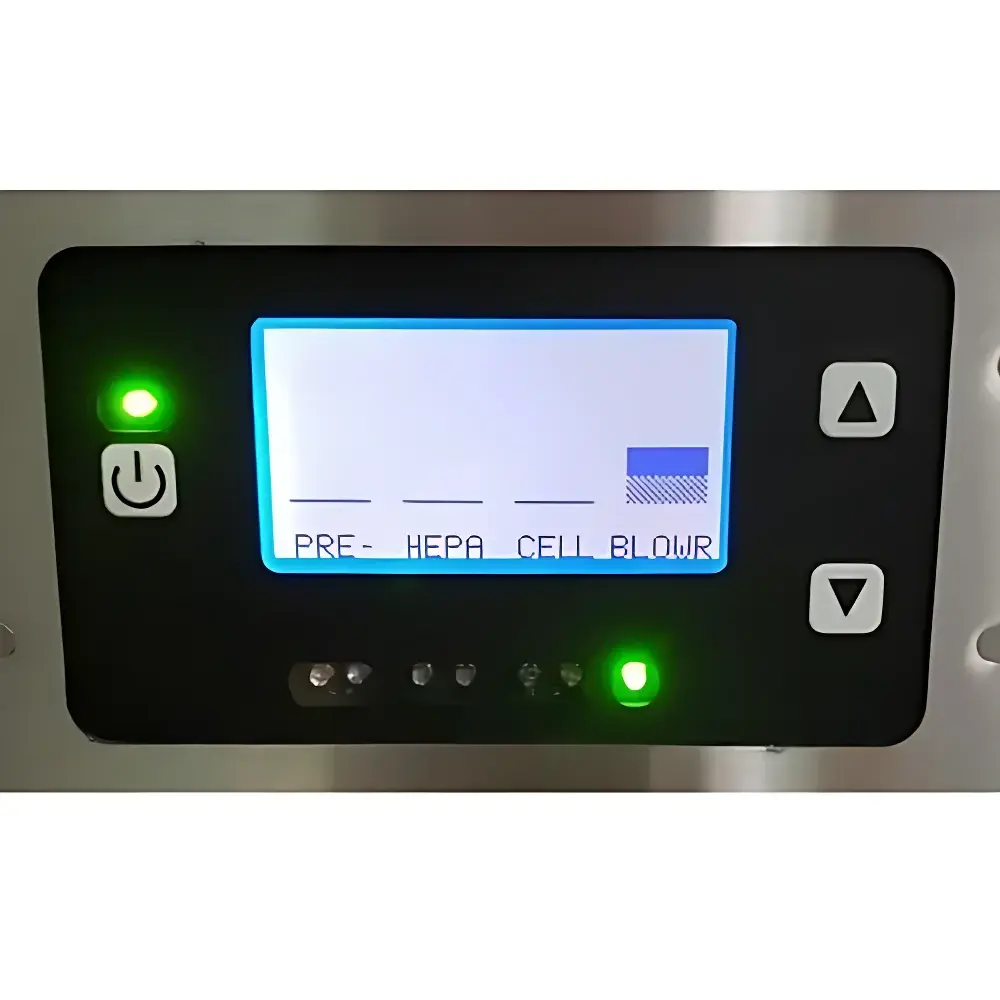
- Intuitive graphical LCD display with real-time status indicators for each filter stage and calibrated VOC sensor output, enabling data-informed maintenance scheduling.
- Four-step electronic fan speed control allows dynamic adjustment of airflow volume to match process emission profiles, material volatility, and hood configuration.
- Stainless steel cabinet with acoustic damping structure reduces operational noise to ≤59 dBA (measured per ANSI S1.13-2020 at 1 m), supporting quiet laboratory environments.
- Front-access service panel enables rapid, tool-free filter replacement without disassembly; all filter media are industry-standard dimensions and compatible with ATS-recommended replacement part numbers (FA540B, FA500, FA501D).
- 24 V DC remote start/stop interface supports integration into facility-wide safety interlocks or programmable logic controller (PLC) systems.
Sample Compatibility & Compliance
The ECU1 is validated for continuous-duty operation in environments generating thermally induced fumes, pyrolysis byproducts, plasticizer emissions, and low-to-moderate concentration VOC streams (e.g., acetone, ethanol, toluene, formaldehyde). It complies with OSHA general ventilation guidelines for local exhaust systems (29 CFR 1910.142) and aligns with AIHA RP-1000 recommendations for source capture design. While not certified as a medical device or explosion-proof unit, its stainless steel construction, non-sparking fan assembly, and absence of internal ignition sources make it suitable for Class I, Division 2 hazardous locations when installed per NEC Article 500. The system meets UL 507 (fan safety) and CSA C22.2 No. 113 standards. Filter media conform to EN 1822-1:2019 (HEPA classification) and ASTM D5212-17 (activated carbon testing protocols). Documentation includes traceable calibration certificates for the onboard VOC sensor (NIST-traceable reference gas validation).
Software & Data Management
The ECU1 operates without proprietary software or network dependency. All monitoring and control functions are managed via its embedded microcontroller and graphical LCD interface. The VOC sensor provides analog voltage output (0–10 VDC) corresponding to real-time gas concentration trends, configurable for external data logging via third-party DAQ systems. The display logs cumulative runtime hours per filter stage and stores up to 30 days of sensor trend history (timestamped at 5-minute intervals). Audit-ready event logs—including filter change timestamps, fan speed adjustments, and sensor calibration events—are retained in non-volatile memory and accessible via USB export (FAT32-formatted drive). The system supports GLP-compliant recordkeeping: all logged entries include operator ID field (manual entry), date/time stamp, and digital signature verification upon critical action confirmation.
Applications
- Polymer processing labs: Capture of thermal degradation fumes during extrusion, compounding, and hot-melt adhesive application.
- Materials characterization suites: Mitigation of outgassing from heated-stage SEM/TEM sample preparation or thermal gravimetric analysis (TGA) vent streams.
- Coating and curing stations: Removal of solvent vapors from UV-curable resins, epoxy hardeners, and powder coating overspray.
- Electronics prototyping areas: Extraction of soldering flux fumes and rosin-based VOCs during PCB rework.
- Pharmaceutical development labs: Localized control of excipient dust and low-concentration residual solvents during lyophilization or granulation trials.
- Educational engineering facilities: Safe demonstration of polymer processing techniques under ANSI Z9.2-compliant ventilation practices.
FAQ
What filter replacement intervals are recommended?
Filter life depends on contaminant load and duty cycle. Under typical lab use (8 hrs/day, moderate emissions), pre-filters last 3–6 months, HEPA filters 12–18 months, and carbon modules 6–12 months. The display’s algorithm estimates remaining service life based on cumulative airflow and VOC exposure history.
Can the ECU1 be ducted to an exterior exhaust system?
Yes. The unit features a 4-inch OD exhaust port rated for continuous ducted operation. Static pressure loss must remain within the fan’s 19-inch w.c. capability; consult ATS Application Engineering for duct sizing guidance.
Is the VOC sensor field-calibratable?
Yes. Calibration is performed using certified 100 ppm isobutylene standard gas per ASTM D6196-17. Full procedure and calibration certificate templates are included in the operator manual.
Does the system meet FDA 21 CFR Part 11 requirements?
The ECU1 supports Part 11 compliance through its audit trail functionality, electronic signatures, and secure data export—but requires integration with a validated LIMS or ELN platform for full regulatory enforcement.
What electrical infrastructure is required for installation?
A dedicated 15 A circuit (120 V) or 8 A circuit (240 V), grounded, single-phase supply meeting NEC Article 430. The unit includes a 7.5-ft, 14 AWG SJT cord with NEMA 5-15P (120 V) or NEMA 6-15P (240 V) plug.



