
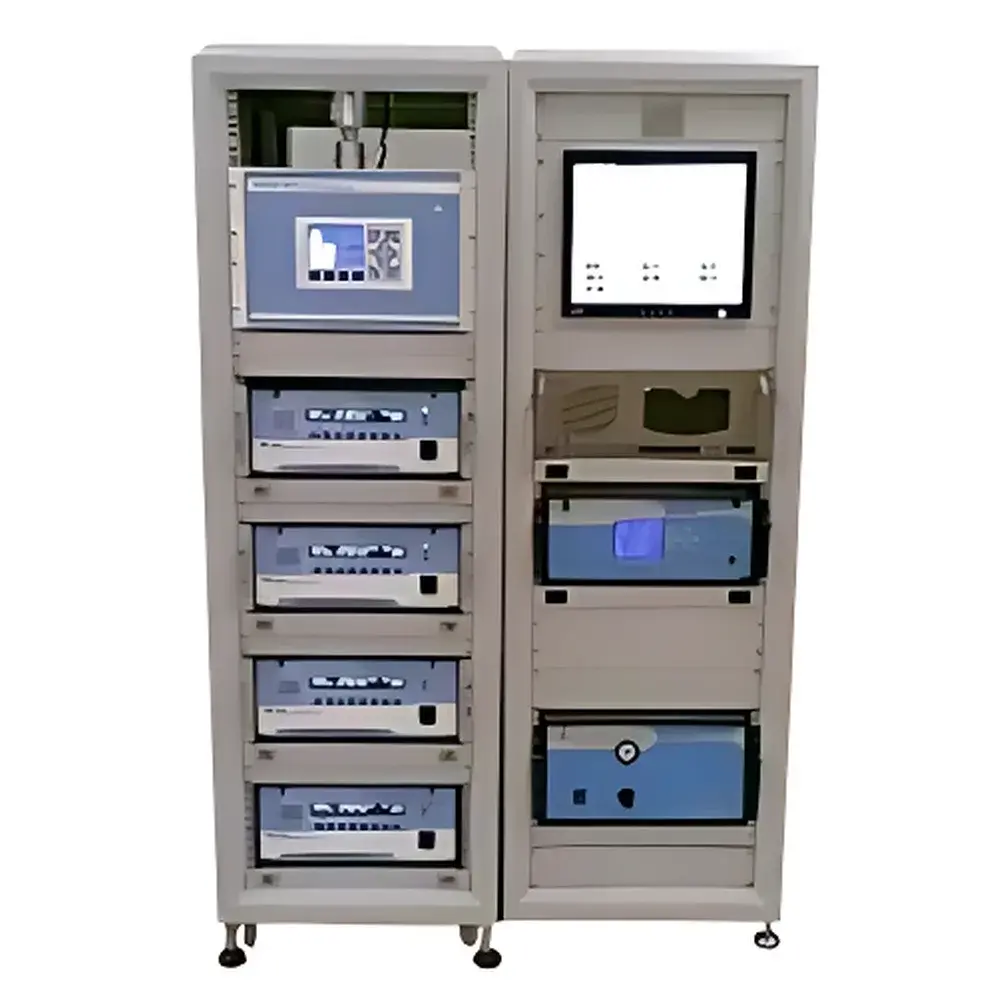
Focuslight AMMS-100 Atmospheric Particulate Matter and Heavy Metal Monitor
| Origin | Zhejiang, China |
|---|---|
| Manufacturer Type | Authorized Distributor |
| Model | AMMS-100 |
| Pricing | Available Upon Request |
Overview
The Focuslight AMMS-100 is an integrated atmospheric particulate matter and trace heavy metal monitoring system engineered for continuous, real-time measurement of ambient air quality. It employs dual-mode detection architecture: (1) beta-ray absorption combined with tapered element oscillating microbalance (TEOM) or equivalent gravimetric reference methodology for PM2.5 and PM10 mass concentration quantification; and (2) X-ray fluorescence (XRF) spectroscopy for simultaneous, non-destructive elemental analysis of airborne metals—including Pb, Cd, As, Hg, Cr, Ni, Cu, Zn, Mn, and Fe—at sub-nanogram per cubic meter detection limits. Designed for fixed-site deployment in urban background stations, industrial fence-line monitoring points, and regional air quality networks, the AMMS-100 complies with the fundamental physical principles outlined in ISO 12103-1 (test dusts), EN 12341 (PM measurement), and EPA Method IO-3.1 (XRF-based metal speciation). Its modular hardware platform supports long-term unattended operation under varying climatic conditions, with temperature and humidity compensation algorithms embedded in firmware to ensure data stability across seasonal transitions.
Key Features
- Simultaneous dual-parameter acquisition: co-registered PM mass loading and elemental composition per 1-hour averaging interval
- Integrated meteorological sensor suite (wind speed/direction, temperature, relative humidity, pressure) for source apportionment correlation
- Automated filter tape advancement with programmable sampling cycles (1–24 hours) and on-board filter storage for offline ICP-MS validation
- Real-time spectral deconvolution engine for XRF peak identification using fundamental parameter (FP) modeling
- Ruggedized enclosure rated IP55 for outdoor installation; operating temperature range: −20 °C to +50 °C
- Remote diagnostics via embedded LTE/4G module with TLS 1.2 encrypted data transmission
- Compliance-ready audit trail: timestamped calibration logs, maintenance records, and raw spectral files retained for ≥36 months
Sample Compatibility & Compliance
The AMMS-100 is validated for use with ambient air matrices containing total suspended particulates (TSP) up to 500 µg/m³, with no interference observed from high-humidity environments (<95% RH, non-condensing) or moderate ozone concentrations (<200 ppb). Filter substrates are certified quartz fiber (QFF) or polytetrafluoroethylene (PTFE)-coated glass fiber, meeting EPA TO-13A specifications. Data outputs conform to China’s HJ 653–2013 (ambient PM monitoring) and HJ 93–2013 (instrument performance requirements), while metadata structure aligns with WMO GAW and EEA AirBase exchange formats. The system supports GLP-compliant workflows through user-accessible electronic signatures, role-based permissions, and 21 CFR Part 11–compatible audit logging when deployed in regulated research or compliance verification settings.
Software & Data Management
The AMMS-100 operates with Focuslight AirSuite™ v4.2 — a web-native platform accessible via secure HTTPS. It provides real-time dashboard visualization of time-series PM and metal concentrations, scatter plots for bivariate correlation (e.g., Zn vs. Pb), and automated exceedance alerts based on GB 3095–2012 or WHO AQG thresholds. Raw XRF spectra and beta-attenuation waveforms are stored in HDF5 format with embedded calibration coefficients. Export options include CSV (for Excel/Python ingestion), NetCDF (for atmospheric modeling integration), and XML (for national reporting portals such as CNEMC). All software updates undergo FIPS 140-2 validated cryptographic signing, and database backups adhere to ISO/IEC 27001 encryption-at-rest protocols.
Applications
- Long-term trend analysis of anthropogenic metal emissions near smelters, coal-fired power plants, and waste incinerators
- Source-receptor modeling in regional haze studies, supporting receptor modeling tools such as PMF and CMB
- Validation of satellite-derived AOD (aerosol optical depth) products through ground-truth elemental ratio constraints
- Health impact assessment studies requiring speciated exposure metrics (e.g., bioavailable Fe vs. total Fe)
- Regulatory compliance monitoring under China’s “Blue Sky Defense War” initiative and provincial emission trading schemes
- Multi-instrument network synchronization in 3D atmospheric profiling campaigns using UAV-borne or tower-mounted complementary sensors
FAQ
What regulatory standards does the AMMS-100 meet for official air quality reporting?
It satisfies technical requirements specified in HJ 653–2013, HJ 93–2013, and JJG 846–2015 for automatic PM and heavy metal monitoring instruments used in national ambient air quality monitoring networks.
Can the system be integrated into existing air quality information platforms (e.g., provincial ECOS systems)?
Yes — AirSuite™ supports standardized API endpoints (RESTful JSON) and legacy protocol emulation (MODBUS TCP, DNP3) for seamless interoperability with provincial and municipal environmental data centers.
Is laboratory-based validation of field-collected filters supported?
Each filter cassette includes a unique QR-coded identifier linked to instrument metadata; archived filters are compatible with standard ICP-MS, SEM-EDS, and ion chromatography workflows.
What maintenance intervals are recommended for optimal performance?
Beta source replacement every 24 months; XRF detector purge gas (He or P10) cylinder replenishment every 6 months; biannual cleaning of inlet cyclones and optical windows per HJ 93–2013 Annex B.







