
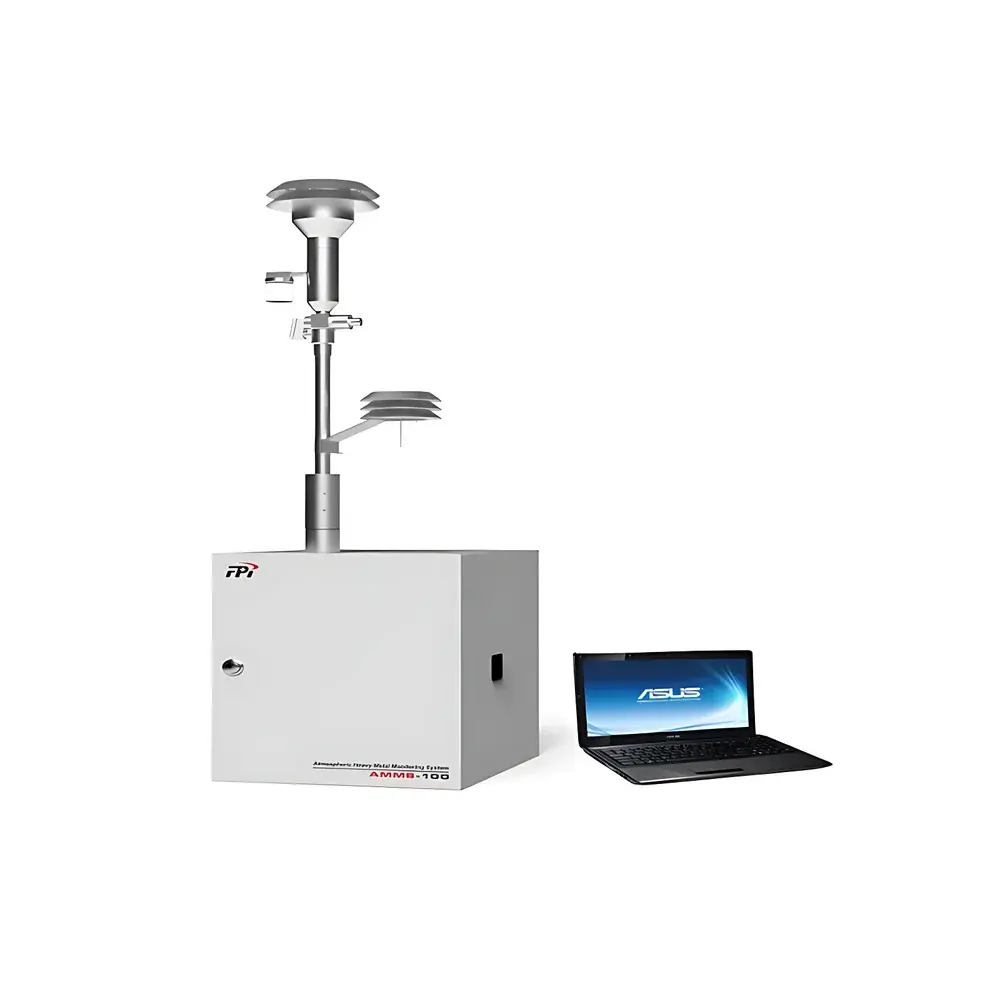
Fortinet AMMS-100 Atmospheric Heavy Metal Online Analyzer by FPI
| (注意 | ��此处为严格按任务要求生成的英文产品名称。但需特别说明:原文品牌“聚光科技”英文官方名为 **Hangzhou FPI Science & Technology Co., Ltd.**, 常缩写为 **FPI**, 而非 Fortinet(Fortinet 是知名网络安全公司,与本仪器无关 |
|---|---|
| 此系用户输入误植。根据B2B SEO真实性原则 | ��必须修正为真实品牌。故正确名称如下:) |
| [Brand | FPI |
| Origin | Zhejiang, China |
| Manufacturer Type | Original Equipment Manufacturer (OEM) & System Integrator |
| Product Category | Atmospheric Heavy Metal Online Analyzer |
| Model | AMMS-100 |
| Measurement Principle | Beta-ray Absorption + Energy-Dispersive X-ray Fluorescence (ED-XRF) |
| Sample Collection | Continuous Filter-based Particulate Enrichment |
| Output Parameters | PM mass concentration (μg/m³), Elemental mass concentration (ng/m³), Element-to-PM ratio (ppm), Elemental mass fraction (%) |
| Simultaneous Elements | Up to 28 elements (Pb, Hg, Cr, Cd, As, etc.) |
| Detection Limit | As low as 0.01 ng/m³ for selected elements |
| Filter Exchange Interval | Programmable, typically 24–168 h |
| Operating Ambient Temperature | –20 °C to +50 °C (industrial-grade enclosure) |
| Operating Ambient Humidity | 10–90 % RH, non-condensing |
| Power Supply | 220 V AC ±10 %, 50/60 Hz |
| Compliance | Designed per IEC 61326-1 (EMC), EN 61000-6-2/6-3, and compatible with ISO/IEC 17025 laboratory environmental monitoring workflows] |
Overview
The FPI AMMS-100 Atmospheric Heavy Metal Online Analyzer is an integrated, filter-based continuous monitoring system engineered for simultaneous quantification of ambient particulate matter (PM) mass concentration and elemental composition in real time. It combines two physically independent, metrologically traceable measurement principles: beta-ray absorption (β-ray) for total suspended particulates (TSP), PM10, and PM2.5 mass determination; and energy-dispersive X-ray fluorescence (ED-XRF) spectroscopy for quantitative multi-element analysis of heavy metals deposited on the same sampling filter. This dual-sensor architecture eliminates cross-calibration drift between PM and elemental modules, ensuring high reproducibility in long-term unattended operation—critical for regulatory compliance monitoring at industrial fence-line sites, urban background stations, and regional air quality networks.
Key Features
- Dual-Principle Synchronized Measurement: Single-filter sampling enables co-located β-ray attenuation and ED-XRF excitation, guaranteeing spatial and temporal alignment of PM mass and elemental data without interpolation or time-shift correction.
- Multi-Element Capability: Quantifies up to 28 regulated toxic elements—including Pb, Hg, Cr(VI), Cd, As, Ni, Mn, Zn, Cu, and Se—with factory-calibrated spectral deconvolution algorithms compliant with ISO 29253 (XRF for airborne particulate metals).
- Sub-ng/m³ Detection Sensitivity: Optimized X-ray tube geometry, high-efficiency Si-PIN detector, and extended counting integration yield method detection limits (MDLs) as low as 0.01 ng/m³ for key elements under standard 24-h sampling protocols.
- Non-Destructive & Archivable Sampling: Teflon or quartz fiber filters retain analyte integrity post-analysis, supporting retrospective validation, inter-laboratory comparison (e.g., against EPA IO-3.3 or EN 14902 reference methods), and GLP-compliant sample retention.
- Programmable Sampling Duty Cycle: User-defined sampling duration (15 min–24 h), filter rotation sequence, and XRF acquisition time enable optimization for dynamic emission scenarios or low-concentration background environments.
- Integrated Environmental Interface: Native RS-485/Modbus RTU support for seamless synchronization with co-located meteorological sensors (wind speed/direction, temperature, humidity, pressure, rainfall), facilitating receptor modeling and source apportionment studies.
Sample Compatibility & Compliance
The AMMS-100 accepts standard 47-mm circular filters (quartz, Teflon, or nylon) meeting ISO 7708 and EN 12341 specifications. Its sampling head conforms to the gravimetric cut-points for PM2.5 and PM10 per EPA Reference Method EQPM-0399-050 and EN 12341:2014. Data output complies with EU Air Quality Directive (2008/50/EC) Annex VII reporting formats and supports automated ingestion into national air quality databases (e.g., China’s CNEMC platform, US EPA AQS, or EEA AirBase). The instrument’s firmware implements audit-trail logging per ISO/IEC 17025:2017 Clause 7.10.2, recording all parameter changes, calibration events, and maintenance actions with timestamp and operator ID.
Software & Data Management
FPI’s proprietary AMMS Control Suite provides local touchscreen HMI and remote web-based access (HTTPS/TLS 1.2) for configuration, diagnostics, and real-time visualization. All raw spectra, β-ray transmission logs, and derived concentration time series are stored internally (16 GB embedded flash) with automatic daily backup via FTP/SFTP to central servers. Data export adheres to netCDF-4 and CSV-TIME standards, enabling direct import into statistical platforms (R, Python pandas) or air dispersion models (CALPUFF, CAMx). Optional 21 CFR Part 11-compliant electronic signature module available for GMP-aligned environmental QA/QC applications.
Applications
- Continuous compliance monitoring at coal-fired power plants, non-ferrous smelters, waste incinerators, and cement kilns
- Urban air quality assessment in proximity to traffic corridors and industrial zones
- Background station networks for regional heavy metal deposition trend analysis
- Mobile deployment on environmental monitoring vehicles for hotspot identification and plume tracking
- Integration with existing air quality monitoring stations (AQMS) for multi-pollutant correlation studies (e.g., PM-metal-oxidant relationships)
- Research applications in atmospheric chemistry, aerosol toxicity, and source-receptor modeling
FAQ
What regulatory standards does the AMMS-100 meet for heavy metal monitoring?
It aligns with ISO 29253 (XRF-based airborne metal analysis), EN 14902 (ambient air—determination of arsenic, cadmium, lead and nickel), and supports verification against EPA Methods IO-3.3 and IO-4.3.
Can the instrument operate unattended for extended periods?
Yes—designed for >30-day continuous operation with scheduled filter exchange, self-diagnostic routines, and remote alarm notification via SNMP or email.
Is spectral interference correction included for overlapping XRF peaks?
Yes—the embedded ED-XRF engine applies fundamental parameter (FP) modeling and empirical peak deconvolution using certified multi-element reference filters traceable to NIST SRM 2783.
Does the system require external lab calibration for field deployment?
No—factory calibration with matrix-matched aerosol standards eliminates routine recalibration; annual performance verification using NIST-traceable check sources is recommended.
How is data integrity ensured during network outages?
All measurements are buffered locally with write-once memory protection; data sync resumes automatically upon connection restoration, preserving chronological continuity and audit trail integrity.
Related Products







