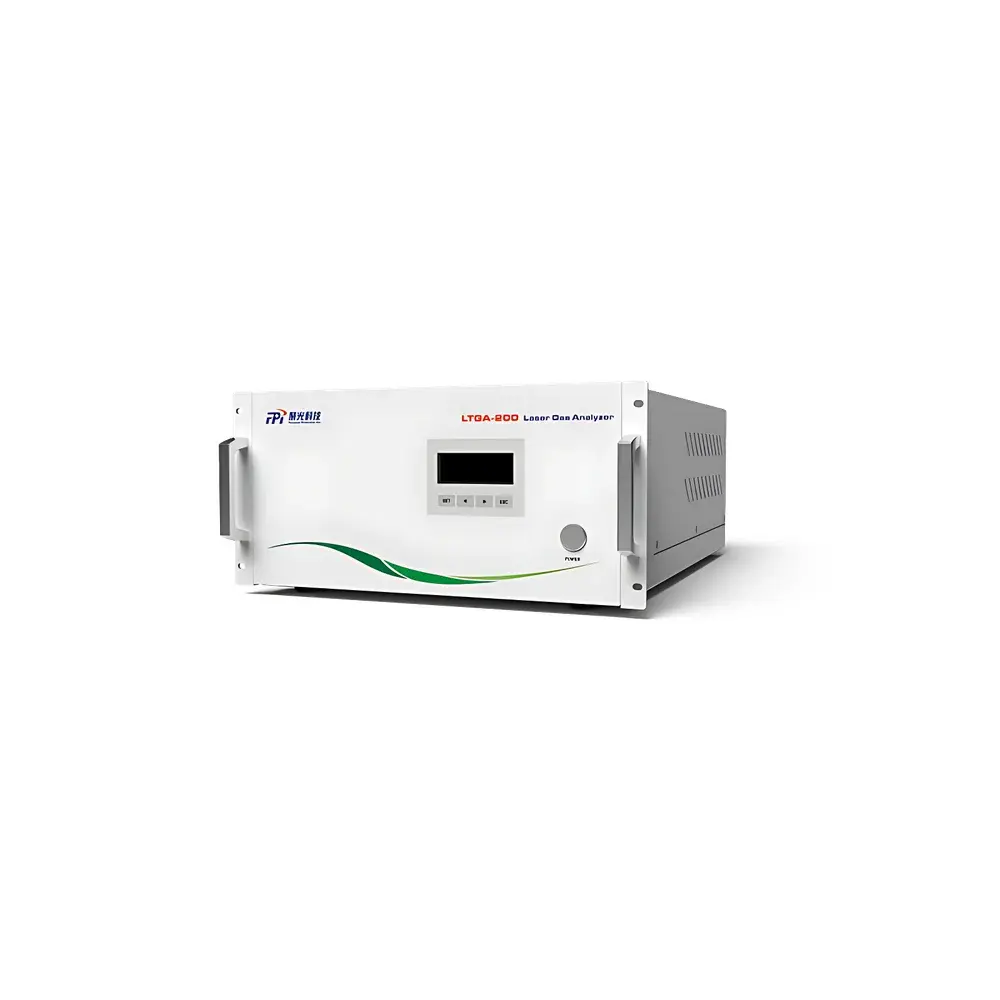
LTGA-200 Laser-Based Trace Gas Analyzer by FPI
| Brand | FPI |
|---|---|
| Origin | Zhejiang, China |
| Manufacturer Type | Original Equipment Manufacturer (OEM) |
| Country of Origin | China |
| Model | LTGA-200 |
| Pricing | Available upon Request |
Overview
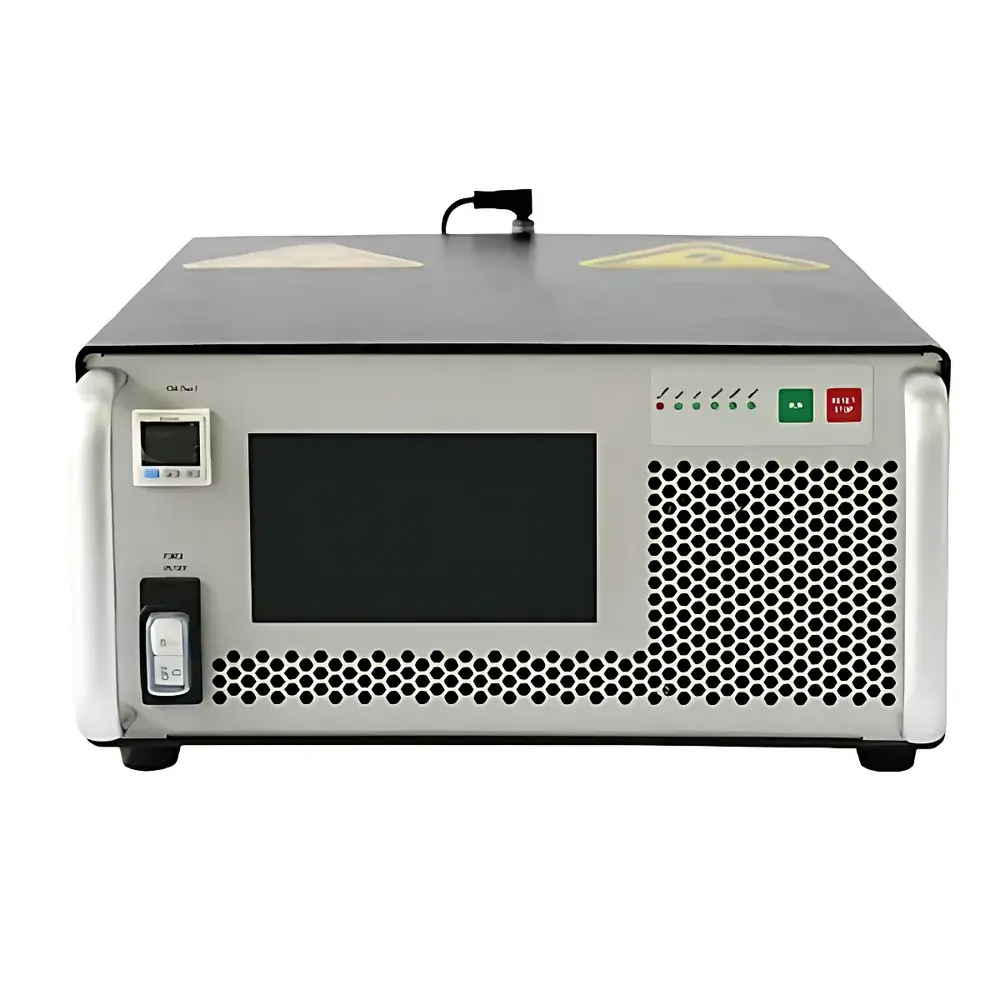
The LTGA-200 Laser-Based Trace Gas Analyzer is an industrial-grade online gas analyzer engineered for continuous, real-time quantification of highly adsorptive trace gases in ambient and process air streams. It employs Tunable Diode Laser Absorption Spectroscopy (TDLAS) — a well-established, physics-based optical measurement principle — operating in the near-infrared (NIR) spectral region. By leveraging wavelength-modulated absorption spectroscopy (WMS) and a proprietary long-path, low-adsorption multi-reflection gas cell, the LTGA-200 minimizes surface interaction artifacts common in measurements of reactive or polar species such as NH₃, H₂S, HF, HCl, and formaldehyde. Its modular 19-inch rack-mount chassis enables seamless integration into centralized monitoring systems deployed at fenceline locations, industrial park perimeters, and emission source stacks. Designed for unattended operation in non-laboratory environments, the analyzer meets the functional requirements of continuous emissions monitoring systems (CEMS) and ambient air quality surveillance networks under ISO 14644, ASTM D6348, and EN 15267-compliant deployment frameworks.
Key Features
- High-sensitivity TDLAS detection with sub-ppb to low-ppm dynamic range, optimized for adsorptive and chemically reactive trace gases
- Low-adsorption, multi-pass optical cavity with effective path length >10 m, fabricated from electropolished stainless steel and passivated internal surfaces
- Rack-mount 19-inch form factor (4U height), compliant with IEC 60297-3-100 mechanical standards for industrial control cabinets
- Integrated zero/span calibration interface supporting automated or manual gas injection via standardized 1/4″ Swagelok fittings
- Embedded temperature and pressure compensation algorithms aligned with NIST SRM traceability protocols
- Robust architecture featuring IP54-rated front panel, wide operating temperature range (−10 °C to +50 °C), and EMC compliance per IEC 61326-1
Sample Compatibility & Compliance
The LTGA-200 is validated for direct analysis of undiluted ambient air, stack effluent, and ducted process gas streams containing moisture, particulates (≤10 µm), and variable background matrices. Sample conditioning is optional and typically limited to particulate filtration (0.3 µm PTFE membrane) and thermoelectric dew-point suppression — no chemical scrubbers or catalytic converters are required due to the selectivity of laser absorption lines. The analyzer supports compliance with regulatory reporting frameworks including China’s HJ 1019-2019 (for fenceline VOC monitoring), EU Directive 2010/75/EU (IED), and U.S. EPA Method TO-15 adjunct validation criteria. Data integrity features include GLP/GMP-aligned audit trails, user-access-level authentication, and timestamped raw absorbance spectra storage.
Software & Data Management
FPI’s proprietary Analytical Control Software (ACS v3.2) provides local HMI via a 7-inch resistive touchscreen and remote access through HTTPS-enabled web server functionality. All measurement data — including concentration time series, spectral residuals, laser current/voltage logs, and diagnostic flags — are stored internally on a ruggedized 32 GB eMMC module with automatic rollover. Export formats include CSV, NetCDF, and MODBUS TCP for SCADA integration. The software supports 21 CFR Part 11-compliant electronic signatures, role-based permissions (admin/operator/auditor), and configurable alarm thresholds with relay output activation. Firmware updates are performed via secure SFTP or USB, with SHA-256 signature verification.
Applications
- Fenceline monitoring of odorants (e.g., H₂S, mercaptans) and toxic gases (e.g., Cl₂, PH₃) at chemical manufacturing sites
- Real-time emission verification at wastewater treatment plant headworks and sludge dewatering facilities
- Leak detection and quantification (LDAR) support for refinery flare stacks and VOC service areas
- Indoor air quality assessment in semiconductor cleanrooms where ultra-low NH₃ levels impact photolithography yield
- Mobile monitoring platforms integrated into environmental inspection vehicles for rapid response deployments
FAQ
What detection limits can be achieved for ammonia (NH₃) under typical field conditions?
Typical 1σ detection limits range from 0.2 ppb to 0.5 ppb for NH₃ over a 1-minute averaging period, dependent on path length configuration and ambient humidity.
Is the LTGA-200 certified for use in hazardous areas (e.g., ATEX or IECEx)?
The standard LTGA-200 is rated for Zone 2 / Class I Div 2 environments; explosion-proof variants (ATEX II 2G Ex db IIB T4 Gb) are available upon request with modified enclosure and purge system.
Does the analyzer require daily calibration or frequent maintenance?
Zero and span checks are recommended weekly; full calibration is typically required every 3–6 months depending on operational duty cycle and matrix complexity. No consumables or optical alignment are required during normal operation.
Can the LTGA-200 measure multiple gases simultaneously?
Yes — up to four target analytes may be configured concurrently using multi-wavelength laser sources and shared optical path, subject to spectral line isolation and cross-interference validation.
How is data security ensured during remote access?
All remote sessions enforce TLS 1.2+ encryption, mandatory two-factor authentication (TOTP), and session timeout after 15 minutes of inactivity. Audit logs record all configuration changes and user logins.