
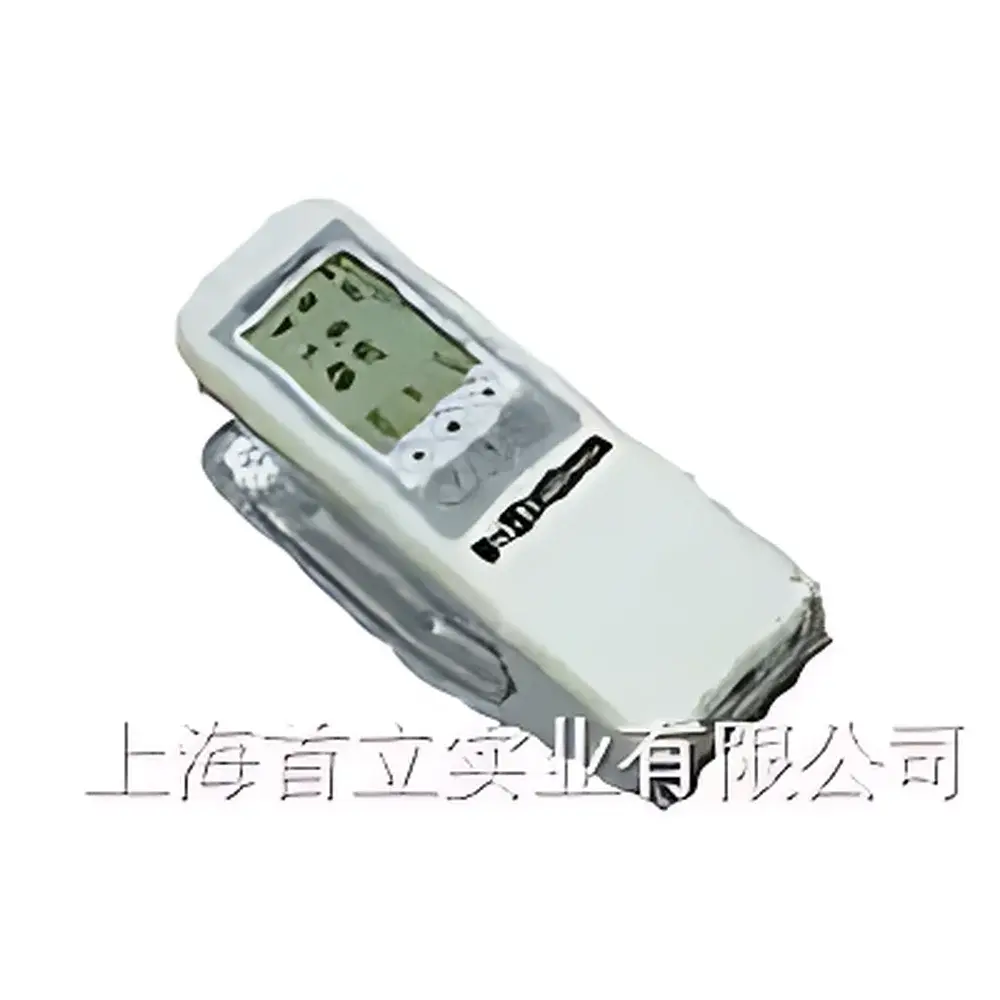
ND-11 Densitometer / Optical Density Meter / Reflectance Densitometer
| Origin | Japan |
|---|---|
| Manufacturer Type | Authorized Distributor |
| Origin Category | Imported Instrument |
| Model | ND-11 |
| Pricing | Upon Request |
| Measurement Parameters | Reflectance Density (OD), Reflectance (%) |
| Measurement Range | 0.00–100.0% (Reflectance), 0.00–3.00 D (Optical Density) |
| Aperture Sizes | Φ3.0 mm, Φ1.7 mm, Φ1.0 mm |
| Illumination/Reception Geometry | 0° vertical illumination / 45° annular edge reception |
| Accuracy (Repeatability) | ±0.01 D (≤2.0 D, Φ3.0 mm) |
| Data Compensation Function | Yes, for cross-model result compatibility |
| Averaging Function | 2–9-point reflectance intensity averaging |
| Data Storage Capacity | Up to 500 measurements |
| Dimensions | 210 × 72 × 50 mm (L × D × H) |
| Weight | 530 g (including Ni-Cd battery) |
| Power Supply | Built-in 4.8 V / 800 mAh Ni-Cd rechargeable battery |
| Light Source | Tungsten-halogen lamp (CCT ≈ 2856 K) |
| Optional Accessories | Serial printer PR-95, RS-232 cable, PC software for Excel-compatible data export, calibration standard plates |
Overview
The ND-11 Densitometer is a precision portable instrument engineered for high-reproducibility measurement of optical density (OD) and reflectance across industrial and quality assurance applications. Operating on the principle of calibrated photometric detection under standardized illumination geometry (0°/45° annular edge reception), it delivers traceable density values aligned with Japanese Industrial Standards (JIS) and certified reference methods established by the Japan Color Research Institute (JCRI). Its core function is the quantification of light absorption and surface reflectance in opaque or semi-opaque materials—particularly critical in evaluating lead grids, electronic shielding components, metallic coatings, architectural cladding, and high-precision instrumentation surfaces. Unlike general-purpose spectrophotometers, the ND-11 employs fixed-wavelength broadband tungsten-halogen illumination (≈2856 K CCT) optimized for consistent OD linearity in grayscale and metallic tone assessment, including specialized yellow density (YD) evaluation for gold-tone finishes and silver density (SD) for reflective metallic substrates.
Key Features
- Triple-aperture measurement capability (Φ3.0 mm, Φ1.7 mm, Φ1.0 mm) enables targeted analysis of micro-features, printed halftone dots, and fine-grained metallized surfaces without spatial averaging artifacts.
- Integrated reticle targeting system ensures precise placement over sub-millimeter test areas—essential for ISO 13655-compliant print density verification and QC of PCB solder mask uniformity.
- Intelligent power management includes four programmable auto-shutdown intervals (5/15/30/60 min), minimizing battery drain during field use while maintaining metrological readiness.
- Onboard data compensation algorithm adjusts raw readings to maintain historical continuity with legacy ND-series instruments (e.g., ND-9, ND-10), satisfying long-term trend analysis requirements in regulated manufacturing environments.
- One-button averaging of 2–9 sequential measurements reduces operator-induced variability and supports ASTM E308-compliant repeatability reporting for Gage R&R studies.
- Compact ergonomic design (210 × 72 × 50 mm; 530 g) facilitates handheld operation in production lines, cleanrooms, and outdoor inspection sites without external support fixtures.
Sample Compatibility & Compliance
The ND-11 accommodates non-transmissive samples including matte-finish metals, anodized aluminum, electrophoretic paint layers, lithographic plates, gravure ink films, and paper-based packaging substrates. Its 0°/45° geometry complies with ISO 5-4 (densitometry of graphic arts materials) and aligns with the reflectance measurement conventions defined in ISO 2846-1 for process control in offset printing. While not a full-spectrum spectrophotometer, its JCRI-traceable calibration enables compliance with internal QA protocols requiring documented density stability per ISO 9001 clause 7.6 and GLP-aligned instrument qualification (IQ/OQ). The built-in standard plate interface supports periodic verification per ASTM E2534 guidelines for densitometer performance monitoring.
Software & Data Management
Data export is facilitated via RS-232 serial interface using optional PR-95 thermal printer or host PC connection. Supplied PC software enables bidirectional communication: uploading calibration offsets, downloading stored datasets (up to 500 entries), batch-exporting CSV/Excel-compatible files, and generating time-stamped audit logs. All exported records include aperture selection, measurement mode (OD/reflectance/YD), date/time stamp, and operator ID field—supporting 21 CFR Part 11 readiness when deployed with electronic signature-capable host systems. Internal memory retains data integrity during battery replacement or firmware updates, with no volatile memory loss.
Applications
- Print quality control: Spot density measurement of CMYK process inks, vignette uniformity validation, dot gain analysis per ISO 12647-2.
- Electronics manufacturing: Lead frame blackening uniformity, EMI shield coating density, solder paste reflectance consistency.
- Architectural metal finishing: Anodized aluminum color batch matching, PVD-coated stainless steel gloss grading.
- Packaging QC: Corrugated board whiteness tracking, metallized PET film opacity verification.
- Calibration lab support: Transfer standard verification for densitometer fleets operating under ISO/IEC 17025-accredited procedures.
FAQ
Is the ND-11 compliant with ISO 13655 for spectral measurement conditions?
No—the ND-11 uses broadband tungsten-halogen illumination and does not provide spectral data. It conforms to ISO 5-4 (0°/45° geometry) and JCRI-certified density scale traceability, not ISO 13655 M1/M2/M3 conditions.
Can the ND-11 measure transmission density?
No—it is designed exclusively for reflectance-mode measurements on opaque or semi-opaque surfaces. Transmission density requires a separate transmittance geometry configuration.
What is the recommended recalibration interval?
JCRI recommends annual calibration using certified reference standards; however, daily zeroing with the supplied white calibration tile and quarterly verification against traceable density plates are required for ISO 9001-compliant operation.
Does the data compensation function modify raw sensor output?
No—it applies a post-acquisition mathematical correction to the final displayed OD value, preserving original analog-to-digital conversion data for audit trail reconstruction.
Is the Ni-Cd battery replaceable by the end user?
Yes—the battery compartment is serviceable with standard tools; replacement kits (model NB-11) are available through authorized distributors with full RoHS-compliant documentation.



