
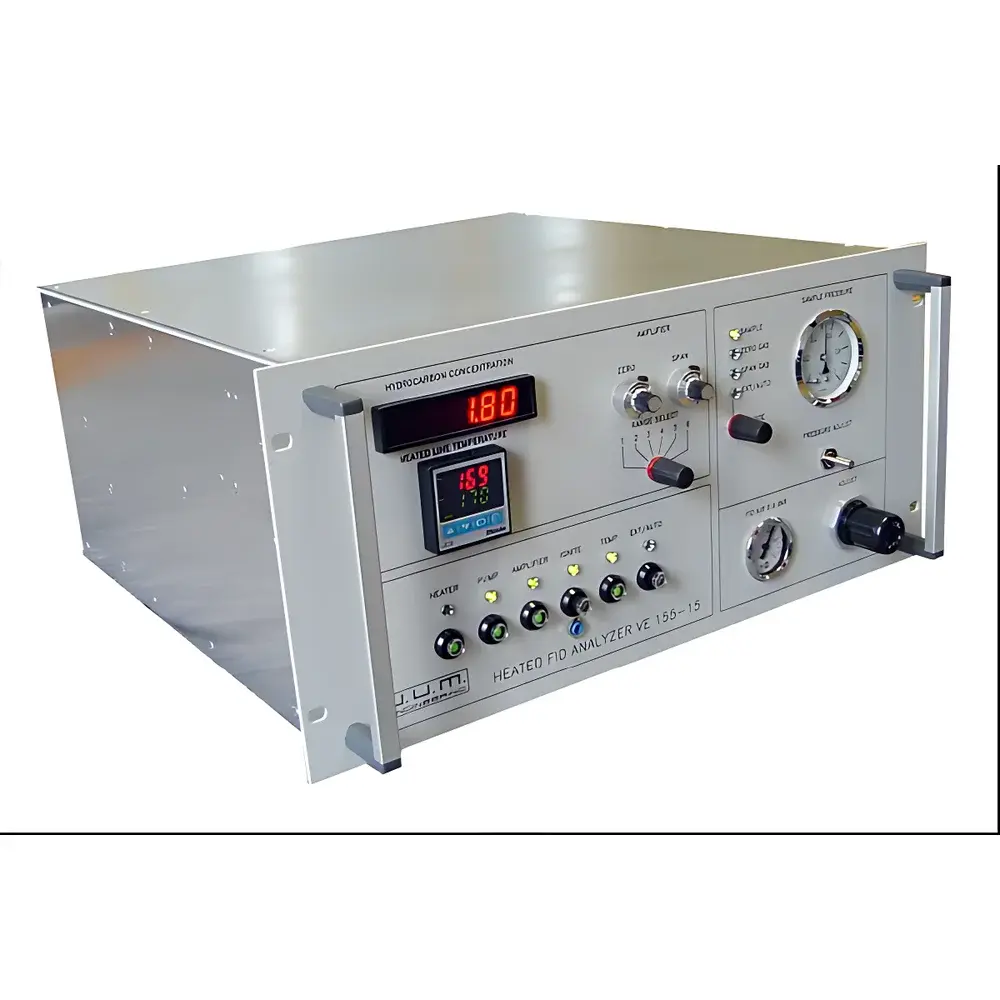
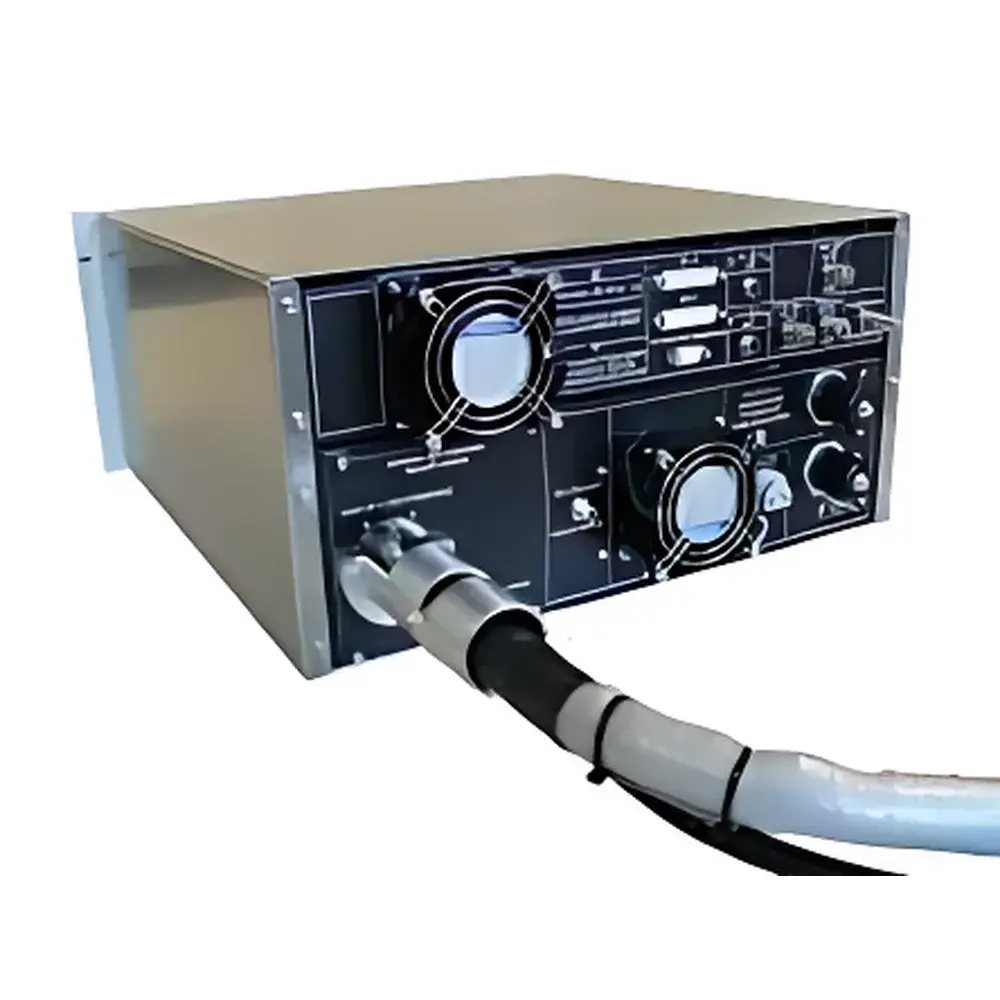
J.U.M. 155-15FID Heated Low-Flow Total Hydrocarbon Analyzer with Integrated FID Detector
| Brand | J.U.M. |
|---|---|
| Origin | Germany |
| Model | 155-15FID |
| Detection Principle | Flame Ionization Detection (FID) |
| Instrument Type | Online Analyzer |
| Detection Range | 0–10,000 ppm C₁–C₁₀ (as methane equivalent) |
| Resolution | 0.1 ppm |
| Accuracy | ±0.1 ppm (at low end), ±1% FS (full scale) |
| Response Time (T₉₀) | ≤3 s at 15 mL/min sample flow |
| Sample Flow Rate | Adjustable 10–30 mL/min (600–1,800 L/h) |
| Heating Zone Temperature | 180 °C (uniform, thermostatically controlled) |
| Integrated Combustion Air Supply | Yes (built-in compressor, no external air source required) |
Overview
The J.U.M. 155-15FID is a purpose-engineered, heated low-flow total hydrocarbon (THC) analyzer designed for continuous, high-fidelity measurement of volatile organic compounds (VOCs) and non-methane hydrocarbons (NMHC) in ultra-low-exchange environments—particularly Micro-SHED and Mini-SHED emission testing chambers per ISO 16000-6, SAE J1711, and EPA Method 25A. It employs a flame ionization detector (FID) operating on the well-established principle of hydrocarbon-specific ionization in a hydrogen–air flame, delivering linear response across C₁–C₁₀ compounds with exceptional sensitivity and long-term baseline stability. Unlike conventional FID analyzers requiring external combustion air supplies or complex gas cabinets, the 155-15FID integrates a precision-controlled, oil-free diaphragm compressor to generate clean, dry combustion air internally—eliminating dependency on bottled gases or centralized air systems. Its thermally managed architecture ensures all sample-wetted components—including sampling lines, pressure regulators, flow controllers, and the FID jet—are maintained at a uniform 180 °C within a single heated enclosure, preventing condensation, adsorption, or fractional loss of heavier hydrocarbons (e.g., C₆+ aromatics and aliphatics) that commonly compromise accuracy in unheated or partially heated systems.
Key Features
- Heated sample path (180 °C) encompassing inlet filter, pressure regulator, mass flow controller, and FID burner—ensuring quantitative transfer of thermally labile and high-boiling-point VOCs
- Integrated combustion air generation: self-contained, maintenance-free compressor eliminates need for external air cylinders or purification systems
- Ultra-low sample consumption: factory-configurable flow rates of 10, 12, 15, or 20 mL/min (600–1,200 L/h), optimized for SHED applications with minimal chamber leakage impact
- Modular, tool-free service design: rear-mounted particulate filter accessible without disassembly; heated chamber door opens for rapid detector or nozzle replacement
- Dual-mode calibration interface: manual zero/span valves with pneumatic actuation capability for remote integration into automated test sequences
- FID flame supervision system with automatic extinguish detection and optional auto-reignition (IEC 61508 SIL 2 compliant logic)
- Low hydrogen consumption (<15 mL/min) and optimized fuel-air stoichiometry reduce operational cost and thermal load
Sample Compatibility & Compliance
The 155-15FID is validated for direct analysis of ambient air, dilution tunnel effluent, SHED headspace gas, and process vent streams containing saturated/unsaturated aliphatics, aromatics, oxygenates (e.g., alcohols, ketones), and halogenated VOCs—provided they are combustible under standard FID conditions. All wetted materials (316L stainless steel, fused silica, high-temp PTFE) meet USP Class VI and FDA 21 CFR Part 11 material compatibility requirements. The analyzer complies with EN 14181 (QAL1/QAL2), ISO 8573-1 Class 2 for compressed air purity, and supports GLP/GMP audit trails when paired with J.U.M.’s optional DataLogger Pro software. It satisfies performance criteria outlined in EPA Method 25A (detection limit <0.1 ppm C₁), ASTM D6348 (for gaseous emissions), and VDI 2440 for THC monitoring in automotive testing facilities.
Software & Data Management
The 155-15FID outputs analog (4–20 mA, 0–10 V) and digital (RS-485 Modbus RTU, optional Ethernet/IP) signals compatible with SCADA, PLC, and LIMS platforms. Optional DataLogger Pro firmware enables time-stamped data logging (1 Hz resolution), configurable alarm thresholds (e.g., flame-out, pressure deviation, calibration overdue), and encrypted CSV export. Audit trail functionality records all operator interventions (zero/span, parameter changes, maintenance events) with user ID and timestamp—fully traceable for 21 CFR Part 11 compliance. Remote diagnostics via embedded web server allow real-time status monitoring, firmware updates, and configuration backup without physical access.
Applications
- Regulatory-grade evaporative emission testing in Micro-SHED/Mini-SHED chambers (SAE J1711, ISO 16000-6)
- Continuous THC monitoring in engine dynamometer exhaust dilution tunnels
- Indoor air quality (IAQ) assessment of VOC off-gassing from building materials and furnishings
- Leak detection and quantification in semiconductor fab tool exhaust lines
- Process safety monitoring of hydrocarbon concentration in inerted reactor purge streams
- Calibration verification of photoionization detectors (PIDs) and metal oxide sensors using certified gas standards
FAQ
Does the 155-15FID require external combustion air?
No. It incorporates a built-in, oil-free diaphragm compressor delivering clean, dry air at regulated pressure and flow—no cylinders, filters, or external compressors needed.
Can the instrument measure compounds other than hydrocarbons?
The FID responds primarily to carbon-hydrogen bonds. Compounds lacking C–H bonds (e.g., CO, CO₂, SO₂, NOₓ, H₂O, NH₃) yield negligible signal and do not interfere.
What maintenance intervals are recommended?
Particulate filter replacement every 3 months under typical SHED use; FID nozzle cleaning every 6 months; annual calibration verification per ISO/IEC 17025 guidelines.
Is the heated zone temperature adjustable?
No—the 180 °C setpoint is fixed to ensure consistent volatilization of C₈–C₁₀ species while maintaining thermal stability and power efficiency.
Can the analyzer be integrated into an automated test cell?
Yes. Digital I/O, Modbus RTU, and optional Profibus DP or EtherCAT interfaces support full synchronization with chamber control systems and test sequence managers.
Related Products







