
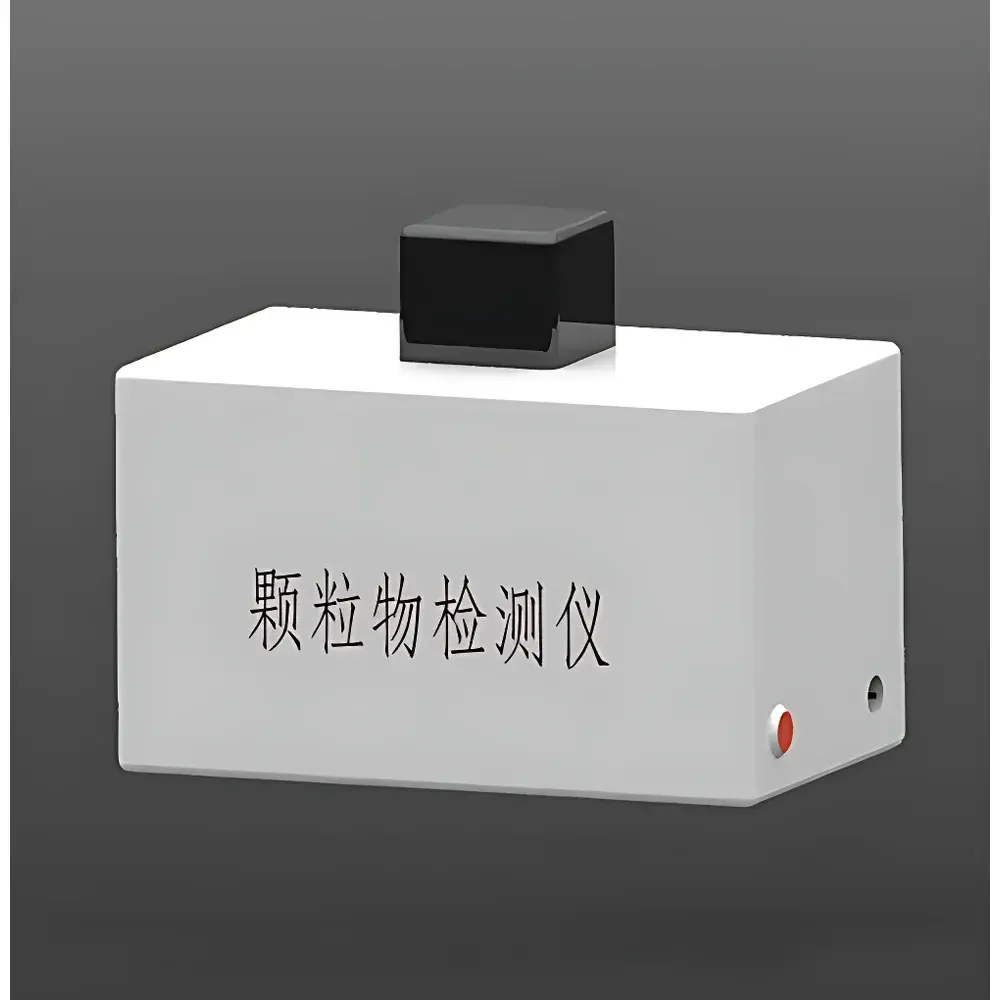
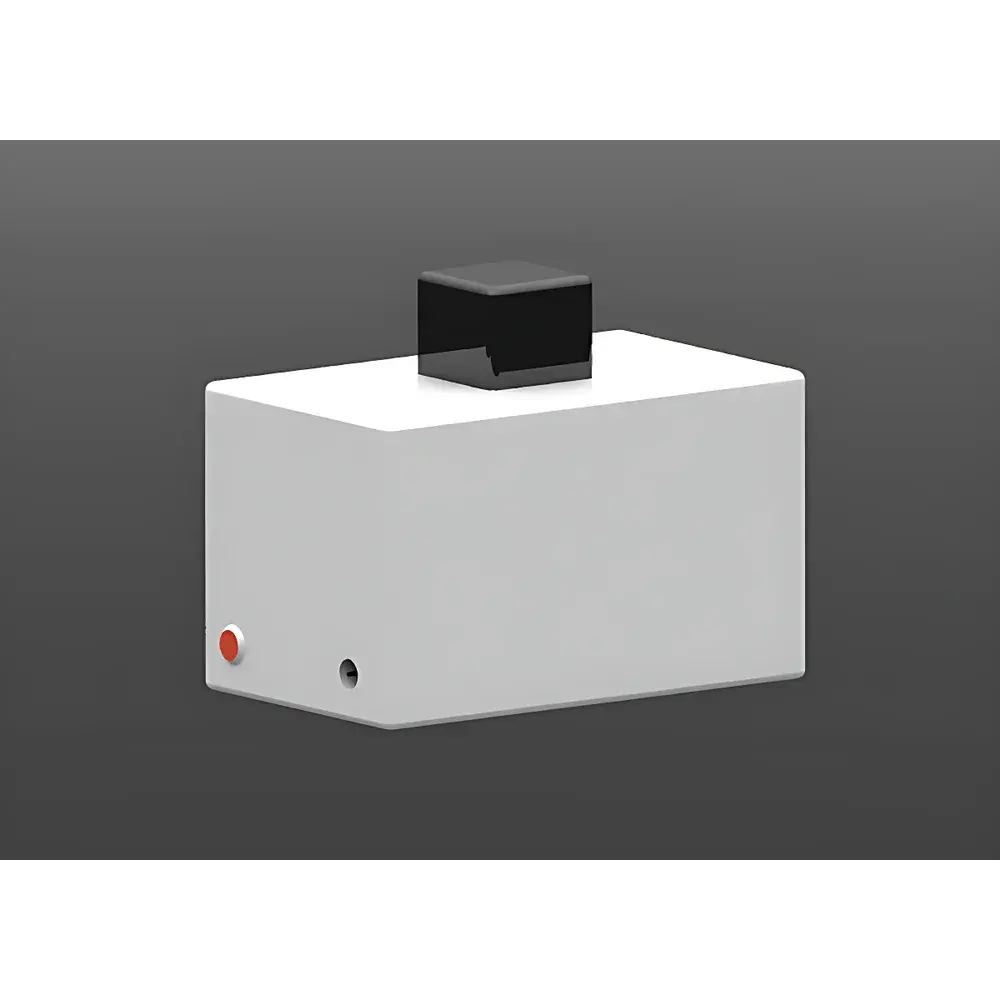
S-16 Particulate Image Analyzer
| Brand | — |
|---|---|
| Origin | China |
| Manufacturer Type | Authorized Distributor |
| Model | S-16 |
| Typical Configuration | Integrated Particulate Imaging Sampler |
| Dimensions | 120 × 70 × 40 mm |
| Weight | 0.35 kg |
| Power Supply | 12 V DC |
| Power Consumption | 5 W |
| Operating Temperature | 0–60 °C |
| Operating Humidity | 0–80 % RH (non-condensing) |
| Acoustic Noise | ≤10 dB(A) at 1 m |
| Battery Runtime | Up to 1.5 h (rechargeable Li-ion integrated) |
Overview
The S-16 Particulate Image Analyzer is a compact, field-deployable optical imaging instrument engineered for real-time visualization and qualitative assessment of suspended particulate matter in liquid media. Unlike conventional gravimetric or beta-attenuation methods, the S-16 employs dual-mode optical interrogation—combining forward-scattered light detection with transmitted-light micro-imaging—to generate high-contrast, in-situ digital micrographs of individual particles within turbid suspensions. Its core architecture integrates a collimated LED illumination source, a fixed-focus CMOS sensor (effective resolution ≥1.3 MP), and an embedded image processing pipeline optimized for particle boundary recognition under variable turbidity conditions. Designed for rapid deployment in environmental field labs, wastewater treatment monitoring stations, and industrial process streams, the analyzer delivers immediate visual evidence of particle morphology, aggregation state, and relative spatial distribution—without requiring sample dilution, filtration, or chemical fixation.
Key Features
- Integrated rechargeable lithium-ion battery enabling up to 1.5 hours of continuous operation—ideal for unpowered or mobile sampling scenarios.
- Ultra-compact form factor (120 × 70 × 40 mm) and lightweight construction (0.35 kg) facilitate handheld use and integration into portable environmental monitoring kits.
- Low-noise optical design (<10 dB[A] at 1 m) ensures minimal acoustic interference during sensitive field measurements near quiet ecosystems or indoor laboratories.
- On-device image capture, annotation, and storage via internal flash memory—no external PC required for basic acquisition.
- Wide operational envelope: functional across 0–60 °C ambient temperature and 0–80 % RH (non-condensing), supporting deployment in diverse climatic zones including humid subtropical and arid environments.
- 12 V DC input compatibility enables direct connection to standard field power sources such as vehicle batteries or solar-charged power banks.
Sample Compatibility & Compliance
The S-16 is validated for use with aqueous suspensions containing non-volatile, optically opaque or semi-transparent particles ranging from ~5 µm to >200 µm in equivalent spherical diameter. It accommodates samples with turbidity up to 2000 NTU without hardware modification. While not intended for regulatory-grade mass concentration quantification (e.g., PM2.5/PM10 compliance per ISO 12103-1 or EPA Method IO-3.2), the instrument supports method development aligned with ASTM D7619 (Standard Guide for Microscopic Particle Characterization) and ISO 13322-2 (Imaging Particle Size Analysis). Data output formats (JPEG, TIFF) are compatible with third-party image analysis platforms used in GLP-compliant laboratories for morphological classification and trend reporting.
Software & Data Management
Acquired images are timestamped and geotagged (when paired with optional Bluetooth GPS module) prior to local storage. The embedded firmware supports batch export via USB 2.0 to Windows/macOS systems. Optional desktop software provides tools for manual particle counting, aspect ratio calculation, and grayscale histogram profiling—functions commonly referenced in USP particulate matter testing protocols for pharmaceutical liquids. Audit trail functionality—including user login logs, parameter change history, and image metadata—is available in licensed versions compliant with FDA 21 CFR Part 11 requirements for electronic records and signatures.
Applications
- Rapid screening of sediment-laden surface water and stormwater runoff for coarse particulate load assessment.
- On-site verification of filter integrity in membrane bioreactors (MBRs) and tertiary treatment units.
- Morphological documentation of algal aggregates or bioflocs in aquaculture and activated sludge systems.
- Pre-analytical evaluation of suspension homogeneity prior to laser diffraction or dynamic light scattering measurements.
- Educational demonstration of particle settling behavior, flocculation kinetics, and coagulant efficacy in environmental engineering curricula.
FAQ
Can the S-16 quantify mass concentration (e.g., mg/L) of suspended solids?
No—the S-16 provides qualitative and semi-quantitative morphological data only; it does not perform gravimetric or nephelometric calibration for mass-based reporting.
Is the device suitable for airborne particulate analysis?
No—it is designed exclusively for liquid-phase suspensions. Air sampling requires dedicated aerosol imaging systems with inertial impactors and vacuum manifolds.
Does the instrument support automated particle size distribution histograms?
Basic histogram generation is available in the optional desktop software; however, full ISO 9276-2-compliant distribution fitting requires export to validated third-party image analysis suites.
What is the minimum detectable particle size under typical operating conditions?
Under optimal contrast (e.g., dark particles in clear medium), the practical lower limit is approximately 5 µm; resolution is constrained by optical diffraction limits and pixel pitch of the onboard sensor.
Is firmware update capability supported over-the-air or via USB?
Firmware updates are performed exclusively via USB-connected host computer using manufacturer-provided utility software; no wireless update functionality is included.







