
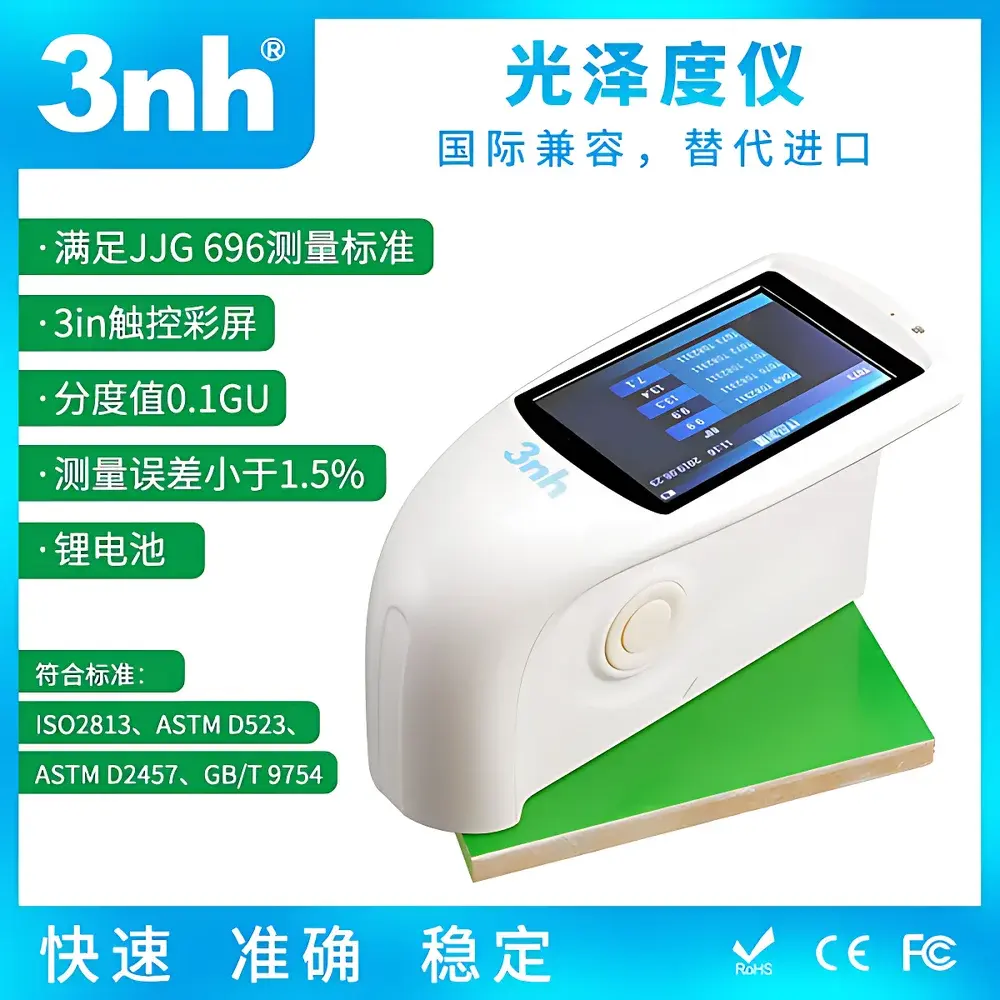
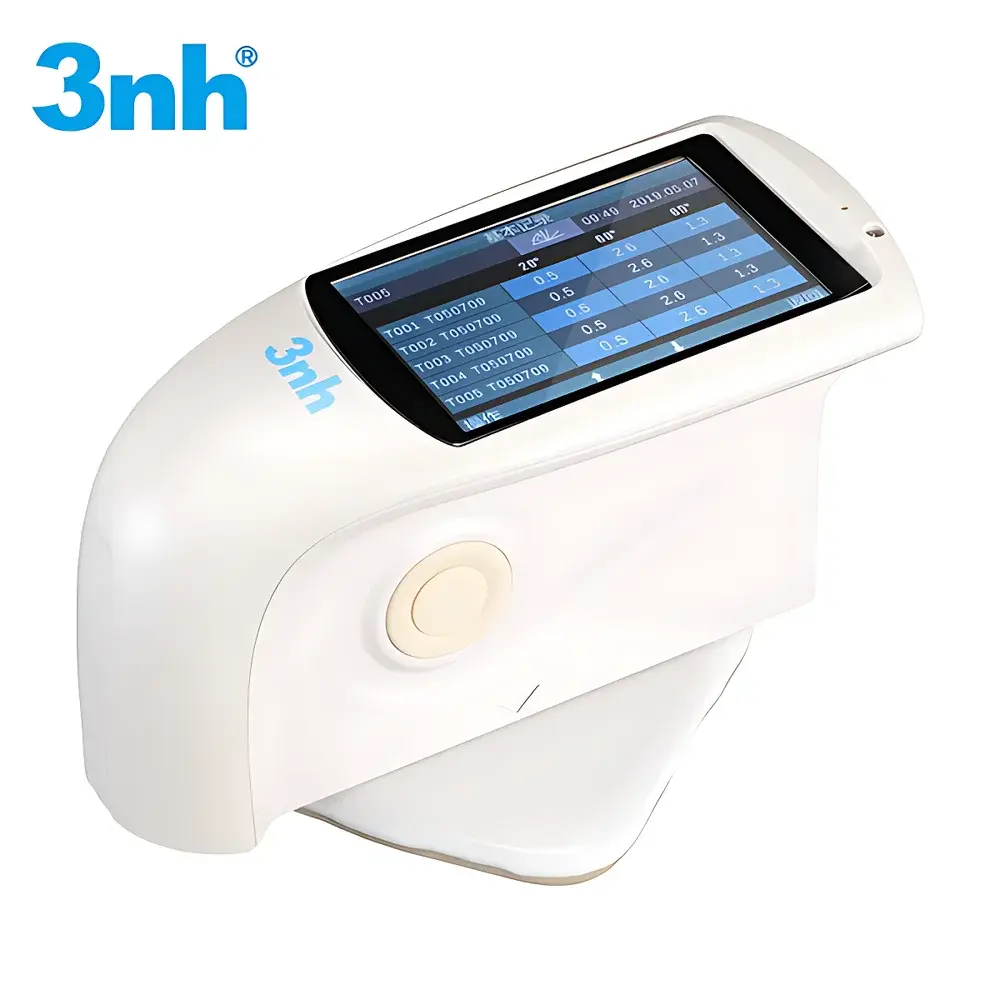
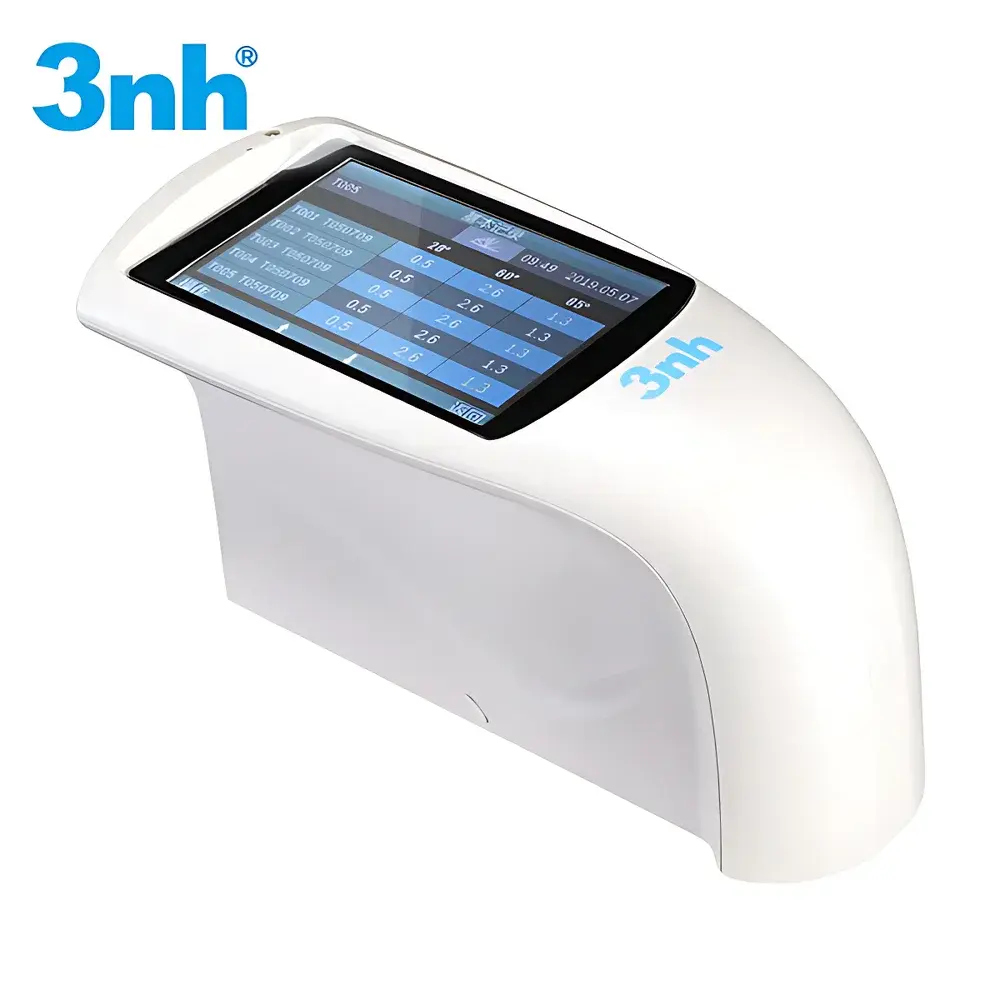
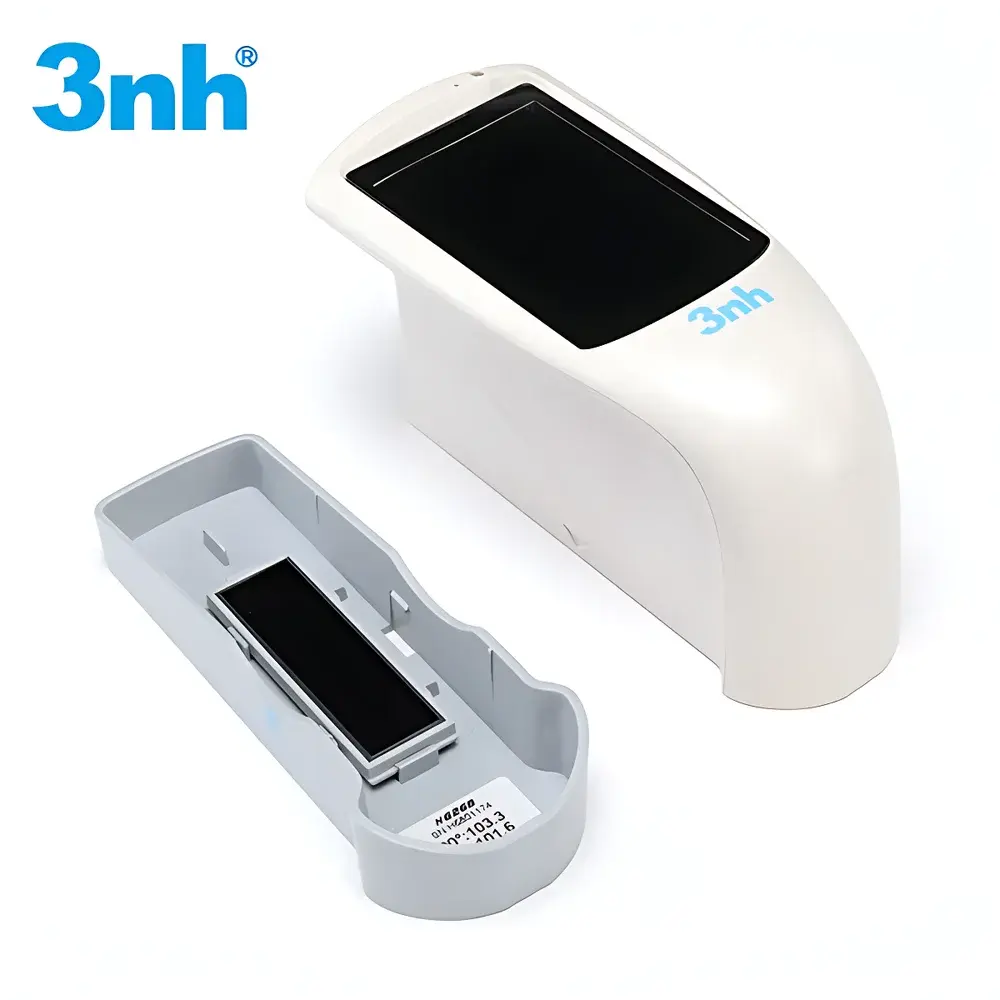
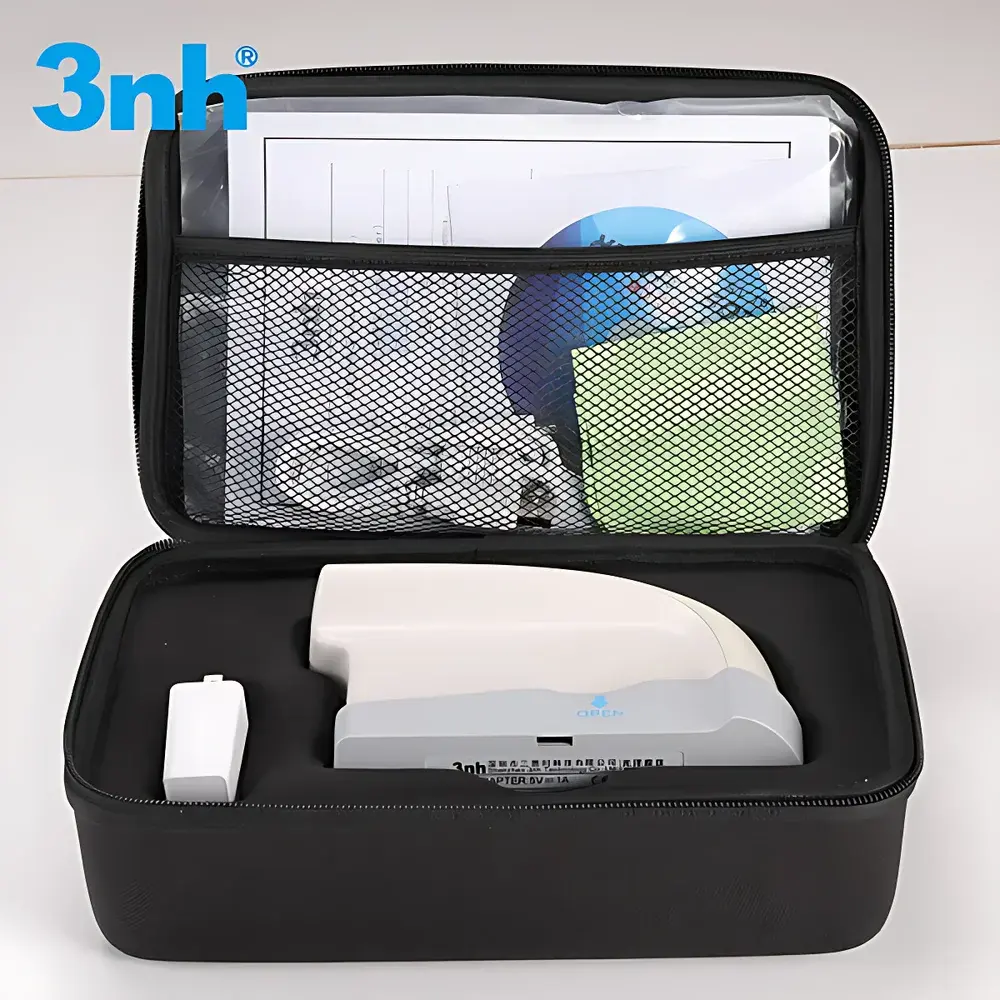
3nh HG268 Tri-Angle Gloss Meter
| Brand | 3nh |
|---|---|
| Model | HG268 |
| Measurement Angles | 20°, 60°, 85° |
| Display | 3.5-inch color TFT LCD (480 × 320 resolution) |
| Compliance | ISO 2813, GB/T 9754, ASTM D 523, ASTM D 2457 |
| Power | Rechargeable Li-ion battery with auto-power-off |
| Operating Environment | Dry, stable temperature |
| Design | Handheld, ergonomic, manual operation |
| Software Interface | PC-based quality management software (optional, USB connectivity) |
| Calibration | Built-in automatic zero and reference calibration routine |
Overview
The 3nh HG268 Tri-Angle Gloss Meter is a precision handheld optical instrument engineered for quantitative gloss evaluation of non-metallic surfaces—including paints, coatings, plastics, ceramics, and printed materials—according to internationally recognized photometric principles. It operates on the principle of specular reflectance measurement: a collimated beam of light (typically at 590 nm, CIE illuminant A equivalent) is directed onto the sample surface at three standardized incident angles—20°, 60°, and 85°—and the intensity of reflected light within the specular direction is captured by a silicon photodiode detector. The measured signal is converted into gloss units (GU), referenced to a polished black glass standard calibrated at 100 GU at 60°. This tri-angle configuration enables comprehensive characterization of surface appearance across varying degrees of reflectivity: high-gloss surfaces (>70 GU at 60°) are optimally assessed at 20°, medium-gloss surfaces (10–70 GU) at 60°, and low-gloss or matte finishes (<10 GU) at 85°. Designed and manufactured in Shenzhen, China, the HG268 adheres strictly to ISO 2813 and GB/T 9754 physical geometry and photometric requirements, ensuring metrological traceability and inter-laboratory comparability.
Key Features
- Simultaneous triple-angle measurement (20°, 60°, 85°) in a single press—no manual angle switching or repositioning required.
- 3.5-inch high-resolution color TFT display (480 × 320 pixels) with wide viewing angle and anti-glare coating for reliable on-site readability under ambient lighting conditions.
- Ergonomic, one-handed grip design compliant with ISO/IEC 17025 handling guidelines for portable metrology tools—reducing operator-induced variability during repeated measurements.
- Integrated rechargeable lithium-ion battery supporting >10,000 measurements per full charge; automatic power-off after 5 minutes of inactivity to conserve energy and extend battery cycle life.
- Onboard calibration routine with dual-point verification: automatic zero calibration (dark current compensation) and reference calibration using included certified gloss standard tiles (certified per ISO 13697).
- Real-time multi-value display: up to nine stored readings visible simultaneously—ideal for comparative analysis across batches, production shifts, or substrate variations.
- Rugged ABS+PC housing rated IP52 for dust resistance and limited drip protection; designed for industrial QC environments without requiring climate-controlled enclosures.
Sample Compatibility & Compliance
The HG268 is validated for flat, opaque, or semi-opaque non-metallic surfaces with minimal texture variation (Ra 50 mm may be measured with reduced uncertainty; highly textured, transparent, or metallic substrates require alternative instrumentation (e.g., gonio-spectrophotometers or BRDF analyzers). All optical path components—including LED source, condenser optics, and detector aperture—are factory-aligned and sealed to prevent misalignment drift. The device meets the geometric and photometric tolerances specified in ISO 2813:2014 (Clause 5.2–5.4), ASTM D 523-14 (Section 7), and GB/T 9754-2007. While not certified to FDA 21 CFR Part 11, its data export functionality supports GLP/GMP-aligned documentation workflows when used with validated PC software and controlled electronic records procedures.
Software & Data Management
The optional PC-based Quality Management Software (QMS v3.2+) connects via USB 2.0 and provides full audit-trail capability: timestamped measurement logs, user ID assignment, instrument serial number tagging, and configurable report templates (PDF/CSV/XLSX). Raw data includes angle-specific GU values, standard deviation across triplicate readings, and pass/fail status against user-defined specification limits. Software supports statistical process control (SPC) charting—X-bar/R charts, histogram distribution analysis, and CPK calculation—for continuous improvement initiatives. All exported files retain embedded metadata compliant with ISO/IEC 17025 clause 7.7.2 for result traceability. No cloud synchronization or remote firmware updates are implemented—ensuring data sovereignty and network isolation per ITAR and internal lab security policies.
Applications
- Automotive OEM and Tier-1 suppliers: In-line gloss verification of clear coats, interior trim, and dashboard overlays per Ford WSS-M2P175-B2 and GMW14872.
- Architectural coatings manufacturers: Batch release testing per ASTM D 523 and ISO 2813, with correlation to weathering performance (ASTM G154, ISO 4892-3).
- Plastic extrusion and injection molding facilities: Surface finish validation of PP, ABS, and PC components prior to assembly.
- Printing and packaging QA labs: Gloss uniformity assessment across CMYK process prints and laminated cartons (ISO 12233-compliant test targets recommended).
- Academic research in surface science: Correlation studies between gloss values and atomic force microscopy (AFM) roughness parameters (Ra, Rq) on polymer films.
FAQ
What standards does the HG268 comply with?
ISO 2813:2014, GB/T 9754-2007, ASTM D 523-14, and ASTM D 2457-18 — all verified through third-party metrological validation reports available upon request.
Can the HG268 measure transparent materials like glass or PET film?
No. It is designed for opaque or semi-opaque surfaces only. Transparent substrates require haze/transmission measurement using dedicated instruments compliant with ASTM D 1003 or ISO 14782.
Is calibration traceable to national metrology institutes?
Yes. Certified reference standards supplied with each unit are calibrated against NIM (National Institute of Metrology, China) traceable artifacts, with calibration certificates including expanded uncertainty (k=2) per ISO/IEC 17025.
How often should the instrument be recalibrated?
Daily zero calibration is recommended before first use; reference calibration with standard tiles every 8 hours of continuous operation or at start/end of shift — consistent with ISO 9001:2015 clause 7.1.5.2.
Does the device support statistical analysis natively?
No. Statistical functions (mean, SD, min/max, CPK) are performed exclusively within the optional QMS software; the instrument’s onboard display shows only raw GU values and basic pass/fail indicators.





