
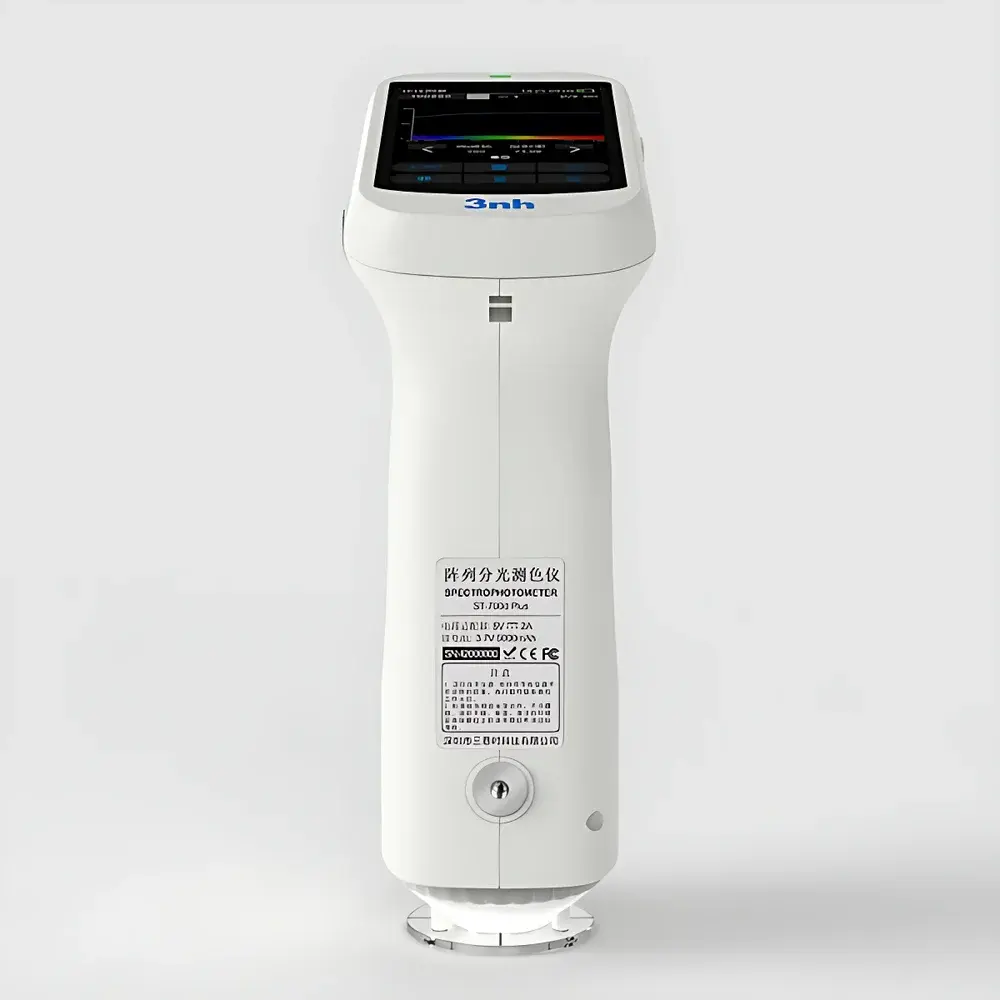
3nh ST-700d Plus Array Spectrophotometric Colorimeter
| Brand | 3nh |
|---|---|
| Origin | Guangdong, China |
| Manufacturer Type | Direct Manufacturer |
| Product Category | Spectrophotometric Colorimeter |
| Instrument Type | Portable |
| Optical Geometry | d/8° Integrating Sphere (SCI/SCE) |
| Illuminant | Full-Spectrum LED Array + UV LED |
| Spectral Range | 360–780 nm |
| Repeatability | ΔE*ab ≤ 0.02 (MAV/SCI, after warm-up & calibration, n=30 on white tile at 5 s intervals) |
| Spectral Reflectance Reproducibility | SD ≤ 0.07% (400–700 nm, MAV/SCI) |
Overview
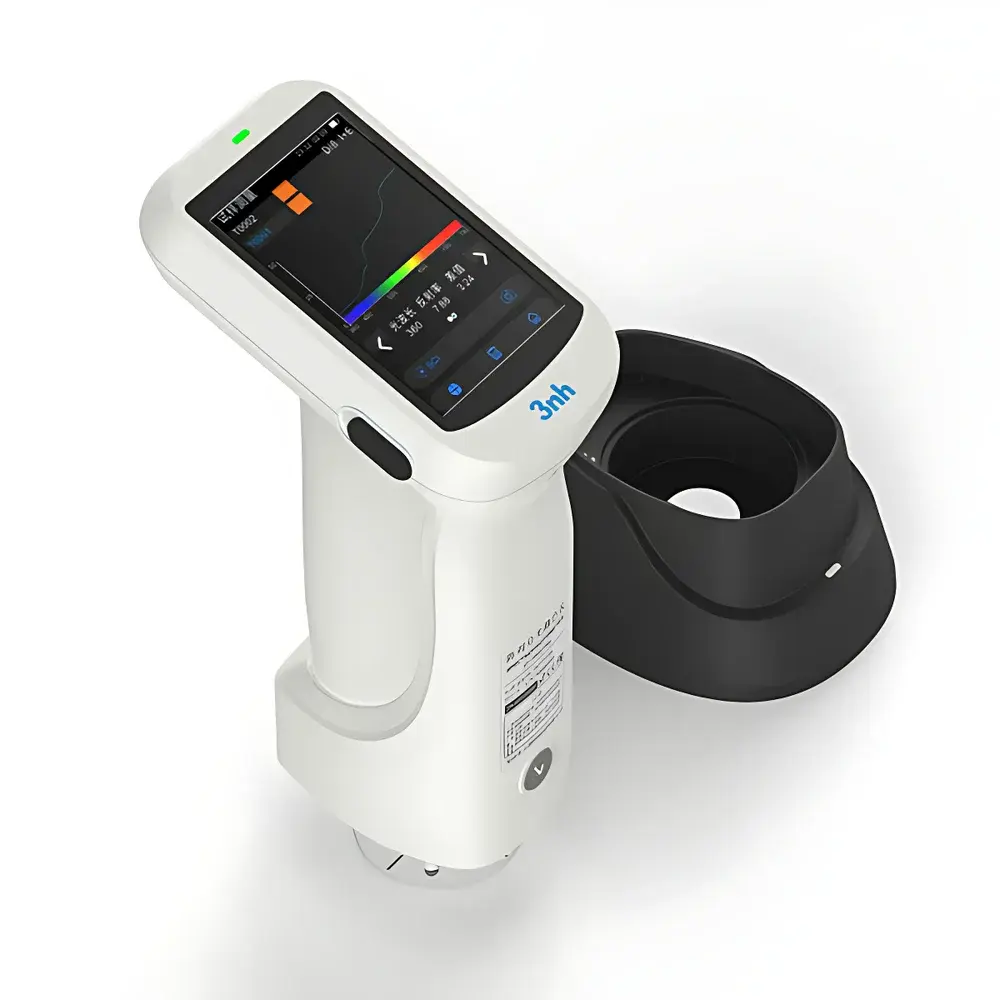
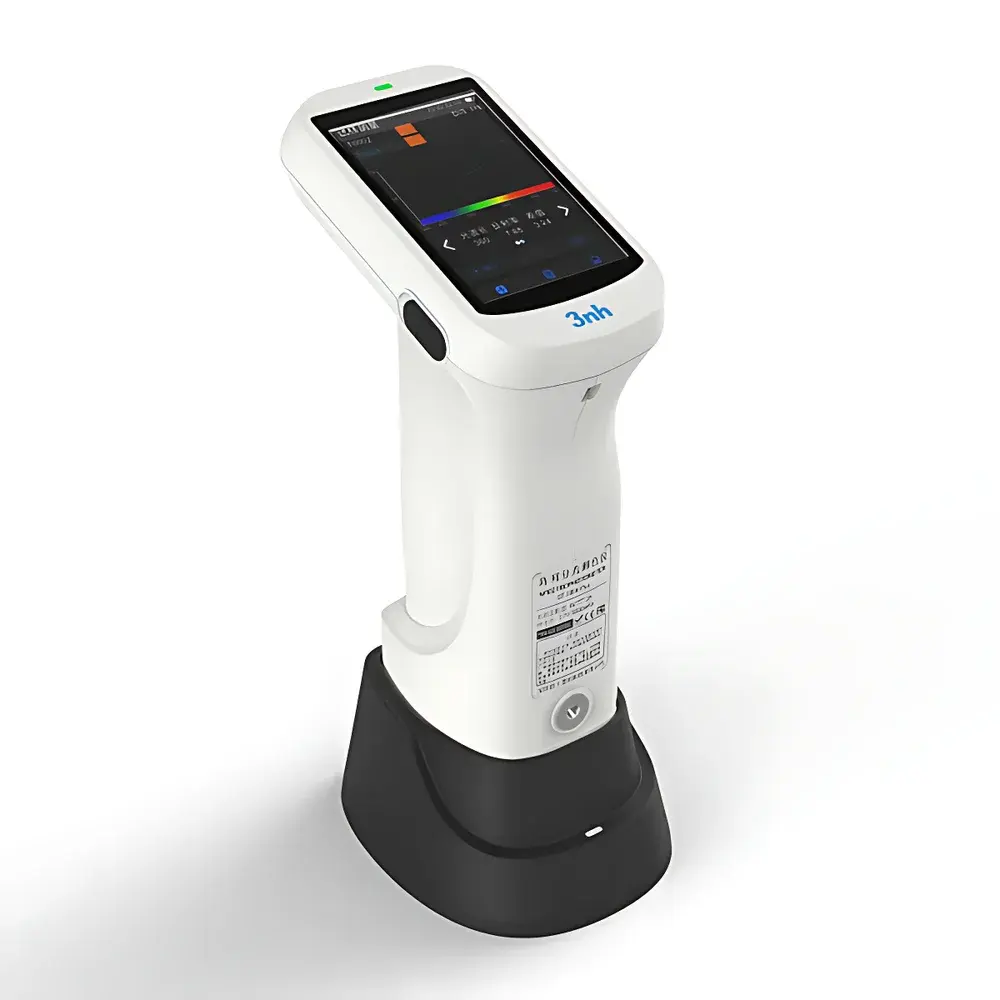
The 3nh ST-700d Plus Array Spectrophotometric Colorimeter is an industrial-grade portable spectrophotometer engineered for high-precision color measurement across R&D laboratories, quality control floors, and field applications. It employs a dual-row 40-element silicon photodiode array sensor coupled with planar grating dispersion optics to deliver rapid, stable, and metrologically traceable spectral reflectance data from 360 nm to 780 nm at 10 nm intervals. Its d/8° integrating sphere optical architecture—compliant with CIE No. 15, ISO 7724-1, ASTM E1164, DIN 5033 Teil 7, and GB/T 3978—supports both Specular Component Included (SCI) and Specular Component Excluded (SCE) modes, enabling objective evaluation of inherent color while minimizing surface texture influence. The instrument’s core design prioritizes long-term stability: dual optical paths compensate for ambient thermal drift, while non-contact auto-calibration via integrated smart base ensures consistent baseline integrity without manual intervention.
Key Features
- High-density dual 40-channel silicon photodiode array sensor: delivers superior signal-to-noise ratio, wide dynamic range (0–200% reflectance), and immunity to saturation under intense illumination or high sensitivity in low-light conditions.
- Full-spectrum LED illuminant array (360–780 nm) with dedicated UV channel: eliminates spectral gaps common in conventional white LEDs, enabling accurate measurement of fluorescent and optically brightened materials per ISO 11475 and ASTM D6553.
- Planar grating monochromator: provides enhanced wavelength resolution and minimal stray light, supporting reliable spectral reconstruction and narrow-band color difference computation.
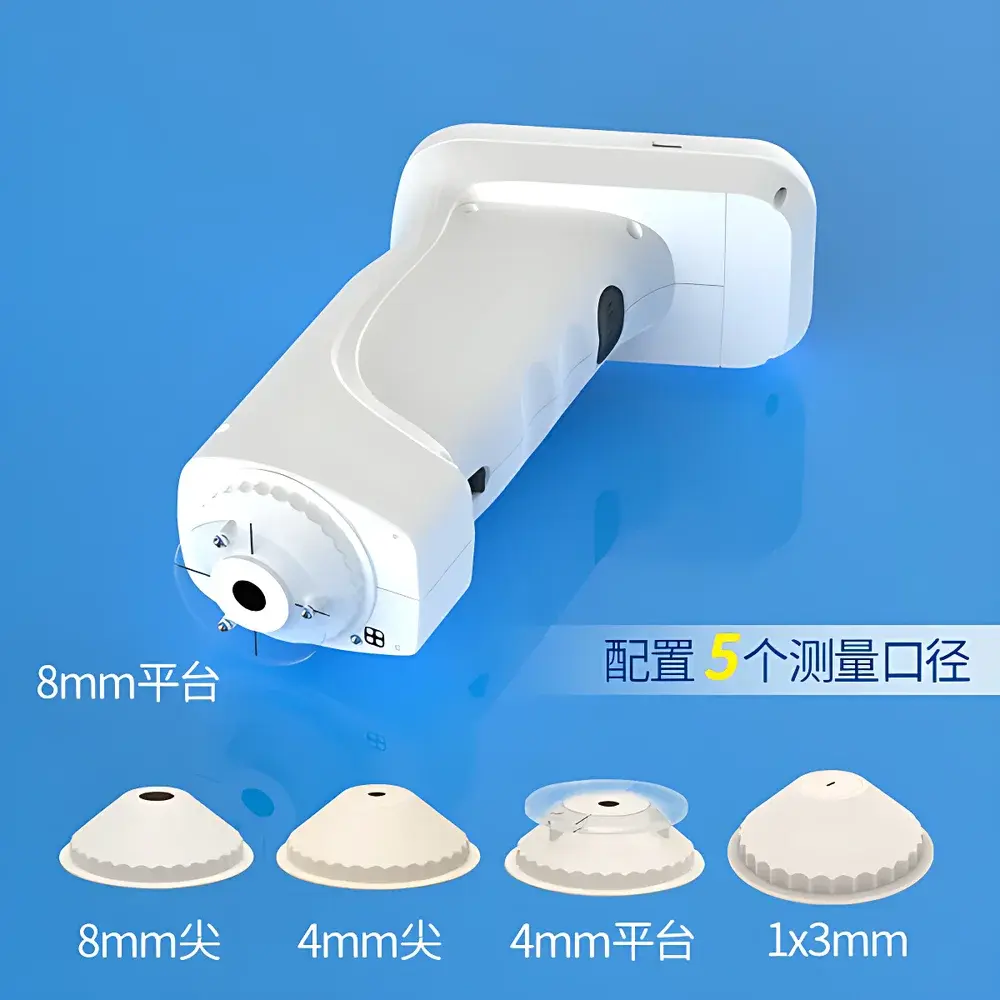
- Five interchangeable apertures: Φ8 mm flat & conical, Φ4 mm flat & conical, and 1×3 mm rectangular—enabling precise targeting of heterogeneous, textured, or micro-scale samples including coatings, textiles, thin films, and printed substrates.
- Real-time camera-assisted targeting: integrated VGA camera with live preview allows visual confirmation of measurement area alignment, reducing operator-induced positioning error and improving first-pass measurement validity.
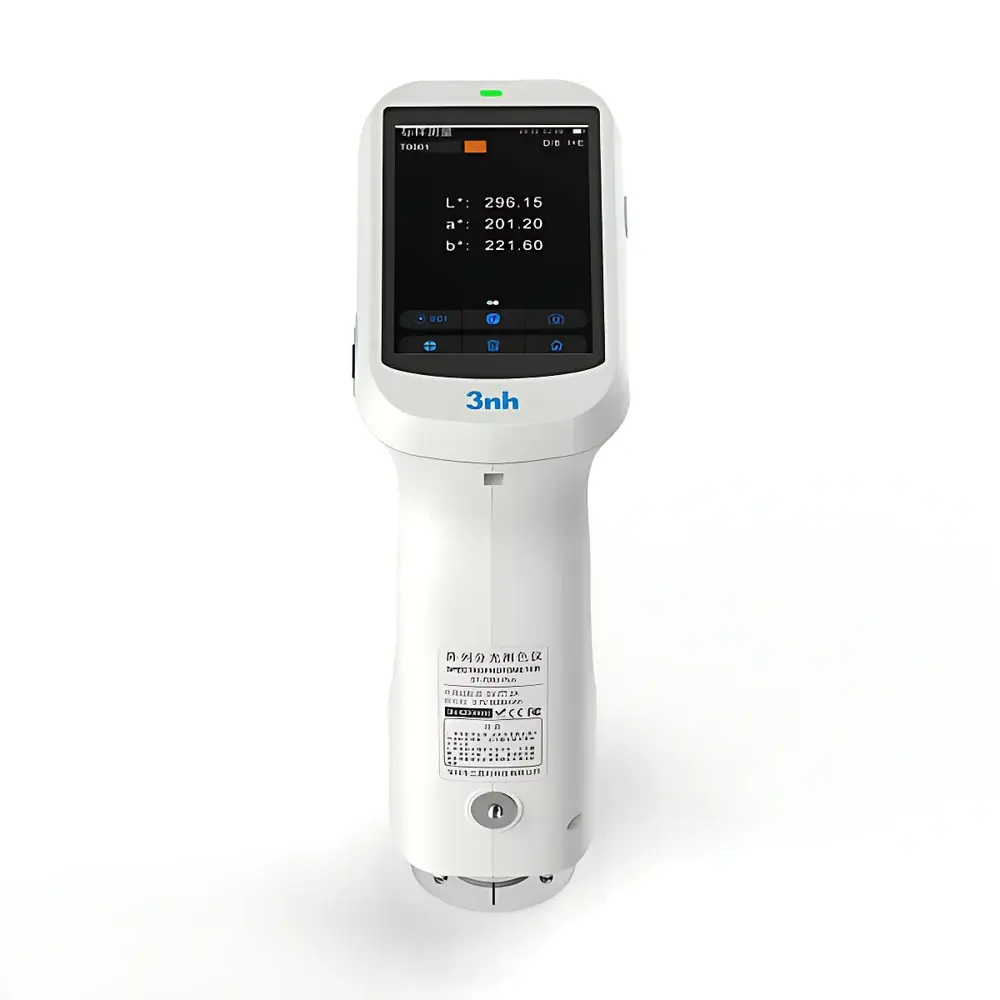
- Capacitive 3.5-inch TFT touchscreen interface: intuitive navigation, real-time spectral graphing, pass/fail threshold overlays, and on-device color simulation for immediate go/no-go assessment.
- Robust mechanical design: ergonomic grip geometry, IP52-rated enclosure, and 435 g mass optimized for extended handheld use without fatigue; operating range: 0–40 °C / 0–85% RH (non-condensing).
Sample Compatibility & Compliance
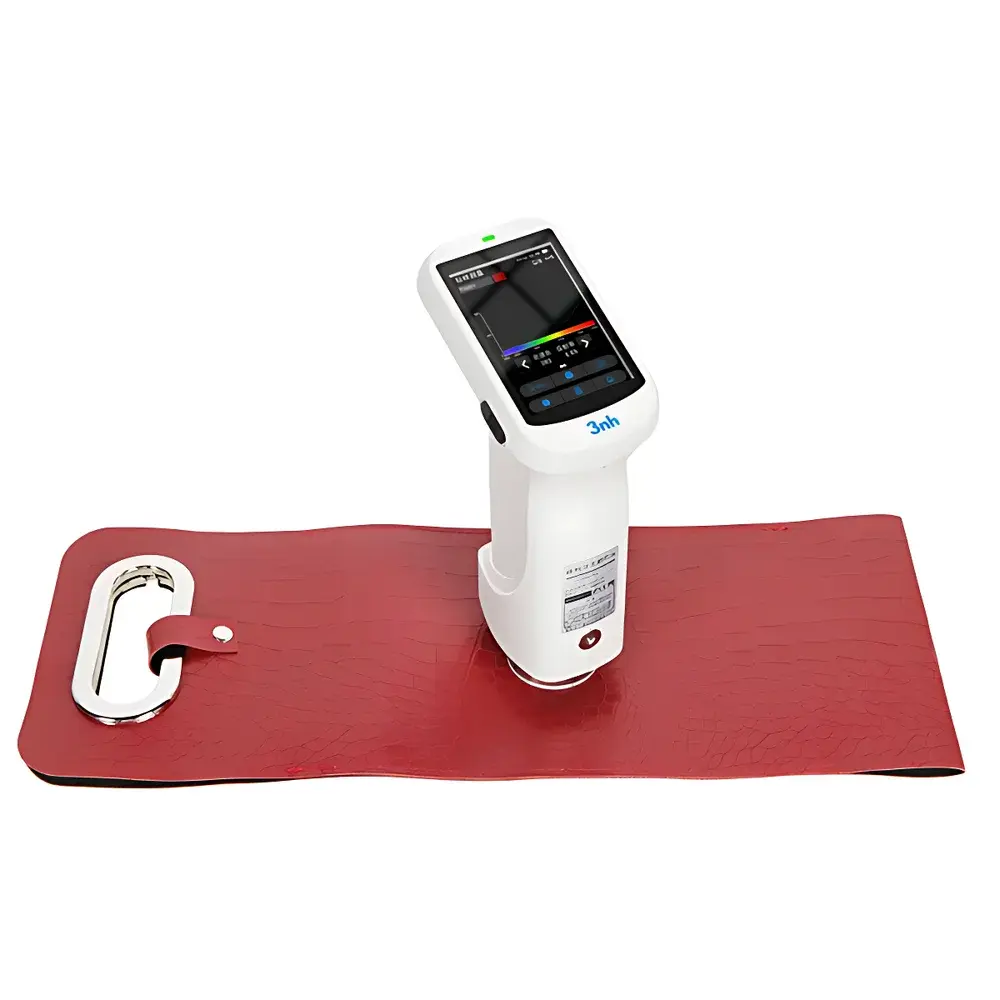
The ST-700d Plus accommodates solid, opaque, translucent, and semi-gloss surfaces—including plastics, painted metal, anodized aluminum, coated paperboard, woven fabrics, ceramic glazes, and pharmaceutical tablets. Its 1×3 mm aperture supports narrow-feature analysis (e.g., inkjet print lines, PCB solder masks), while the Φ4 mm conical tip enables recessed or curved surface sampling. All optical configurations meet international standard requirements for colorimetric instrumentation: CIE 15:2018, ISO 7724-1:2019, ASTM E1164-22, GB/T 18833-2020, and DIN 5033-7:2021. For regulated environments, measurement audit trails (via PC software) support GLP/GMP documentation workflows, and firmware-level timestamping aligns with FDA 21 CFR Part 11 electronic record integrity principles.
Software & Data Management
Native cross-platform support includes Windows desktop application, Android/iOS mobile apps, WeChat Mini Program, and HarmonyOS integration—enabling synchronized database management across global supply chains. The software suite supports full spectral data export (CSV, XML), custom tolerance ellipsoids (CIEDE2000, CMC, DIN99), batch statistical reporting (CPK, ΔE distribution histograms), and automated PDF/Excel report generation. Cloud-ready architecture permits centralized calibration status monitoring, multi-instrument intercomparison studies, and version-controlled firmware updates. All color calculations adhere to CIE 1931 2° and 1964 10° standard observer functions, with optional Munsell conversion (C/2) and textile-specific indices (AATCC Gray Scale, ISO 105-A02).
Applications
This instrument serves as a primary reference tool in sectors where color fidelity directly impacts regulatory compliance, brand equity, or functional performance: automotive OEM paint validation (SAE J1545), medical device packaging verification (ISO 15378), cosmetic formulation QC (ICH Q5C), food product consistency auditing (ASTM D6553), and printed electronics substrate matching (IPC-4552). Its portability and battery endurance (up to 8,500 measurements per charge) make it suitable for supplier audits, in-line process checks, and field service color correction—particularly where laboratory-grade repeatability (ΔE*ab ≤ 0.02) and inter-instrument agreement (ΔE*ab ≤ 0.18 across units) are contractually mandated.
FAQ
What standards does the ST-700d Plus comply with for optical geometry and color calculation?
It conforms to CIE No. 15:2018, ISO 7724-1:2019, ASTM E1164-22, DIN 5033-7:2021, and GB/T 3978–2008 for d/8° sphere geometry, and implements CIE 1931 2°/1964 10° observers with all major color difference formulas (CIEDE2000, CMC, DIN99).
Can the instrument measure fluorescent materials accurately?
Yes—the integrated UV LED channel (365 nm peak) excites fluorescence across the visible band, and full-spectrum LED illumination ensures complete spectral coverage for quantitative fluorophore response per ISO 11475.
How is calibration traceability maintained across multiple devices?
Each unit ships with NIST-traceable ceramic white tile (R ≥ 95% @ 400–700 nm); inter-instrument agreement is validated using BCRA Series II tiles, with documented ΔE*ab ≤ 0.18 (MAV/SCI) meeting ISO 13655:2017 metrological class requirements.
Is spectral data export supported for third-party analysis?
Yes—raw reflectance spectra (360–780 nm, 10 nm steps), XYZ, LAB, and custom illuminant/observer combinations are exportable in CSV and XML formats compatible with MATLAB, Python (NumPy/Pandas), and commercial color science platforms.
Does the firmware support audit trail logging for regulated industries?
While the device itself logs timestamps and calibration events locally, full electronic record functionality—including user authentication, change history, and digital signature—requires the Windows PC software operating in 21 CFR Part 11-compliant mode with enabled audit trail settings.




