
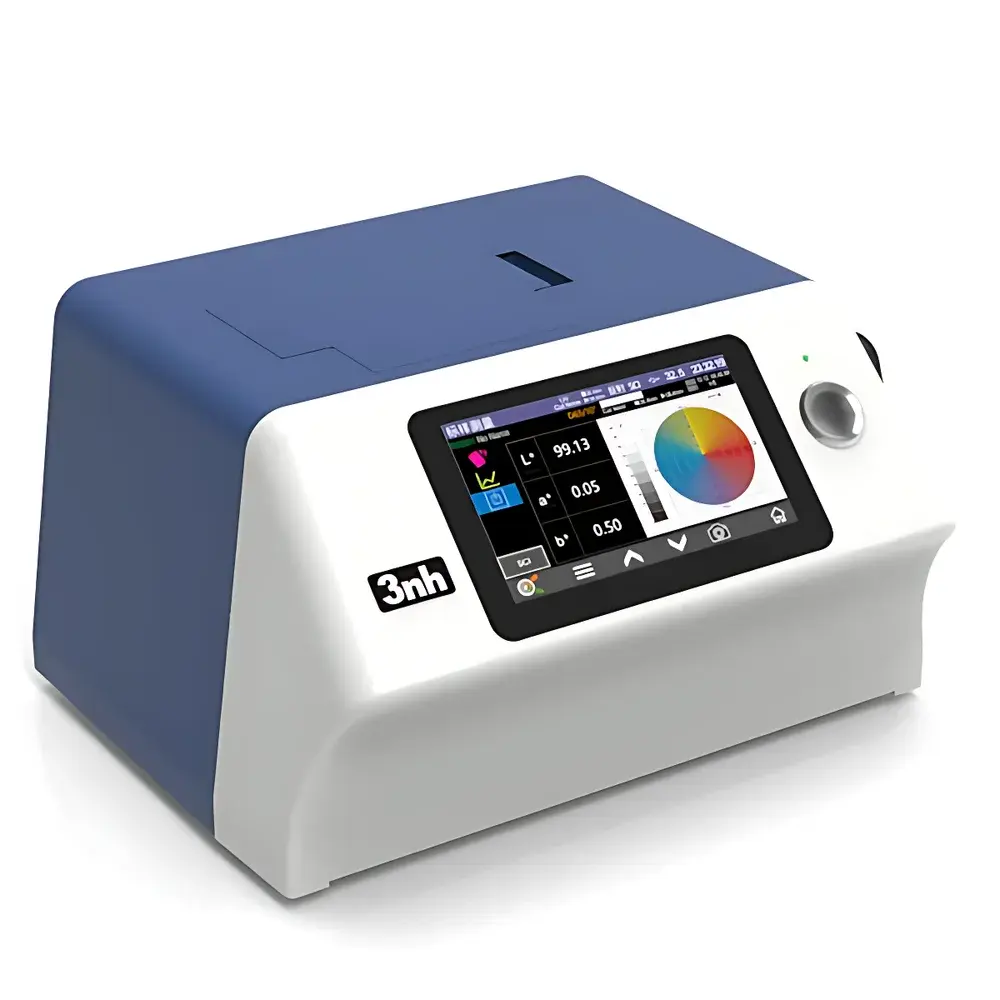
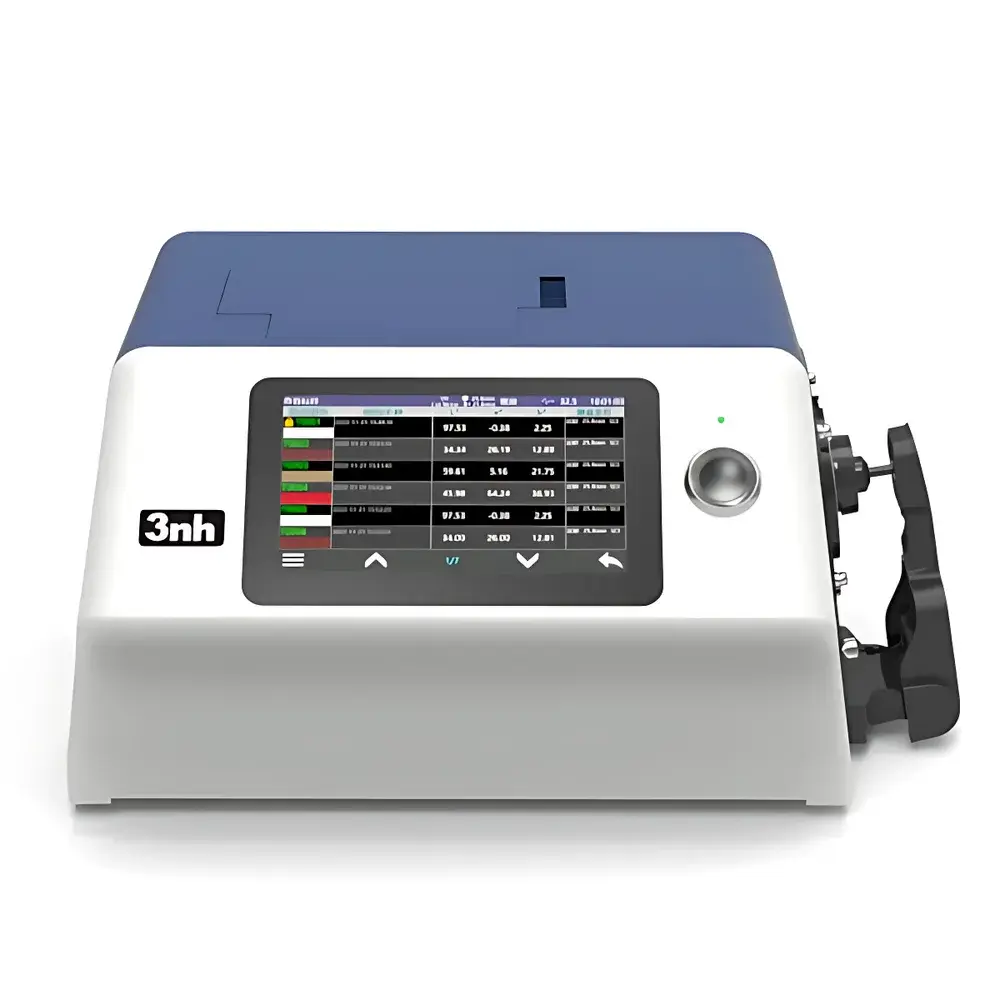
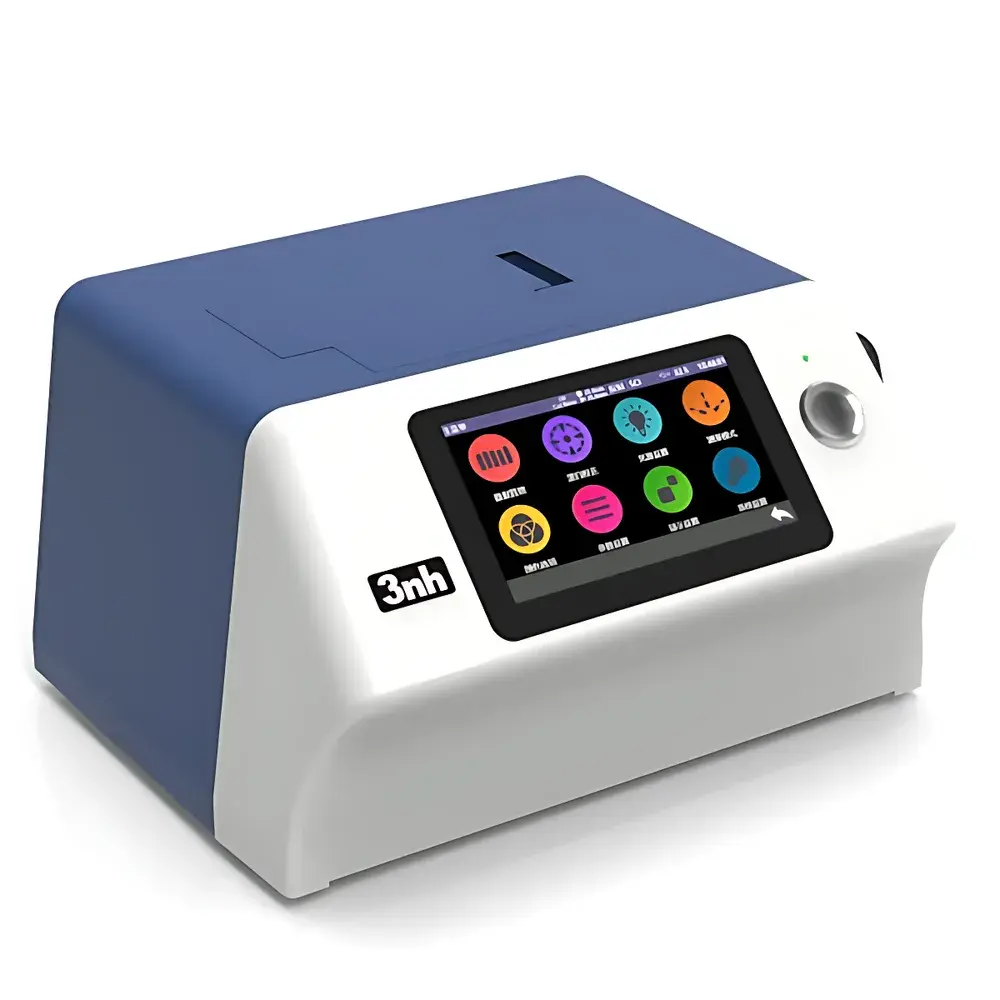
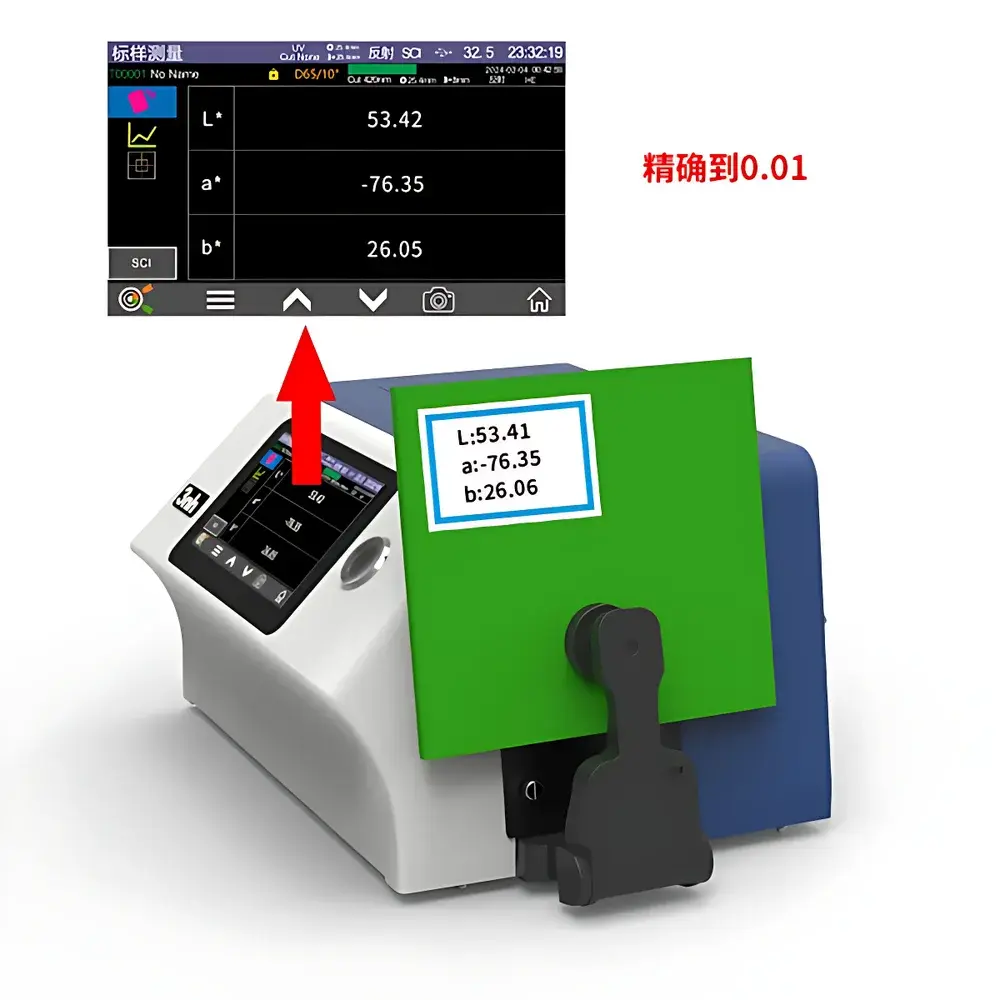
3nh TS8299 Desktop Spectrophotometer
| Brand | 3nh |
|---|---|
| Origin | Guangdong, China |
| Manufacturer Type | Manufacturer |
| Product Category | Spectrophotometer |
| Instrument Type | Desktop |
| Optical Geometry | d/8° integrating sphere |
| Light Source | Combined LED array (360–780 nm), 400 nm cutoff, 420 nm cutoff |
| Spectral Range | 360–780 nm |
| Repeatability | ΔE*ab ≤ 0.008 (Φ25.4 mm, SCI) |
Overview
The 3nh TS8299 Desktop Spectrophotometer is a high-precision, CIE-compliant color measurement instrument engineered for laboratory-grade spectral analysis and industrial color quality control. Operating on the principle of diffuse illumination with an 8° viewing angle (d/8° geometry) and equipped with a calibrated integrating sphere, the TS8299 captures reflectance and transmittance spectra across the full visible range (360–780 nm), including near-UV extension. Its dual-path optical architecture supports both Specular Component Included (SCI) and Specular Component Excluded (SCE) modes—enabling accurate characterization of surface texture effects, gloss influence, and metamerism. Designed for traceable, repeatable measurements under standardized illuminants, the TS8299 serves as a reference-grade tool in environments where color consistency, regulatory compliance, and inter-laboratory data equivalence are critical.
Key Features
- Integrated dual-optical-path design supporting simultaneous SCI/SCE measurement, reflection/transmission, haze, and transmittance evaluation—compatible with opaque, translucent, transparent, and fluorescent samples.
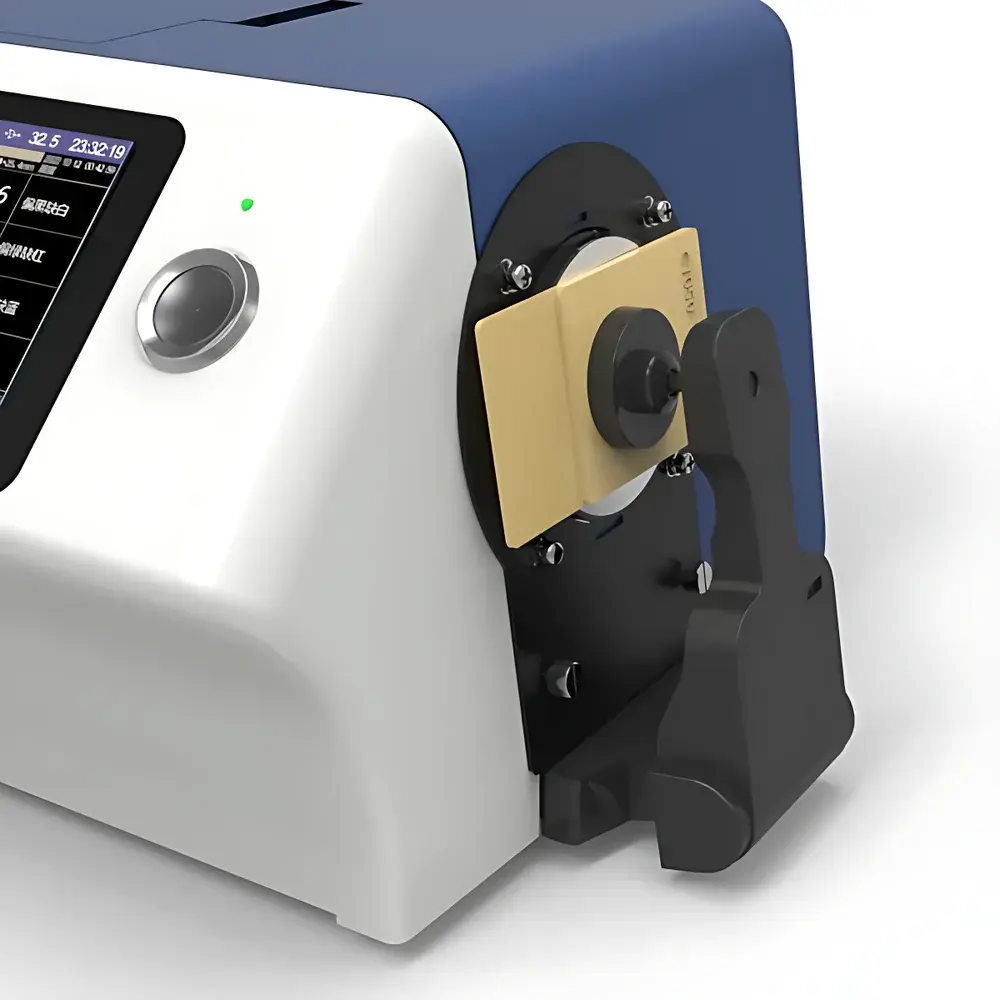
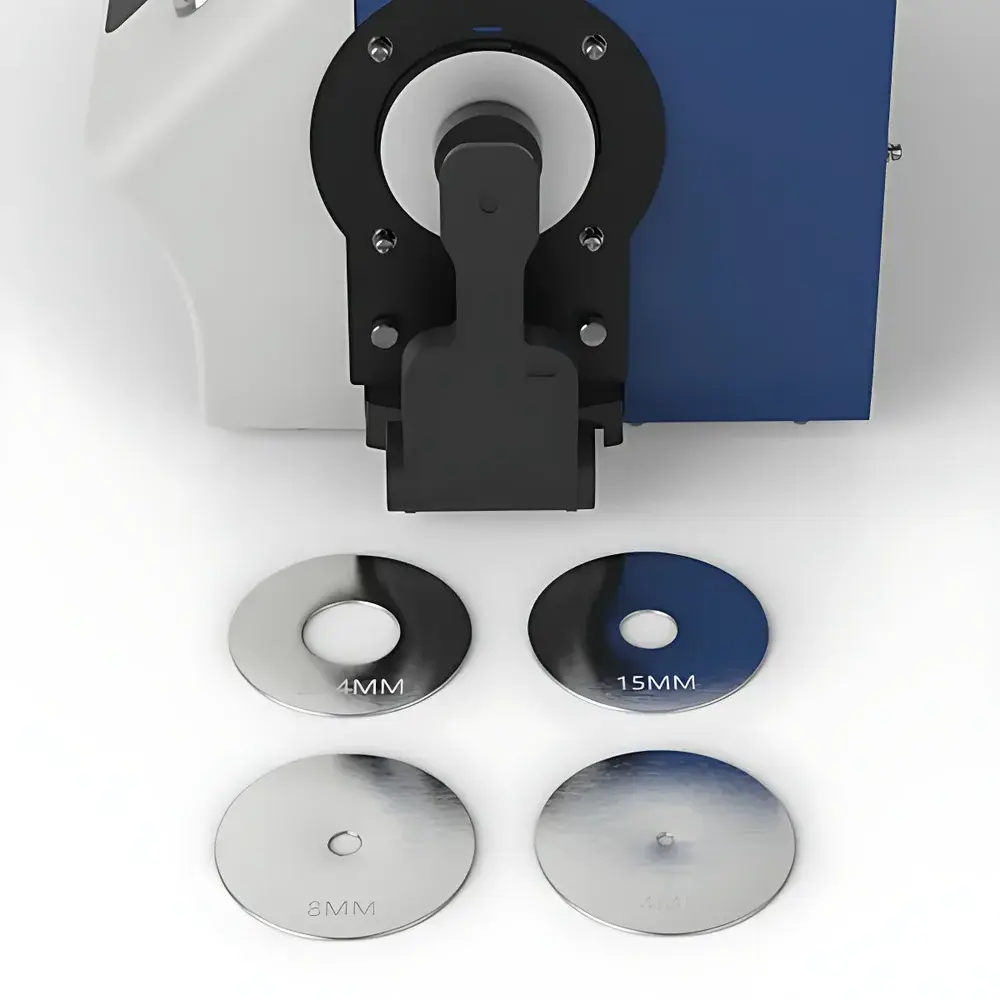
- Multi-aperture system with automatic recognition of four measuring ports: Φ25.4 mm, Φ15 mm, Φ8 mm, and Φ4 mm—optimized for heterogeneous sample geometries and industry-specific ASTM/ISO test requirements.
- Real-time imaging module with coaxial high-resolution camera enables precise targeting and ROI verification, minimizing operator-induced positioning error and enhancing measurement reproducibility.
- Full-spectrum LED illumination with three configurable spectral profiles: broadband (360–780 nm), 400 nm UV-cutoff, and 420 nm UV-cutoff—ensuring compatibility with UV-fluorescent materials and photostability-sensitive applications.
- Preloaded CIE-standard illuminants (D65, A, C, D50, D55, D75, F1–F12, etc.) and observer angles (2° and 10°) compliant with ISO/CIE/ASTM protocols—including USP , ASTM E308, ASTM D2244, and ISO 11664.
- High-stability optical train with thermally compensated sensor array and real-time drift correction—delivering ΔE*ab repeatability ≤ 0.008 under controlled conditions (Φ25.4 mm aperture, SCI mode).
Sample Compatibility & Compliance
The TS8299 accommodates solid, liquid, powdered, and film-based specimens—including coated substrates, plastic pellets, textile swatches, ink films, glass filters, and pharmaceutical tablets. Its transmission module supports direct measurement of clear and hazy liquids per ASTM D1003 (haze) and ASTM D1747 (luminous transmittance). For regulatory alignment, the instrument’s firmware and data output conform to GLP/GMP documentation requirements, supporting audit trails, user access control, and electronic signature readiness per FDA 21 CFR Part 11 when paired with validated software configurations. All spectral data comply with CIE Publication 15:2018, ISO 7724-1:2022, and DIN 5033-7.
Software & Data Management
The TS8299 operates natively with 3nh’s SQCX Quality Control Software—a Windows-based platform designed for enterprise-level color data governance. SQCX supports multi-user role assignment, version-controlled method templates, statistical process control (SPC) charting (X-bar/R, Cp/Cpk), deviation mapping, and automated report generation (PDF/Excel/XML). Raw spectral data (.spc, .csv) and metadata—including instrument ID, calibration timestamp, aperture selection, illuminant, and observer—are embedded and exportable for third-party integration (e.g., LIMS, ERP, or MES systems). The software includes built-in color difference calculators for CIELAB, CMC(l:c), CIEDE2000, and DIN99, along with specialized indices: ASTM D1500 (petroleum), Gardner, APHA/Pt-Co, Yellowness Index (ASTM E313), Whiteness Index (CIE/ASTM E313, Ganz), and Haze (ASTM D1003).
Applications
The TS8299 is deployed across R&D laboratories and production QA/QC departments in sectors requiring rigorous spectral fidelity and cross-site color matching. Key use cases include: formulation validation of automotive coatings and aerospace composites; batch-to-batch consistency monitoring in pigment manufacturing; spectral fingerprinting of dyed textiles per ISO 105-J03; transparency and yellowness assessment of medical-grade polymers; color release testing of pharmaceutical tablets per USP ; and spectral qualification of display filters and optical films. Its UV-cutoff capability further supports stability studies of light-sensitive compounds in cosmetic and agrochemical development.
FAQ
Does the TS8299 support measurement of fluorescent samples?
Yes—the instrument’s 360–780 nm spectral coverage, combined with selectable UV-cutoff sources and SCE/SCI mode flexibility, enables quantitative fluorescence correction and excitation-emission profiling per ISO 13655:2017.
Is calibration traceable to NIST or other national standards?
The TS8299 is supplied with factory calibration certified against 3nh’s internal master standards, which are periodically verified against NIST-traceable ceramic tiles (e.g., BCRA Series II) and liquid standards. Optional annual recalibration services include ISO/IEC 17025-accredited certificates.
Can the device measure color on curved or textured surfaces?
With its motorized aperture selection, real-time camera targeting, and variable port sizes, the TS8299 accommodates moderately curved and structured surfaces—provided the measurement area remains fully illuminated within the selected aperture footprint and complies with ISO 2813 gloss limitations.
What spectral resolution and sampling interval does the TS8299 employ?
The instrument acquires spectra at 10 nm intervals from 360 nm to 780 nm, with interpolated resolution down to 1 nm for derivative analysis and peak detection—consistent with ASTM E2535 and ISO/CIE 13655 spectral reporting conventions.
Is remote operation or API integration available?
SQCX software provides COM/ActiveX and TCP/IP interfaces for OEM integration, PLC synchronization, and custom script automation (Python/VB.NET), enabling deployment in Industry 4.0 production lines and centralized metrology networks.



