
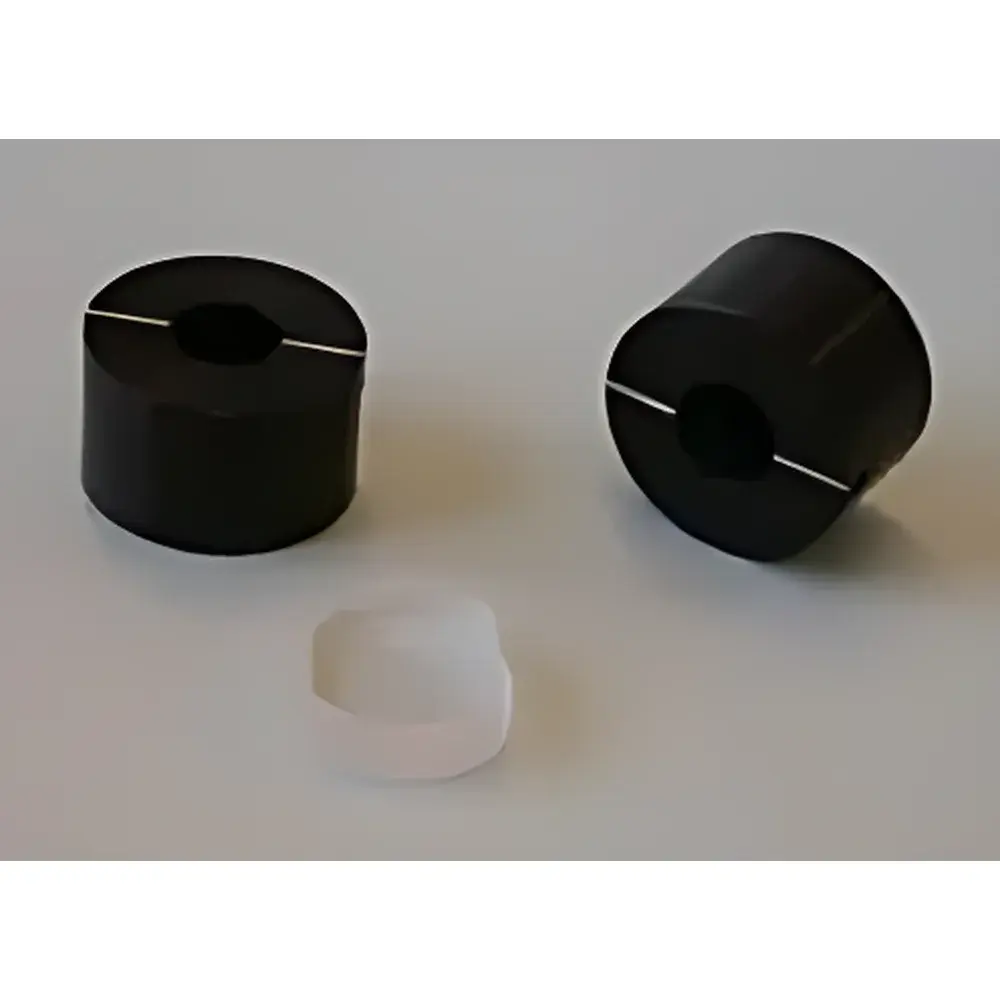
Achromatic Polarization Rotator
| Origin | Canada |
|---|---|
| Manufacturer Type | Distributor |
| Origin Category | Imported |
| Model | Achromatic Polarization Rotator |
| Pricing | Upon Request |
| Component Category | Light Source |
Overview
The Achromatic Polarization Rotator is a precision optical component engineered to rotate the plane of linear polarization of incident light with minimal wavelength-dependent deviation across a broad spectral range. Unlike simple half-wave plates, this rotator employs a compound design—typically consisting of two or more birefringent crystal elements (e.g., quartz and magnesium fluoride) cemented or air-spaced in series—to compensate for dispersion. Its achromatic performance ensures consistent rotation angles (commonly 45° or 90°, configurable upon request) from the visible through near-infrared (e.g., 400–1100 nm), making it indispensable in broadband polarimetric systems where polarization fidelity must be preserved independent of wavelength. The device operates on the principle of controlled, spectrally balanced retardation and is optimized for collimated, low-divergence beams with defined input polarization states.
Key Features
- Achromatic design delivering <±1.5° polarization angle deviation over 400–1100 nm
- High transmission efficiency (>95% per surface, AR-coated for specified band)
- Wavefront distortion <λ/8 @ 633 nm (typical), suitable for interferometric-grade applications
- Mounted in kinematic SM1-threaded housing with engraved angular reference marks and zero-alignment indicator
- Compatible with standard optomechanical platforms (e.g., Thorlabs, Newport) via integrated mounting flange or optional cage-system adapters
- Thermally stable construction with low coefficient of thermal expansion (CTE-matched substrates)
Sample Compatibility & Compliance
The rotator is designed for use with free-space, collimated beams of diameter ≤12 mm (standard aperture); custom apertures up to 25 mm are available. It supports both CW and pulsed laser sources (including femtosecond Ti:sapphire and picosecond Nd:YAG systems) provided pulse energy remains below damage threshold specifications (≥5 J/cm² for 10 ns pulses at 1064 nm). All optical coatings comply with ISO 10110-7 surface quality standards (scratch-dig 10-5), and mechanical housing meets RoHS Directive 2011/65/EU. Device documentation includes traceable calibration data per ISO/IEC 17025-accredited methodology, supporting GLP-compliant laboratory workflows.
Software & Data Management
As a passive optical component, the Achromatic Polarization Rotator requires no embedded firmware or driver software. However, its integration into automated polarization control systems is facilitated by compatibility with industry-standard motion controllers (e.g., Thorlabs KDC101, Newport ESP300) when paired with motorized rotation mounts. Calibration reports include wavelength-dependent retardation curves and angular accuracy maps—exportable as CSV or MATLAB-compatible .mat files. For regulated environments (e.g., ISO 13485 or FDA 21 CFR Part 11), full audit trails—including serial-numbered calibration certificates, environmental test logs, and material declarations—are provided upon delivery.
Applications
- Polarization-resolved Raman spectroscopy, where consistent excitation polarization is critical across multiband detection
- Ellipsometry systems requiring broadband polarization state generation without recalibration between wavelengths
- Quantum optics experiments involving polarization-entangled photon sources and time-bin encoding
- Optical coherence tomography (OCT) beam conditioning for polarization diversity detection
- Calibration of Stokes polarimeters and Mueller matrix measurement setups
- Industrial laser processing monitoring, where real-time polarization feedback improves weld seam consistency
FAQ
What is the typical angular accuracy across the specified wavelength range?
Angular deviation remains within ±1.5° from nominal rotation (e.g., 90°) from 400 nm to 1100 nm, verified via calibrated rotating analyzer polarimetry.
Can this rotator be used with high-power CW lasers?
Yes—when operated within specified power density limits (<1 kW/cm² for 1064 nm, continuous wave) and with appropriate beam homogenization to avoid localized thermal lensing.
Is vacuum-compatible packaging available?
Standard units are not vacuum-rated; however, custom versions with stainless-steel housings and outgassing-certified adhesives can be supplied under NDA.
Do you provide OEM integration support?
Yes—mechanical drawings (STEP/IGES), coating spectral reflectance/transmittance data, and mounting torque specifications are included with every order.
How is wavelength-dependent performance validated?
Each unit undergoes spectral retardation mapping using a calibrated photoelastic modulator-based polarimeter traceable to NIST SRM 2085.





