
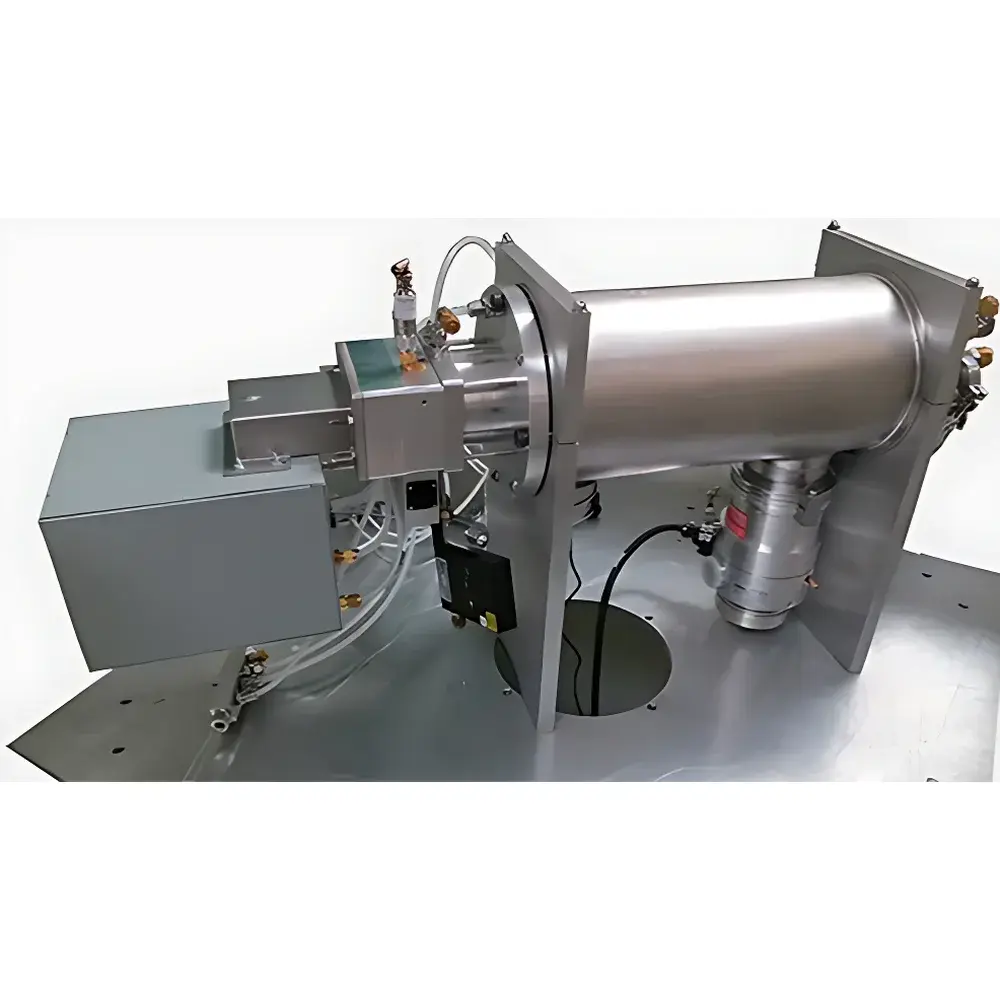
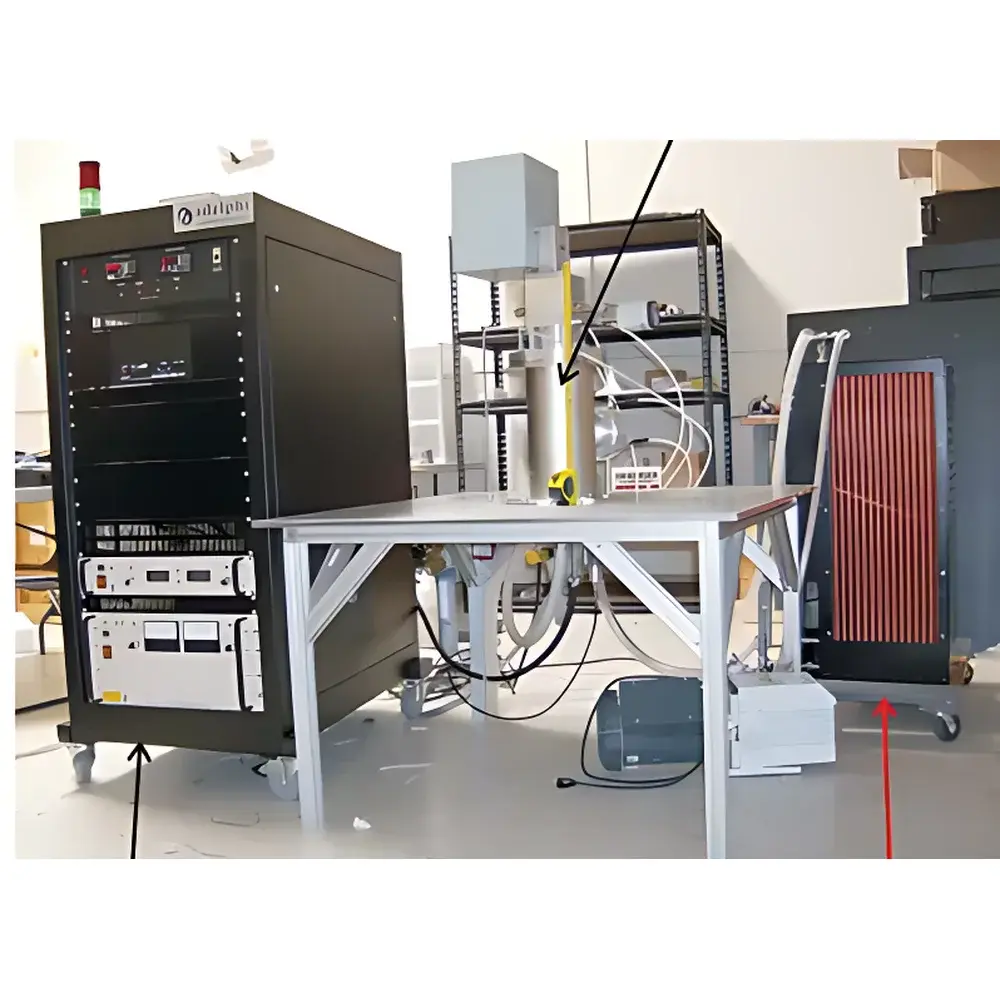
Adelphi DD110 Deuterium-Deuterium (D-D) Fast Neutron Generator
| Key | Origin: USA |
|---|---|
| Manufacturer Type | Authorized Distributor |
| Origin Category | Imported |
| Model | DD110 |
| Pricing | Available Upon Request |
| Neutron Yield | 1 × 10⁹ n/s |
| Neutron Energy | 2.5 MeV |
| Source Diameter | ≤ 16 mm |
| Maintenance Interval | ≥ 2000 h (scheduled, component-replaceable) |
| Operating Mode | Continuous (standard), Pulsed (optional, ≥ 50 µs pulse width, up to 100% duty factor) |
Overview
The Adelphi DD110 is a compact, high-output deuterium-deuterium (D-D) fast neutron generator engineered for laboratory-scale nuclear physics research, neutron activation analysis (NAA), radiation effects testing, and educational neutron source applications. Unlike radioactive isotopic sources, the DD110 produces neutrons on-demand via inertial electrostatic confinement (IEC)-assisted D-D fusion reactions—accelerating deuterium ions into a deuterated target under high vacuum conditions. This results in a monoenergetic neutron beam centered at 2.5 MeV, with negligible gamma background and no regulatory burden associated with sealed radioactive sources. Its open-vacuum architecture eliminates pressurized gas containment, enhancing operational safety and long-term stability. Designed for continuous-duty operation with minimal thermal drift, the DD110 delivers reproducible neutron flux over extended runtime cycles—making it suitable for quantitative, time-resolved experiments requiring traceable, controllable neutron output.
Key Features
- High neutron yield of 1 × 10⁹ neutrons per second at rated operating voltage and current, enabling statistically robust measurements in NAA and dosimetry calibration.
- Compact source geometry with ≤16 mm effective neutron emission diameter, facilitating collimation and spatial resolution in beamline configurations.
- Vacuum-integrated design using a dedicated turbomolecular pumping system ensures stable ion beam focus and consistent target sputtering rates—critical for yield reproducibility across multi-week campaigns.
- Modular internal architecture permits field-replacement of consumable components including the deuterated metal hydride target (e.g., TiD₂ or ErD₃), plasma aperture electrodes, and insulator assemblies—extending functional service life beyond 10,000 hours with routine maintenance.
- Standard continuous-mode operation supports steady-state irradiation protocols; optional pulsed mode provides programmable neutron bursts ≥50 µs wide, adjustable duty factor up to 100%, compatible with time-of-flight (TOF) spectroscopy and gated detection systems.
- Integrated interlock network compliant with IEC 61010-1 and ANSI N43.3 standards, featuring real-time vacuum monitoring, high-voltage fault logging, and remote emergency shutdown capability.
Sample Compatibility & Compliance
The DD110 is compatible with standard neutron irradiation sample holders (e.g., aluminum or graphite capsules) and integrates seamlessly with existing neutron shielding vaults (concrete, polyethylene-boron composites) and beamline optics. It meets requirements for Class III radiation-producing equipment per U.S. NRC 10 CFR Part 30 and is classified as a “non-isotopic neutron source” under IAEA SSG-46. While not requiring NRC licensing for possession, institutional radiation safety officers (RSOs) must register its use under local ALARA programs. The system supports GLP-compliant operation through hardware-enforced audit trails, timestamped yield logs, and user-access-controlled parameter locking—fully traceable for ISO/IEC 17025-accredited laboratories conducting certified neutron fluence measurements.
Software & Data Management
Control and monitoring are executed via Adelphi’s proprietary NeutronLink™ GUI (Windows-based), which provides real-time visualization of beam current, target voltage, vacuum pressure, neutron detector count rate (via optional He-3 or BF₃ monitor integration), and cumulative neutron fluence. All operational parameters—including pulse timing, dwell time, and interlock status—are logged in CSV- and SQLite-formatted files with SHA-256 checksum integrity verification. Data export supports ASTM E268–22-compliant reporting templates for neutron fluence certification. Remote access is available via TLS-secured Ethernet connection, enabling integration into centralized lab infrastructure management platforms. Firmware updates maintain backward compatibility and include periodic validation routines aligned with NIST-traceable neutron yield calibration procedures.
Applications
- Neutron activation analysis (NAA) of geological, environmental, and archaeological specimens—particularly for elements with high (n,γ) cross-sections (e.g., Mn, Na, Al, V) at 2.5 MeV.
- Radiation hardness testing of microelectronics and aerospace components under controlled fast-neutron spectra.
- Calibration and validation of neutron detectors (scintillators, proportional counters, solid-state sensors) across energy thresholds relevant to fission reactor monitoring.
- Teaching and training in nuclear engineering curricula—demonstrating fusion principles, neutron moderation, and shielding effectiveness without radiological licensing overhead.
- Development of neutron imaging prototypes, especially for low-Z material contrast enhancement where thermal neutron sources exhibit limited penetration.
FAQ
Does the DD110 require radioactive material licensing?
No—it is a non-isotopic neutron source and does not contain or generate radioactive isotopes during operation. Institutional registration with the RSO suffices.
Can the neutron energy spectrum be modified?
The primary D-D peak remains fixed at 2.5 MeV; spectral tailoring requires external moderators (e.g., HDPE, water, or graphite) placed downstream of the source port.
What vacuum level is maintained during operation?
Typical operating pressure is 1 × 10⁻⁵ Torr, sustained by a dual-stage vacuum system comprising a scroll pre-pump and 300 L/s turbomolecular pump.
Is remote operation supported out-of-the-box?
Yes—Ethernet interface with RESTful API and SCPI command set enables integration into automated test benches and facility-wide control networks.
How is neutron output calibrated and verified?
Each unit ships with a NIST-traceable neutron yield certificate based on absolute measurements using a calibrated long-counter detector in a reference geometry; annual recalibration services are available through Adelphi-certified labs.




