
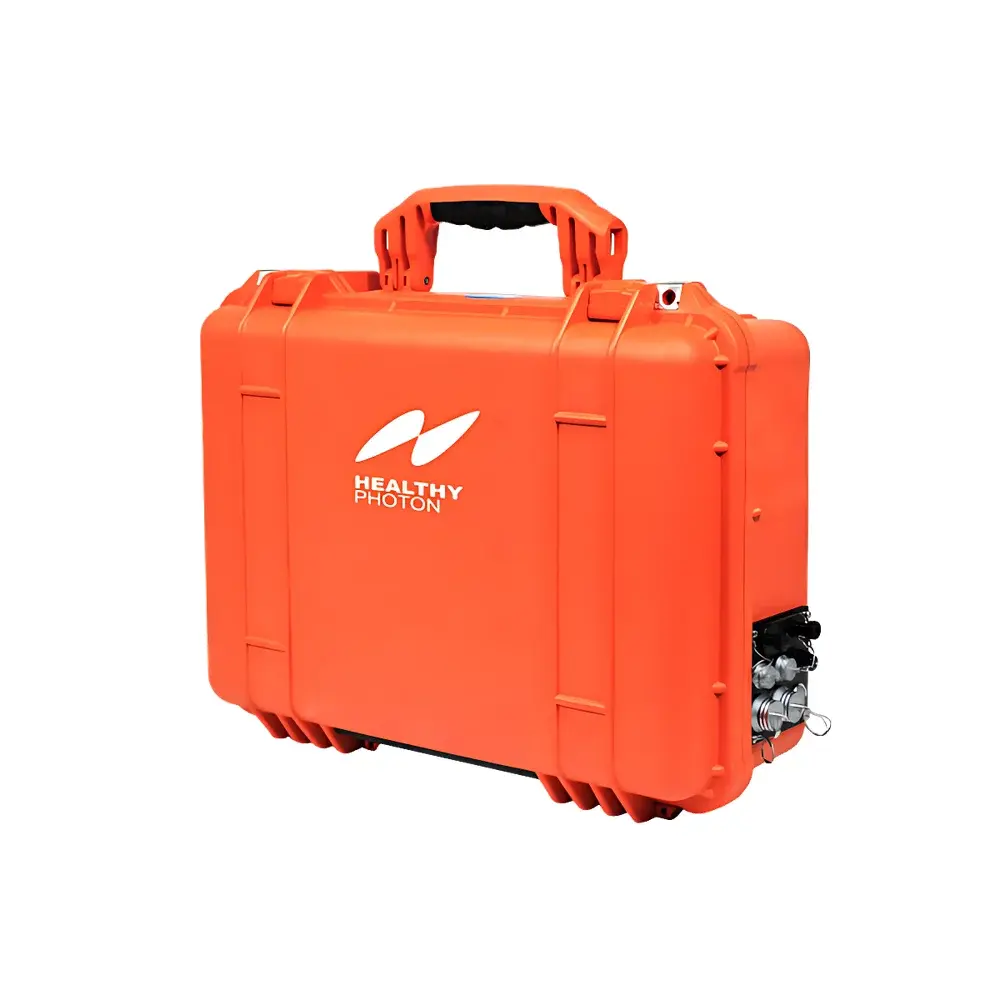
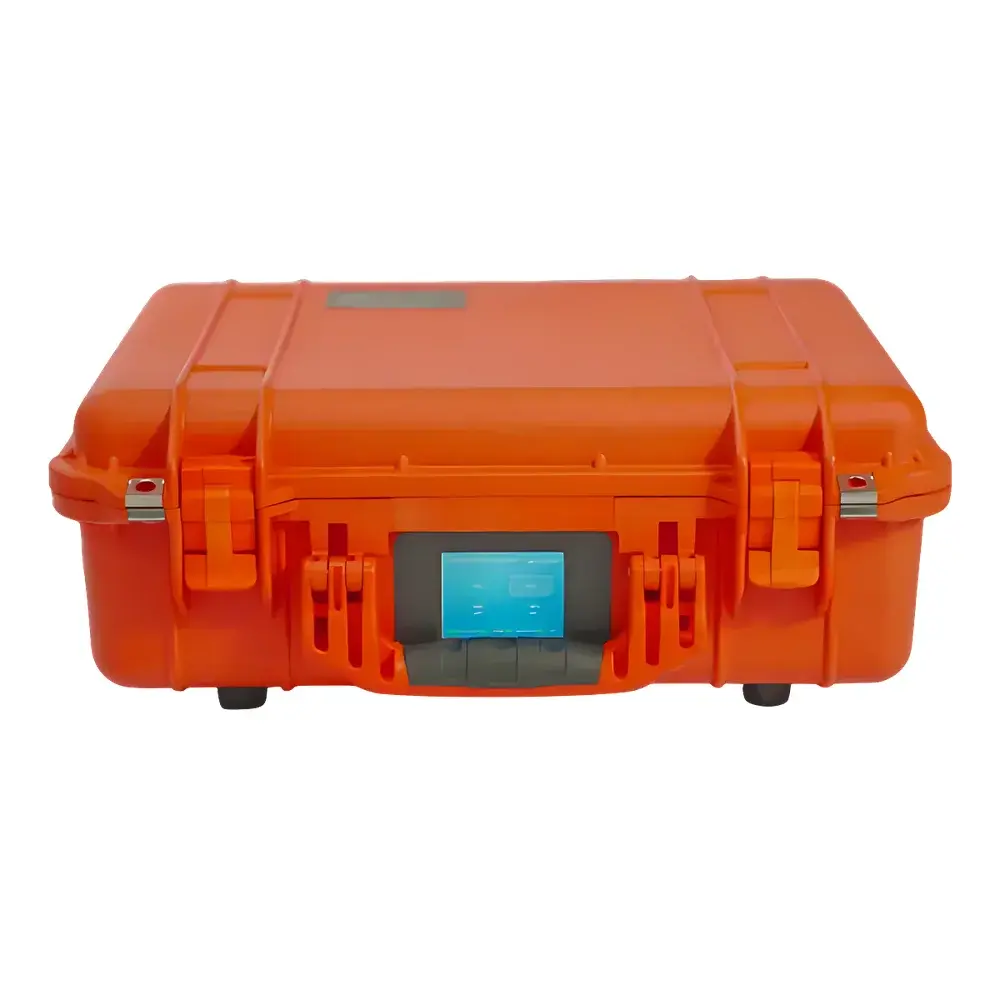
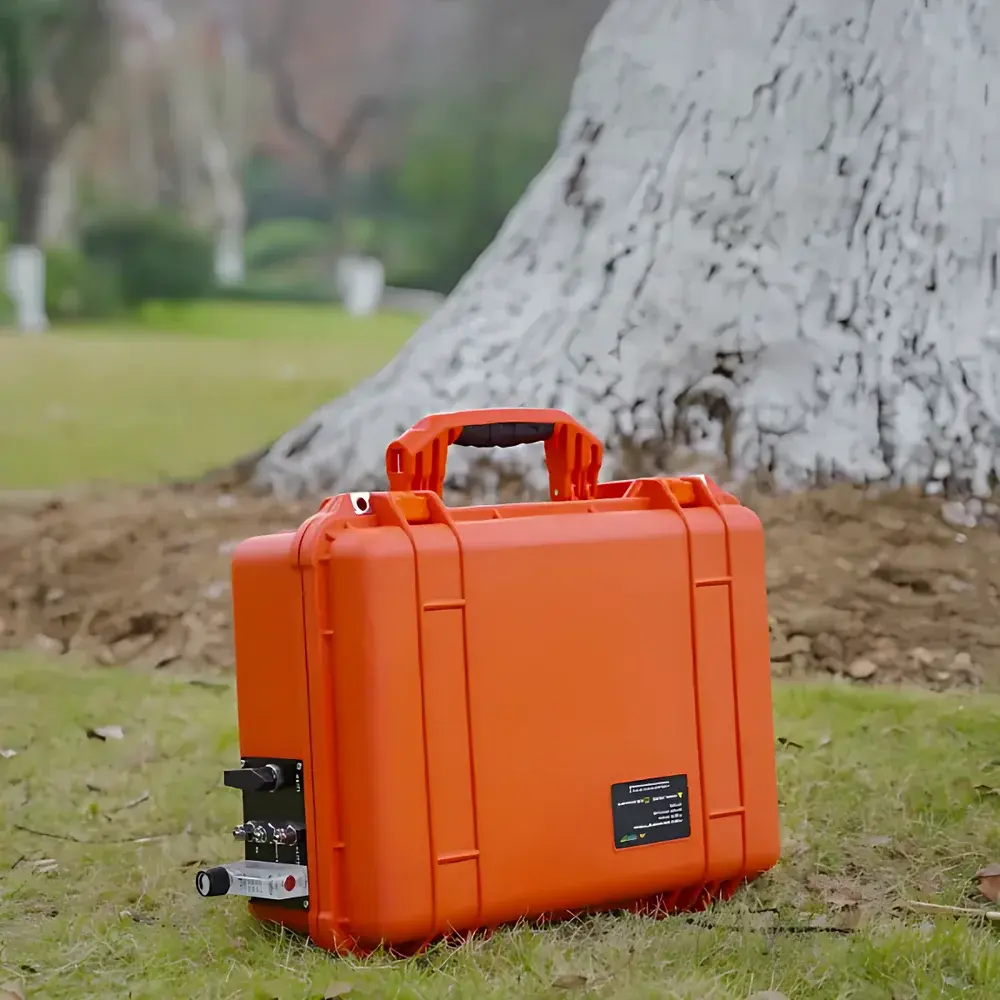
AeroNose HT8830 Portable Multi-Component Greenhouse Gas Analyzer
| Brand | AeroNose |
|---|---|
| Origin | Zhejiang, China |
| Manufacturer | AeroNose (OEM/ODM Capable) |
| Model | HT8830 |
| Technology Principle | Tunable Diode Laser Absorption Spectroscopy (TDLAS) in Mid-Infrared Region |
| Detection Gases & Ranges | CO₂: 0–5000 ppm |
| N₂O | 0–6 ppm |
| H₂O | 0–30000 ppm |
| Accuracy | CO₂: ±0.5 ppm @ 400 ppm |
| N₂O | ±0.5 ppb @ 330 ppb |
| H₂O | ±10 ppm @ 10000 ppm |
| Response Time | <15 s |
| Operating Temperature | −10 °C to +45 °C |
| Storage Temperature | −25 °C to +50 °C |
| Relative Humidity | <95% RH (non-condensing) |
| Atmospheric Pressure Range | 70–110 kPa |
| Dimensions | 50 cm × 36 cm × 18 cm |
| Weight | <15 kg |
| Power Supply | 12 VDC / 10 A |
| Power Consumption | <70 W (steady-state) |
| Data Storage | Integrated SD card or external DAQ system |
| Communication Interface | RS232 serial port |
| User Interface | Windows-based control and visualization software |
Overview
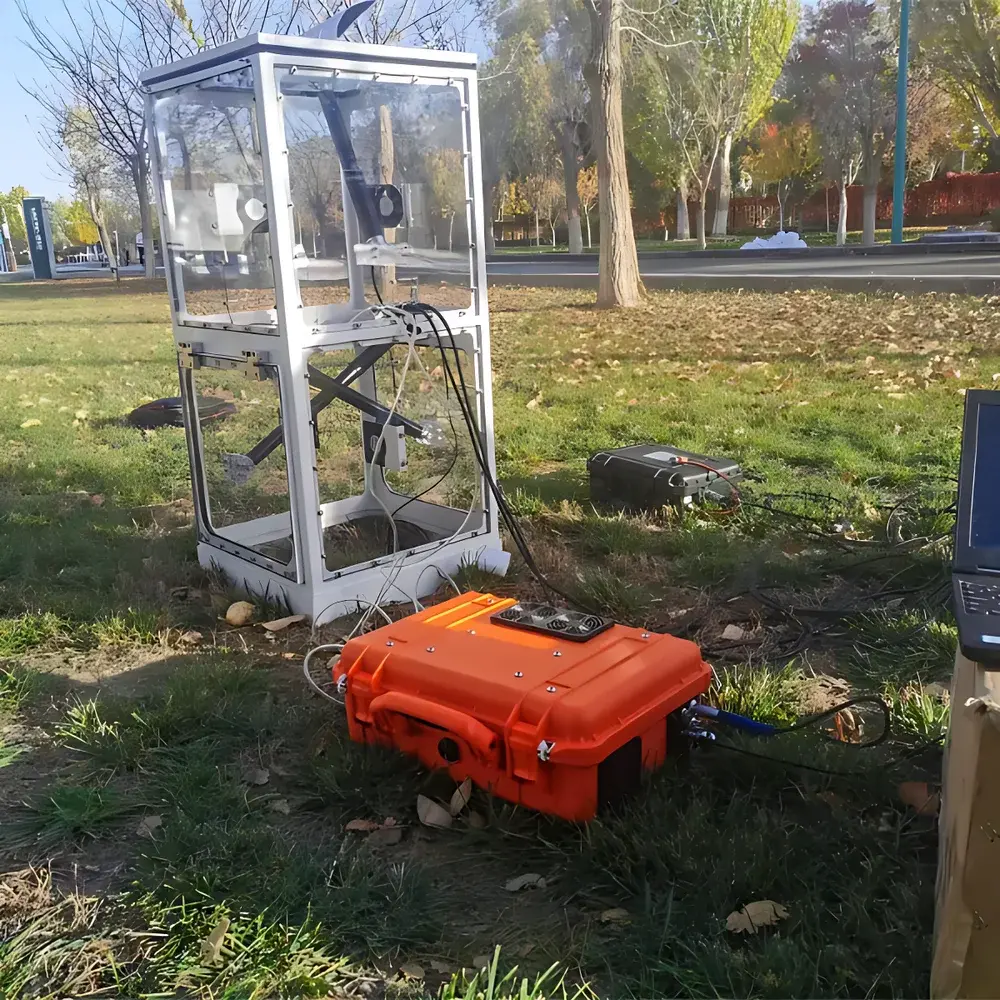
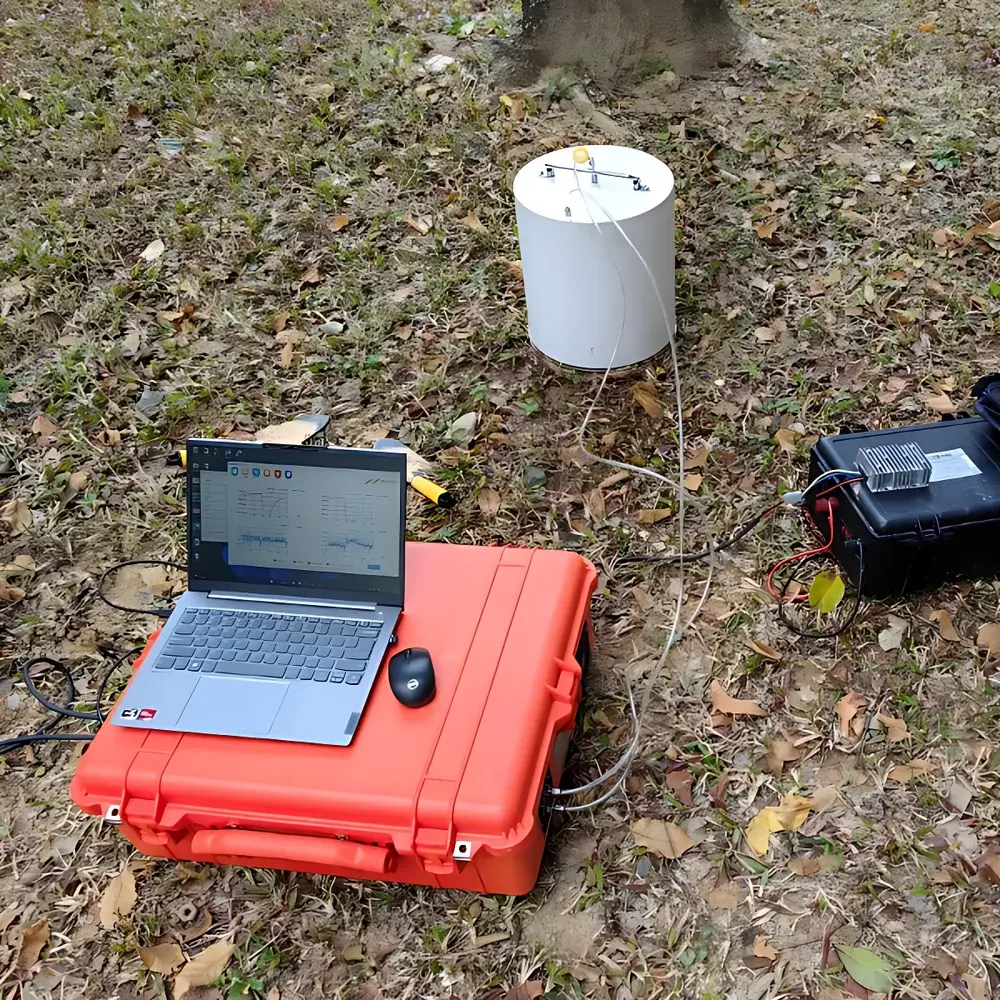
The AeroNose HT8830 is a field-deployable, battery- and solar-compatible portable analyzer engineered for simultaneous, real-time quantification of carbon dioxide (CO₂), nitrous oxide (N₂O), and water vapor (H₂O) in ambient air, soil flux chambers, aquatic headspaces, and mobile survey platforms. It employs tunable diode laser absorption spectroscopy (TDLAS) operating in the mid-infrared (MIR) spectral region—specifically targeting isolated, high-intensity rovibrational absorption lines of each target gas. This spectral selectivity eliminates interferences from overlapping transitions of co-existing atmospheric constituents (e.g., CH₄, CO, O₃), enabling direct, calibration-free measurement without chemical scrubbing or separation columns. Unlike cavity-enhanced or photoacoustic variants, the HT8830 utilizes a compact, thermally stabilized multi-pass optical cell with optimized pathlength—balancing sensitivity, stability, and mechanical robustness for unattended outdoor operation. Its design adheres to the metrological principles outlined in ISO 14064-3 (greenhouse gas validation) and supports traceable data acquisition under GLP-aligned field protocols.
Key Features
- Multi-component specificity: Simultaneous detection of CO₂, N₂O, and H₂O using spectrally resolved MIR-TDLAS—each gas measured on its own non-overlapping, pressure-broadened absorption line (e.g., CO₂ at ~4.26 µm, N₂O at ~4.52 µm, H₂O at ~2.7 µm).
- Field-grade stability: No ultra-long optical cavities or vacuum systems required; thermal management and vibration-damping mounts ensure baseline drift <0.2 ppm/h for CO₂ under diurnal temperature cycling (−5 °C to +40 °C).
- Low-power architecture: Total system power draw ≤70 W in steady-state operation; compatible with 12 VDC input from lithium-iron-phosphate (LiFePO₄) batteries or photovoltaic arrays with MPPT charge controllers—enabling >72 h continuous operation on a 100 Ah battery bank.
- Ruggedized portability: IP54-rated enclosure (dust-protected, splash-resistant); shock-mounted optics; operational within −10 °C to +45 °C ambient range; weight <15 kg including integrated sample inlet, pump, and flow controller.
- Self-calibrating diagnostics: Onboard reference cell with certified NIST-traceable gas standards enables automated zero/span verification every 24 h; full system health logging (laser current, detector voltage, cell temperature, flow rate) stored with spectral raw data.
Sample Compatibility & Compliance
The HT8830 accepts gas samples via heated stainless-steel inlet (optional 50 °C heating to prevent condensation) and integrated mass flow controller (0.1–2 L/min range). It interfaces directly with common environmental sampling configurations: soil collar chambers (e.g., static or dynamic flux chambers per ASTM D6728), floating chamber systems for aquatic GHG emission studies, and vehicle-mounted intake manifolds for mobile mapping. All firmware and data handling comply with ISO/IEC 17025 requirements for measurement uncertainty estimation, and raw spectral files retain full metadata (timestamp, GPS coordinates if externally synced, ambient T/P/RH). While not FDA 21 CFR Part 11-certified out-of-the-box, audit trails, user access logs, and electronic signature support can be enabled via optional configuration for regulated environmental monitoring programs.
Software & Data Management
AeroNose Control Suite (Windows 10/11 compatible) provides real-time spectral visualization, multi-gas concentration trending, and configurable alarm thresholds. All measurements are timestamped with microsecond resolution and stored in open-format CSV and HDF5 files—including calibrated concentrations, raw absorbance spectra, and instrument status parameters. The software supports batch processing of spectral baselines using polynomial fitting and least-squares fitting against HITRAN 2020 line database cross-sections. Data export modules include direct integration with EDD (Environmental Data Deliverables) templates and compatibility with EPA’s MOVES and CALPUFF modeling inputs. Remote monitoring is achievable via optional Ethernet-to-RS232 bridge with Modbus RTU protocol support.
Applications
- Soil respiration flux quantification in agricultural, forest, and wetland ecosystems—aligned with IPCC Tier 2 methodology for national GHG inventories.
- In situ surface water and sediment-water interface N₂O and CO₂ evasion studies, supporting UN SDG 14.1 and 15.3 reporting frameworks.
- Urban and peri-urban atmospheric GHG gradient profiling using backpack or drone-mounted deployments.
- Validation of satellite-based XCO₂ and XN₂O retrievals (e.g., OCO-2, Sentinel-5P) through coordinated ground-truth campaigns.
- Process monitoring in biogas upgrading facilities and landfill cover gas extraction systems—supporting ISO 14067 carbon footprinting.
FAQ
Does the HT8830 require daily manual calibration?
No. The analyzer performs automated zero and span checks using internal reference cells at user-defined intervals (default: every 24 hours); factory calibration remains stable for ≥6 months under typical field conditions.
Can it operate unattended for extended periods in remote locations?
Yes. With a 120 Ah LiFePO₄ battery and 100 W solar panel (with charge controller), the system sustains continuous operation—including data logging, telemetry, and active temperature control—for >10 days without human intervention.
Is spectral raw data accessible for reprocessing?
Yes. All acquired interferograms and absorbance spectra are saved in HDF5 format with full metadata, enabling offline reanalysis with custom line-fitting algorithms or third-party spectroscopic libraries.
What maintenance is required for long-term field deployment?
Annual replacement of the particulate filter and inlet desiccant cartridge; biannual inspection of optical window cleanliness and pump diaphragm integrity; no laser or detector replacements needed within 5-year design lifetime.
How is cross-sensitivity to methane (CH₄) mitigated when measuring N₂O?
The HT8830 selects an N₂O absorption line at 2203.6 cm⁻¹ (4.533 µm) with <0.002% overlap from CH₄’s strongest MIR bands—verified by laboratory testing against NIST Standard Reference Material (SRM) 1650b (methane in air) at up to 100 ppm CH₄ concentration.







