
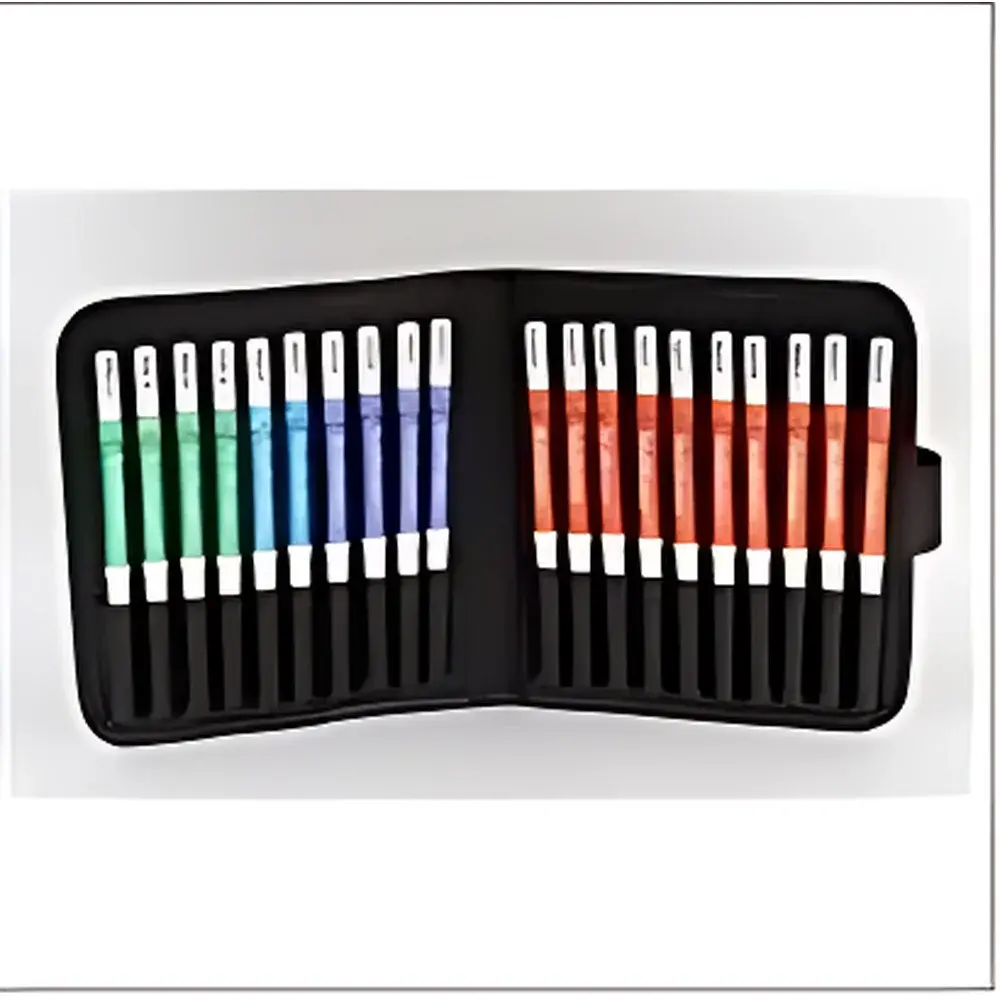
Aesthesio Von Frey Filament Set for Rodent Mechanical Allodynia and Hyperalgesia Assessment
| Origin | Italy |
|---|---|
| Manufacturer Type | Authorized Distributor |
| Origin Category | Imported |
| Model | Aesthesio |
| Pricing | Available Upon Request |
Overview
The Aesthesio Von Frey Filament Set is a precision-engineered, standardized tactile sensory assessment tool designed for quantitative evaluation of mechanical nociception in rodent models. Based on the Semmes-Weinstein monofilament principle, it applies calibrated, non-invasive mechanical stimuli to the plantar surface of hind paws to elicit and quantify withdrawal reflexes—serving as a behavioral proxy for mechanical allodynia and hyperalgesia. Each filament consists of a precisely manufactured nylon fiber mounted orthogonally on a rigid plastic handle; force delivery is governed by Euler–Bernoulli beam deflection mechanics—where applied force (in grams) is determined solely by filament diameter, material modulus, and controlled bending displacement. The set comprises 20 filaments spanning a validated dynamic range from 0.008 g to 300 g (logarithmic scale), enabling high-resolution threshold mapping across physiological and pathophysiological states.
Key Features
- 20 individually calibrated filaments traceable to international metrological standards, each marked with color-coded identification and corresponding target force (g) and log10 value
- Nylon monofilaments manufactured under ISO 9001-certified processes to ensure batch-to-batch reproducibility in flexural rigidity and elastic recovery
- Consistent stimulus geometry: filaments are applied perpendicularly to the skin surface at a fixed rate (3–5 s ramp, 6 s dwell) to minimize operator-induced variability
- Comprehensive force coverage: spans sub-threshold innocuous touch (0.008 g) through noxious mechanical pressure (300 g), supporting both baseline sensitivity profiling and longitudinal disease progression studies
- Ergonomic, non-slip handles facilitate single-handed operation and reduce experimenter fatigue during high-throughput testing protocols
- Compatible with standard rodent restraint devices and automated video-tracking systems for synchronized behavioral annotation
Sample Compatibility & Compliance
The Aesthesio set is optimized for use in C57BL/6, BALB/c, CD-1, and Sprague-Dawley mice and rats (18–35 g and 200–300 g, respectively). It adheres to widely accepted preclinical guidelines including the IASP’s “Animal Models of Pain” consensus recommendations and NIH Office of Laboratory Animal Welfare (OLAW) standards for humane endpoint determination. When integrated into GLP-compliant study designs, filament application protocols may be documented with full audit trails—including operator ID, date/time stamp, filament lot number, and raw withdrawal latency data—to support regulatory submissions under FDA Guidance for Industry (2022) and EMA CHMP Reflection Paper on Analgesic Drug Development.
Software & Data Management
While the Aesthesio set operates independently as a manual assessment tool, its output integrates seamlessly with third-party behavioral analysis platforms such as Noldus EthoVision XT, CleverSys TopScan, or open-source tools like DeepLabCut. Force values are encoded using the standardized Semmes-Weinstein numbering system (e.g., 4.31 = 2 g), enabling direct import into statistical packages (R, GraphPad Prism, SAS) for up-down method (Dixon) or area-under-curve (AUC) analysis. For regulated environments, laboratory information management systems (LIMS) can associate filament usage logs with animal ID, protocol version, and environmental metadata—ensuring full traceability under 21 CFR Part 11 when paired with electronic signature workflows.
Applications
- Neuropathic pain modeling: sciatic nerve chronic constriction injury (CCI), spared nerve injury (SNI), and streptozotocin-induced diabetic neuropathy
- Inflammatory pain assessment: CFA-induced monoarthritis, carrageenan paw edema, and TNFα-mediated synovitis
- Pharmacodynamic evaluation of novel analgesics: opioid receptor modulators, Nav1.7/1.8 inhibitors, and anti-NGF biologics
- Genetic screening: phenotyping transgenic lines (e.g., TRPV1-KO, Piezo2-heterozygous) for mechanosensory deficits
- Rehabilitation neuroscience: monitoring recovery trajectories post-spinal cord injury or peripheral nerve repair
FAQ
How is filament calibration verified?
Each Aesthesio filament lot undergoes independent verification using a certified force transducer (±0.001 g resolution) per ASTM E4-22 procedures; calibration certificates are supplied with every set.
Can filaments be reused across animals?
Yes—provided they are cleaned with 70% ethanol between subjects and inspected for permanent deformation or surface abrasion; replacement is recommended after 50 applications per filament.
Is training required for consistent application technique?
Yes—inter-operator reliability requires ≥3 supervised practice sessions using blinded reference animals; intra-class correlation coefficient (ICC) >0.90 is achievable with standardized training.
Does humidity affect filament performance?
Nylon exhibits hygroscopic behavior; storage at 40–60% RH and acclimatization for 30 min prior to use minimizes moisture-related stiffness drift.
Are there alternatives for high-throughput labs?
For automated force delivery, the Aesthesio set serves as the reference standard against which electronic von Frey systems (e.g., Ugo Basile Dynamic Plantar Aesthesiometer) must be cross-validated per ISO/IEC 17025 requirements.
Related Products




