
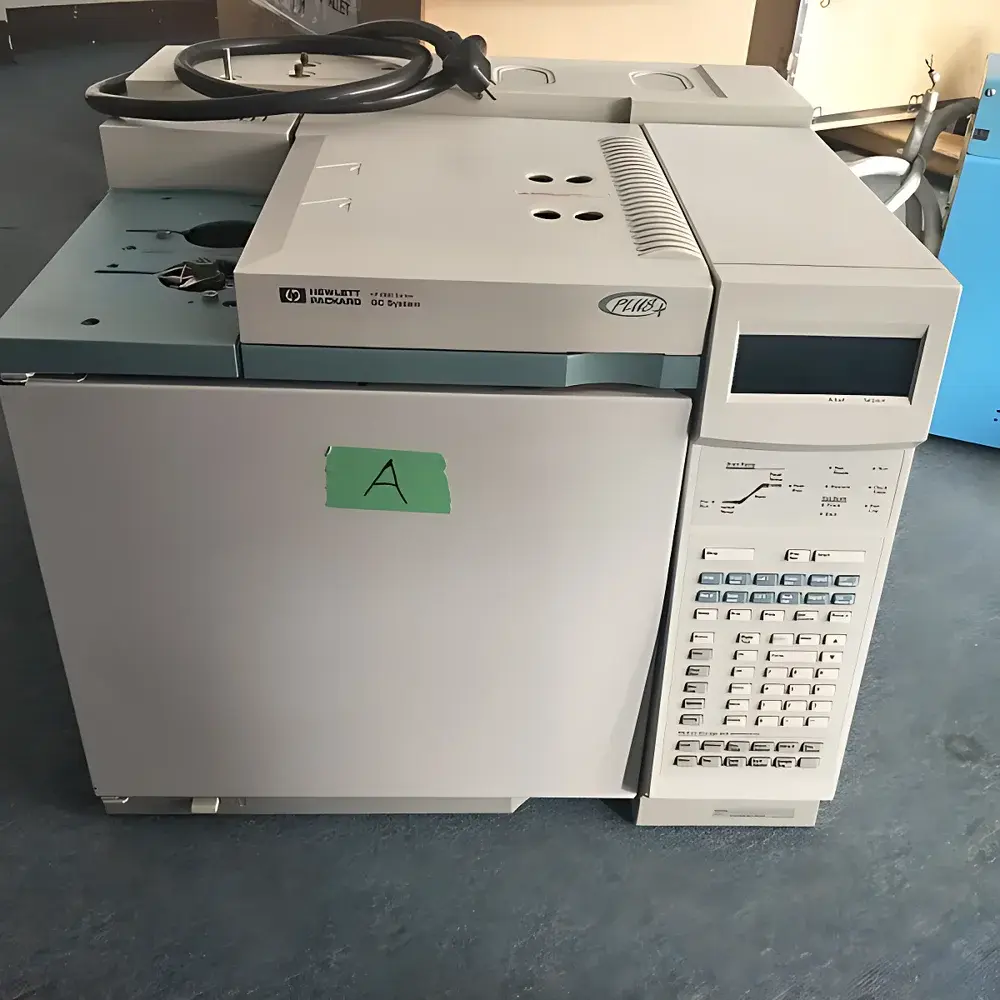
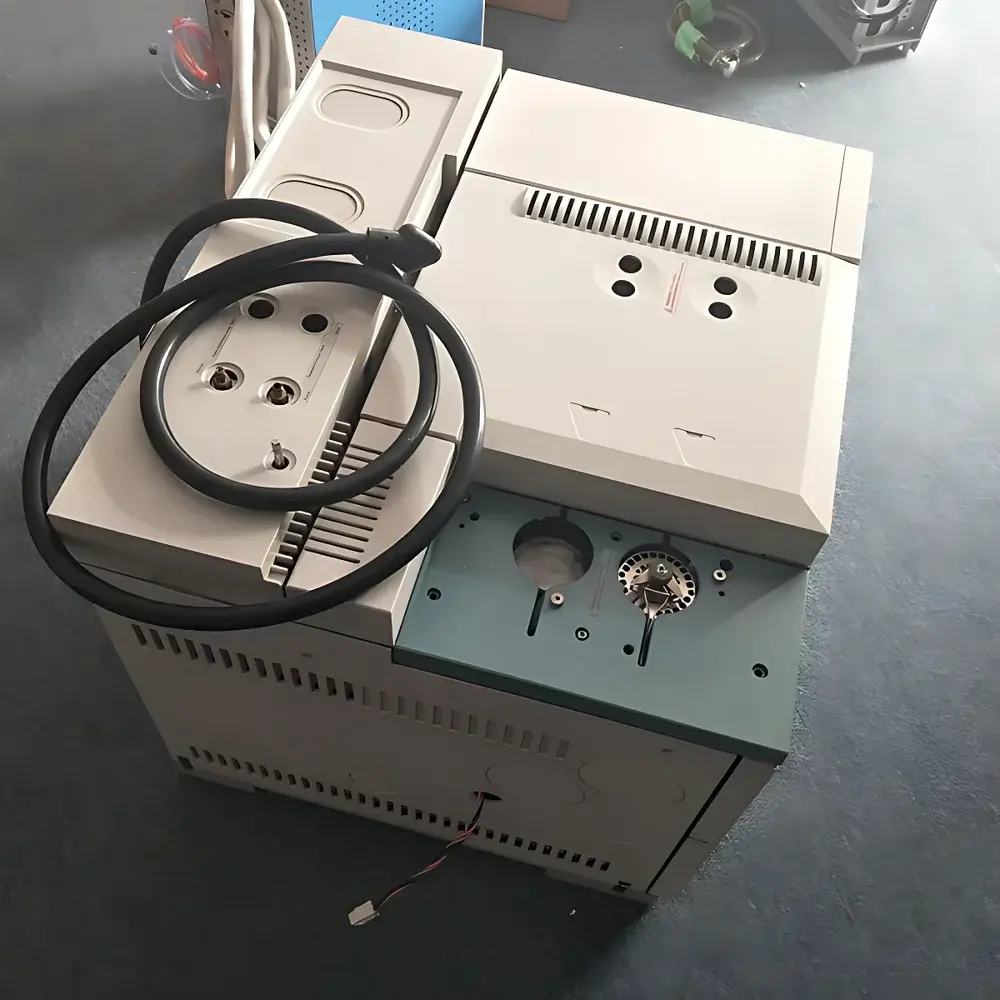
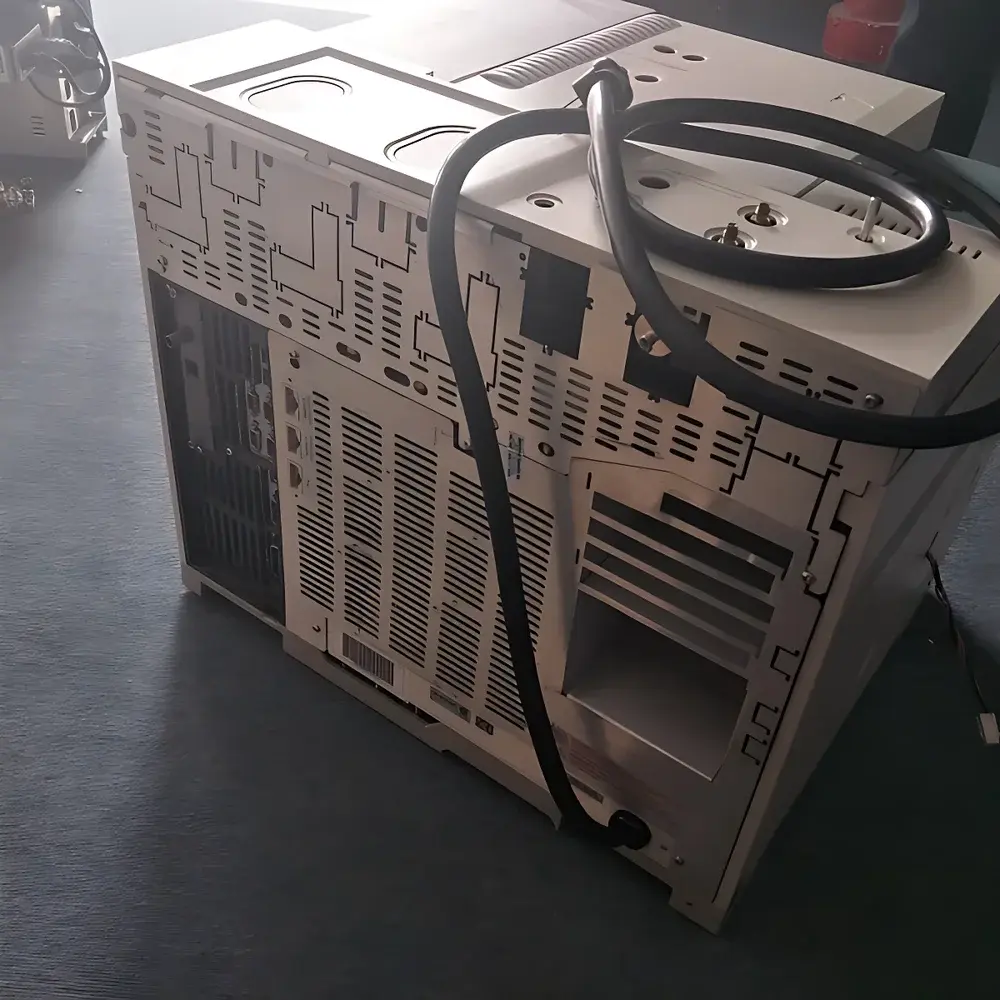
Agilent 6890PLUS Used Gas Chromatograph
| Brand | Agilent Technologies |
|---|---|
| Origin | USA |
| Manufacturer Type | Authorized Distributor |
| Origin Category | Imported |
| Model | 6890PLUS |
| Instrument Type | Laboratory Gas Chromatograph |
| Application Scope | General-Purpose |
| Oven Temperature Range | Ambient +4 °C to 450 °C |
| Ramp Rate | 0.1–40 °C/min |
| Cool-Down Time | ~6 min (450 °C to 50 °C) |
| Carrier Gas Flow Range & Control | 0–1200 mL/min |
| Carrier Gas Pressure Range & Control | 0–970 kPa |
| Injector Maximum Operating Temperature | 450 °C |
| Injector Pressure Setting Range | 0–970 kPa |
| Injector Total Flow Setting Range | 0–1200 mL/min |
Overview
The Agilent 6890PLUS is a robust, high-performance laboratory gas chromatograph originally engineered by Agilent Technologies (USA) for precision separation and quantitative analysis of volatile and semi-volatile organic compounds. Based on capillary and packed column chromatography principles, the system employs temperature-programmed oven control, electronically actuated pneumatic modules (EPC), and configurable inlet systems—including split/splitless, cool-on-column, and programmable temperature vaporization (PTV) options—to deliver consistent retention time reproducibility and peak resolution. Designed for long-term operational stability in regulated and non-regulated environments, the 6890PLUS supports method development, routine QC testing, and compliance-driven workflows across pharmaceutical, environmental, food safety, and academic research laboratories.
Key Features
- Temperature-controlled column oven with precise ramping (0.1–40 °C/min) and rapid cool-down (~6 minutes from 450 °C to 50 °C), enabling high-throughput method cycling.
- Electronically controlled pneumatic (EPC) modules for carrier gas pressure and flow regulation—ensuring ±0.01 psi pressure accuracy and <0.1 mL/min flow stability over time.
- High-temperature injector capable of operation up to 450 °C, compatible with both standard and deactivated liners for minimal active site interference.
- Modular detector support including FID, TCD, ECD, NPD, and PID—each with independent temperature control and digital signal processing.
- Front-panel keypad and LCD interface for standalone method entry; fully compatible with Agilent ChemStation software (G1701DA or later) for instrument control, data acquisition, and reporting.
- Robust mechanical architecture with stainless-steel gas pathways, inert internal surfaces, and sealed electronics—optimized for reliability in multi-shift laboratory use.
Sample Compatibility & Compliance
The 6890PLUS accommodates a broad range of sample matrices—including aqueous extracts, organic solvents, headspace vapors, and thermal desorption tubes—when paired with appropriate inlet configurations and column chemistries (e.g., DB-5ms, HP-INNOWAX, or PLOT columns). It meets foundational requirements for ASTM D3606, EPA Method 8021B/8260C/8270D, USP , and ISO 17025-compliant analytical procedures. When operated with validated methods and integrated into a documented quality system, the platform supports GLP and GMP-aligned workflows. Audit trail functionality and electronic signature readiness are achievable via ChemStation configured under FDA 21 CFR Part 11 compliance mode (with appropriate server infrastructure and user access controls).
Software & Data Management
Instrument control, sequence management, and raw data processing are performed using Agilent ChemStation (version G1701DA or newer), which provides full integration with LIMS environments via OpenLab CDS interfaces. The software supports customizable report templates, peak integration algorithms (e.g., valley-to-valley, tangent skim), calibration curve fitting (linear, quadratic, weighted), and automated pass/fail criteria against specification limits. All method parameters, audit logs, and raw chromatograms are stored in proprietary .D format—exportable to ASCII, CSV, or AIA (.cdf) for third-party analysis tools. Data integrity is preserved through timestamped acquisition records, user-specific login credentials, and optional electronic signature enforcement per regulatory validation protocols.
Applications
- Pharmaceutical residual solvent analysis per ICH Q3C guidelines using headspace-GC/FID.
- Environmental monitoring of BTEX, PAHs, chlorinated hydrocarbons, and pesticides in soil/water extracts (EPA 8260C, 8270D).
- Fatty acid methyl ester (FAME) profiling in biodiesel and edible oils via GC-FID with polar capillary columns.
- Flavor and fragrance compound identification in food matrices using GC-MS coupling (requires optional MSD interface).
- Polymer additive screening (e.g., antioxidants, plasticizers) via thermal extraction–GC/TCD or GC/ECD.
- Method transfer and backup instrumentation in QC labs requiring cross-platform equivalence to newer Agilent 7890/8890 systems.
FAQ
Is the Agilent 6890PLUS compliant with current FDA 21 CFR Part 11 requirements?
Yes—when deployed with ChemStation in validated configuration (including electronic signatures, audit trails, and role-based access control), it satisfies core Part 11 expectations for electronic records and signatures.
What detector options are typically available with refurbished 6890PLUS units?
Most units include FID as standard; TCD, ECD, and NPD are commonly available as field-upgradable options—subject to hardware compatibility and calibration history.
Can this system be integrated into modern LIMS or ELN platforms?
Yes—via ChemStation’s OLE/COM automation interface or OpenLab CDS gateway, supporting structured data exchange using ASTM E1384 or HL7-compatible protocols.
What maintenance documentation accompanies a certified pre-owned unit?
Each instrument ships with full service history, post-refurbishment performance verification report (including retention time RSD ≤0.05%, peak area RSD ≤1.5% for test mixtures), and 12-month limited warranty covering parts and labor.
Is column oven cooling performance affected by ambient lab conditions?
Cool-down rate may vary slightly under sustained ambient temperatures >30 °C or low airflow environments; optimal performance is achieved at 18–25 °C with ≥15 cm clearance around the instrument chassis.




