
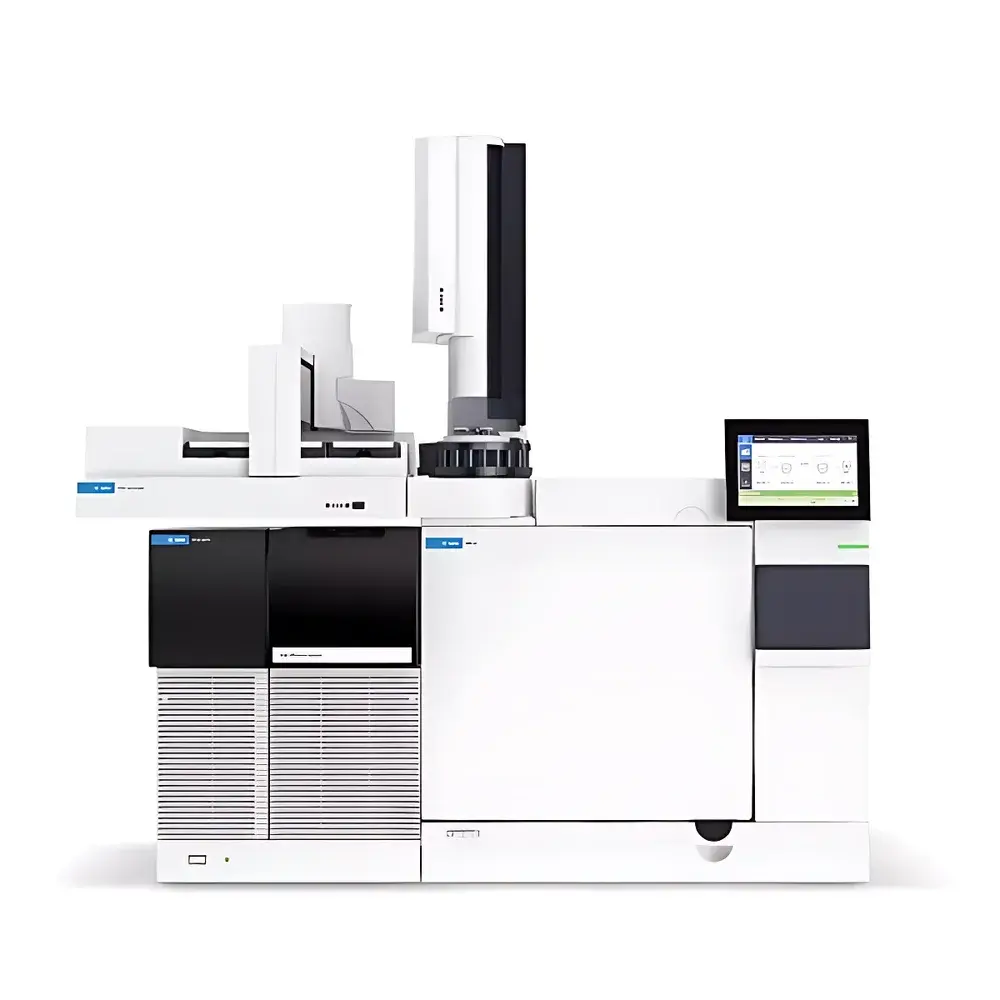
Agilent 7010D GC/TQ Triple Quadrupole Gas Chromatography-Mass Spectrometry System
| Brand | Agilent Technologies |
|---|---|
| Origin | Imported |
| Manufacturer Status | Original Equipment Manufacturer (OEM) |
| Instrument Type | Triple Quadrupole Mass Spectrometer |
| GC Configuration | Conventional GC-MS/MS |
| Mass Range | m/z 10–1050 |
| Sensitivity | IDL ≤ 0.3 fg for 1 fg OFN injection |
| Scan Speed | ≤ 20,000 Da/s |
| Detector | Agilent triple-axis high-efficiency dynamic electron multiplier (HED-EM) with extended-life EM and dynamically ramped iris aperture |
Overview
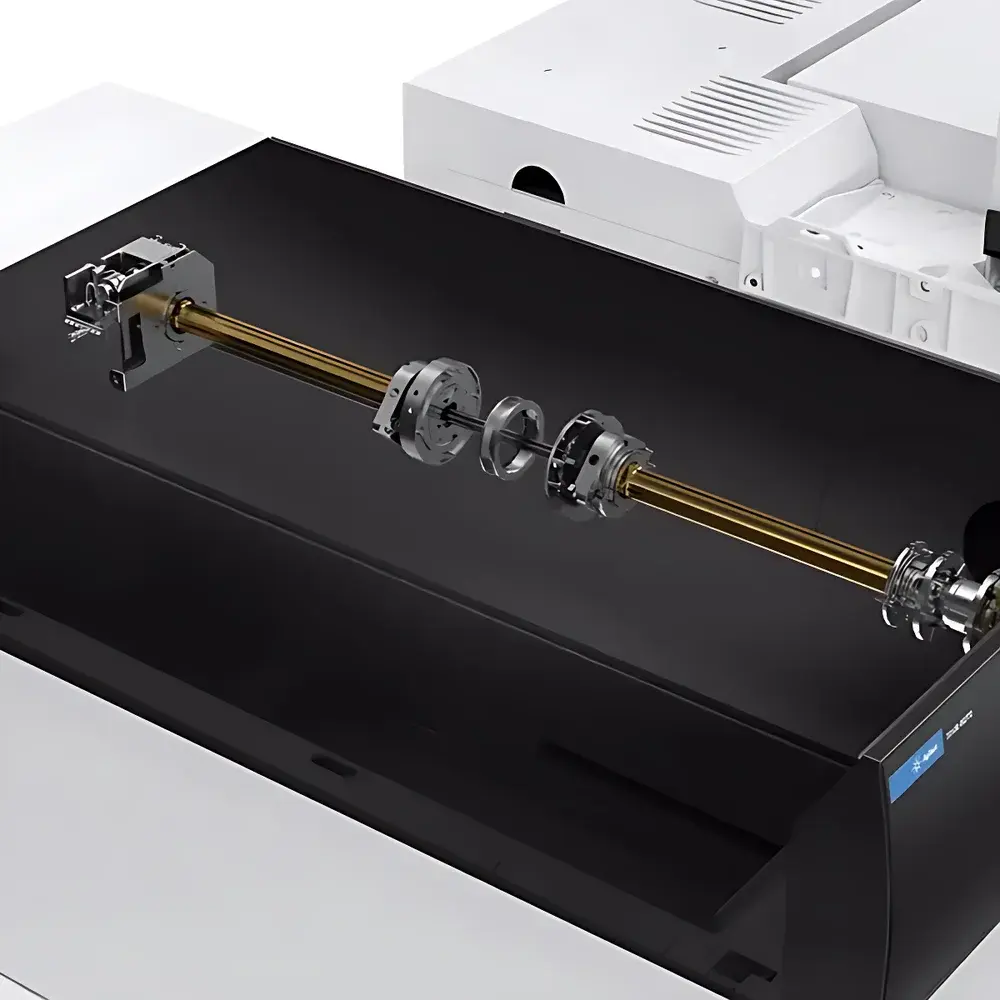
The Agilent 7010D GC/TQ Triple Quadrupole Gas Chromatography-Mass Spectrometry System is engineered for high-fidelity quantitative analysis of trace-level analytes in complex matrices. It integrates gas chromatographic separation with tandem mass spectrometry based on triple quadrupole (QqQ) architecture—where Q1 performs precursor ion selection, q2 functions as a collision cell for controlled fragmentation via collision-induced dissociation (CID), and Q3 enables product ion detection in multiple reaction monitoring (MRM) mode. This configuration delivers exceptional selectivity, sensitivity, and reproducibility required for regulated applications across food safety, environmental monitoring, forensic toxicology, and pharmaceutical impurity profiling. The system operates with electron ionization (EI) as standard and chemical ionization (CI) as an optional source configuration, supporting both targeted quantitation and confirmatory identification workflows under GLP/GMP-compliant environments.
Key Features
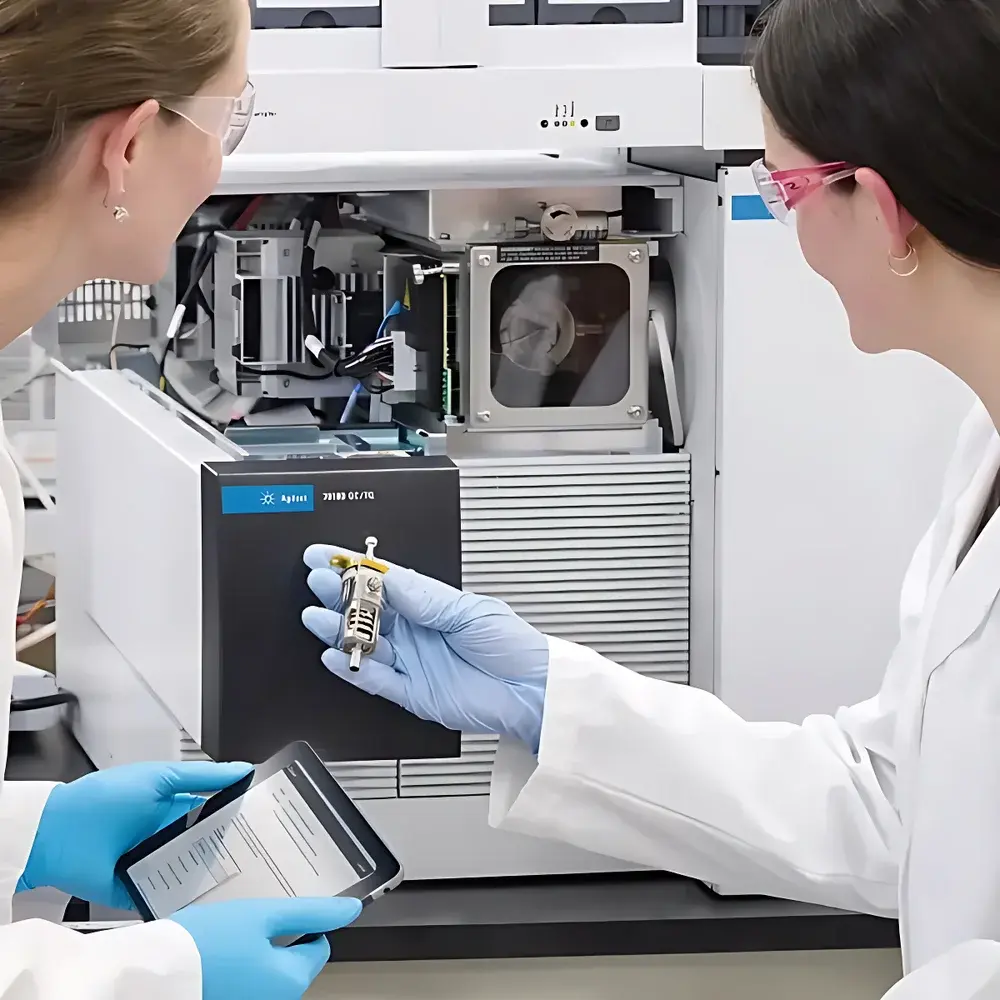
- HES 2.0 (High Efficiency Source) ion source featuring dipole RF lens technology to enhance ion transmission efficiency and improve robustness in high-matrix-load applications—enabling attogram-level detection limits without signal degradation over extended run times.
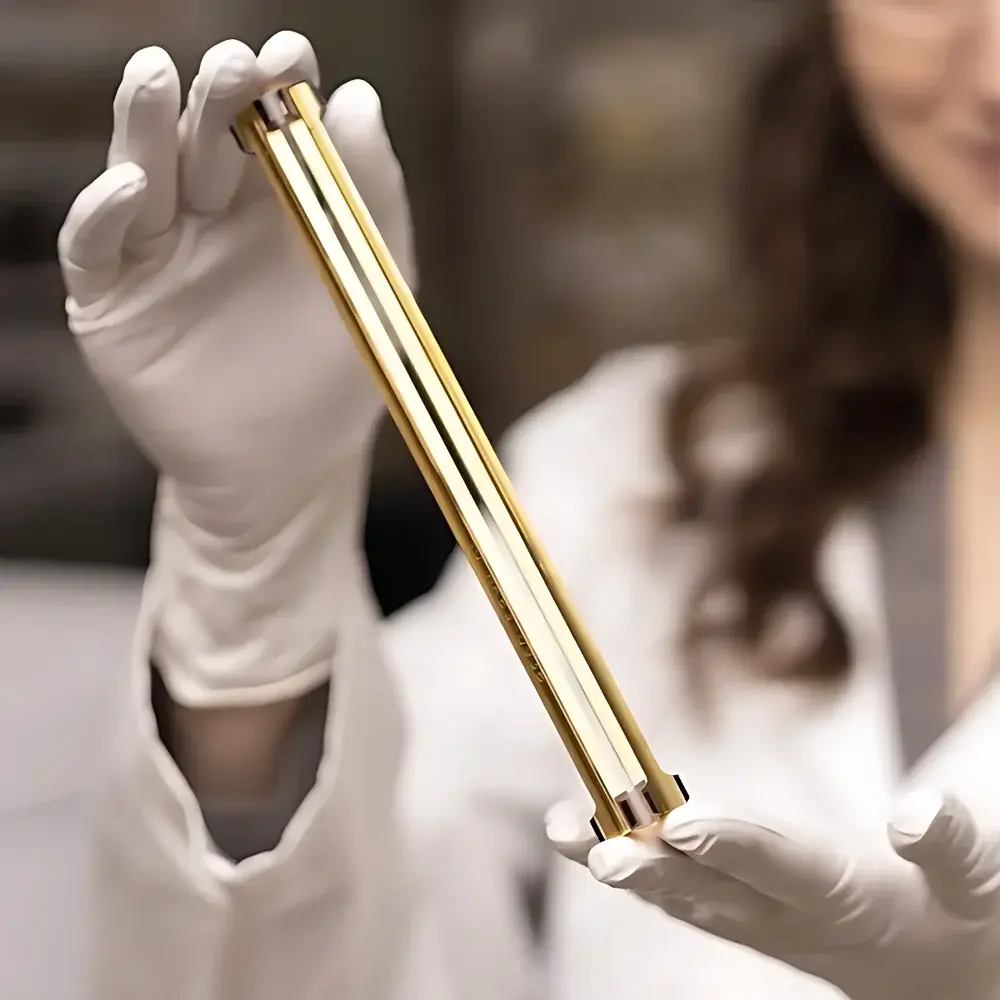
- Heated, gold-coated quadrupole mass filters constructed from fused silica for thermal stability, reduced surface adsorption, and long-term mass accuracy retention across temperature gradients.
- Agilent JetClean intelligent hydrogen-based ion source cleaning system that autonomously removes non-volatile residues during idle periods, reducing manual maintenance intervals by up to 70% and minimizing instrument downtime.
- SWARM (Smart Workflow Auto-tuning and Real-time Monitoring) cluster auto-tuning algorithm—delivers twice the tuning speed of prior-generation systems while incorporating real-time diagnostic feedback for proactive performance validation.
- MassHunter Optimizer software module specifically designed for GC/TQ method development—automates MRM parameter optimization, facilitates seamless transfer of GC/MSD methods to GC/TQ platforms, and maintains retention time lock (RTL) integrity across column changes or GC system migrations.
- Linear acceleration hexapole collision cell with optimized collision gas dynamics—ensures consistent fragmentation efficiency and low background noise across wide dynamic ranges.
- Triple off-axis detector architecture with dynamically ramped iris aperture and extended-life high-efficiency dynamic electron multiplier (HED-EM)—provides superior signal-to-noise ratio and extended detector lifetime under sustained high-sensitivity operation.
Sample Compatibility & Compliance
The Agilent 7010D GC/TQ supports routine analysis of volatile and semi-volatile organic compounds—including pesticides, polycyclic aromatic hydrocarbons (PAHs), dioxins/furans (via EPA-approved alternative methods using Agilent Reference Compound Injection Valve), pharmaceutical residuals, and environmental contaminants. Its hardware and software architecture comply with international regulatory frameworks including US FDA 21 CFR Part 11, EU Annex 11, and ISO/IEC 17025 requirements for data integrity. Built-in audit trail functionality, electronic signature support, and role-based access control ensure full traceability of all acquisition, processing, and reporting actions. The system is validated for use in laboratories adhering to AOAC, ASTM D5847, EPA Methods 1613/8270/8082, and ICH Q2(R2) guidelines.
Software & Data Management
Controlled entirely through Agilent MassHunter Workstation Software (version B.09 or later), the 7010D GC/TQ provides integrated acquisition, qualitative analysis, and quantitative reporting modules. MassHunter supports synchronized dMRM (dual MRM) and hybrid scan/MRM acquisition modes—enabling simultaneous quantification of >500 analytes per run while retaining full-scan confirmation capability. The software includes embedded diagnostics, automated calibration verification, and intelligent peak integration algorithms trained on reference standards. All raw data files are stored in open-format .D format compatible with third-party review tools. Data export options include CSV, PDF, and XML formats compliant with LIMS integration protocols. Optional MassHunter Quantitative Analysis with Compliance Edition adds 21 CFR Part 11-compliant electronic signatures, user authentication logs, and immutable audit trails.
Applications
- Food Safety Testing: Quantitative screening of >1,100 pesticide residues using the Agilent Pesticides and Environmental Contaminants Database v4.0—featuring matrix-optimized MRM transitions and dual-ion-pair validation for each compound.
- Environmental Analysis: Detection of dioxins at sub-picogram levels in soil, sediment, and biota extracts; compliance with EPA Method 1613B and EU Directive 2008/98/EC.
- Pharmaceutical Quality Control: Identification and quantification of genotoxic impurities (GTIs) at ≤1 ppm levels in active pharmaceutical ingredients (APIs), aligned with ICH M7 guidance.
- Forensic Toxicology: Multi-analyte confirmation of drugs of abuse, metabolites, and novel psychoactive substances (NPS) in blood, urine, and hair matrices using tMRM (triggered MRM) acquisition.
- Research & Development: Structural elucidation support via EI/CI spectral libraries, deconvolution-assisted unknown screening, and retention index-based compound identification.
FAQ
What ionization modes does the 7010D GC/TQ support?
Electron Ionization (EI) is standard; Chemical Ionization (CI) is available as an optional configuration.
Is the system compatible with legacy GC/MSD methods?
Yes—MassHunter Optimizer enables automated conversion of existing GC/MSD methods to GC/TQ MRM workflows while preserving retention time alignment and quantitative accuracy.
How does JetClean reduce instrument downtime?
JetClean uses catalytic hydrogen generation to thermally decompose non-volatile residues on the ion source surfaces during system standby—eliminating the need for weekly manual cleaning cycles.
What regulatory standards does the software meet?
MassHunter Quantitative Analysis with Compliance Edition satisfies FDA 21 CFR Part 11, EU Annex 11, and ISO/IEC 17025 requirements for electronic records and signatures.
Can the 7010D be integrated into a laboratory information management system (LIMS)?
Yes—through standardized ODBC and REST API interfaces, enabling bidirectional data exchange for sample tracking, result reporting, and audit trail synchronization.
Related Products





