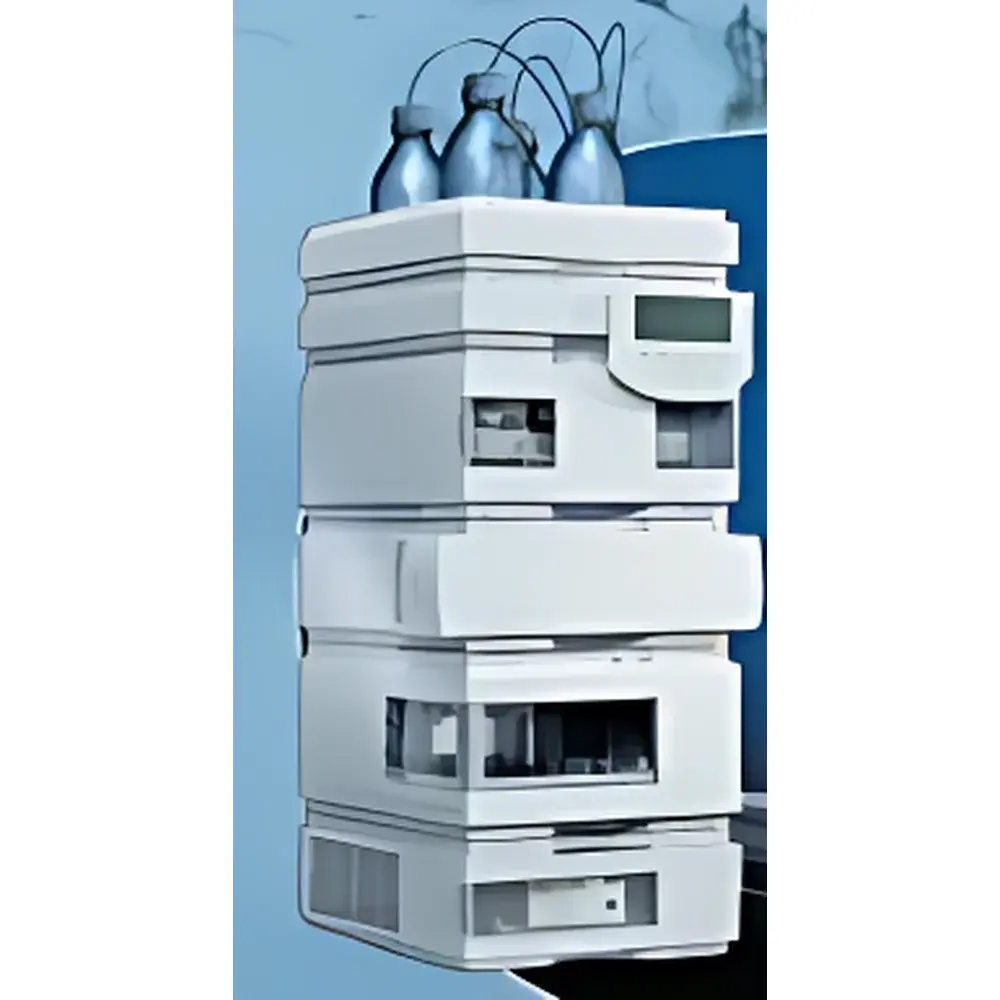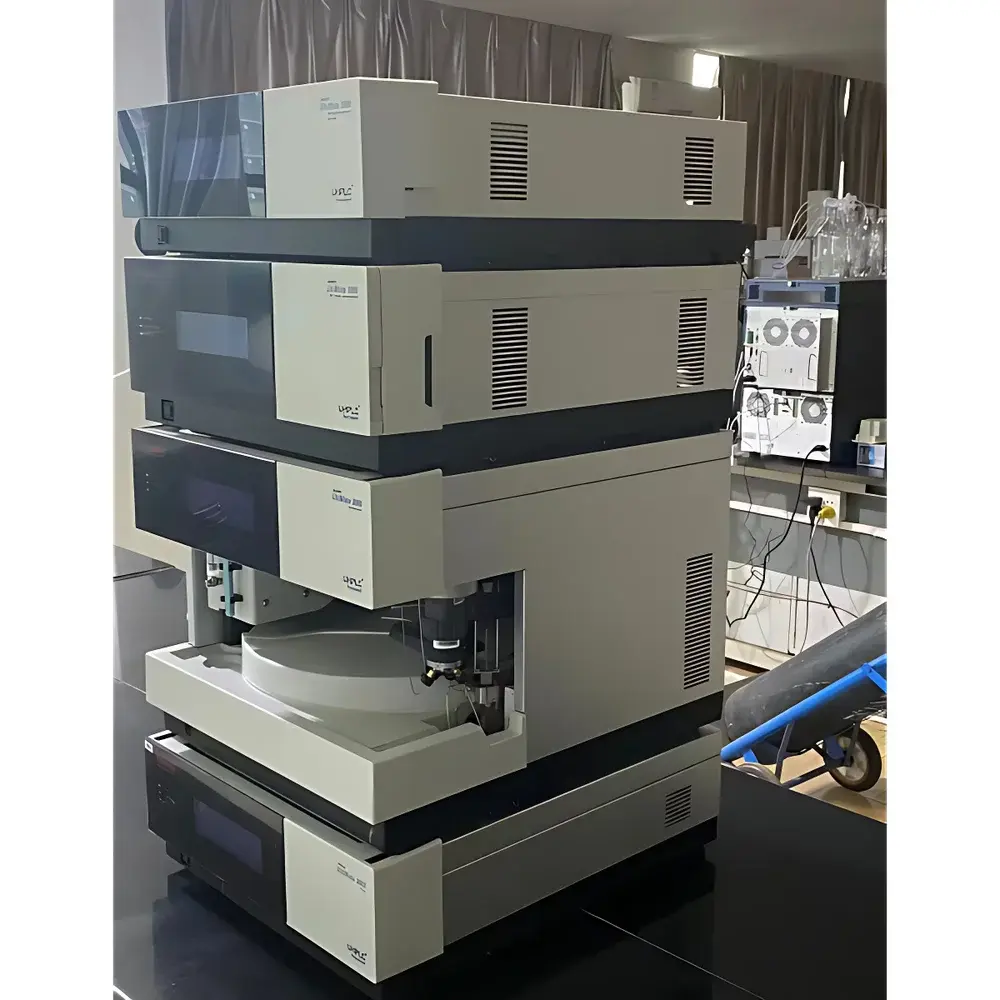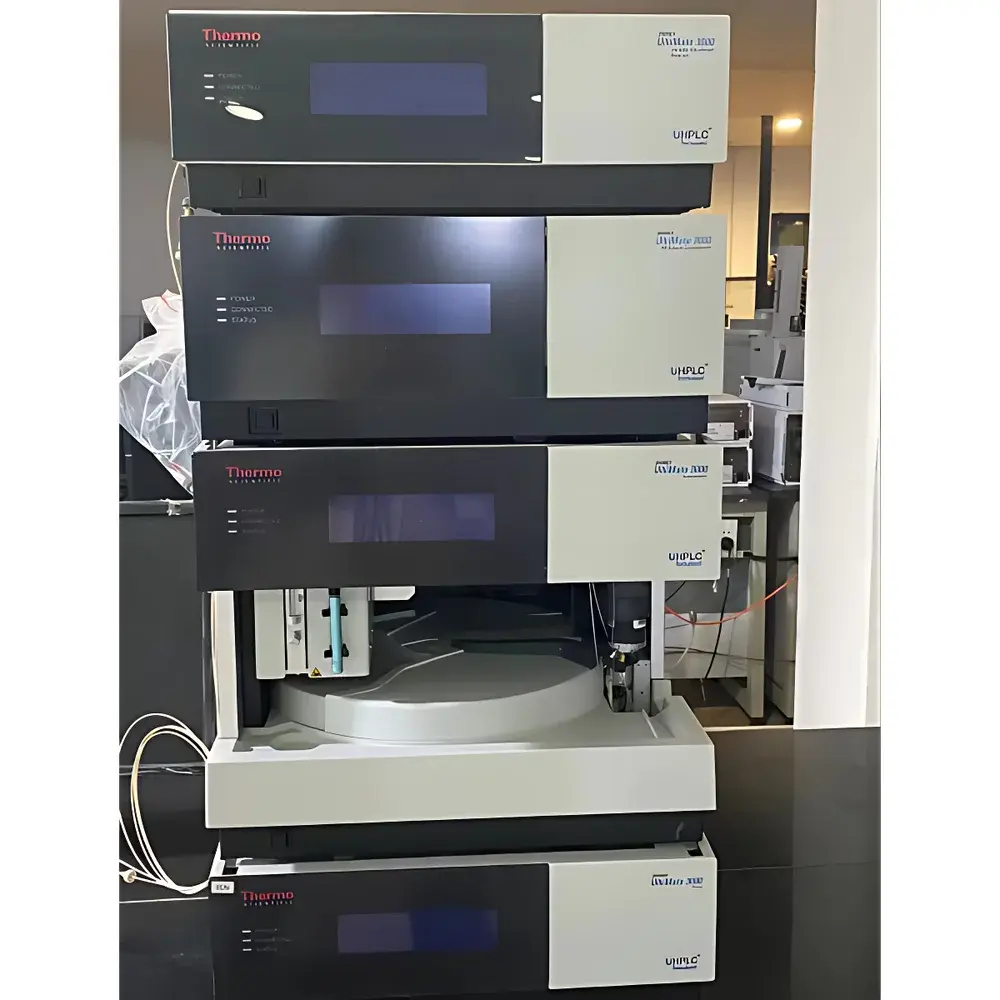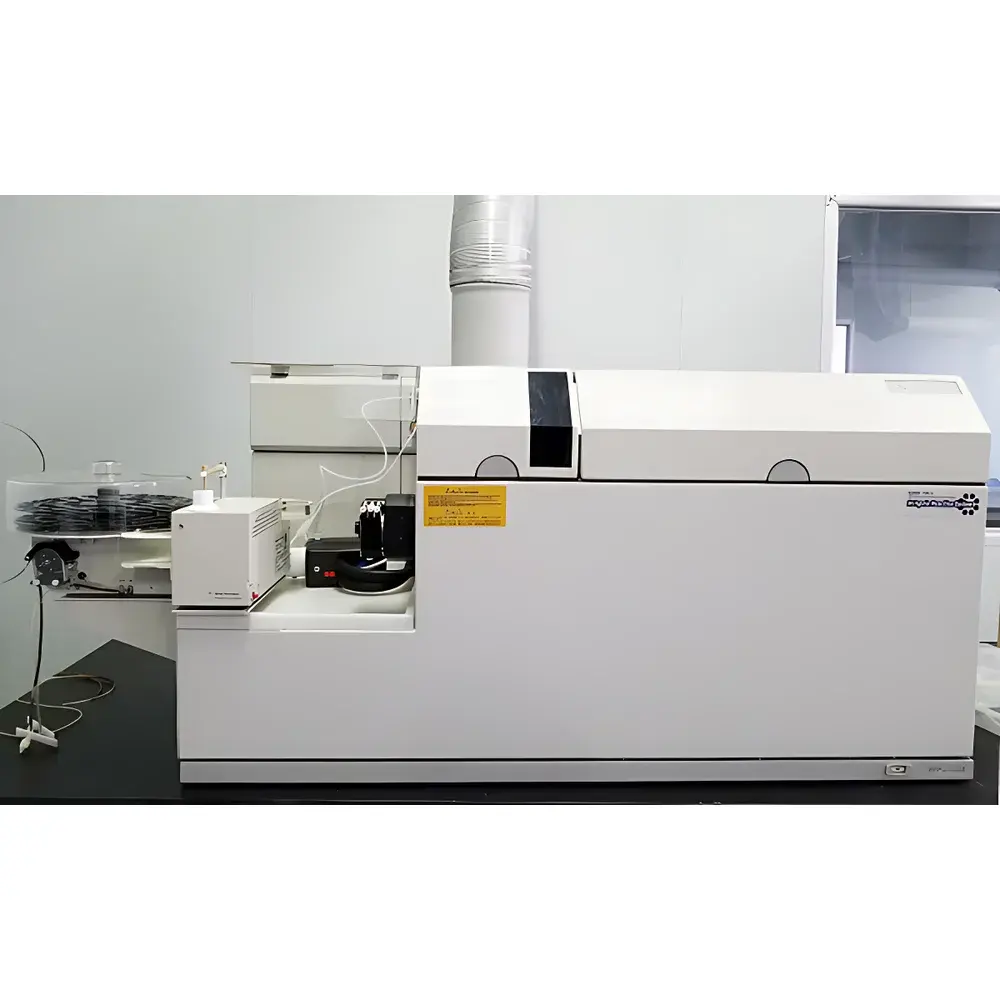
Agilent 7500 ICP-MS (Refurbished, US-Sourced, 3-Year Operational History)
| Brand | Agilent Technologies |
|---|---|
| Origin | USA |
| Model | 7500 |
| Instrument Type | Inductively Coupled Plasma Mass Spectrometer |
| Year of Operation | ~2020–2021 (3 years service life) |
| Warranty | 12 months comprehensive coverage |
| Configuration | Standard quadrupole ICP-MS with shielded torch, collision/reaction cell (CRC), and high-sensitivity interface |
| Detection Limit | Sub-part-per-quadrillion (ppq) for key isotopes (e.g., ¹¹⁵In, ²⁰⁸Pb) |
| Linear Dynamic Range | >11 orders of magnitude |
| Sample Introduction | Compatible with standard nebulizers (e.g., PFA microflow), desolvating systems (e.g., Aridus II), and laser ablation (LA-ICP-MS via optional interface) |
| Software | MassHunter Workstation v4.4 or later (FDA 21 CFR Part 11 compliant configuration available upon request) |
| Regulatory Compliance | Designed to support ISO/IEC 17025, ASTM D5673, EPA Method 6020B, and USP <232>/<233> elemental impurities testing |
Overview
The Agilent 7500 ICP-MS is a high-performance, quadrupole-based inductively coupled plasma mass spectrometer engineered for ultra-trace multi-element and isotopic analysis of inorganic species in complex matrices. Operating on the principle of ion generation in a high-temperature argon plasma (~7,000–10,000 K), followed by mass separation in a radiofrequency-driven quadrupole mass filter and detection via electron multiplier, the 7500 delivers exceptional sensitivity, precision, and robustness across diverse sample types. Its core architecture integrates a robust shielded-torch plasma interface, a dynamic reaction cell (DRC) capable of kinetic energy discrimination and reactive gas chemistry (e.g., He, H₂, NH₃), and advanced signal stabilization algorithms—enabling reliable quantification from sub-ppq detection limits up to hundreds of ppm without dilution. This refurbished unit has undergone full functional validation, including mass calibration, sensitivity verification (≥1 × 10⁹ cps/ppm ²³⁸U), oxide/carbon-based interferences assessment (<2% ²³⁸U¹⁶O⁺/²³⁸U⁺), and detector linearity confirmation over 11 decades.
Key Features
- High-efficiency sample introduction system compatible with aqueous, organic, and high-purity acid matrices (e.g., HF, HNO₃, TMAH, IPA, acetone)
- Collision/reaction cell technology enabling interference removal for polyatomic species (e.g., ⁴⁰Ar³⁵Cl⁺ on ⁷⁵As⁺, ⁴⁰Ar⁴⁰Ca⁺ on ⁸⁰Se⁺)
- Shielded-torch plasma design enhancing stability during long-term operation and reducing matrix-induced signal drift
- Dual-mode detection (analog and pulse counting) ensuring optimal dynamic range and low-level precision
- Integrated autosampler compatibility (e.g., Agilent G1888, Cetac ASX-520) for unattended batch analysis
- Modular vacuum system with turbomolecular pump and backing pump, validated for ≤5 × 10⁻⁸ mbar operating pressure
Sample Compatibility & Compliance
The Agilent 7500 supports direct analysis of liquids (μL–mL volumes), laser-ablated solids (with optional LA interface), and gases (via specialized inlet). It is routinely deployed in laboratories requiring compliance with regulatory frameworks including USP / for elemental impurities in pharmaceuticals, EPA Method 6020B for environmental monitoring, ASTM D5673 for semiconductor-grade water, and ISO/IEC 17025 for accredited testing. The instrument’s hardware and firmware architecture support audit-ready data integrity features—including electronic signatures, user access controls, and immutable audit trails—when configured with validated MassHunter Workstation software under 21 CFR Part 11 guidelines. All refurbished units undergo full traceable calibration using NIST-traceable standards (e.g., CRM 3100a, 3101a) and are verified against certified reference materials relevant to target applications.
Software & Data Management
Data acquisition and processing are performed using Agilent MassHunter Workstation software (v4.4 or higher), which provides method development tools, real-time interference diagnostics, isotope ratio calculation modules, and automated QC reporting. The platform supports LIMS integration via ASTM E1384-compliant interfaces and enables secure, role-based data handling aligned with GLP/GMP documentation requirements. Raw data files (.d format) are stored with embedded metadata (instrument parameters, calibration history, operator ID, timestamp), and all processing steps are logged in a tamper-evident audit trail. Optional IQ/OQ/PQ documentation packages are available to support laboratory qualification protocols.
Applications
- Environmental analysis: Trace metal speciation in seawater, groundwater, soil digests, and airborne particulates
- Semiconductor manufacturing: Ultra-low-level contamination screening of ultrapure water, etchants (HF, HNO₃), photoresists, and wafer surfaces
- Clinical and biological research: Quantitative metallomics, isotopic tracer studies, and elemental biomarker validation
- Geochemistry and nuclear science: Isotopic ratio measurements (e.g., U/Pb, Sr/Nd), actinide analysis, and nuclear forensics
- Materials science: Impurity profiling in high-purity quartz, Si wafers, GaAs substrates, and battery cathode materials
- Food and agriculture: Heavy metal screening per EU Commission Regulation (EU) No 2023/915 and FDA Elemental Impurities Guidance
FAQ
What is the operational history and refurbishment scope of this unit?
This Agilent 7500 ICP-MS has accumulated approximately three years of continuous laboratory use prior to full technical refurbishment. The process included replacement of consumables (torch, sampler/skimmer cones, pump oils), vacuum system leak testing, mass spectrometer alignment, detector gain recalibration, and full performance verification per Agilent’s factory acceptance criteria.
Is the system compatible with laser ablation?
Yes—this unit can be integrated with commercial LA systems (e.g., CETAC LSX-213, UP213) via its standard interface port; required hardware (e.g., fast washout chamber, gated acquisition trigger) and software modules are available as optional add-ons.
Does the warranty cover both parts and labor?
Yes—the 12-month comprehensive warranty includes all parts, labor, and remote technical support, with on-site service available within 72 business hours for critical failures under standard terms.
Can the system be validated for regulated environments?
Yes—full IQ/OQ documentation, URS alignment, and 21 CFR Part 11-compliant software configuration are available upon request, with validation support provided by certified field application specialists.