
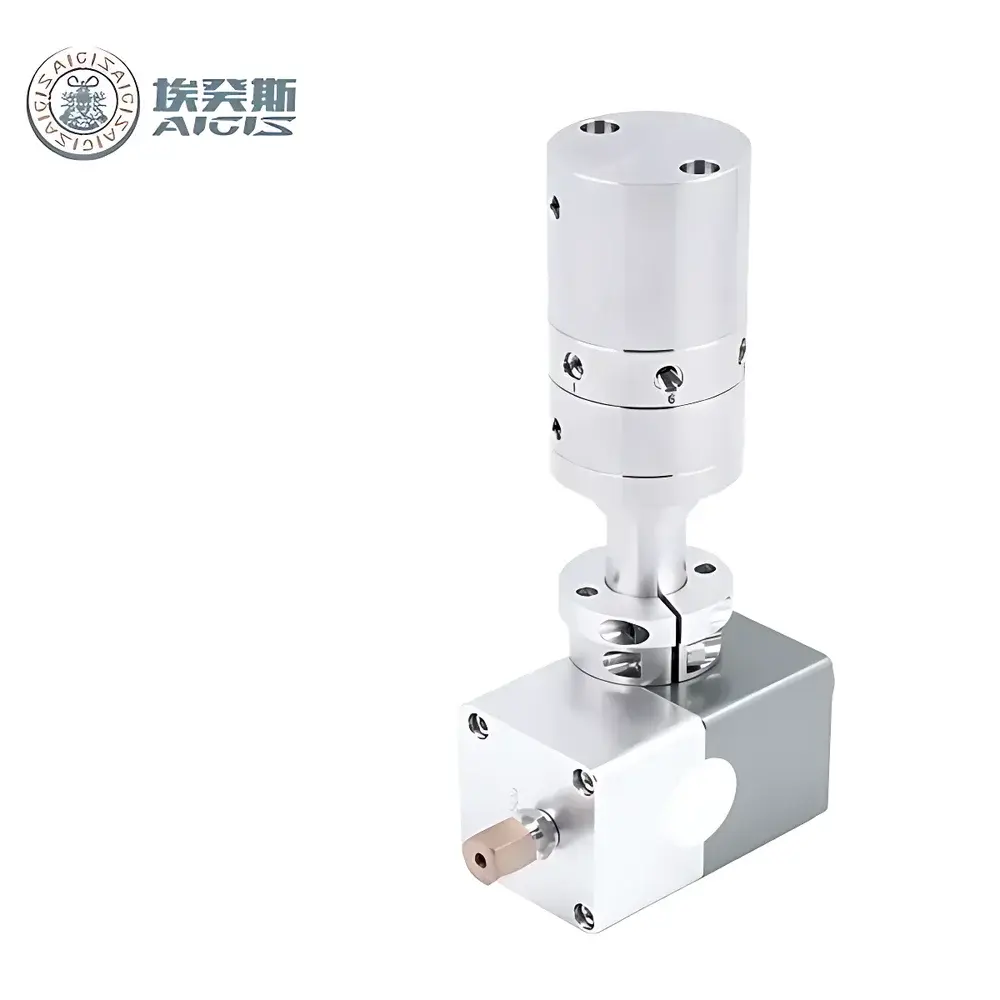
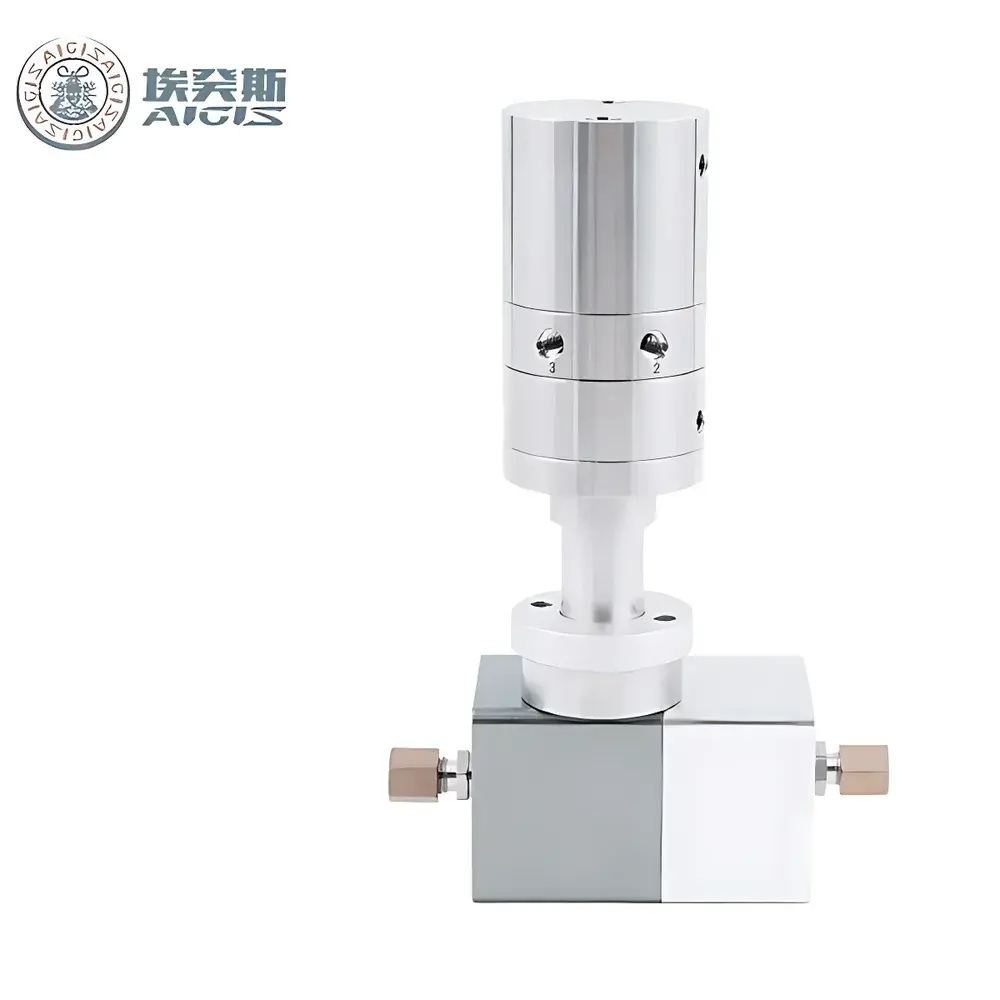
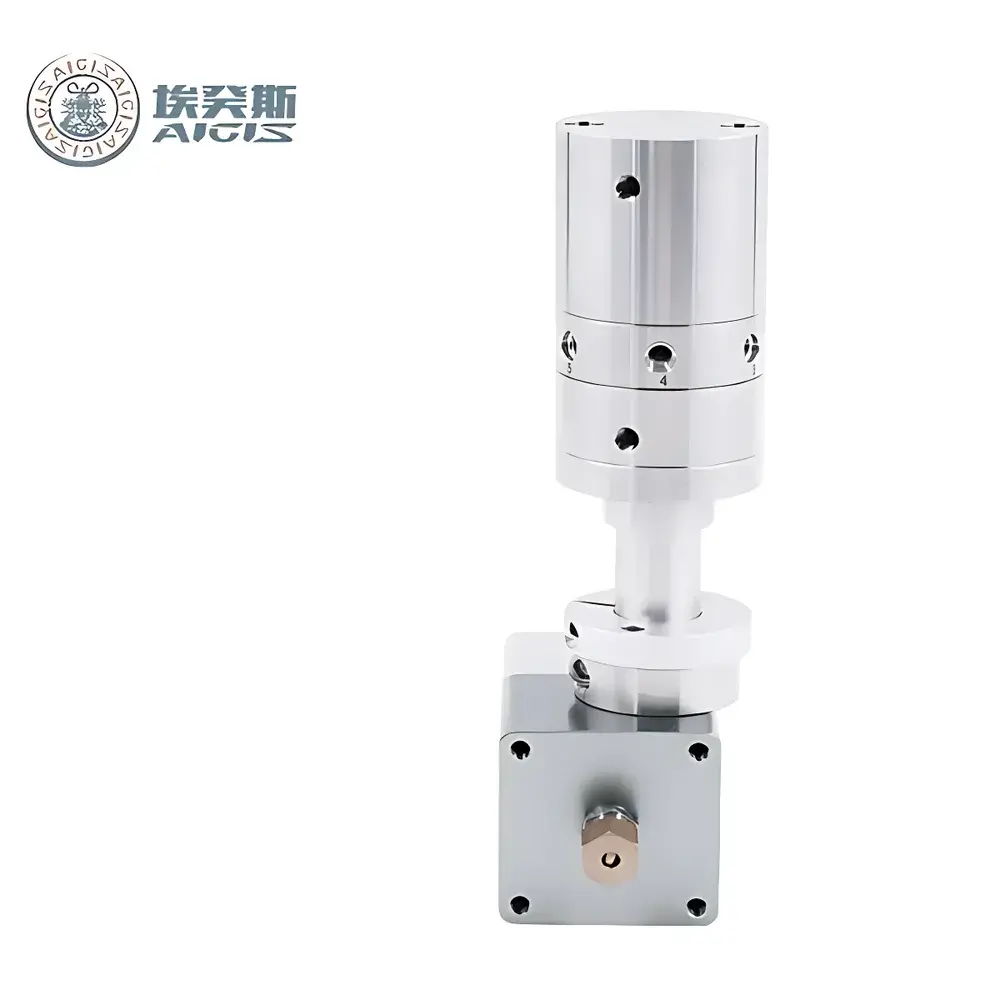
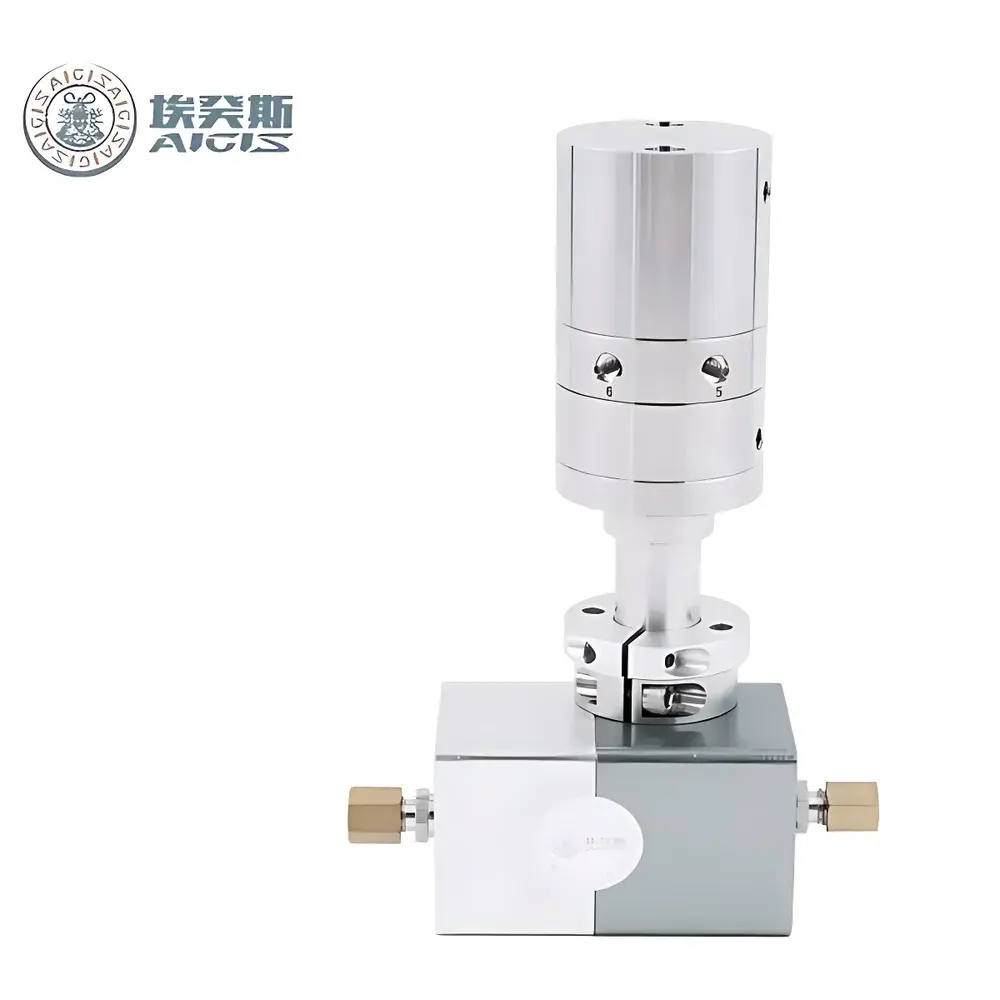
AIGIS AGS-GBG10-ET-K75S2-2-N-A1-S Pneumatic/Electric Actuated Multi-Position Sample Introduction and Purge/Trap Switching Valve
| Brand | AIGIS |
|---|---|
| Origin | Fujian, China |
| Manufacturer Type | OEM/ODM Producer |
| Model | AGS-GBG10-ET-K75S2-2-N-A1-S |
| Valve Type | Multi-port (4/6/8/10/12/14-way) Rotary Switching Valve |
| Rotor Material | PEEK |
| Stator Body Material | SUS316L / Inconel 600 / Hastelloy C-276 |
| Max. Pressure Rating | 0–0.7 MPa (gas), 0–3 MPa (liquid) |
| Max. Operating Temperature | 200 °C |
| Flow Path Bore Diameter | 0.4 mm / 0.75 mm |
| Port Interface | 10-32 UNF female |
| Extension Stem Options | 2", 3", 4", 6" |
| Actuation | Pneumatic or 24 VDC ±10% Electric |
| Pneumatic Supply Pressure | 30–80 psi |
| Electrical Interface | RS232 / RS485 (19200 bps, default address 01) |
Overview
The AIGIS AGS-GBG10-ET-K75S2-2-N-A1-S is a precision-engineered multi-position switching valve designed specifically for integration into automated purge-and-trap (P&T) systems and gas chromatography (GC) sample introduction workflows. It operates on the principle of rotary port selection—enabling sequential, repeatable routing of gaseous or liquid samples, carrier gases, purge streams, and trap desorption flows across up to 14 discrete flow paths. Unlike solenoid-based alternatives, this valve employs a high-tolerance rotor-stator architecture with metal-to-polymer sealing (PEEK rotor against corrosion-resistant metallic stator), delivering exceptional long-term sealing integrity and minimal carryover in trace-level volatile organic compound (VOC) analysis. Its modular design supports both pneumatic and electric actuation, allowing seamless compatibility with legacy GC autosamplers, modern laboratory information management systems (LIMS), and custom-built environmental monitoring platforms.
Key Features
- Multi-configurable port count: Factory-configurable as 4-, 6-, 8-, 10-, 12-, or 14-way valve to match system architecture requirements without redesigning fluidic manifolds.
- Chemically inert wetted materials: Rotor fabricated from medical-grade PEEK (polyether ether ketone); stator body options include electropolished SUS316L stainless steel, Inconel 600, or Hastelloy C-276—ensuring compatibility with aggressive matrices including hydrogen sulfide, chlorine, and halogenated hydrocarbons.
- High-pressure capability: Rated for continuous operation up to 3 MPa (435 psi) with liquids and 0.7 MPa (100 psi) with gases—suitable for pressurized headspace and supercritical fluid applications.
- Thermal stability: Certified for continuous duty at 200 °C; optional heated extension stems (2″–6″) maintain thermal uniformity across valve body and transfer lines, minimizing condensation in VOC analysis.
- Dual-actuation flexibility: Pneumatic version accepts 30–80 psi supply pressure with fast cycle times (<150 ms); electric version features 24 VDC ±10% input and standard serial communication (RS232/RS485) for deterministic command sequencing and remote diagnostics.
- Trace-level cleanliness: All internal surfaces are passivated, ultrasonically cleaned, and tested for extractables per ASTM D7251—validated for use in EPA Method 502.2, 524.4, and ISO 19458 compliance environments.
Sample Compatibility & Compliance
This valve is validated for use with aqueous, organic, and mixed-phase samples containing volatile and semi-volatile analytes—including BTEX, chlorinated solvents, trihalomethanes, and oxygenates. Its low dead volume (≤1.2 µL per port) and non-reactive flow path minimize adsorption and memory effects critical in ultra-trace environmental and potable water testing. The device conforms to mechanical safety standards per ISO 14119 and electromagnetic compatibility (EMC) per IEC 61326-1. When integrated into a full purge-and-trap system, it supports audit-ready operation under GLP and 21 CFR Part 11 frameworks when paired with compliant data acquisition software featuring electronic signatures and audit trail logging.
Software & Data Management
The electric variant includes native support for ASCII-based command protocols over RS485 multidrop networks (up to 32 devices per bus). Default configuration uses Modbus RTU addressing (slave ID 01, 19200 bps, 8N1), enabling direct integration with LabVIEW, Python-controlled DAQ systems, or third-party chromatography data systems (CDS) such as Thermo Chromeleon or Agilent OpenLab. Firmware supports position feedback via status register polling and configurable error reporting (e.g., timeout, pressure fault, motor stall). Optional firmware upgrades enable time-synchronized valve sequencing synchronized to GC oven ramp profiles or mass spectrometer acquisition triggers.
Applications
- Automated purge-and-trap preconcentration for EPA-compliant drinking water and wastewater analysis.
- Gas-phase calibration standard delivery in multi-point GC calibration sequences.
- Multi-stream sampling in continuous emissions monitoring systems (CEMS) and ambient air quality stations.
- Valve-based microfluidic routing in portable GC platforms for field-deployable environmental screening.
- In-line solvent switching in preparative GC or hyphenated GC–FTIR systems requiring inert, high-pressure-compatible flow control.
FAQ
What materials are available for the stator body, and how do they differ in chemical resistance?
SUS316L offers broad compatibility with oxidizing and mildly acidic media; Inconel 600 provides superior resistance to chloride-induced stress corrosion cracking; Hastelloy C-276 is recommended for highly reducing, acidic, or halogen-rich environments.
Can this valve be used in liquid chromatography (LC) applications?
Yes—within its 3 MPa pressure limit and compatible solvents (e.g., water, methanol, acetonitrile); however, extended exposure to strong acids or bases below pH 2 or above pH 12 may accelerate PEEK wear.
Is position feedback available on the pneumatic version?
No—position sensing is only supported on the electric version via internal Hall-effect sensors and serial register readout.
Does the valve require periodic maintenance or lubrication?
No—PEEK-on-metal sealing eliminates need for greases or oils; recommended preventive maintenance includes quarterly leak verification and annual rotor rotation torque check per ISO 5211.
How is valve timing synchronized with GC instrument events?
Via external TTL trigger input (optional accessory board) or software-commanded serial timing—enabling sub-second coordination with injector activation, oven ramp initiation, or detector signal acquisition.
Related Products






