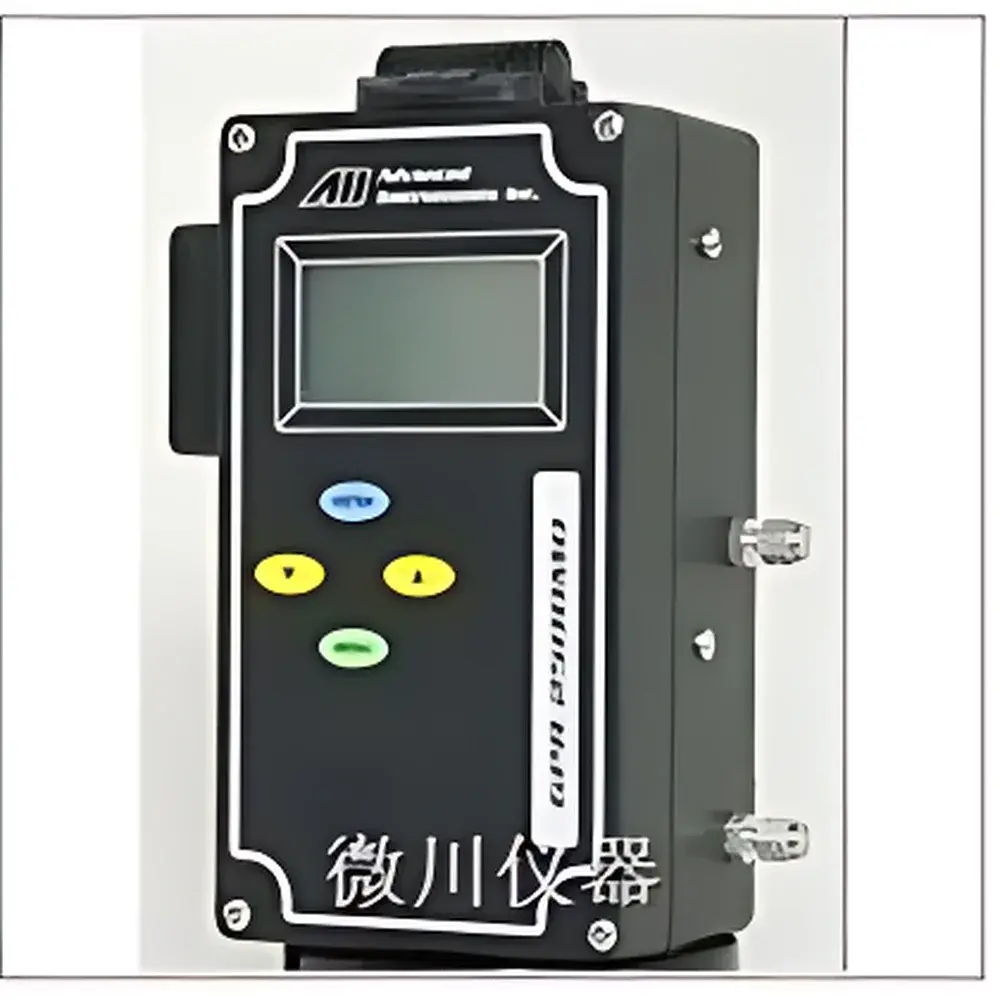
AII GPR-2500ATEX Hydrogen-in-Hydrogen Oxygen Analyzer
| Brand | AII |
|---|---|
| Origin | USA |
| Model | GPR-2500ATEX |
| Measurement Principle | BreakThrough electrochemical sensor technology |
| Range | 0–1%, 0–10%, 0–20%, 0–25% O₂ (selectable) |
| Accuracy | ±0.1% O₂ (calibrated with 98–100% O₂ in N₂ standard gas) |
| Resolution | 0.01% O₂ |
| Sensor Lifetime | 24 months in 100% O₂ |
| Linearity | R² = 0.995 |
| T90 Response Time | 13 seconds |
| Pressure Compensation | Automatic, 5–100 psig |
| Temperature Compensation | Automatic, –5 to +45 °C |
| Sample Flow Rate | 1–3 SCFH (recommended: 2 SCFH ≈ 1 L/min) |
| Analog Outputs | 0–1 V DC and 4–20 mA |
| Digital Interface | USB for remote control and data logging |
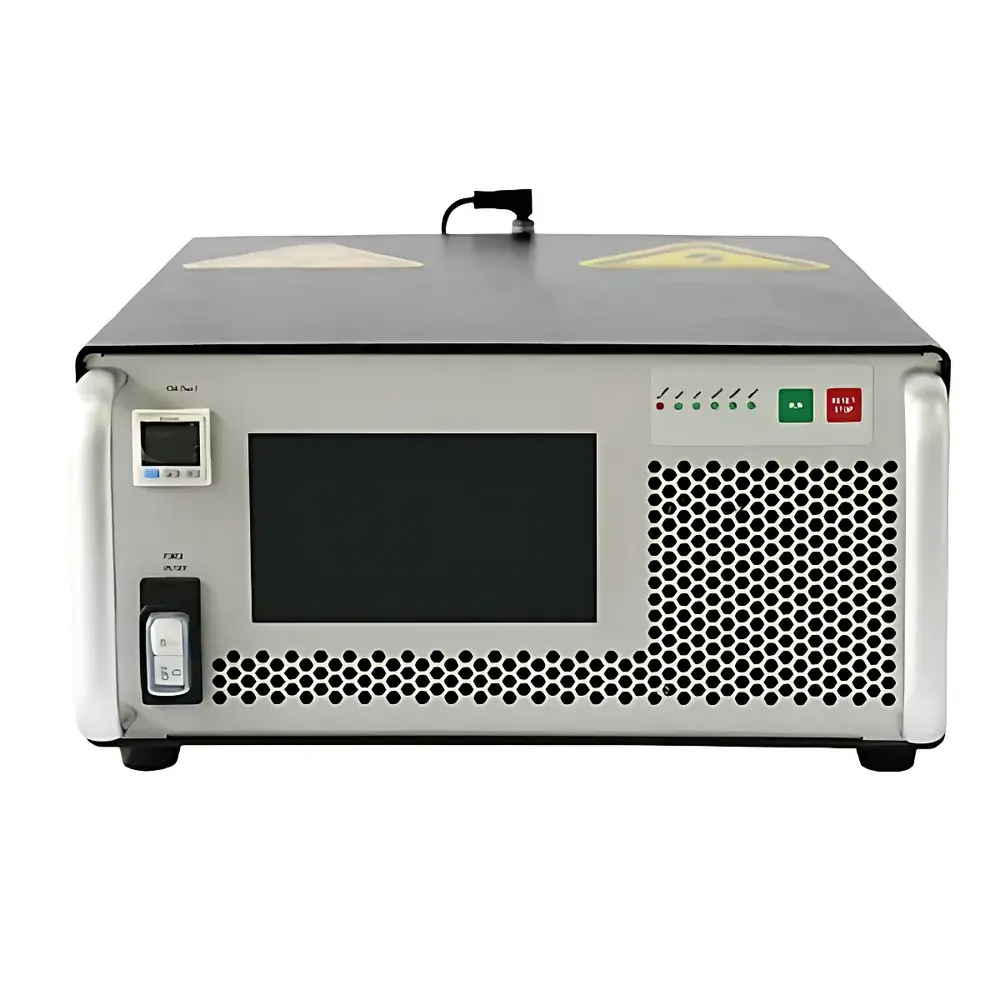
| Display | Backlit LCD with real-time pressure & temperature readout |
| Enclosure Material | Anodized aluminum |
| Mounting | Panel-mount (cutout: 178 × 223 mm) |
| Dimensions | 190 × 274 × 315 mm (W × H × D) |
| Weight | ~5 kg |
| Certifications | CE, ISO 9001 |
| Hazardous Area Rating | ATEX II 2G Ex d IIB T4 Gb |
Overview
The AII GPR-2500ATEX Hydrogen-in-Hydrogen Oxygen Analyzer is a purpose-engineered, intrinsically robust electrochemical analyzer designed for continuous, high-reliability oxygen monitoring in hydrogen-rich process streams—particularly within power generation turbine cooling systems, hydrogen-cooled generators, and fuel cell support infrastructure. It employs AII’s proprietary BreakThrough electrochemical sensor technology, which eliminates the conventional limitations of traditional galvanic or polarographic oxygen sensors—including rapid signal drift, short operational life under high-O₂ partial pressures, and sensitivity to background gas composition. Unlike conventional fuel-cell-type sensors that degrade rapidly in pure H₂ or low-oxygen hydrogen matrices, the BreakThrough platform delivers stable, linear output across its full dynamic range without electrolyte depletion or membrane saturation. The instrument operates on a diffusion-limited amperometric principle, where O₂ molecules permeate a selective barrier and undergo controlled reduction at a catalyzed working electrode; the resulting current is linearly proportional to partial pressure, enabling trace-level quantification even at sub-0.1% O₂ in >99.9% H₂ environments.
Key Features
- ATEX-certified explosion-proof enclosure (II 2G Ex d IIB T4 Gb) for safe deployment in Zone 1 hazardous areas adjacent to hydrogen handling systems
- BreakThrough electrochemical sensor with 24-month guaranteed lifetime in 100% O₂—validated per IEC 60079-29-1 sensor longevity protocols
- Automatic dual compensation for sample pressure (5–100 psig) and temperature (–5 to +45 °C), ensuring measurement integrity across variable process conditions
- Real-time backlit LCD display showing O₂ concentration, sample pressure, temperature, sensor status, and alarm flags
- Dual analog outputs (0–1 V DC and 4–20 mA) with HART-compatible signal conditioning for integration into DCS/SCADA systems
- USB interface supporting firmware updates, configuration export/import, and time-stamped data logging (up to 32,000 records)
- Two programmable relay outputs for high/low O₂ alarms, plus dedicated fault relays for power failure and sensor degradation detection
- Front-panel waterproof membrane keypad enabling field calibration, range selection, and system diagnostics without tools
- Panel-mount anodized aluminum housing (IP65-rated) with standardized 19″ rack or wall-mount options for flexible installation
Sample Compatibility & Compliance
The GPR-2500ATEX is validated for use with hydrogen, helium, argon, nitrogen, and inert gas mixtures—making it suitable for turbine generator seal gas monitoring, cryogenic air separation unit (ASU) argon column off-gas analysis, and impurity tracking in high-purity hydrogen supply lines. It meets ASTM D6866-22 requirements for electrochemical O₂ analyzers used in energy applications and complies with EN 61000-6-2/6-4 for electromagnetic compatibility in industrial environments. While not FDA 21 CFR Part 11 certified out-of-the-box, audit-ready data logging (with user ID, timestamp, and event type) supports GLP/GMP-aligned quality documentation when paired with validated SOPs. Calibration traceability is maintained via NIST-traceable 99% O₂ in N₂ standard gases, and linearity verification conforms to ISO 17025-compliant laboratory practices.
Software & Data Management
The embedded firmware supports automatic zero/span calibration routines, configurable alarm hysteresis, and adaptive averaging algorithms to suppress transient noise without compromising response fidelity. Logged data includes O₂ concentration, pressure, temperature, sensor voltage, and diagnostic flags—all time-stamped to millisecond resolution. USB export generates CSV files compatible with Microsoft Excel, LabVIEW, and PI System historians. Optional PC-based configuration utility enables batch parameter loading, firmware version management, and graphical trend review of up to 72 hours of continuous operation. No external software license is required; all functions are resident in non-volatile memory and retain settings during power cycling.
Applications
- Continuous monitoring of dissolved O₂ in hydrogen coolant loops of synchronous generators (IEEE Std 115-2019 Annex C compliance support)
- Leak detection and purity assurance in PEM fuel cell hydrogen feed streams
- O₂ impurity control in high-purity hydrogen delivery systems for semiconductor manufacturing
- Argon fraction monitoring in ASU cold boxes (per ISO 8573-1 Class 2 particulate/gas purity standards)
- Research-grade O₂ quantification in catalytic hydrogenation reactors and inert-atmosphere gloveboxes
- Verification of purge effectiveness during shutdown/startup sequences in refinery hydrogen units
FAQ
What is the recommended calibration gas for the GPR-2500ATEX?
Use 99% O₂ in N₂ (certified to ISO 6142), with certificate of analysis traceable to NIST SRM 2622.
Can the instrument measure 0–100% O₂?
Yes—0–100% O₂ is available as a factory-configured option; default configuration covers 0–1%, 0–10%, 0–20%, and 0–25% ranges with auto-scaling.
Is flow control integrated into the analyzer?
No—external flow regulation is required; the unit expects a stable 2 SCFH (≈1 L/min) sample stream via 1/4″ stainless steel Swagelok fittings.
Does the GPR-2500ATEX require routine maintenance beyond calibration?
No consumables or periodic sensor replacement are needed within the 24-month service interval; only annual verification with certified gas is advised.
How does the BreakThrough sensor differ from standard electrochemical O₂ cells?
It uses a solid-state electrolyte architecture with diffusion-limiting membranes and stabilized catalyst layers, eliminating liquid electrolyte evaporation and electrode passivation mechanisms common in legacy designs.