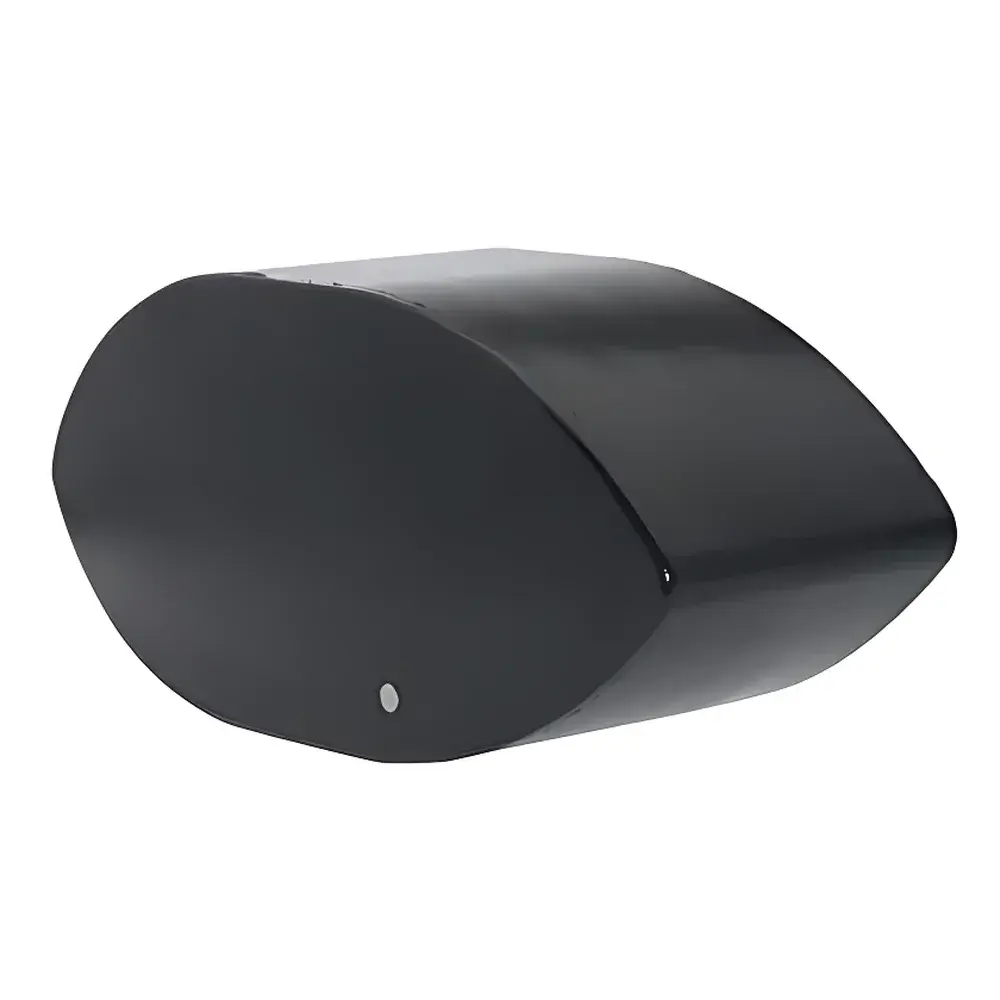
AirMar M563 Dual-Beam Chirp Echo Sounder
| Brand | AIRMAR |
|---|---|
| Origin | USA |
| Model | M563 |
| Frequency Bands | 25–45 kHz (low-band, 1000 W), 80–130 kHz / 130–210 kHz / 160–260 kHz (high-band options, 2000 W each) |
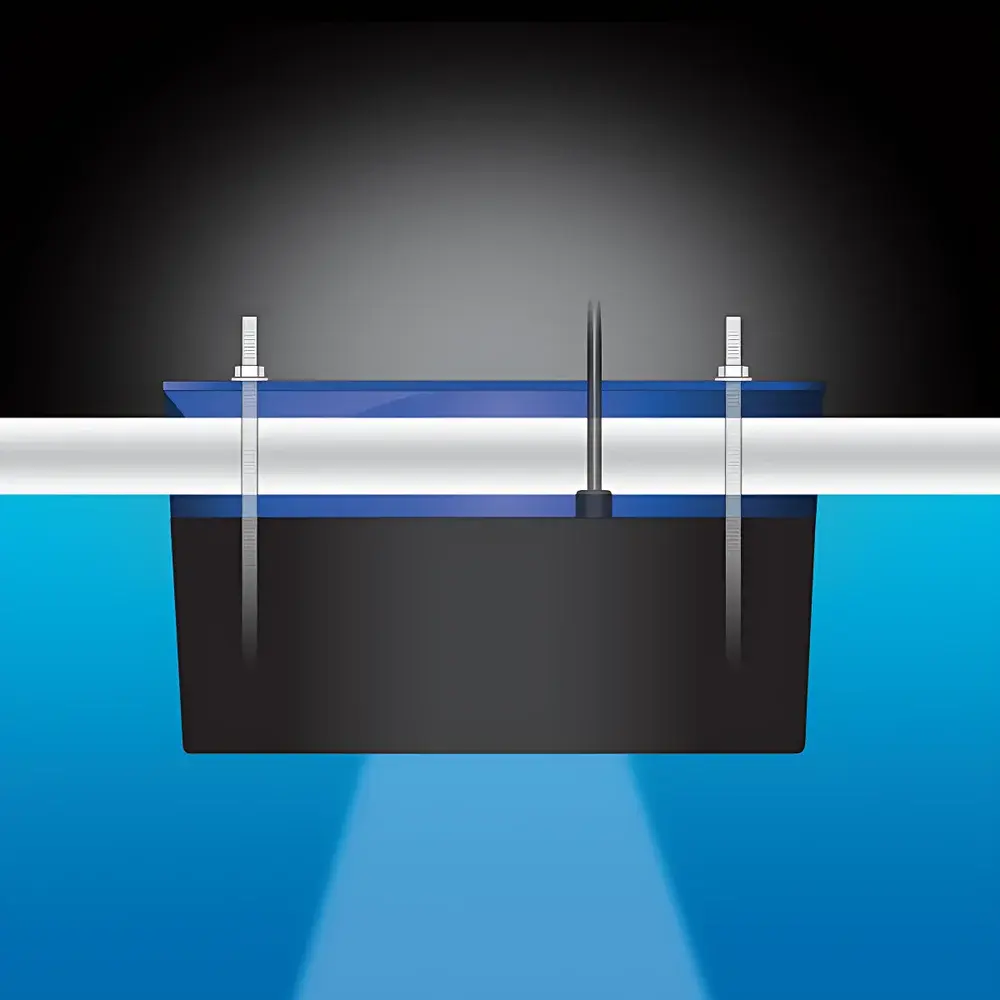
| Transducer Mounting | Through-hull or in-hull |
| Housing Material | Polyurethane-over-molded plastic |
| Temperature Sensor | Integrated high-accuracy thermistor |
| Cable Length | 10 m |
| Weight | 10 kg |
| Acoustic Window | Polyurethane |
Overview
The AirMar M563 is a dual-beam, broadband Chirp echo sounder engineered for precision hydrographic surveying, fisheries research, and marine navigation applications. Unlike conventional pulsed sonars, the M563 employs frequency-modulated continuous-wave (FMCW) Chirp technology—transmitting swept-frequency signals across user-selectable bandwidths—to achieve superior range resolution, signal-to-noise ratio, and target discrimination. Its dual-beam architecture simultaneously emits and receives on two independent acoustic axes: one optimized for deep-water bathymetric profiling (low-band), and the other configurable for high-resolution fish detection or shallow-water substrate analysis (high-band). This architecture enables concurrent depth measurement and water column target classification without mechanical scanning or time multiplexing. The system integrates a calibrated, NIST-traceable thermistor directly within the transducer housing, delivering real-time water temperature data synchronized with echo returns—critical for sound velocity correction in high-accuracy depth computation per IHO S-44 and ISO 25875 standards.
Key Features
- Dual-beam Chirp architecture supporting simultaneous low-band (25–45 kHz, 1000 W) and high-band (80–130 kHz, 130–210 kHz, or 160–260 kHz, 2000 W each) operation
- Xducer ID® technology—patented transducer identification and calibration memory embedded in the housing, ensuring automatic recognition and optimal parameter loading by compatible chartplotters and echosounders
- Through-hull or in-hull installation flexibility, validated for fiberglass, wood, and stainless steel hulls up to 50 mm thickness
- Polyurethane acoustic window with broadband impedance matching, minimizing signal loss and cavitation noise across all operating frequencies
- Integrated high-stability thermistor with ±0.2°C accuracy over 0–30°C, factory-calibrated and drift-compensated
- Ruggedized IP68-rated housing with UV-stabilized polyurethane overmolding for long-term submersion and abrasion resistance
Sample Compatibility & Compliance
The M563 is designed for deployment on commercial fishing vessels, research platforms, and hydrographic survey craft operating in coastal, estuarine, and inland water environments. Its low-band configuration provides reliable bottom detection in turbid or sediment-laden waters down to 1,200 m (dependent on absorption and seabed reflectivity), while high-band variants resolve individual fish targets as small as 5 cm at ranges exceeding 150 m under typical thermal stratification conditions. The device complies with FCC Part 15 Class B and CE RED Directive 2014/53/EU for electromagnetic compatibility. All firmware and transducer calibration data adhere to NMEA 2000 v3.200 and NMEA 0183 v4.10 messaging standards, enabling seamless integration into marine networks compliant with ISO 80000-8 and IEC 61162-1/2. For GLP-aligned data acquisition, the M563 supports timestamped, sensor-fused output with metadata logging required for audit trails under ISO/IEC 17025-accredited laboratories.
Software & Data Management
Raw echo data and processed depth/temperature streams are delivered via standard NMEA 2000 PGNs (e.g., 128267 Depth, 130311 Water Temperature) and optional high-speed Ethernet output (NMEA-TCP or proprietary binary protocol) for third-party acquisition software including Echoview, QPS Qimera, and SonarWiz. Calibration coefficients—including beam pattern corrections, time-variance compensation, and temperature-dependent sound speed lookup tables—are stored permanently in the transducer’s Xducer ID® EEPROM and auto-loaded upon network initialization. Firmware updates are performed via USB-C interface using AirMar’s certified utility suite, which maintains version-controlled change logs traceable to ISO 9001 design history files. Data export formats include CSV, NetCDF4, and industry-standard .raw binary for post-processing with MATLAB, Python (echopype), or R-based acoustic analysis pipelines.
Applications
- Multi-frequency fisheries stock assessment—differentiating species-specific swim bladder resonance signatures across Chirp bands
- High-resolution bathymetric mapping in support of IHO Order 1a surveys (≤ 0.5 m vertical uncertainty)
- Real-time water column monitoring for aquaculture site selection and environmental impact assessments
- Underwater infrastructure inspection—including pipeline burial verification and scour detection around offshore wind foundations
- Integration into autonomous surface vehicle (ASV) and unmanned underwater vehicle (UUV) sensor suites for persistent area monitoring
FAQ
Does the M563 require external sound velocity profiling for accurate depth calculation?
No—the integrated thermistor provides sufficient input for empirical sound speed estimation using UNESCO algorithms; however, for sub-decimeter vertical accuracy, external CTD input is recommended.
Can the M563 be operated in freshwater and seawater without recalibration?
Yes—Xducer ID® stores salinity-compensated calibration profiles; default settings assume 35 ppt, but user-defined salinity values can be loaded via NMEA 2000 PGN 127257.
Is the 10-meter cable length extendable?
Extension is possible using shielded, twisted-pair marine-grade cable rated for NMEA 2000, but total bus length must remain ≤ 100 m with proper termination and power injection per ISO 11898-2.
What hull materials are validated for in-hull installation?
Fiberglass (≥ 6 mm thickness), solid wood (non-resin-impregnated), and stainless steel (with optional acoustic coupling gel and backing plate); aluminum and cored composites are not supported.
How is firmware integrity verified during update?
Each firmware image includes SHA-256 hash validation and digital signature verification against AirMar’s root certificate, enforced by onboard secure boot ROM.