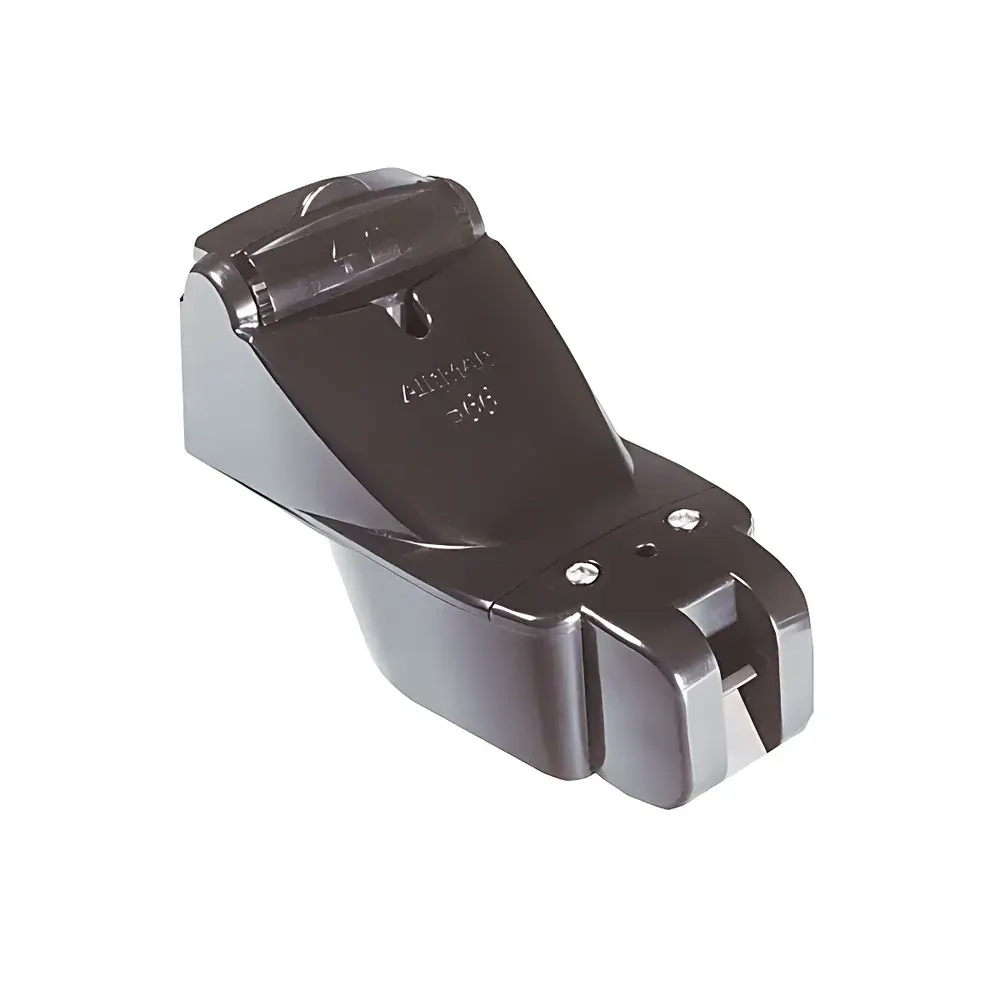
Airmar P66 TRIDUCER® Transom-Mount Multifunction Depth Sounder
| Brand | Airmar |
|---|---|
| Origin | USA |
| Model | P66 |
| Frequency | 50 kHz / 200 kHz |
| Beam Width | 45° @ 50 kHz, 11° @ 200 kHz |
| Output Power | 600 W |
| Mounting Type | Transom-mount |
| Housing Material | Polyurethane (LPU) |
| Cable Length | 10 m |
| Integrated Sensors | Depth, Water Temperature, Optional Speed (Paddlewheel) |
| Tilt Compatibility | 2°–20° |
| Weight | 0.5 kg |
| Acoustic Window | Layered Polyurethane (LPU) |
Overview
The Airmar P66 TRIDUCER® is a transom-mounted multifunction acoustic transducer engineered for precision depth sounding, water temperature measurement, and optional speed sensing on small- to mid-sized vessels operating in inland lakes, coastal waters, and nearshore fisheries. It operates on dual-frequency sonar principles—50 kHz for long-range bottom profiling with high penetration in turbid or deep water, and 200 kHz for high-resolution shallow-water imaging with enhanced target separation and structural definition. The transducer employs piezoceramic elements housed within a hydrodynamically optimized polyurethane (LPU) acoustic window, which focuses the acoustic beam and minimizes flow-induced turbulence across the sensor face. This design ensures stable signal coupling, reduced cavitation noise, and consistent echo return integrity—critical for reliable depth and velocity data acquisition under dynamic vessel motion.
Key Features
- Dual-frequency operation (50 kHz and 200 kHz) enables adaptive use across variable water depths and clarity conditions—50 kHz delivers up to 300+ meters range in freshwater; 200 kHz provides sub-meter vertical resolution in depths up to 60 meters.
- Patented noise suppression architecture mitigates mechanical vibration and broadband flow noise, improving signal-to-noise ratio by 5–8 knots (6–9 mph) equivalent in effective operational envelope.
- Integrated LPU-layered acoustic window offers superior acoustic impedance matching, abrasion resistance, and thermal stability across -10°C to +50°C ambient ranges.
- Modular plastic release bracket allows rapid, tool-free detachment of the transducer from the mounting assembly—facilitating maintenance, calibration verification, or seasonal storage without compromising hull integrity.
- Optimized hydrodynamic profile with recessed water-channel grooves protects paddlewheel speed sensors (when installed) from turbulent wash and blade strike during high-speed planing or wake interaction.
- Compatible with standard marine NMEA 2000 networks and legacy analog interfaces via Furuno 10-pin, Garmin, and Raymarine proprietary connectors—ensuring seamless integration into existing helm displays and chartplotter ecosystems.
Sample Compatibility & Compliance
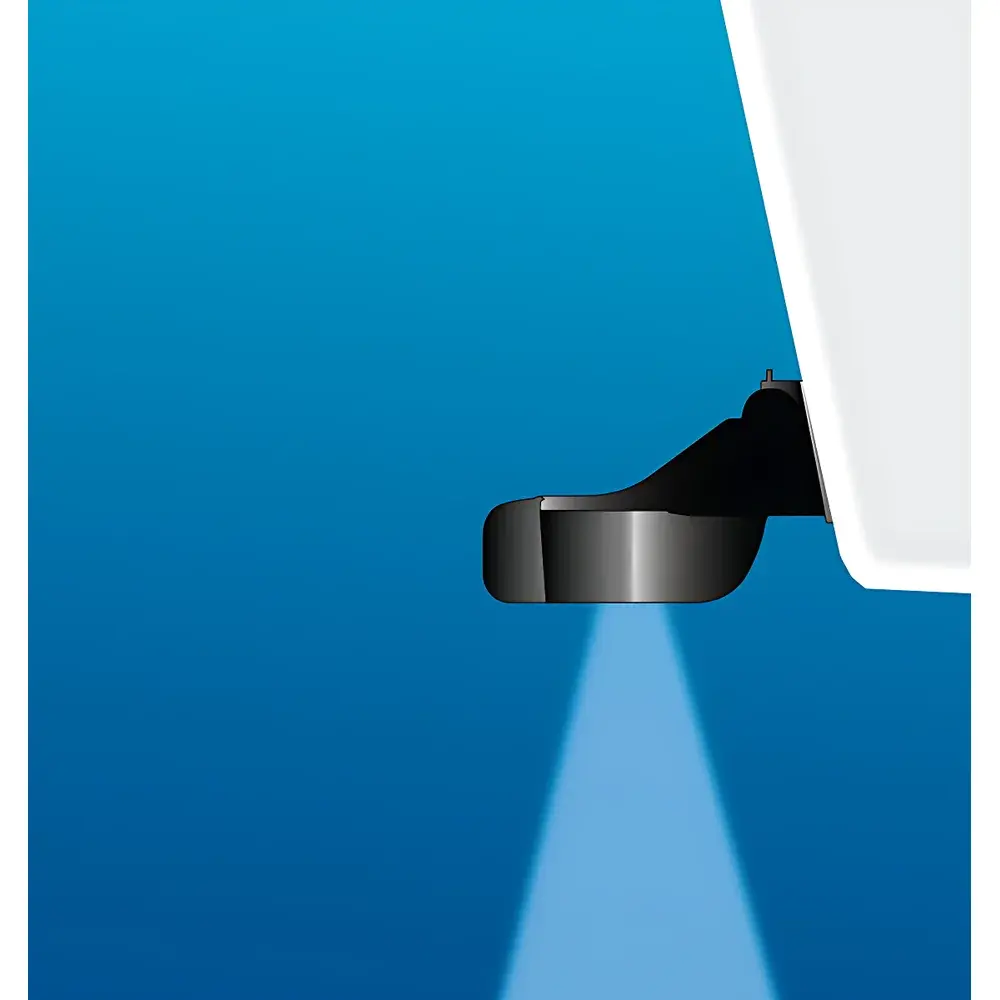
The P66 is validated for installation on fiberglass, aluminum, and wood transoms with tilt angles between 2° and 20°, accommodating both flat and angled hull configurations common in recreational fishing boats, survey skiffs, and research support vessels up to 12 meters (40 feet). Its low-profile, non-intrusive mounting eliminates hull modification requirements and maintains vessel hydrodynamic efficiency. The transducer conforms to IEC 62287-1:2017 (Marine echo sounders — Part 1: Performance requirements, methods of testing and required test results) and meets EMC compliance per EN 55022:2010 Class B for radiated and conducted emissions. While not certified for safety-critical navigation under IMO SOLAS Annex 13, it supports GLP-aligned data logging when paired with compliant chartplotters supporting NMEA 2000 message logging (e.g., depth, temperature, SOG, COG).
Software & Data Management
The P66 itself is a hardware transducer without onboard firmware or embedded software; however, its analog and digital outputs interface directly with third-party marine electronics platforms that implement standardized NMEA 0183 (Depth, MTW, VHW) and NMEA 2000 (PGNs 128259, 130311, 130312) protocols. When connected to compatible chartplotters—including Furuno TZtouch, Garmin GPSMAP series, and Raymarine Axiom—the device contributes time-synchronized, timestamped datasets suitable for post-mission analysis. Users may export raw depth/temperature logs in CSV or GPX format for GIS integration, bathymetric modeling, or fisheries stock assessment workflows. For regulatory traceability, systems supporting NMEA 2000’s built-in message timestamps and external SD-card logging meet minimum ALARP (As Low As Reasonably Practicable) data retention expectations under USCG and EU MCA guidance for non-safety-critical hydrographic operations.
Applications
- Recreational and commercial inland lake and estuarine fisheries—enabling real-time bottom contour mapping, thermocline detection, and baitfish school identification.
- Small-vessel hydrographic surveys for marina development, dredging pre-assessment, and environmental baseline studies.
- Academic fieldwork involving limnological profiling, sediment transport monitoring, and aquatic habitat characterization.
- Coastal patrol and SAR support vessels requiring redundant depth and speed inputs independent of GPS-derived SOG.
- Integration into autonomous surface vehicle (ASV) telemetry stacks where low-power, high-reliability transduction is prioritized over full-bandwidth multibeam capability.
FAQ
Does the P66 require hull penetration or through-hull installation?
No. The P66 is designed exclusively for transom mounting and does not require drilling or permanent hull modification.
Can the P66 be used on metal-hulled vessels?
Yes—provided the transom surface is flat, rigid, and free of air gaps or foam-core delamination beneath the mounting surface.
Is the temperature sensor calibrated to NIST-traceable standards?
The integrated thermistor is factory-calibrated to ±0.5°C accuracy across 0–35°C; full NIST-traceable calibration certificates are available upon request at time of order.
What is the maximum recommended vessel speed for accurate depth readings?
For optimal echo return integrity and minimal cavitation, sustained speeds above 35 knots are not recommended; empirical validation shows stable depth tracking up to 28 knots in calm sea states.
How does the P66 differ from the P66DT variant?
The P66DT omits the speed-sensing paddlewheel and associated electronics—retaining only depth and temperature functionality—making it suitable for applications where speed data is either redundant or sourced externally.