AirMar P7 Shorty™ Low-Profile Depth Sounder Transducer
| Brand | AIRMAR |
|---|---|
| Origin | USA |
| Model | P7 |
| Frequency | 200 kHz |
| Beamwidth | 12° @ 200 kHz |
| Output Power | 375 W |
| Housing Material | Polyurethane-encapsulated plastic |
| Mounting Type | Through-hull |
| Hole Diameter | 51 mm |
| Overall Height | 66 mm |
| Projection Beyond Hull | 5 mm |
| Cable Length | 10 m |
| Operating Tilt Range | 0–12° (max 20°) |
| Weight | 0.5 kg |
| Compliance | ABYC H-27 |
| Acoustic Window | Polyurethane |
Overview
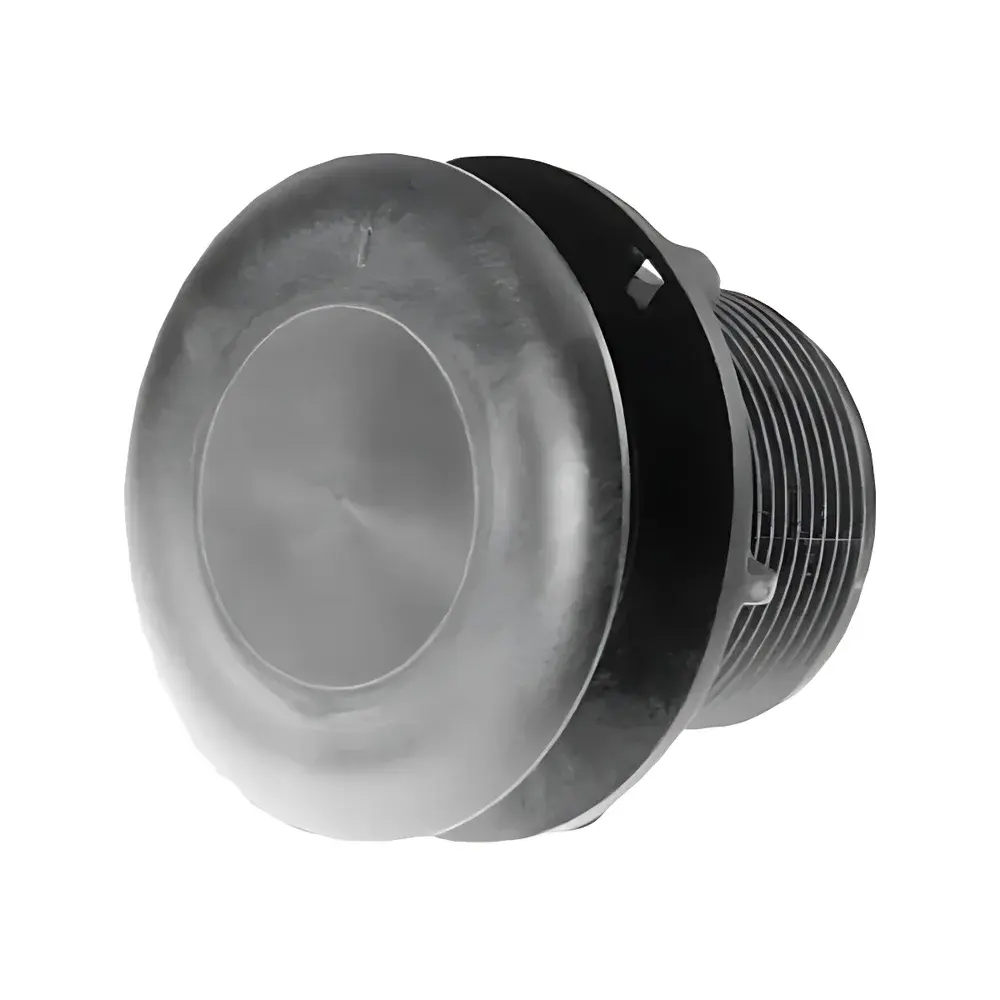
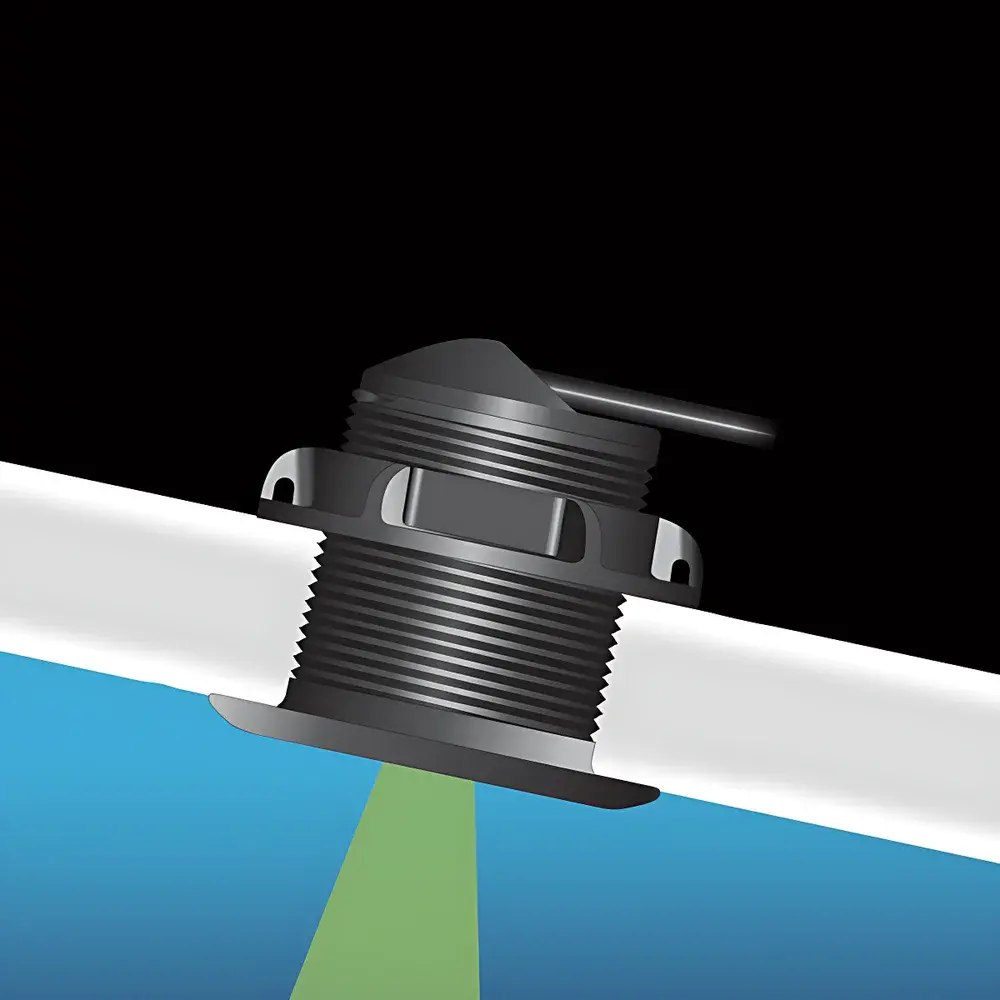
The AirMar P7 Shorty™ is a compact, through-hull depth sounder transducer engineered for precision hydrographic performance in space-constrained marine environments. Utilizing piezoceramic element technology operating at a nominal frequency of 200 kHz, the P7 delivers high-resolution echo returns optimized for shallow-to-moderate depth profiling (typically up to 300 m in freshwater and 150 m in seawater, depending on bottom composition and water clarity). Its acoustic architecture follows the principles of pulse-echo sonar: a short-duration acoustic pulse is transmitted into the water column; the time delay between transmission and reception of the reflected signal from the seabed is converted into depth via calibrated sound velocity assumptions (default 1500 m/s, user-adjustable). The transducer’s low-profile geometry—projecting only 5 mm beyond the hull surface—minimizes hydrodynamic drag and eliminates flow-induced noise, thereby enhancing signal-to-noise ratio and measurement stability across vessel speeds up to 40 knots.
Key Features
- Industry-standard low-profile form factor: 66 mm total height with just 5 mm external projection—ideal for fiberglass and aluminum hulls with limited interior headroom.
- 200 kHz ceramic transducer element delivering narrow 12° beamwidth for improved lateral resolution and reduced side-lobe interference.
- 375 W peak acoustic output power enables reliable bottom detection in turbid or acoustically attenuating conditions.
- Polyurethane acoustic window provides broad-spectrum impedance matching, corrosion resistance, and mechanical durability in saltwater environments.
- ABYC H-27 compliant housing ensures adherence to U.S. marine electrical and structural safety standards for underwater transducers.
- Optional integrated NTC thermistor allows concurrent water temperature measurement, supporting sound velocity correction in advanced echosounder systems.
- Through-hull installation with standardized 51 mm cutout simplifies retrofitting and minimizes hull integrity concerns.
Sample Compatibility & Compliance
The P7 is compatible with all NMEA 2000–compliant depth display units and multifunction displays (MFDs) that support analog or digital depth input via proprietary or standard transducer interfaces (e.g., Raymarine SeaTalkNG, Garmin Marine Network, Simrad NSS/evo3). It operates within the ISO 8846 marine electrical safety standard for ignition protection and meets ABYC H-27 requirements for underwater transducer construction, including pressure rating (tested to 30 m static submersion), material UV resistance, and galvanic isolation. While not certified for Class I Div 1 hazardous locations, it is suitable for recreational and light commercial vessels operating under GLP-aligned operational protocols where traceable calibration and environmental logging are maintained.
Software & Data Management
The P7 itself is a passive analog transducer and does not incorporate onboard firmware or data storage. Depth and optional temperature outputs are delivered as analog voltage signals (0–5 V or 0–10 V, configurable per host system) or digitized via the connected display unit’s internal ADC. When interfaced with NMEA 2000 networks, raw depth data appears as PGN 128259 (Depth Below Transducer) and PGN 130311 (Environmental Parameters), enabling integration into vessel management systems that support automated log export, time-stamped CSV generation, and GIS-linked bathymetric mapping workflows. For regulatory traceability, users deploying the P7 in survey-grade applications should implement external calibration verification logs aligned with ISO/IEC 17025 documentation practices.
Applications
- Recreational powerboat and sailboat depth monitoring with minimal hull modification.
- Shallow-draft workboats and research skiffs requiring unobtrusive hull-mounted sensing.
- Marine survey platforms performing nearshore bathymetric profiling and habitat mapping.
- OEM integration into autonomous surface vehicles (ASVs) and unmanned surface vessels (USVs) where size, weight, and power constraints govern sensor selection.
- Training and educational maritime programs emphasizing hands-on sonar fundamentals and transducer physics.
FAQ
Does the P7 include built-in temperature sensing?
An optional NTC thermistor is available as a factory-installed upgrade; it is not included by default.
Can the P7 be used on metal hulls?
Yes—provided proper dielectric isolation (e.g., non-conductive mounting gasket and bedding compound) is applied to prevent galvanic corrosion and ensure acoustic coupling.
What is the recommended maximum vessel speed for stable depth readings?
Stable operation is verified up to 40 knots; above this, cavitation may degrade return signal fidelity depending on hull shape and water conditions.
Is calibration required after installation?
No factory recalibration is needed; however, users must configure sound velocity and offset values in the host display to match local water conditions and transducer mounting depth.
How does the polyurethane acoustic window affect long-term performance?
Polyurethane offers superior acoustic impedance matching to water compared to rigid plastics, maintains consistent performance across temperatures from −10°C to +50°C, and resists biofouling adhesion better than bare ceramic or epoxy surfaces.