AIRMAR PM265LM Dual-Frequency CHIRP Depth Sounder
| Brand | AIRMAR |
|---|---|
| Origin | USA |
| Model | PM265LM |
| Power Output | 1000 W |
| Operating Frequency Bands | Low Band 42–65 kHz (max depth 914 m, beam width 25°–16°) |
| Total Chirp Bandwidth | 73 kHz |
| Housing Material | Bronze |
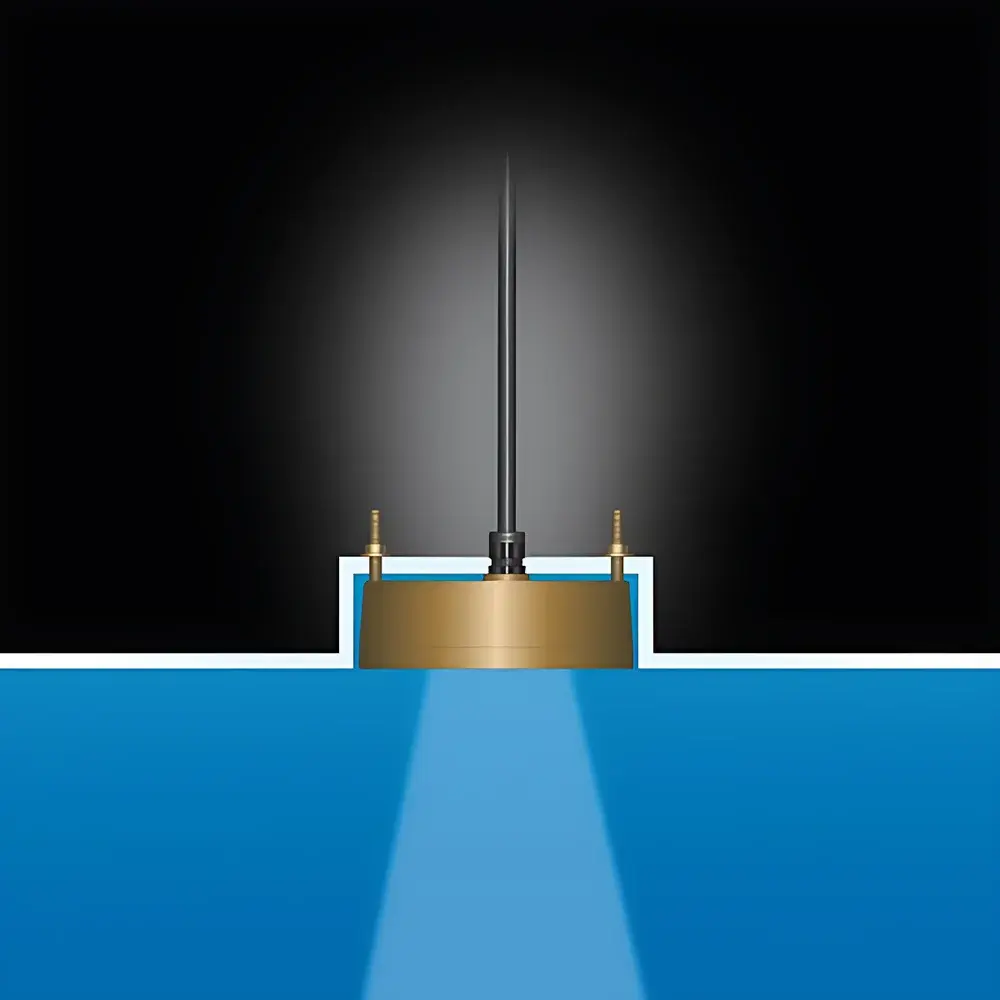
| Mounting Options | Pocket/Kiln-hull, Through-hull (B265LM), Transom (TM265LM), In-hull (M265LM), or Tank (CM265LM) |
| Temperature Sensor | Integrated fast-response thermistor |
| Beam Steering | Fixed (non-rotating), optimized for hull-integrated installation |
| Weight | 5.2 kg |
| Hull Compatibility | Solid fiberglass hulls ≥8 m in length |
| Tilt Compensation | Custom-installation adaptable to hull deadrise angles |
Overview
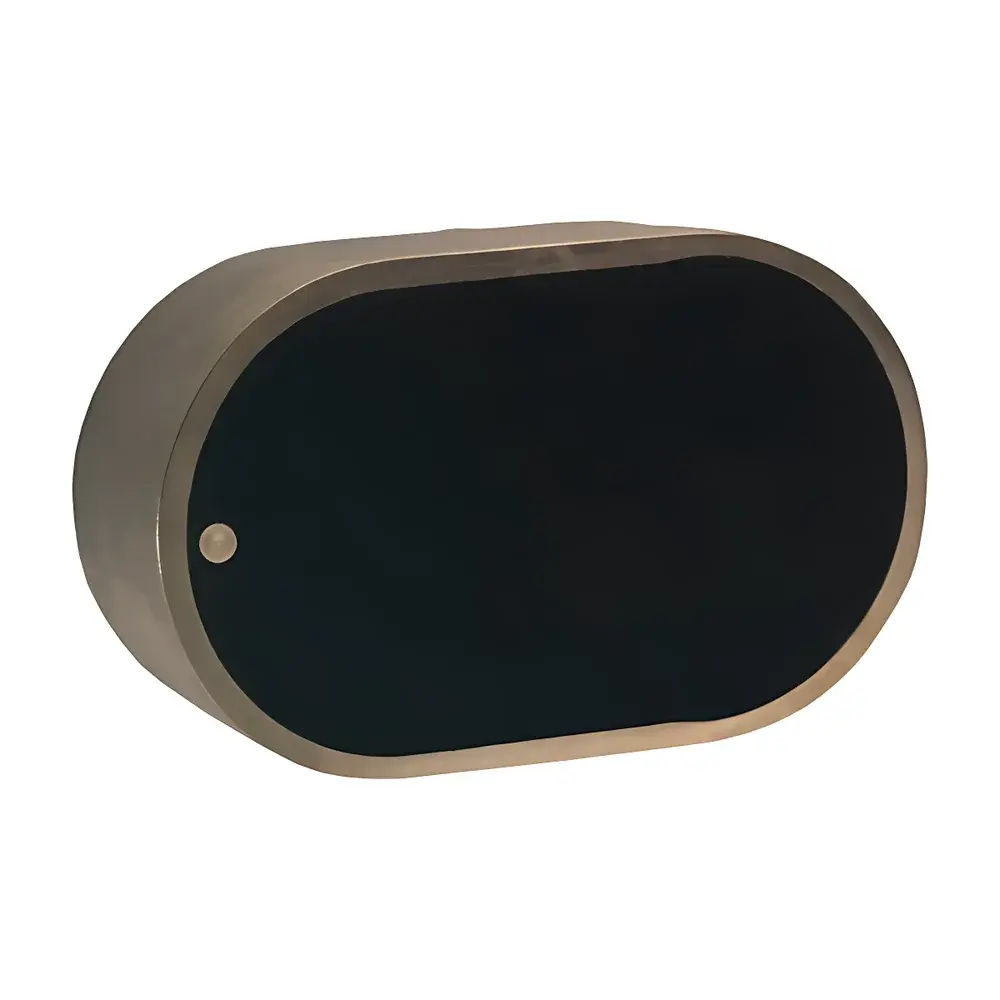
The AIRMAR PM265LM is a dual-frequency CHIRP (Compressed High-Intensity Radar Pulse) depth sounder engineered for high-fidelity underwater target discrimination and bathymetric profiling in both recreational and commercial marine applications. Unlike conventional pulsed sonar systems, the PM265LM employs swept-frequency CHIRP transmission across two independently configurable bands—low-band (42–65 kHz) and mid-band (85–135 kHz)—enabling simultaneous high-resolution imaging of deep-water seabed morphology and mid-water column targets such as baitfish schools, pelagic predators, and structural features. Its 1000 W peak acoustic output delivers exceptional signal-to-noise ratio (SNR) and range resolution, while the integrated fast-response thermistor provides real-time water temperature data synchronized with depth returns. Designed for permanent integration into solid fiberglass hulls ≥8 meters in length, the PM265LM utilizes a fixed-beam, bronze-housed transducer architecture optimized for minimal flow noise and maximum acoustic coupling.
Key Features
- Dual-band CHIRP operation with independent low-band (42–65 kHz) and mid-band (85–135 kHz) channels, supporting concurrent deep-water bottom tracking and mid-water target separation
- 1000 W peak transmit power enabling reliable detection at 914 m (low band) and 457 m (mid band), with beam widths dynamically narrowing across frequency sweep (25°–16° low band; 16°–11° mid band)
- Bronze transducer housing with polyurethane acoustic window—corrosion-resistant, mechanically robust, and acoustically matched for broadband transmission in seawater
- Integrated digital thermistor with ±0.2 °C accuracy and <1 s thermal response time, co-located with acoustic aperture for spatially aligned environmental sensing
- Mounting versatility: compatible with pocket/kiln-hull, through-hull (B265LM), transom (TM265LM), in-hull (M265LM), and tank-mount (CM265LM) configurations
- Xducer ID® technology enables automatic transducer recognition and firmware-optimized parameter loading on NMEA 2000 or Ethernet-connected displays
- Fixed-beam design calibrated for hull deadrise angles up to ±25°, with custom mounting kits available for precise acoustic axis alignment
Sample Compatibility & Compliance
The PM265LM is certified for use on vessels with solid fiberglass hulls (no cored or wood-laminated structures) and requires minimum hull thickness and curvature specifications per AIRMAR Installation Manual Rev. 4.2. It complies with IEC 62288 Ed. 2.0 (Maritime navigation and radiocommunication equipment – Presentation of information on shipborne navigational displays) and meets EMC requirements per EN 301 489-1 V2.2.0 (2019-02) and EN 60945:2015 (Maritime navigation and radiocommunication equipment). While not FDA-regulated, its temperature measurement subsystem adheres to ASTM E1137/E1137M-22 (Standard Specification for Industrial Platinum Resistance Thermometers), ensuring traceable calibration stability under continuous marine exposure. The device supports GLP-compliant data logging when interfaced with NMEA 2000-certified chartplotters featuring audit-trail-enabled storage.
Software & Data Management
The PM265LM communicates via NMEA 2000 (Fast Packet) and Ethernet (TCP/IP) protocols, delivering raw echo envelope data, depth-corrected bathymetry, temperature timestamps, and CHIRP metadata (center frequency, bandwidth, pulse duration) to compatible multifunction displays (e.g., Garmin GPSMAP, Raymarine Axiom, Furuno TZtouch). Firmware updates are performed via AIRMAR’s free SounderTools™ utility (Windows/macOS), which also enables advanced configuration of sweep parameters, gain profiles, and interference rejection filters. All logged data—including synchronized depth/temperature/time triplets—can be exported in CSV or NMEA 0183 RMC/GGA/MTW formats for post-processing in MATLAB, Python (via nmea-parser), or GIS platforms. No proprietary cloud service is required; local storage on display units satisfies ISO/IEC 17025 clause 7.5.2 (data integrity and retention).
Applications
- Commercial fisheries: Discrimination of demersal vs. pelagic species aggregations, biomass estimation via echo-integration, and real-time trawl depth optimization
- Hydrographic survey support: Shallow-to-deep bathymetric profiling in coastal zones, estuaries, and inland waterways where multi-angle beam coverage improves bottom classification accuracy
- Sportfishing operations: Identification of thermocline layers, suspended baitfish shoals, and hard-bottom habitats using dual-band contrast enhancement
- Marine research: Long-term water column monitoring in conjunction with CTD profilers, leveraging synchronized temperature-depth correlation for physical oceanography studies
- Vessel performance optimization: Real-time draft monitoring and hull fouling assessment via consistent bottom return amplitude analysis over time
FAQ
Is the PM265LM compatible with aluminum or steel hulls?
No. The PM265LM is validated exclusively for solid fiberglass hulls ≥8 m in length. Aluminum and steel hulls require alternative transducers (e.g., AIRMAR TM265LM with transom mount) due to acoustic impedance mismatch and potential signal attenuation.
Does the unit support CHIRP frequency customization beyond factory presets?
No. Sweep ranges are fixed per band (42–65 kHz and 85–135 kHz) and cannot be user-modified. However, center frequency, pulse compression settings, and gain profiles are adjustable via SounderTools™.
Can temperature data be logged independently of depth returns?
Yes. The thermistor operates continuously and outputs NMEA 0183 MTW sentences at 1 Hz, regardless of sonar activity, enabling standalone environmental logging.
What is the minimum recommended water depth for reliable low-band operation?
For optimal signal penetration and bottom lock, a minimum operational depth of 10 m is recommended for low-band mode; shallower depths may result in near-field reverberation masking target returns.
Is Xducer ID® functionality dependent on specific display hardware?
Yes. Full Xducer ID® auto-configuration requires NMEA 2000 displays supporting PGN 127250 (Transducer Configuration) and firmware v5.0 or later from Garmin, Raymarine, or Furuno.