
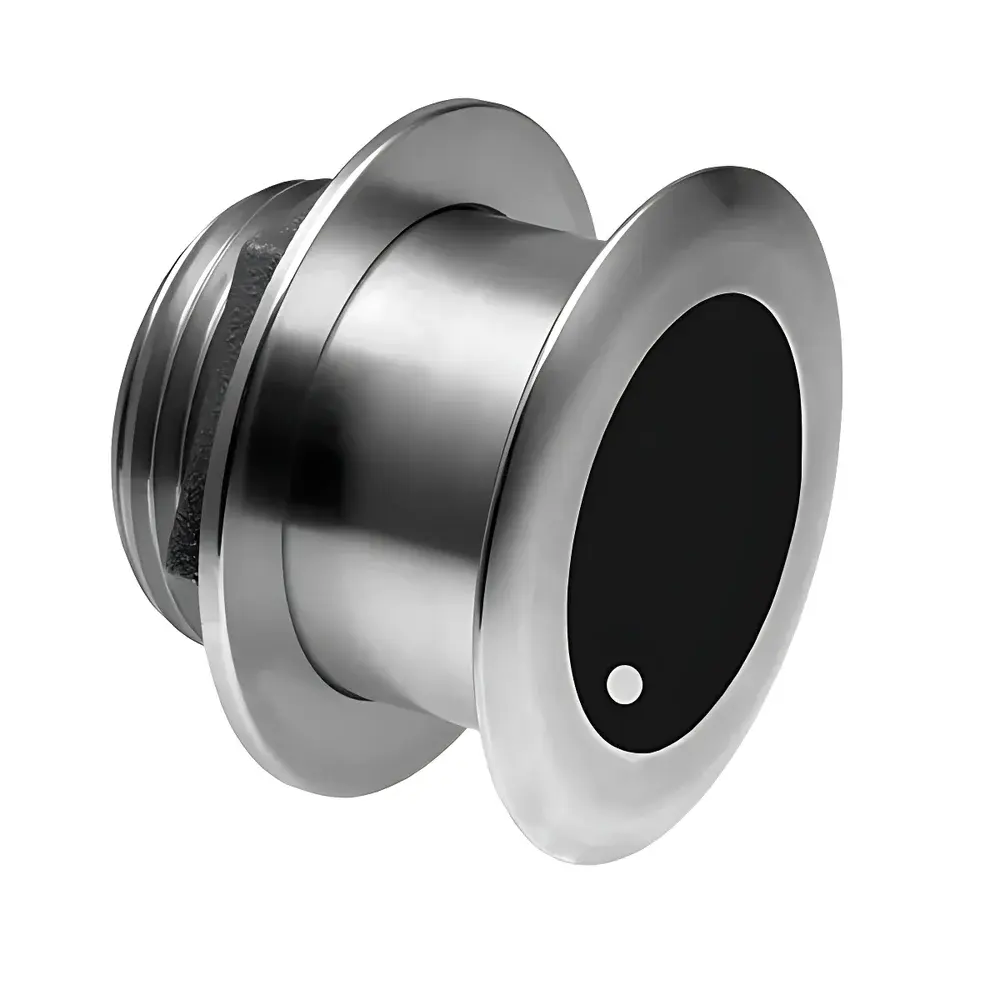
AirMar SS175HW Wide-Beam Chirp Depth Sounder
| Brand | Airmar |
|---|---|
| Origin | USA |
| Model | SS175HW |
| Operating Frequency Range | 150–250 kHz |
| Beam Width | Fixed 25° |
| Output Power | 1000 W |
| Housing Material | Stainless Steel |
| Mounting Type | Low-Profile Through-Hull |
| Transducer Window | Polyurethane |
| Maximum Hull Angle | 28° |
| Cable Length | 10 m |
| Integrated Temperature Sensor | Yes |
| Weight | 2.7 kg |
| Required Hull Cutout Diameter | 98 mm |
| Shaft Length | 118 mm |
| Compatible Hull Materials | Fiberglass, Wood, Aluminum, Stainless Steel |
| Vessel Length Limit | Up to 8 m |
| Xducer ID® Technology | Yes |
| Total Bandwidth | 100 kHz |
Overview
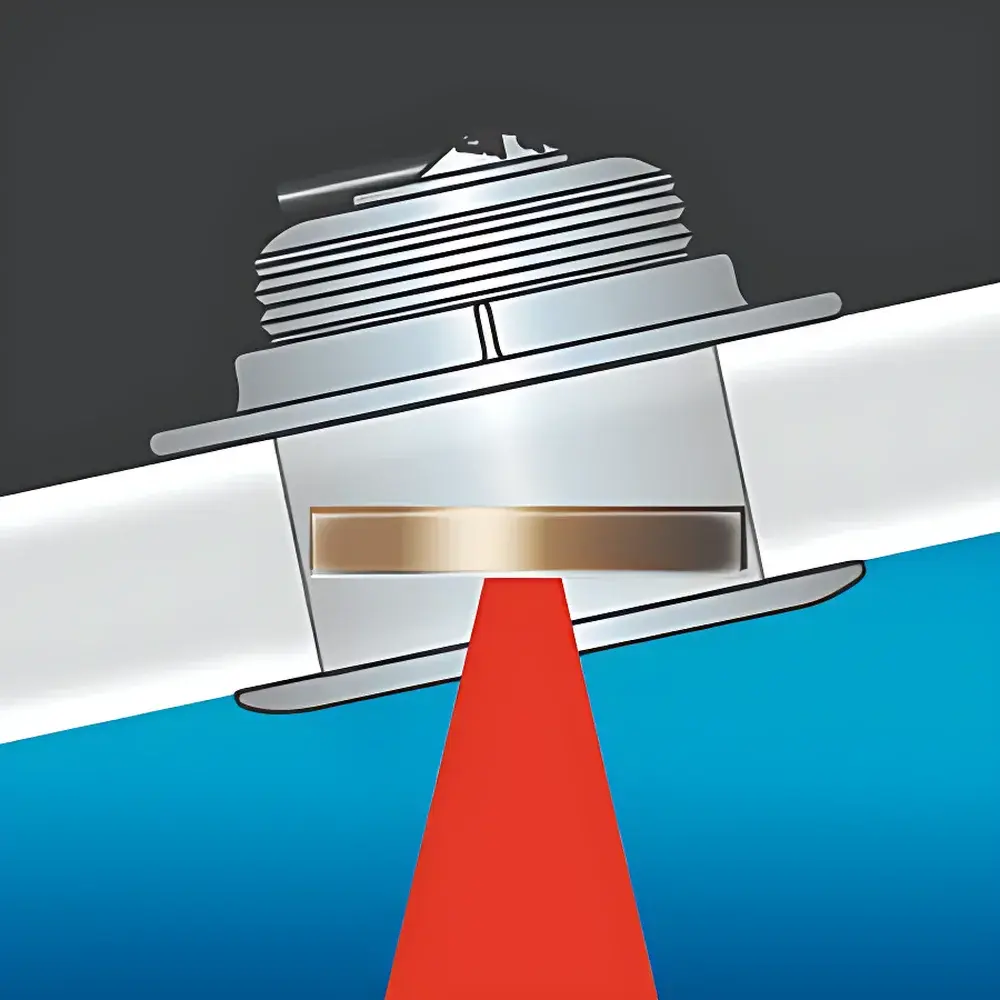
The AirMar SS175HW is a high-frequency, wide-beam CHIRP (Compressed High-Intensity Radar Pulse) depth sounder transducer engineered for precision bathymetric measurement and real-time water temperature profiling in recreational and light-commercial marine applications. Unlike conventional fixed-frequency sonar systems, the SS175HW employs swept-frequency CHIRP technology across a continuous 100 kHz bandwidth (150–250 kHz), enabling superior target resolution, improved signal-to-noise ratio, and enhanced bottom discrimination—particularly in turbid or acoustically complex environments. Its fixed 25° conical beam provides consistent spatial coverage independent of depth, delivering approximately double the seabed footprint compared to narrow-beam equivalents at equivalent mounting depth. Designed for through-hull installation with minimal hydrodynamic drag, the SS175HW features a low-profile stainless steel housing and a polyurethane acoustic window optimized for broadband transmission and mechanical durability across fiberglass, wood, aluminum, and stainless steel hulls.
Key Features
- CHIRP operation across 150–250 kHz with 100 kHz total bandwidth, supporting high-resolution echo integration and adaptive pulse compression
- Fixed 25° wide-angle conical beam—engineered for uniform coverage and consistent swath width from shallow to moderate depths (up to 300 m typical)
- 1000 W peak acoustic output power, compliant with IEC 62237-2 and EN 60945 marine transducer safety standards
- Integrated high-stability thermistor-based water temperature sensor with ±0.5 °C accuracy over 0–35 °C range
- Stainless steel pressure housing (AISI 316) with IP68-rated sealing and corrosion-resistant fasteners
- Xducer ID® digital identification protocol—enables automatic transducer recognition, configuration loading, and firmware validation via NMEA 2000 networks
- Low-profile through-hull design with 98 mm cutout diameter and 118 mm shaft length, accommodating hull angles up to 28° without beam distortion
- Polyurethane acoustic window with broadband impedance matching and UV-resistant formulation for long-term underwater exposure
Sample Compatibility & Compliance
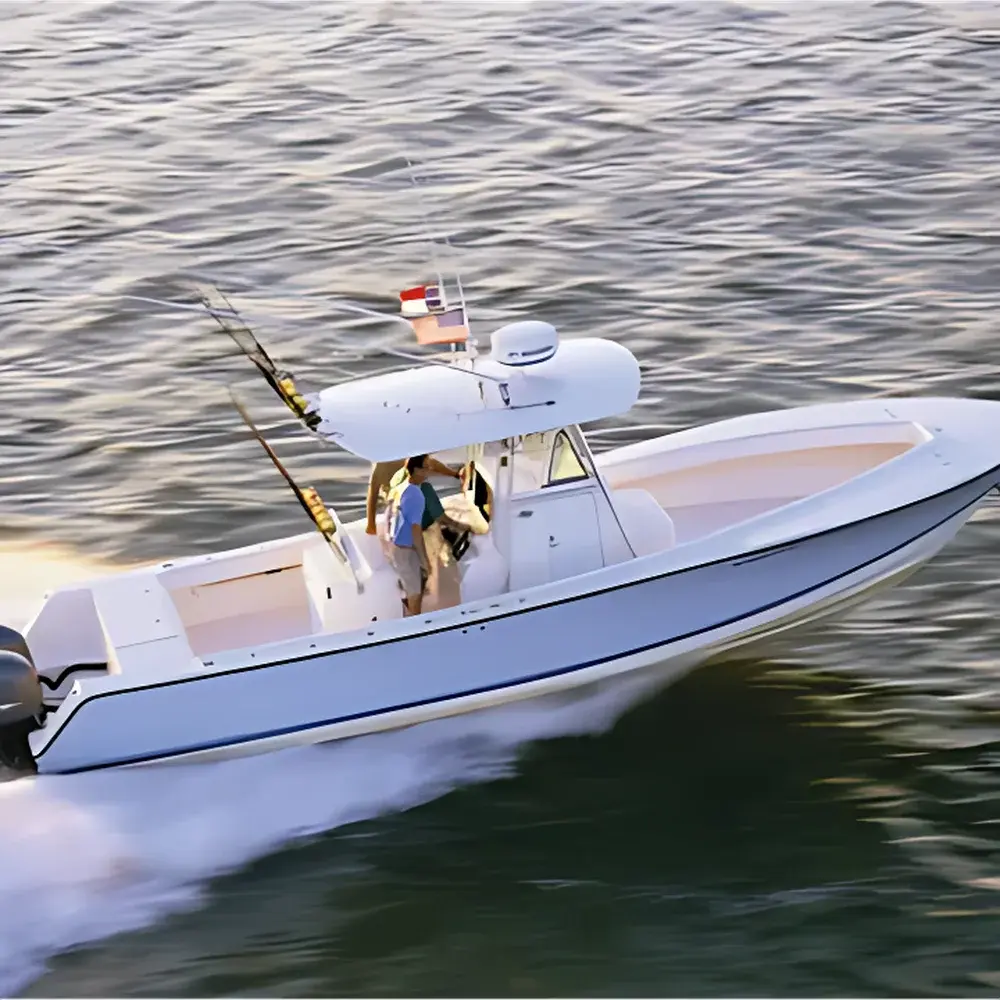
The SS175HW is validated for installation on monohull vessels up to 8 meters LOA with planing or semi-displacement hull forms. It supports hull materials including fiberglass-reinforced polymer (FRP), solid wood, marine-grade aluminum (5083/6061), and austenitic stainless steel (316). The transducer complies with IMO Resolution A.694(17), IEC 62237-2:2019 (Marine echosounders), and EN 60945:2019 (Maritime navigation and radiocommunication equipment). Its CHIRP waveform design adheres to ITU-R SM.1138 spectral occupancy guidelines for shared maritime frequency bands. No regulatory licensing is required for operation within the 150–250 kHz band under FCC Part 80 and ETSI EN 302 017-1.
Software & Data Management
The SS175HW interfaces natively with NMEA 2000 networks (via compatible gateway or multifunction display) and outputs depth, water temperature, and transducer status data using PGNs 128259 (Depth), 130311 (Environmental Parameters), and 127250 (Transducer Configuration). When paired with AirMar’s ActiveTarget™ or third-party CHIRP-capable chartplotters (e.g., Garmin Panoptix, Raymarine Axiom+, Furuno TZtouch3), it supports real-time bottom contour mapping, fish arch rendering, and dual-frequency overlay. All configuration parameters—including gain slope, noise rejection threshold, and pulse width—are adjustable via NMEA 2000 commands. Firmware updates are performed over CAN bus using AirMar’s free Transducer Configuration Utility (Windows/macOS), which logs calibration history and supports GLP-compliant audit trails for commercial survey use.
Applications
- Recreational fishing—target separation and structure identification in depths from 1 to 300 m
- Inland lake and coastal bathymetric surveys for hydrographic mapping and habitat assessment
- Shallow-water dredging support and channel monitoring where wide-swath coverage improves survey efficiency
- Scientific limnology studies requiring concurrent depth and water column temperature profiling
- Small-vessel navigation safety augmentation in poorly charted or dynamically shifting waterways
- Integration into autonomous surface vehicle (ASV) platforms for uncrewed hydrographic data collection
FAQ
Does the SS175HW require external temperature compensation?
No—the integrated thermistor is factory-calibrated and provides direct water temperature output; no external compensation is needed.
Can the SS175HW be installed on a metal hull without an external fairing?
Yes—its stainless steel housing and polyurethane window are designed for direct mounting on aluminum and stainless steel hulls, provided hull thickness does not exceed 25 mm and local structural reinforcement is applied per AirMar Installation Manual Section 4.2.
Is Xducer ID® compatible with non-AirMar displays?
Yes—any NMEA 2000-compliant MFD supporting PGN 127250 and manufacturer-specific device identification fields can read and utilize Xducer ID® metadata.
What is the minimum operating depth for reliable CHIRP return detection?
The SS175HW achieves stable bottom lock at depths ≥0.9 m under standard salinity (35 ppt) and temperature (15 °C) conditions, verified per ISO 25862:2022 Annex B test protocols.
How does the 25° beam affect vertical resolution versus narrow-beam transducers?
While vertical resolution is governed primarily by pulse length and sound speed, the fixed 25° beam maintains consistent angular sampling geometry—reducing depth-dependent beam spread error and improving repeatability in multi-beam correlation algorithms used in post-processed bathymetry.
Related Products







