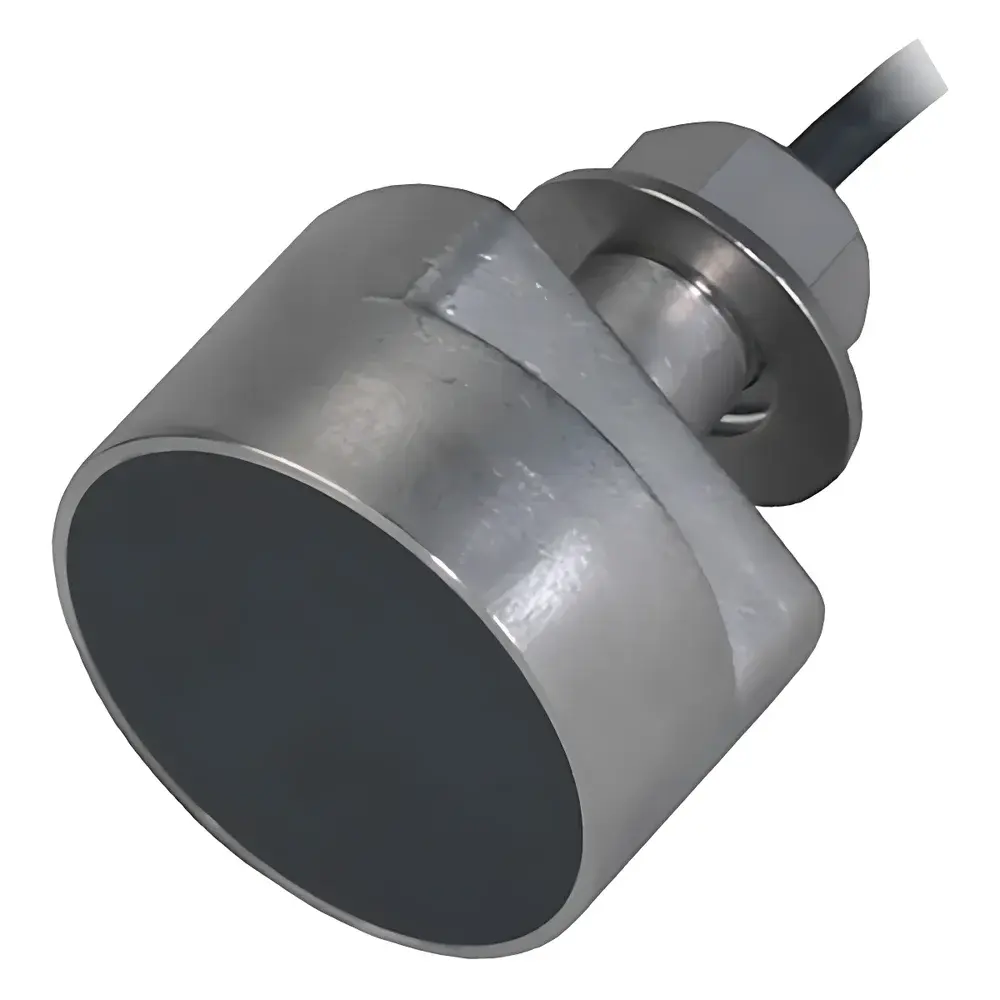
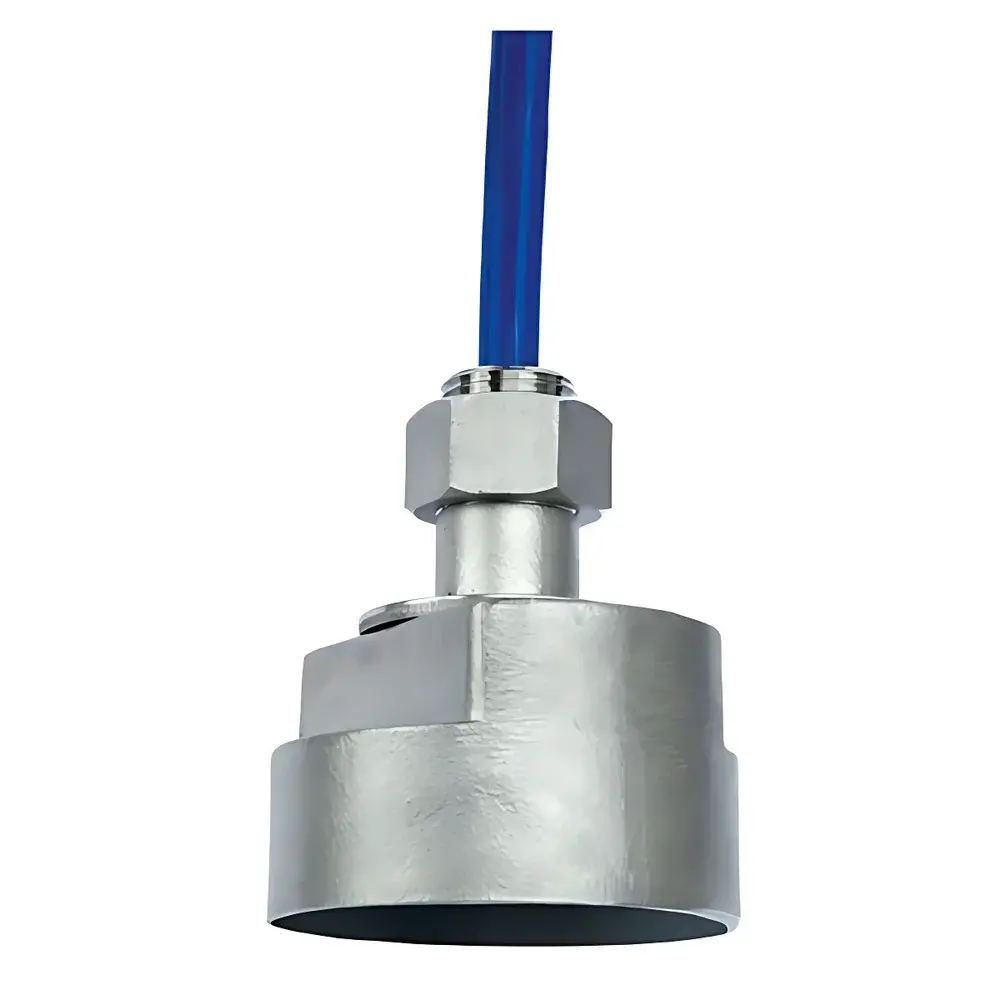
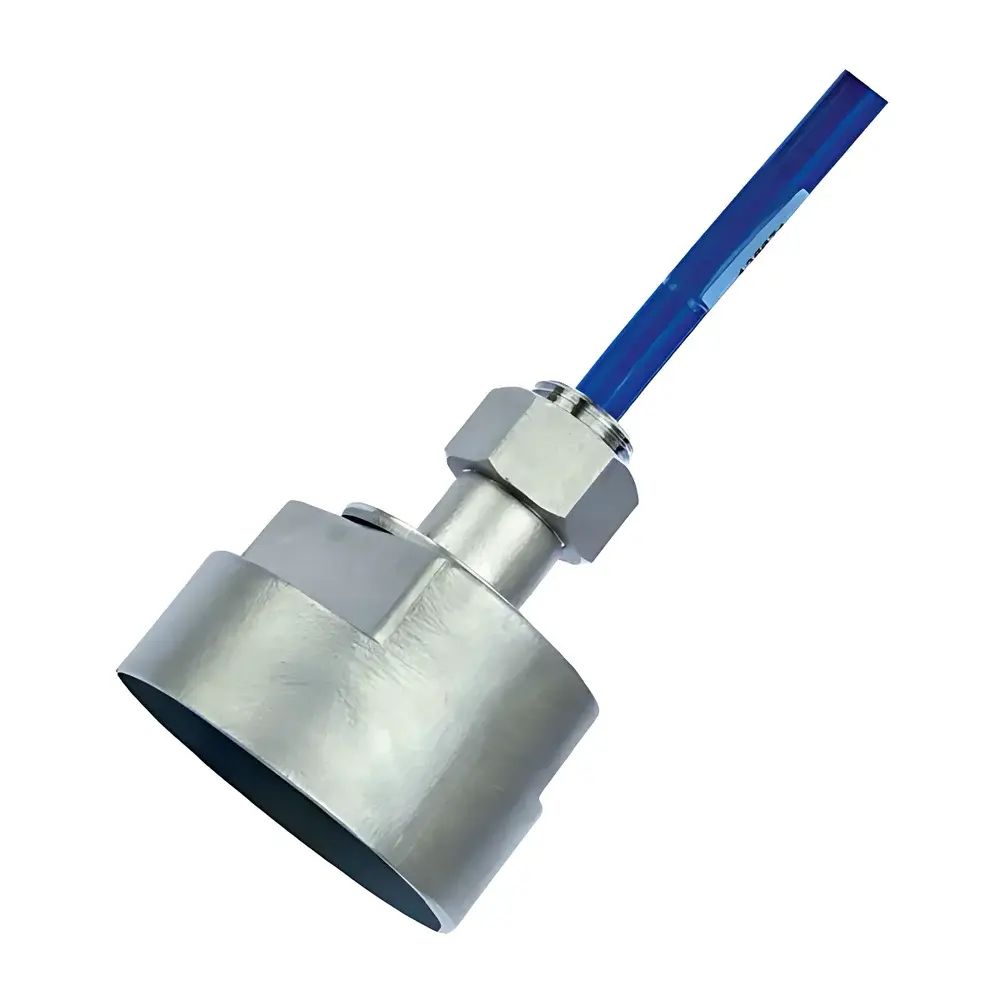
Airmar SS510 Smart EchoSounder Sensor
| Brand | Airmar |
|---|---|
| Origin | USA |
| Model | SS510 |
| Operating Frequency | 200 kHz |
| Depth Range | 0.4–200 m |
| Depth Accuracy | ±0.54% FS |
| Depth Resolution | 0.01 m |
| Temperature Sensor | 10 kΩ NTC thermistor |
| Temp Range | −5 to +60 °C |
| Temp Accuracy | ±0.05 °C |
| Temp Resolution | 0.09 °C |
| Output Protocol | NMEA 0183 (4800 baud default) + Echo-Envelope (921600 baud) |
| Power Supply | 9–40 VDC |
| Avg. Current Draw | 150 mA @ 12 VDC |
| Max. Power Consumption | 100 W |
| Submersible Depth Rating | 10 m |
| Cable Length | 7.6 m or 20 m (C304, 5-pair shielded twisted pair, polyurethane jacket) |
| Reverse-Polarity Protection | Yes |
| Weight | 1.3 kg |
| Certifications | CE, IEC 60945 |
| Flash Reprogrammable | Yes (encrypted bootloader) |
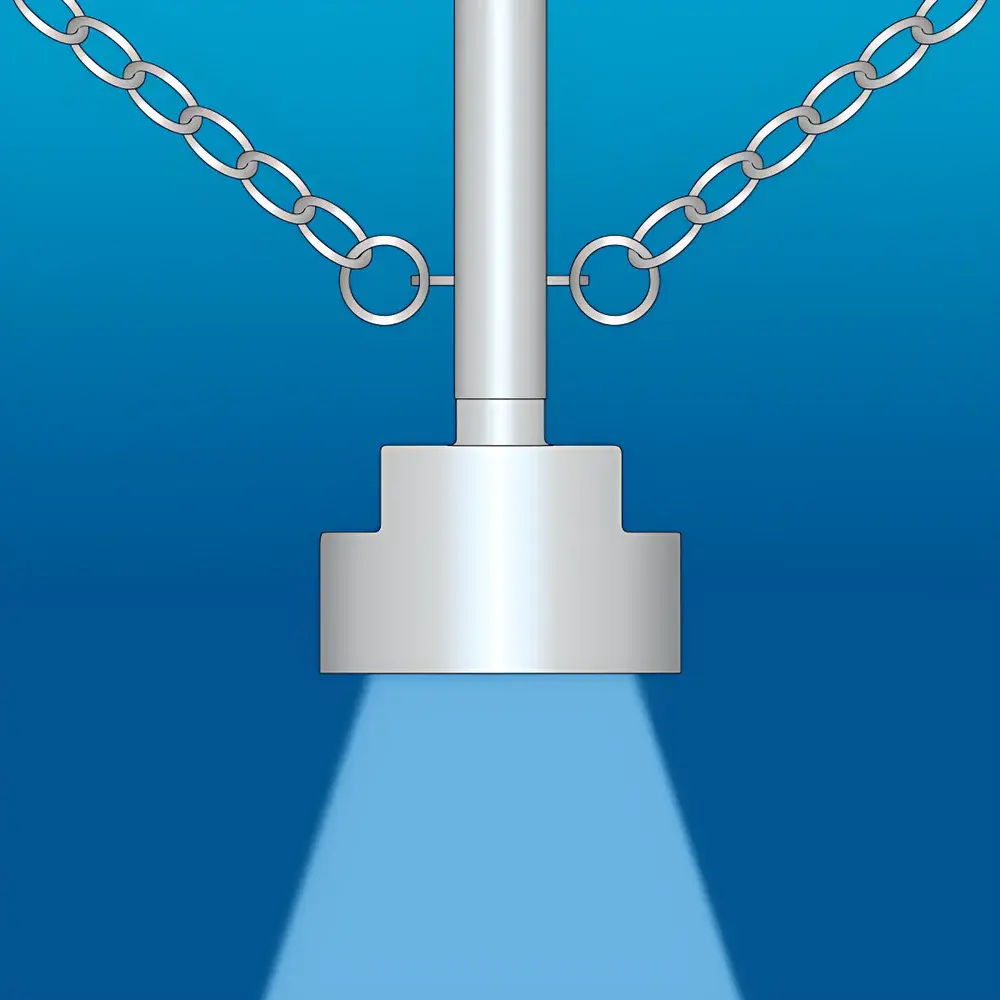
| Mounting Options | Portable pole mount, beam mount (optional bracket), hull-mount (internal/external) |
Overview
The Airmar SS510 Smart EchoSounder Sensor is a compact, high-reliability ultrasonic depth and temperature transducer engineered for precision hydrographic surveying, infrastructure inspection, and marine environmental monitoring. Based on pulse-echo time-of-flight measurement at 200 kHz, the SS510 employs piezoelectric transduction and real-time digital signal processing (DSP) within its sealed housing to compute water column depth and integrated water temperature concurrently. Unlike conventional analog transducers requiring external processing, the SS510 embeds a microcontroller-based signal conditioning engine—Airmar’s proprietary Smart™ Sensor architecture—that digitizes, filters, calibrates, and formats raw acoustic returns prior to output. This eliminates analog noise susceptibility and enables deterministic latency in data delivery. Designed for deployment in freshwater and marine environments up to 10 meters submergence, the sensor delivers stable performance across temperature gradients (−5 to +60 °C) and variable water clarity conditions, making it suitable for both field-portable operations and fixed-installation applications including bridge scour assessment, dredge monitoring, and autonomous underwater vehicle (AUV) integration.
Key Features
- Integrated 200 kHz broadband transducer with optimized near-field response for shallow-water resolution
- Onboard DSP firmware performing echo envelope detection, bottom tracking, and thermal compensation in real time
- Dual-output interface: NMEA 0183 sentences (DPT, MTW, DBT) at 4800 baud for legacy chartplotters and data loggers; high-speed Echo-Envelope stream at 921600 baud for post-processing and waveform analysis
- User-configurable acquisition modes: automatic depth-range adaptation (dynamic pulse repetition interval) or fixed-rate manual mode (up to 10 Hz sampling)
- Programmable output interval (0.1–25 s) independent of sampling rate in auto mode, enabling bandwidth-efficient telemetry
- Robust C304 cable assembly with 5-pair shielded twisted pairs and polyurethane jacket—rated for abrasion, UV, and hydrolysis resistance
- Multi-mount mechanical design supporting portable pole mounting, structural beam attachment (with optional bracket), and flush or through-hull installation
- Reverse-polarity protected power input (9–40 VDC) and low quiescent current draw (150 mA @ 12 VDC) compatible with battery-powered platforms
- Field-upgradable firmware via encrypted bootloader, ensuring long-term compliance with evolving NMEA and IEC standards
Sample Compatibility & Compliance
The SS510 is designed for direct interfacing with NMEA 0183-compliant display units, data acquisition systems, and embedded controllers used in hydrographic, civil engineering, and oceanographic workflows. Its depth and temperature outputs conform to standard sentence structures (e.g., DPT for depth below transducer, MTW for water temperature), facilitating seamless integration into GIS-enabled survey software and SCADA-based infrastructure monitoring platforms. The sensor meets CE marking requirements and complies with IEC 60945 for maritime navigation equipment—ensuring electromagnetic compatibility (EMC), environmental robustness, and operational safety in marine environments. While not certified for Class I Div 1 hazardous locations or FDA-regulated medical use, its IP68-rated housing and corrosion-resistant stainless-steel faceplate support long-term deployment in brackish and saline waters without degradation in metrological performance.
Software & Data Management
Data from the SS510 is natively supported by industry-standard hydrographic software suites including Hypack®, QINSy, and HYPACK® MAX, as well as open-source tools such as OpenCPN (with appropriate plugin configuration). The Echo-Envelope output provides full digitized return waveforms—enabling advanced post-processing tasks such as sediment classification, multi-echo discrimination, and bottom roughness estimation. Firmware updates are delivered via secure encrypted bootloader protocol, preserving traceability and integrity during reprogramming—a requirement aligned with GLP/GMP-aligned calibration management practices. Audit logs of configuration changes and firmware versions can be retrieved programmatically, supporting ISO/IEC 17025 documentation needs for accredited laboratories conducting bathymetric validation studies.
Applications
- Shallow-water hydrographic surveys for inland waterways, reservoirs, and coastal zones
- Bridge pier and abutment scour monitoring using repeated vertical profiling over time-series deployments
- Dredging operation control and volume computation via real-time depth differencing
- Integration into unmanned surface vessels (USVs) and autonomous underwater vehicles (AUVs) for mission-critical bathymetry
- Environmental monitoring stations measuring seasonal water level fluctuations and thermal stratification
- Educational field instrumentation for university-level geomatics, oceanography, and civil engineering curricula
FAQ
Does the SS510 require an external sounder processor or display unit to operate?
No—the SS510 performs all signal processing internally and outputs calibrated depth and temperature data directly via NMEA 0183. However, a receiving device (e.g., PC, chartplotter, or DAQ system) is required to parse and visualize the data.
Can the SS510 be used in turbid or sediment-laden water?
Yes. Its 200 kHz frequency provides strong signal-to-noise ratio in moderate turbidity; bottom lock reliability may decrease in extremely high suspended solids (>1000 NTU), but adaptive gain control and envelope filtering help maintain usable returns.
Is the temperature sensor independently calibrated and traceable?
The integrated 10 kΩ NTC thermistor is factory-calibrated against NIST-traceable standards, with accuracy specified at ±0.05 °C across the full operating range. Calibration certificates are available upon request for QA/QC documentation.
What is the maximum recommended cable length for maintaining signal integrity?
Standard configurations include 7.6 m and 20 m C304 cables. For installations exceeding 20 m, custom-length cables with enhanced shielding and impedance matching are recommended to preserve NMEA 0183 timing margins and Echo-Envelope fidelity.
How does the SS510 handle air gaps or non-vertical mounting angles?
Mounting deviation up to ±15° from vertical is accommodated via internal tilt compensation algorithms. Air gaps exceeding 10 cm between transducer face and water surface will result in invalid depth readings due to lack of acoustic coupling.