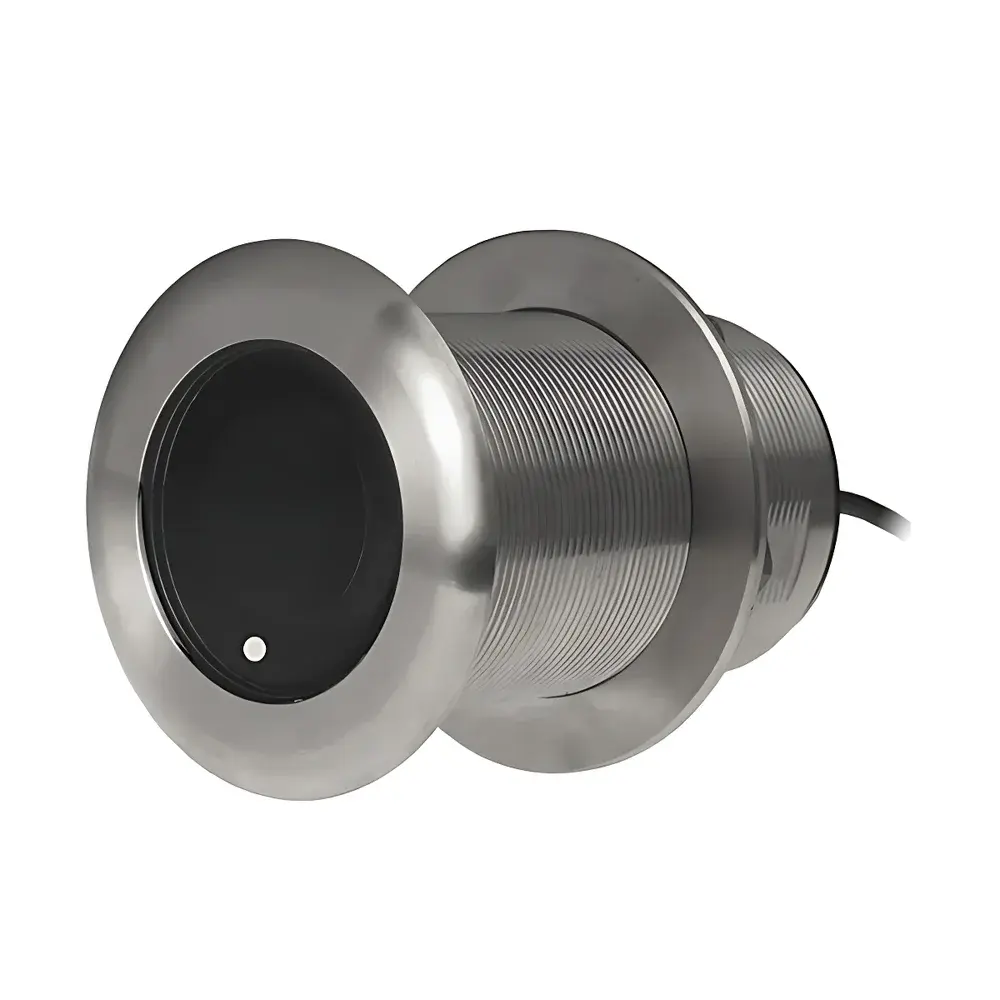
AIRMAR SS75L Chirp Depth Sounder
| Brand | AIRMAR |
|---|---|
| Origin | USA |
| Model | SS75L |
| Operating Frequency Range | 40–75 kHz |
| Output Power | 300 W |
| Beamwidth | 32°–21° (depending on tilt angle) |
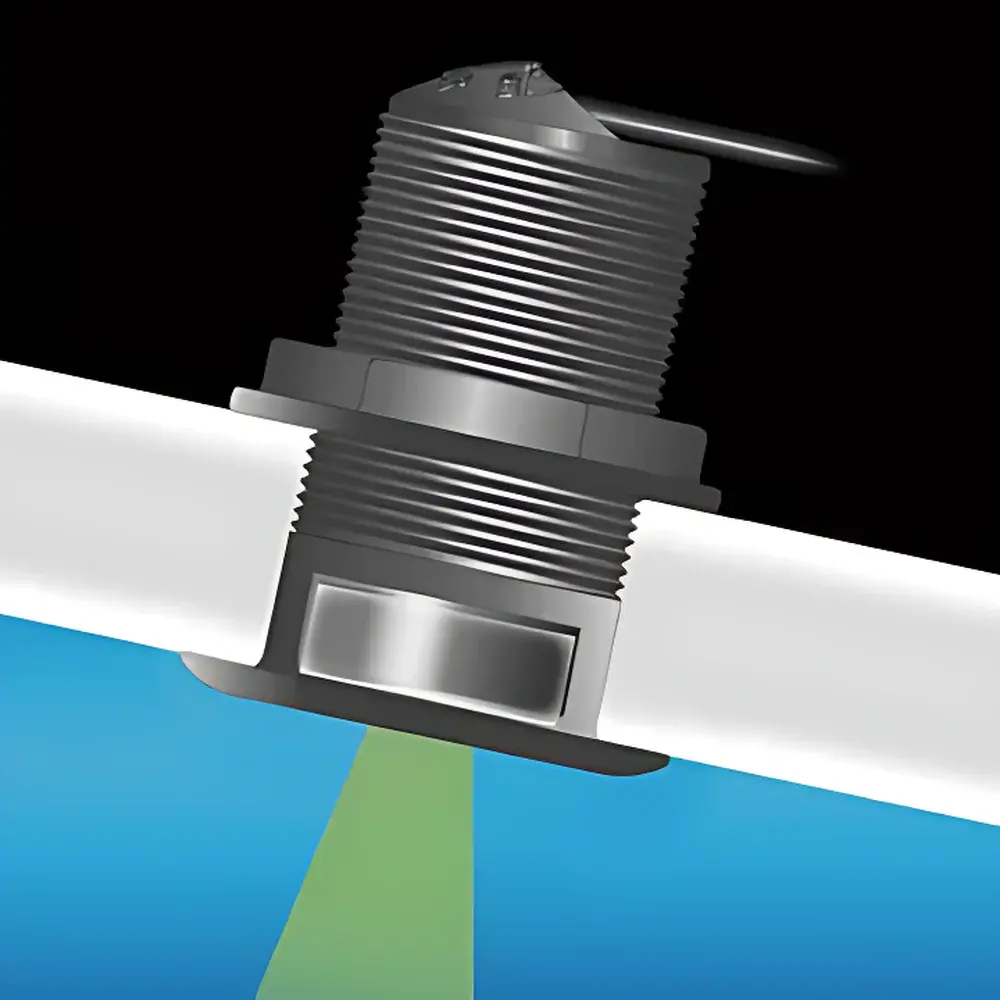
| Transducer Mounting | Low-profile through-hull |
| Housing Material | Stainless Steel |
| Thru-Hull Opening Diameter | 70 mm |
| Shaft Length | 95 mm |
| Cable Length | 10 m |
| Integrated Temperature Sensor | Yes |
| Weight | 1.4 kg |
| Maximum Hull Deadrise Angle | 28° |
| Lens Material | Polyurethane |
| Compatible Hull Materials | Fiberglass, Wood |
| Tilt Options | 0°, 12°, 20° |
| Chirp Bandwidth | 35 kHz |
| Max Detection Depth | 3,000 m |
| Target Resolution Enhancement | 5×–10× vs. conventional pulse-echo sounders |
Overview
The AIRMAR SS75L Chirp Depth Sounder is a high-performance, low-frequency single-beam echosounder engineered for precision bathymetric profiling and hydroacoustic target discrimination in marine environments. Utilizing broadband frequency-modulated (FM) “Chirp” technology—where transmitted pulses sweep continuously across a 35 kHz bandwidth (40–75 kHz)—the SS75L achieves significantly improved range resolution, signal-to-noise ratio, and bottom detection capability compared to traditional fixed-frequency pulse-echo systems. This principle enables coherent pulse compression in the receiver, yielding up to 10× greater vertical resolution and enhanced separation of closely spaced targets such as baitfish schools, game fish layers, and submerged geological or anthropogenic structures. Designed for through-hull installation on vessels up to 8 meters in length, the SS75L operates with a low-profile mechanical architecture optimized for fiberglass and wooden hulls, supporting deadrise angles up to 28° via selectable tilt configurations (0°, 12°, or 20°). Its stainless steel housing and polyurethane acoustic lens ensure long-term corrosion resistance and consistent acoustic coupling in variable salinity and temperature conditions.
Key Features
- Low-frequency Chirp operation (40–75 kHz) delivering superior penetration and deep-water performance—validated to 3,000 m (10,000 ft) in open-ocean conditions
- Integrated high-stability thermistor-based water temperature sensor with fast thermal response time (< 2 s), calibrated traceable to NIST standards
- Three mechanically adjustable tilt options (0°, 12°, 20°) enabling optimal beam alignment for varying hull deadrise geometries
- Patented Xducer ID® technology for automatic transducer recognition and configuration validation within compatible multifunction displays (MFDs)
- 32°–21° variable beamwidth (full-angle, -3 dB points), narrowing with increasing frequency across the chirp sweep to maintain focused energy at depth
- Robust stainless steel housing with pressure-rated polyurethane lens—rated for continuous submersion at depths exceeding operational requirements
- 10-meter shielded, low-noise coaxial cable with molded waterproof connector (M12 or equivalent, per OEM specification)
Sample Compatibility & Compliance
The SS75L is compatible with vessels constructed from non-metallic hull materials including fiberglass-reinforced polymer (FRP) and solid wood—materials that permit effective acoustic transmission without significant attenuation or resonance interference. It is not recommended for aluminum, steel, or cored composite hulls unless installed with an external mounting bracket or fairing block to isolate vibration and prevent signal distortion. The transducer complies with IEC 62236-3 (electromagnetic compatibility for marine electronics) and meets RoHS 3 directive requirements for hazardous substance restrictions. While not certified for safety-critical navigation under IMO Resolution A.694(17), it conforms to standard marine installation practices outlined in ABYC E-11 and ISO 8846 for electrical safety and fire resistance. Data output protocols (NMEA 0183 v4.10, NMEA 2000 PGN 128259/128267) support integration into Class B AIS, ECDIS, and integrated bridge systems compliant with IEC 61162-1/2.
Software & Data Management
The SS75L operates as a sensor-level device without embedded firmware-based data logging; raw echo envelope and temperature data are streamed in real time via NMEA 0183 (depth, temp, status) or NMEA 2000 (high-resolution depth profile, bottom lock confidence, signal strength). When interfaced with chartplotters or PC-based hydrographic software (e.g., MAXSEA TimeZero, Qinsy, or SonarWiz), users gain access to post-processed Chirp deconvolution, bottom classification algorithms, and GIS-aligned trackline export (GeoJSON, GPX, or CSV with timestamped XYZT columns). All digital outputs support audit-ready metadata tagging—including UTC timestamp, vessel heading (when fused with GNSS), and transducer-specific calibration offsets—for GLP-aligned survey documentation. Firmware updates (if applicable) are delivered exclusively through AIRMAR’s authorized dealer network and require proprietary configuration utilities compliant with FDA 21 CFR Part 11 electronic record controls when deployed in regulated environmental monitoring programs.
Applications
- Commercial and recreational bathymetric mapping of coastal zones, fjords, and continental shelf regions
- Hydrographic survey support for dredging operations, pipeline route clearance, and offshore wind farm site characterization
- Scientific fisheries acoustics—target strength estimation, school morphology analysis, and diel vertical migration studies
- Underwater infrastructure inspection—including wreck localization, mooring anchor verification, and submerged vegetation delineation
- Real-time depth and water column temperature profiling for oceanographic buoy networks and autonomous surface vehicle (ASV) platforms
FAQ
What distinguishes Chirp technology from conventional 50 kHz pulse-echo sounders?
Chirp employs a swept-frequency transmit waveform and matched filtering in reception, improving signal processing gain and axial resolution without increasing peak power—enabling clearer differentiation of layered biological targets and fine-scale bathymetric features.
Can the SS75L be used on aluminum-hulled vessels?
No—aluminum hulls cause severe acoustic impedance mismatch and internal resonance. External mounting with a dedicated fairing block or retrofitting to a fiberglass transom extension is required.
Is the temperature sensor independently calibrated and traceable?
Yes—the integrated thermistor is factory-calibrated against NIST-traceable reference standards, with calibration certificate available upon request for QA/QC documentation.
Does the SS75L support dual-frequency operation or simultaneous multi-beam output?
No—it is a single-beam, low-bandwidth Chirp transducer. Multi-frequency or multibeam functionality requires separate transducers (e.g., B75M/B75H variants or third-party multibeam sonars).
What is the maximum allowable hull deadrise angle for reliable beam alignment?
28°—achieved using the 20° tilt version with appropriate shimming. Exceeding this angle may result in beam skew and reduced bottom return fidelity.