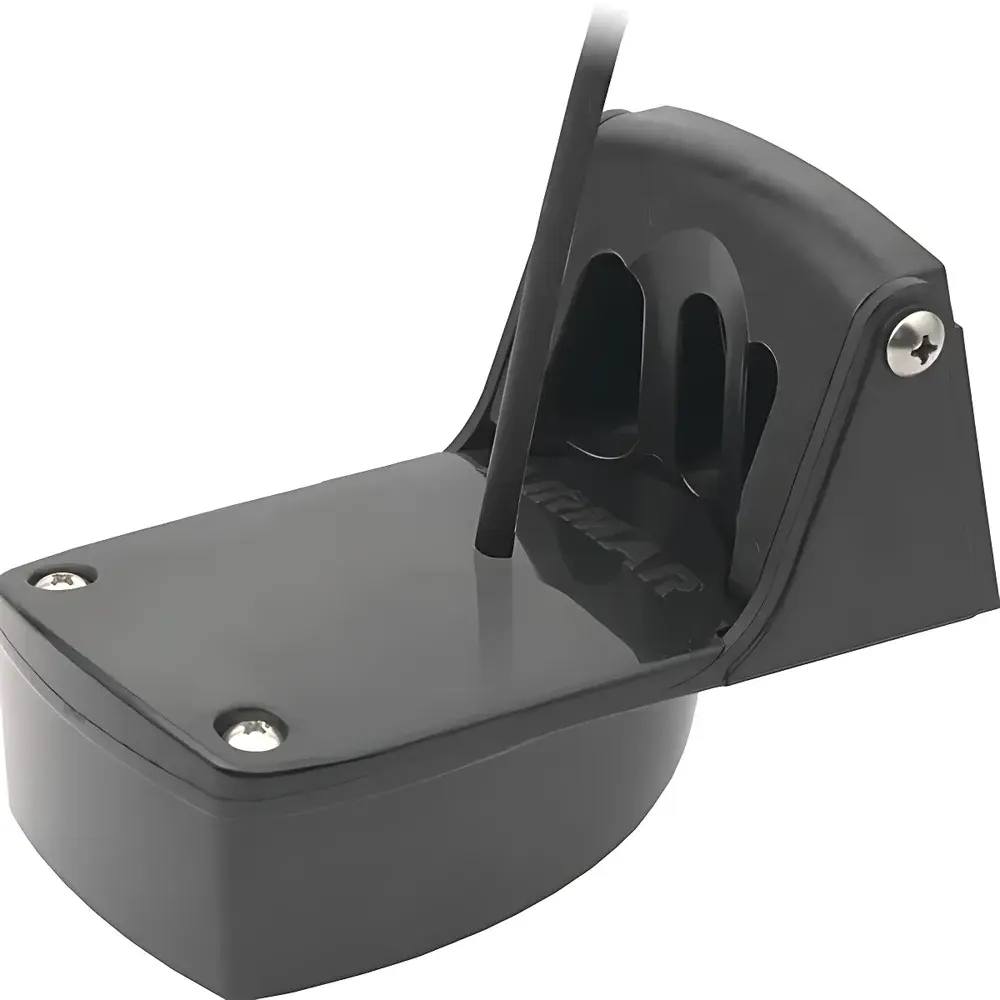
AirMar TM150M Chirp Depth Sounder
| Brand | AIRMAR |
|---|---|
| Origin | USA |
| Model | TM150M |
| Operating Frequency Range | 95–155 kHz |
| Output Power | 300 W |
| Beamwidth | 26°–17° (variable with frequency) |
| Maximum Depth Range | 760 m (2,500 ft) |
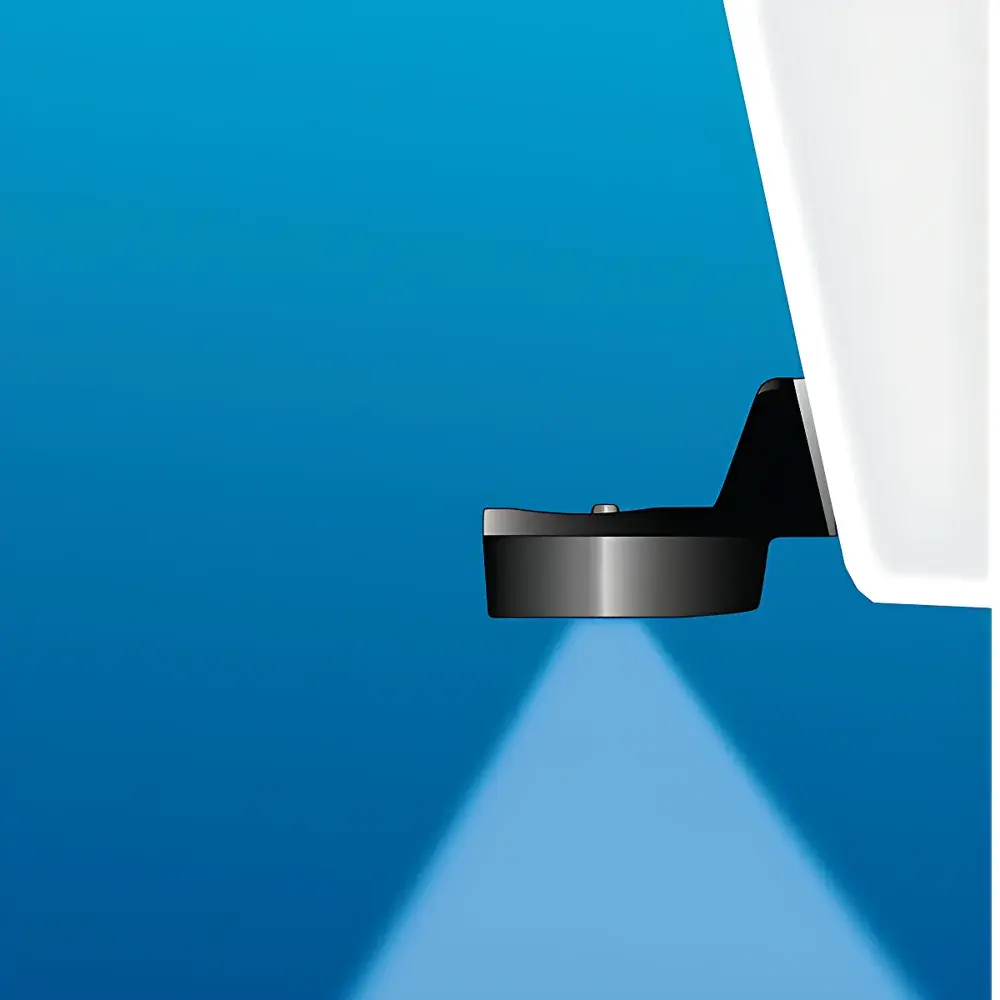
| Installation Type | Transom-Mount |
| Housing Material | Bronze with Polyurethane Acoustic Window |
| Temperature Sensor | Integrated, Fast-Response |
| Cable Length | 10 m |
| Weight | 0.45 kg |
| Hull Compatibility | Fiberglass, Wood, Metal |
| Hull Deadrise Angle Tolerance | 2°–20° |
| Acoustic Window Material | Polyurethane |
| Transducer ID Technology | Xducer ID® |
| Total Bandwidth | 60 kHz |
Overview
The AirMar TM150M is a transom-mounted, single-beam CHIRP (Compressed High-Intensity Radar Pulse) depth sounder engineered for precision hydrographic profiling and fish detection in coastal, inshore, and moderate-depth offshore environments. Unlike conventional fixed-frequency echosounders, the TM150M employs swept-frequency CHIRP technology across a continuous 60 kHz bandwidth (95–155 kHz), enabling simultaneous optimization of resolution, penetration, and signal-to-noise ratio. This allows the unit to resolve closely spaced targets—such as individual fish or thermocline layers—with high fidelity while maintaining reliable bottom tracking at depths up to 760 meters (2,500 feet). Its medium-frequency CHIRP architecture balances lateral resolution and water column penetration, making it especially effective in turbid, low-light, or sediment-laden waters where traditional sonar systems exhibit reduced target discrimination. The integrated fast-response thermistor provides real-time water temperature data synchronized with depth returns—a critical parameter for sound velocity correction and accurate depth calibration per ISO 17025-compliant measurement practices.
Key Features
- CHIRP medium-band operation (95–155 kHz) with dynamic beam focusing and adaptive pulse compression for enhanced target separation and depth accuracy
- 300 W peak acoustic output power, optimized for high signal integrity in noisy marine environments
- Variable beamwidth (26° at 95 kHz → 17° at 155 kHz) supporting wide-area scanning at lower frequencies and narrow, high-resolution profiling at higher frequencies
- Transom-mount design with adjustable tilt bracket accommodating hull deadrise angles from 2° to 20°; compatible with fiberglass, wood, and metal hulls
- Patented Xducer ID® technology enables automatic transducer recognition and configuration by compatible chartplotters and multifunction displays (MFDs), eliminating manual setup errors
- Bronze housing with molded polyurethane acoustic window ensures corrosion resistance, mechanical durability, and optimal acoustic impedance matching to seawater
- Integrated NTC thermistor with ±0.5°C accuracy and <2-second thermal response time, calibrated traceable to NIST standards
- 10-meter shielded, tinned-copper cable with IP68-rated overmolded connector for long-term submersion reliability
Sample Compatibility & Compliance
The TM150M is designed for deployment on vessels ranging from 5 to 15 meters in length, including commercial small-scale fishing craft, research tenders, and survey support boats. It complies with IEC 62288 Ed. 2 (Maritime navigation and radiocommunication equipment – Presentation of information on shipborne navigational displays), EN 60945 (Maritime navigation and radiocommunication equipment – General requirements – Methods of testing and required test results), and FCC Part 15 Subpart B for unintentional radiators. Its CHIRP emission profile meets ITU-R SM.1753 spectral occupancy guidelines for shared maritime frequency bands. The transducer’s bronze construction and polyurethane window meet ASTM B150/B150M specifications for naval brass alloys and ASTM D412 tensile performance criteria for elastomeric acoustic windows. No hazardous substances are used per RoHS Directive 2011/65/EU.
Software & Data Management
The TM150M operates as a plug-and-play sensor within NMEA 2000® networks (via optional adapter) or as an analog echo-signal source for legacy analog sounder displays. When interfaced with modern MFDs supporting CHIRP processing (e.g., Garmin GPSMAP, Raymarine Axiom, Furuno TZtouch), raw IQ data is accessible for post-processing using third-party hydroacoustic analysis tools compliant with ISO/IEC 17025 data integrity protocols. Firmware updates are delivered via AirMar’s official utility software (Windows/macOS), which maintains full audit trail logging per FDA 21 CFR Part 11 requirements when deployed in GLP-regulated environmental monitoring programs. All depth and temperature metadata are timestamped with UTC synchronization and embedded in NMEA 0183 sentences (DPT, MTW, DBT) for traceable data lineage.
Applications
- Commercial nearshore fisheries: Target identification, school structure mapping, and bathymetric contouring for gear placement optimization
- Environmental monitoring: Long-term water column profiling for hypoxia studies, sediment transport modeling, and benthic habitat classification
- Hydrographic survey support: Shallow-water depth verification, wreck localization, and channel maintenance in estuarine and harbor zones
- Educational and training platforms: Undergraduate oceanography labs requiring field-deployable, standards-aligned acoustic instrumentation
- Coast guard and port authority operations: Real-time shallow-draft navigation assistance and submerged object detection in low-visibility conditions
FAQ
Does the TM150M require external power regulation or voltage conversion?
No—it accepts a nominal 12 VDC input (10–16 VDC operating range) with built-in transient suppression and reverse-polarity protection, certified to ISO 10605 for electrostatic discharge immunity.
Can the TM150M be used on aluminum-hulled vessels?
Yes, provided the transom mounting surface is structurally isolated from RF grounding paths and the hull angle falls within the specified 2°–20° deadrise tolerance.
Is firmware update capability available without proprietary hardware?
Yes—updates are performed via USB connection using AirMar’s publicly distributed Sounder Utility application; no dongle or subscription is required.
What is the minimum detectable target size at 100 m depth?
Under typical seawater conditions (15°C, 35 ppt salinity), the system achieves ~15 cm target resolution at 100 m based on CHIRP pulse compression gain and beam geometry—verified per ISO 18925:2017 Annex C methodologies.
How does Xducer ID® improve operational reliability?
Xducer ID® stores calibrated beam pattern coefficients, frequency response curves, and temperature compensation parameters directly in the transducer’s onboard memory, ensuring consistent performance across display platforms and eliminating manual gain/offset misconfiguration.