AIRMAR TM265LH Dual-Frequency Chirp Transducer
| Brand | AIRMAR |
|---|---|
| Origin | USA |
| Model | TM265LH |
| Power Output | 1000 W |
| Operating Frequency Range | Low Band 42–65 kHz, High Band 130–210 kHz |
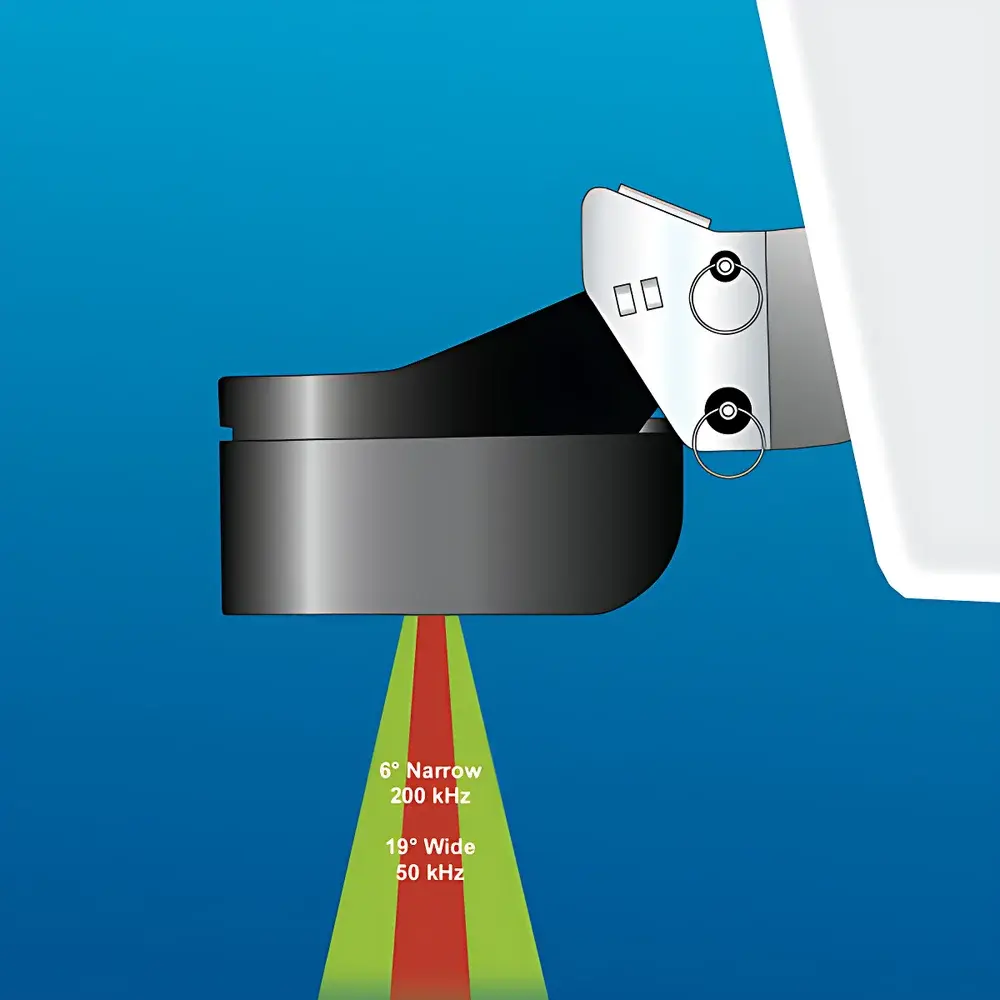
| Beam Width | Low Band 25°–16°, High Band 10°–6° |
| Max Depth Rating | Low Band 914 m, High Band 304 m |
| Mounting Type | Transom-Mount |
| Housing Material | SEALCAST™ Polyurethane Encapsulation |
| Bracket Material | Stainless Steel |
| Temperature Sensor | Integrated Fast-Response Thermistor |
| Weight | 4 kg |
Overview
The AIRMAR TM265LH is a dual-frequency, broadband Chirp transducer engineered for high-fidelity hydrographic profiling and precision fishery resource assessment. Unlike conventional fixed-frequency echosounders, the TM265LH employs swept-frequency (Chirp) pulse compression technology across two independently optimized bands—low-band (42–65 kHz) and high-band (130–210 kHz)—to deliver simultaneous depth measurement, water column target discrimination, and bottom classification with exceptional signal-to-noise ratio and range resolution. Its physics-based design leverages time-domain pulse compression and matched filtering to achieve narrow effective pulse widths without sacrificing transmit energy, enabling accurate separation of baitfish schools from pelagic predators—even at operational depths exceeding 900 meters in low-band mode. The transducer integrates a calibrated, fast-response thermistor for concurrent water temperature logging, supporting thermal stratification analysis critical for fisheries management and environmental monitoring.
Key Features
- Dual-band Chirp architecture with independent low-band (42–65 kHz) and high-band (130–210 kHz) transmission paths, each with dynamically adjustable pulse width and sweep rate
- Low-band seven-element array delivering 25°–16° variable beamwidth and rated for continuous operation to 914 m maximum depth
- High-band narrow-beam configuration (10°–6°) optimized for structural mapping and fine-scale target localization—including species-specific detection windows (e.g., 60 kHz for bluefin tuna, 133 kHz for squid, 175 kHz for cod)
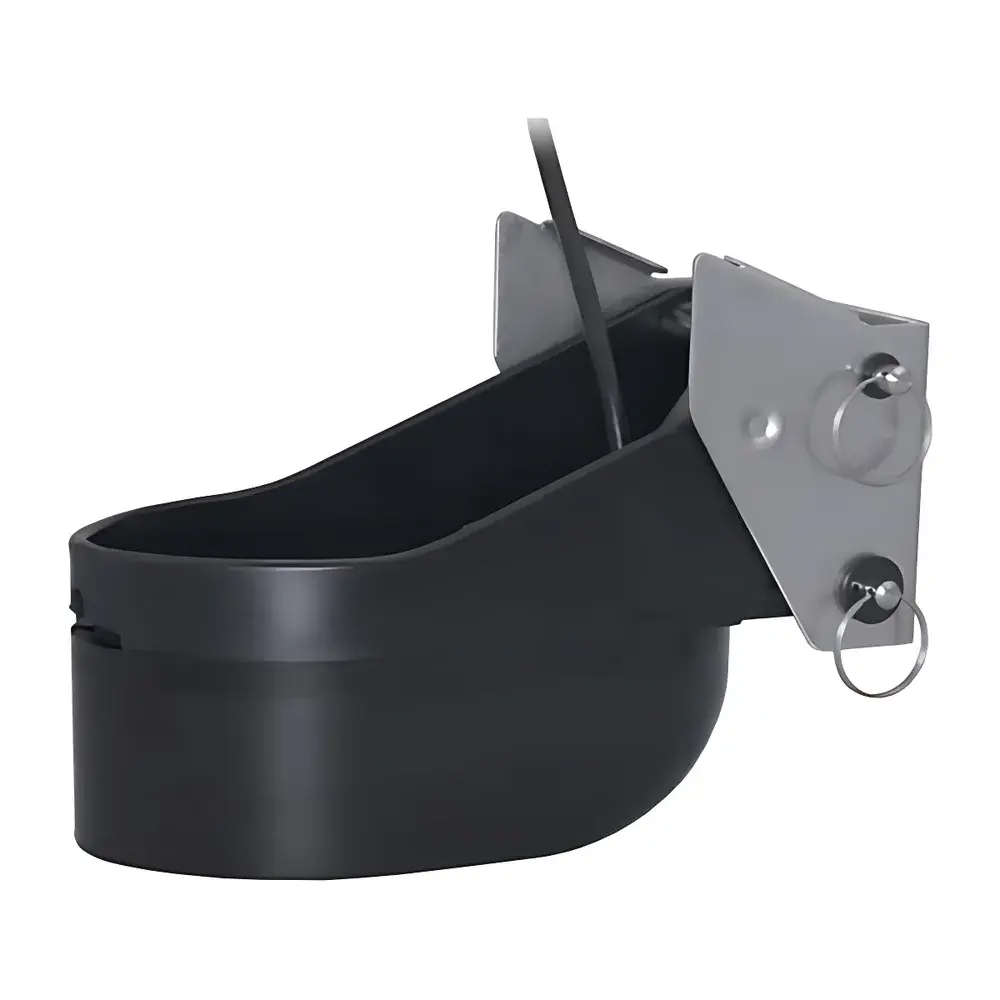
- SEALCAST™ seamless polyurethane encapsulation providing full IP68 submersion rating and resistance to biofouling, UV degradation, and mechanical abrasion
- Stainless steel transom-mount bracket with adjustable tilt angle (3°–21°), compatible with planing, displacement, and semi-displacement hulls up to 10 meters LOA
- Integrated Xducer ID® digital identification protocol for automatic configuration recognition by compatible sonar processors (e.g., Simrad, Garmin, Raymarine)
- 1 kW peak acoustic power output compliant with IEC 62237-2 for marine transducer safety and electromagnetic compatibility
Sample Compatibility & Compliance
The TM265LH is validated for deployment on vessels with fiberglass, aluminum, wood, and composite hull materials. Its transom-mount geometry eliminates hull penetration requirements while maintaining consistent acoustic coupling across varying trim angles and sea states. The transducer meets ISO 17670:2019 for underwater acoustic transducers used in fisheries research and complies with CE marking directives for marine electronics (EMC Directive 2014/30/EU and RoHS 2011/65/EU). It supports GLP-aligned data acquisition when paired with NMEA 2000-certified chartplotters or third-party hydrographic software platforms that enforce audit-trail logging and timestamped metadata embedding per IHO S-100 framework specifications.
Software & Data Management
Raw echo data streams are delivered via NMEA 2000 (PGN 128267, 128275) and proprietary Ethernet protocols compatible with industry-standard hydrographic processing suites including Echoview, QPS Qimera, and SonarWiz. The transducer’s embedded firmware supports real-time spectral analysis, automatic gain control (AGC), and bottom lock tracking algorithms. When integrated into a certified data acquisition system, it enables traceable calibration logs, sensor health diagnostics, and synchronized multi-sensor fusion (e.g., GPS, motion reference units, CTD profiles). Firmware updates are performed over CAN bus or Ethernet, preserving configuration integrity during field deployments.
Applications
- Commercial and artisanal fisheries stock assessment using species-specific frequency targeting and school morphology analysis
- Hydrographic surveying for coastal zone management, dredging planning, and habitat mapping under IHO Order 1b standards
- Environmental monitoring of thermocline dynamics, turbidity layers, and plankton biomass distribution
- Marine infrastructure inspection—including pier pilings, submerged pipelines, and aquaculture net pens—using high-band structural imaging
- Academic research in physical oceanography, acoustical oceanography, and behavioral ecology requiring synchronized depth–temperature–backscatter datasets
FAQ
What vessel types and hull materials are compatible with the TM265LH transom mount?
The stainless steel transom bracket accommodates fiberglass, aluminum, wood, and composite hulls up to 10 meters LOA; no hull modification or through-hull drilling is required.
Does the TM265LH support simultaneous dual-frequency operation?
Yes—the transducer operates both low-band and high-band channels concurrently, with independent pulse scheduling and receive path isolation to prevent inter-band interference.
Is the integrated temperature sensor traceable to NIST standards?
The thermistor is factory-calibrated against NIST-traceable reference standards with documented uncertainty (±0.15 °C over 0–35 °C range) and included in the device’s calibration certificate.
Can the TM265LH be interfaced with non-AIRMAR display systems?
It is fully compatible with all NMEA 2000–compliant multifunction displays and supports vendor-neutral data output formats (e.g., Kongsberg .all, ASVP, NetCDF) via optional gateway modules.
What maintenance procedures are recommended for long-term submersion?
Annual visual inspection of the polyurethane housing for microcracking and bracket corrosion is advised; cleaning with freshwater and pH-neutral detergent preserves SEALCAST™ integrity without solvent exposure.