
AL-CT1020 Industrial Micro-CT System for Core Analysis
| Brand | AOLONG |
|---|---|
| Origin | Liaoning, China |
| Manufacturer Type | Direct Manufacturer |
| Country of Origin | China |
| Model | AL-CT1020 |
| X-ray Tube Voltage | 20–225 kV |
| Target Type | Reflection Anode |
| Max. Tube Power | 320 W |
| Max. Target Power | 280 W |
| Source-to-Object Minimum Distance | 4 mm |
| Spatial Resolution (JIMA) | 2 µm |
| Number of Axes | 5 |
Overview
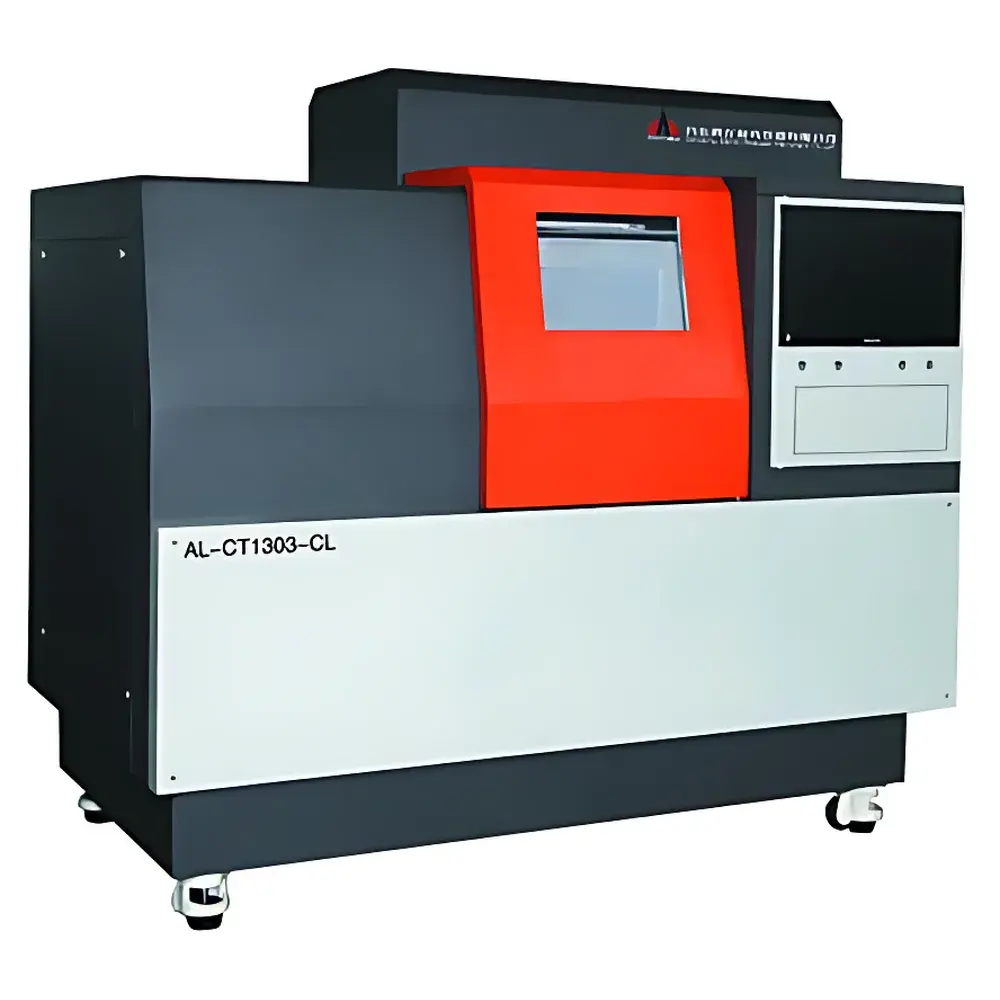
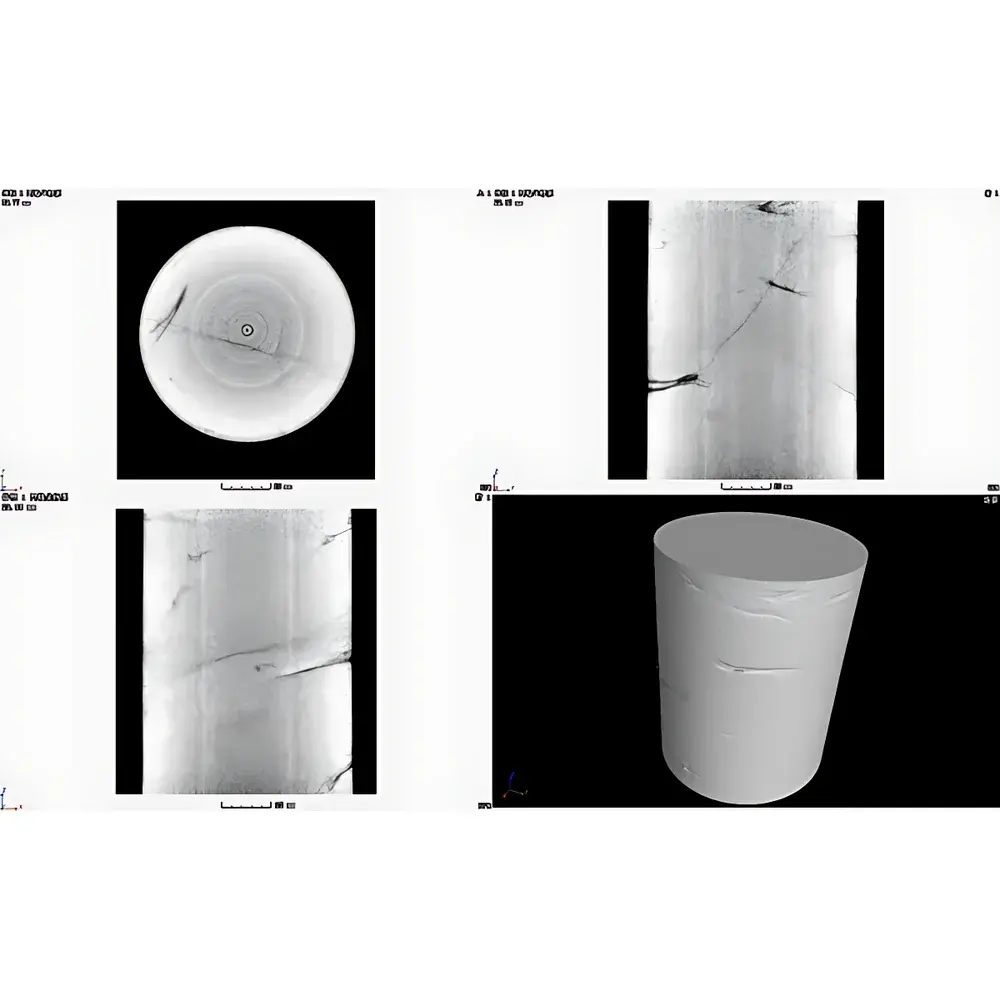
The AL-CT1020 Industrial Micro-CT System is a high-precision, benchtop-scale X-ray computed tomography platform engineered specifically for non-destructive 3D characterization of geological core samples. It operates on the principle of cone-beam micro-computed tomography (micro-CT), utilizing a microfocus X-ray source and flat-panel detector to acquire hundreds of projection images as the sample rotates through 360°. These projections are reconstructed via filtered back-projection or iterative algorithms into isotropic volumetric datasets with sub-micron spatial resolution—enabling quantitative analysis of internal microstructure without physical sectioning. Designed for laboratory-based core evaluation in petroleum geoscience, reservoir engineering, and sedimentary petrology, the system supports full-length core scanning (up to standard 100 mm diameter × 200 mm length specimens) with adjustable source-detector geometry to optimize geometric magnification and contrast-to-noise ratio per sample dimension.
Key Features
- Microfocus reflection-target X-ray tube (20–225 kV, up to 320 W tube power) with stable focal spot size ≤2 µm (JIMA standard), ensuring high-resolution imaging across low-Z (e.g., clay minerals, kerogen) and mid-Z (e.g., calcite, quartz) materials.
- Five-axis precision motion system: integrated rotary stage with ±0.001° angular repeatability, linear translation axes for source/detector positioning, and vertical sample height adjustment—enabling dynamic geometric optimization for variable core diameters and lengths.
- Granite marble base with vibration-damping isolation, minimizing mechanical drift during long-exposure scans (>30 min typical for high-SNR 3D reconstruction).
- Cone-beam acquisition architecture with optional helical scanning mode for continuous rotation and axial translation—reducing ring artifacts and improving longitudinal resolution in elongated cores.
- Real-time 2D radiography preview with live histogram adjustment, region-of-interest (ROI) masking, and automatic exposure control—facilitating rapid setup and dose optimization prior to full-volume acquisition.
- Compliance with international radiation safety standards: leakage dose <1 µSv/h at 10 cm from enclosure surface; fully interlocked shielded cabinet meeting IEC 61000-6-4 and GBZ 138–2002 requirements.
Sample Compatibility & Compliance
The AL-CT1020 accommodates cylindrical geological specimens ranging from 10 mm to 100 mm in diameter and up to 200 mm in length—including sandstone, carbonate, shale, coal, unconsolidated sediments, paleontological fossils, and synthetic rock analogs. Samples are mounted in reusable low-absorption plastic or aluminum sleeves to maintain coaxial alignment and minimize beam hardening. The system supports ASTM D6913 (standard test methods for particle-size distribution of soil), ISO 15148 (water retention curves via CT), and is compatible with workflows aligned with API RP 40 and SPE guidelines for digital rock physics (DRP). All hardware and software components are designed for GLP-compliant operation, with audit-trail-enabled user access logs and configuration change records.
Software & Data Management
The proprietary reconstruction and analysis suite includes GPU-accelerated Feldkamp-Davis-Kress (FDK) and SART algorithms for fast 3D volume generation (typical 512³ volume in <120 s). Segmentation tools employ adaptive thresholding, watershed separation, and machine-learning-assisted phase classification (clay vs. quartz vs. pore space) validated against SEM-EDS ground truth. Quantitative outputs include porosity distribution maps (voxel-wise %), pore-throat size spectra (via maximal inscribed sphere analysis), coordination number statistics, tortuosity tensors, and mineral phase volume fractions. All results are exportable in DICOM, TIFF stack, STL, and CSV formats; metadata embedding follows NIfTI-1 conventions. Software complies with FDA 21 CFR Part 11 requirements for electronic records and signatures when deployed in regulated environments.
Applications
- Quantitative pore network modeling for permeability prediction using Lattice-Boltzmann simulation inputs.
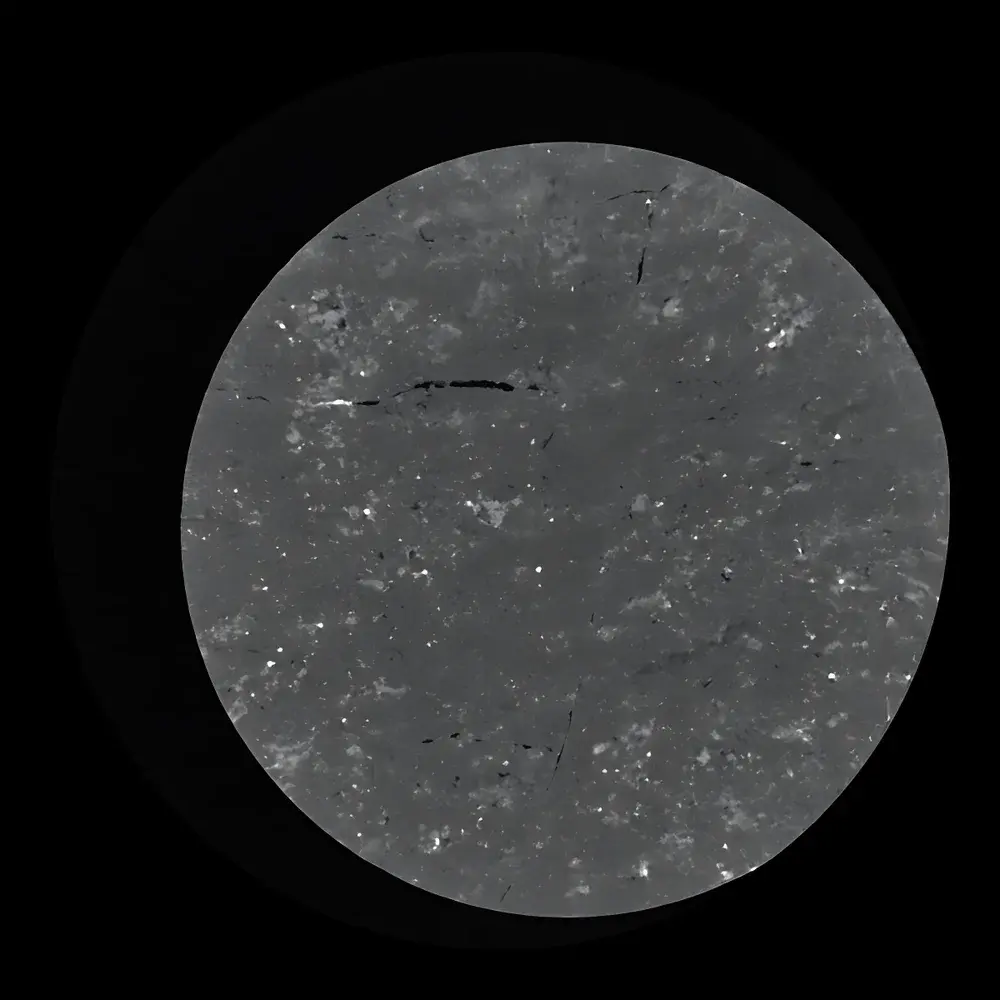
- Diagenetic mineral mapping: spatial localization and volumetric quantification of authigenic clays (kaolinite, illite, smectite), carbonates, and iron oxides.
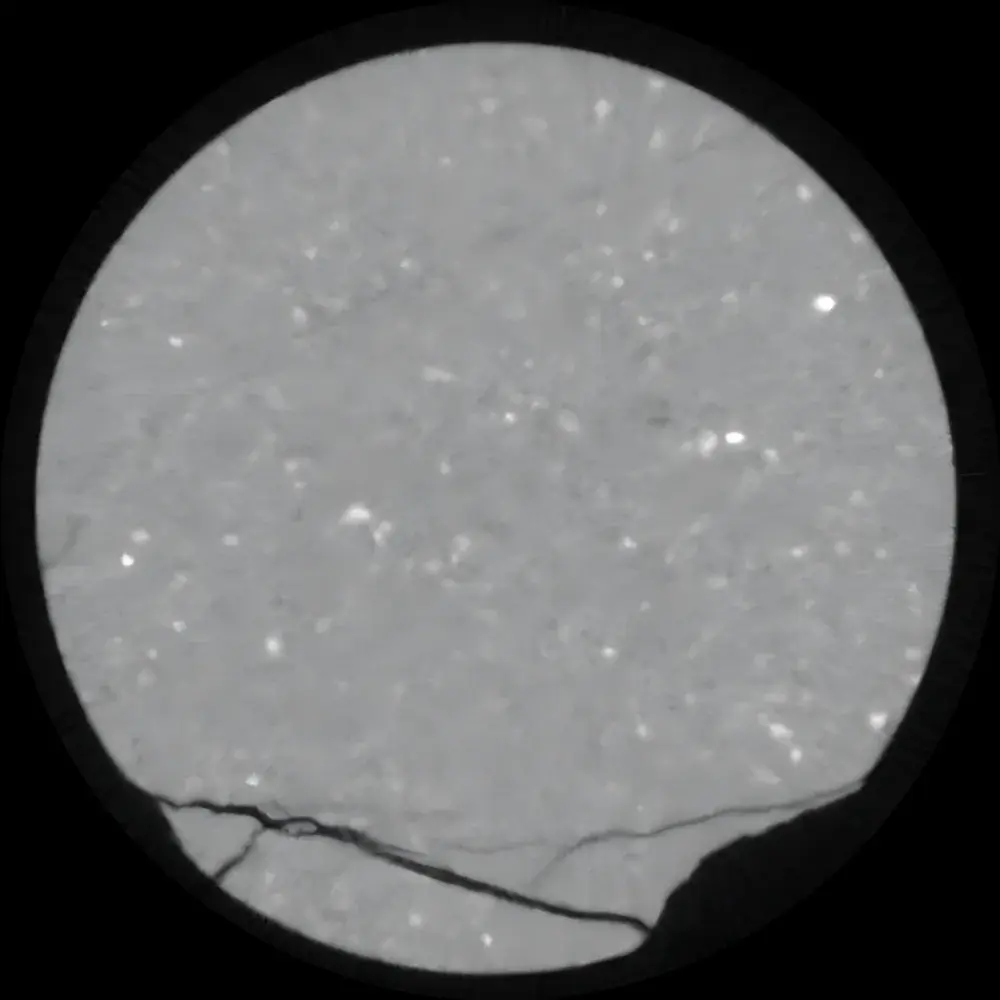
- Fracture network characterization: orientation, aperture distribution, connectivity index, and mechanical aperture estimation.
- Core flooding monitoring: time-resolved 4D-CT tracking of fluid saturation fronts during imbibition/drainage experiments.
- Digital twin generation for reservoir simulation: direct integration of segmented binary volumes into CMG, tNavigator, or MRST platforms.
- Core damage assessment: visualization and quantification of drilling-induced microfractures, mud invasion zones, and filter cake penetration depth.
FAQ
What is the minimum detectable pore throat size under optimal scanning conditions?
Under nominal settings (100 kV, 150 µA, 0.5° angular step, 1200 ms exposure), the system resolves features ≥2 µm in equivalent spherical diameter with >90% detection probability in homogeneous sandstone matrices.
Can the AL-CT1020 perform in-situ mechanical testing during scanning?
No—the system is optimized for static high-resolution imaging. In-situ triaxial or uniaxial loading requires external rigs with CT-compatible load frames and synchronized trigger interfaces (available as custom integration option).
Is raw projection data accessible for third-party reconstruction?
Yes—unprocessed sinograms and metadata (geometry, exposure, filtration) are saved in HDF5 format with documented schema, enabling use with TomoPy, ASTRA Toolbox, or custom MATLAB/Python pipelines.
Does the system support automated batch scanning of multiple core plugs?
Yes—via programmable macro scripting in the control software; users define scan protocols, stage positions, and naming conventions for unattended overnight acquisition of up to 12 standard 25 mm diameter plugs.
How is radiation safety ensured during routine operation?
The cabinet incorporates 2.5 mm lead-equivalent shielding, dual redundant door interlocks, real-time dosimetry monitoring, and failsafe beam cutoff within 100 ms of any safety loop breach—certified by provincial radiation safety authorities per CNPC HSE standards.



