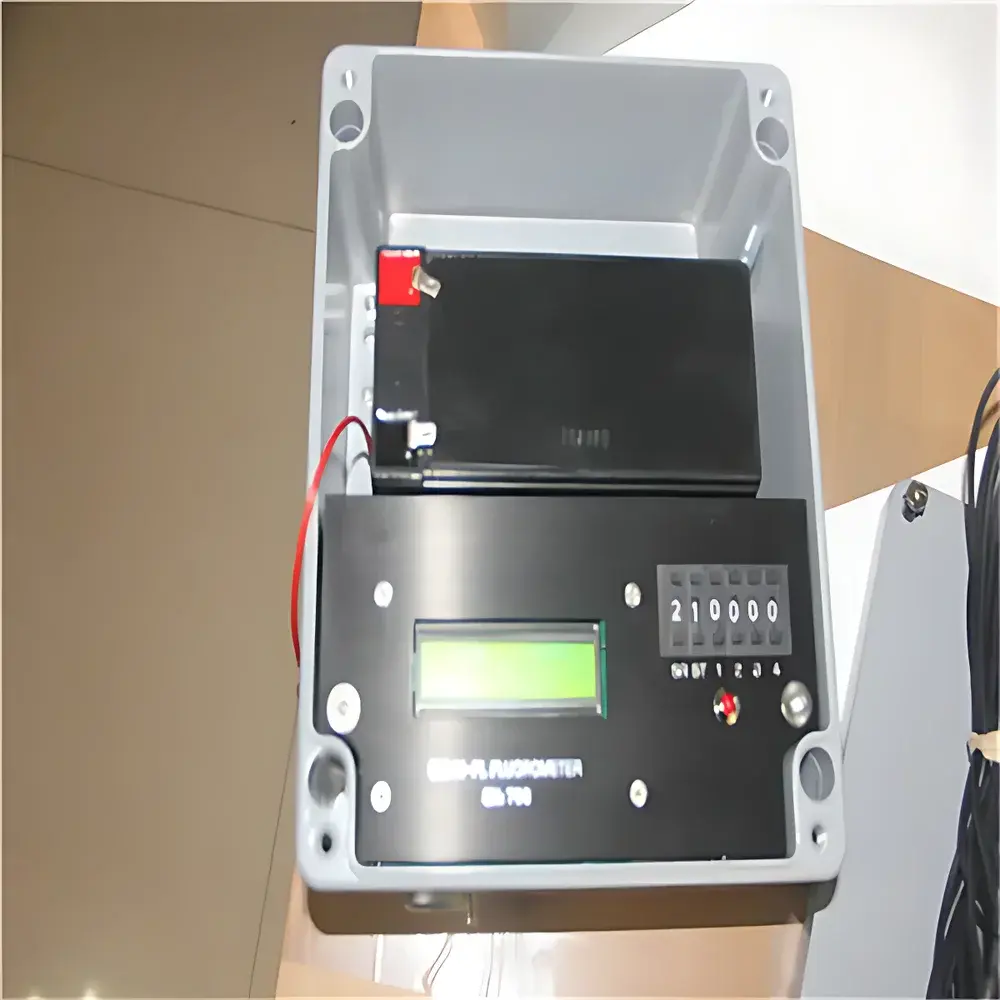
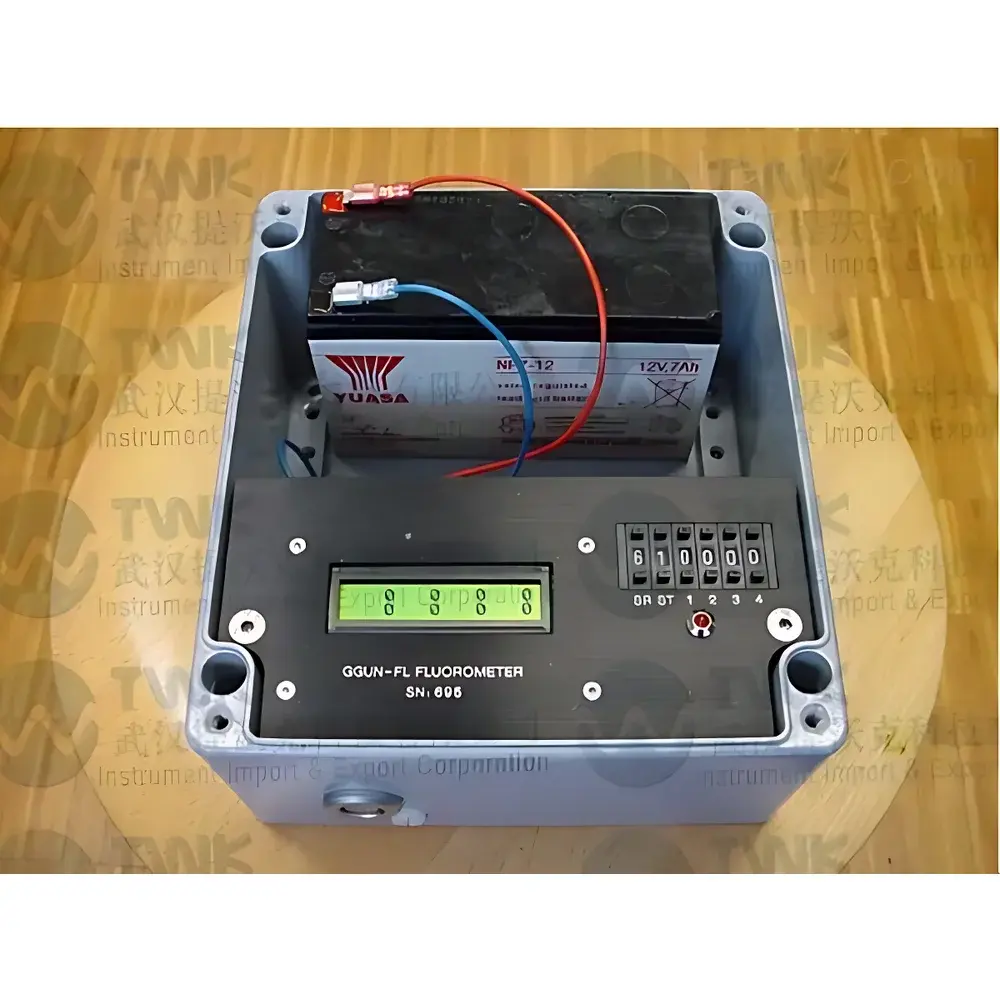
Alibillia II River Monitoring Data Logger
| Brand | Alibillia |
|---|---|
| Origin | Switzerland |
| Model | II |
| Storage Capacity | 2 GB microSD card |
| Display | 2×16-character LCD |
| Interface | USB 2.0 |
| Operating System | Embedded DOS-compatible firmware |
| Sampling Interval | 2 seconds to 15 minutes (user-selectable via rotary encoder) |
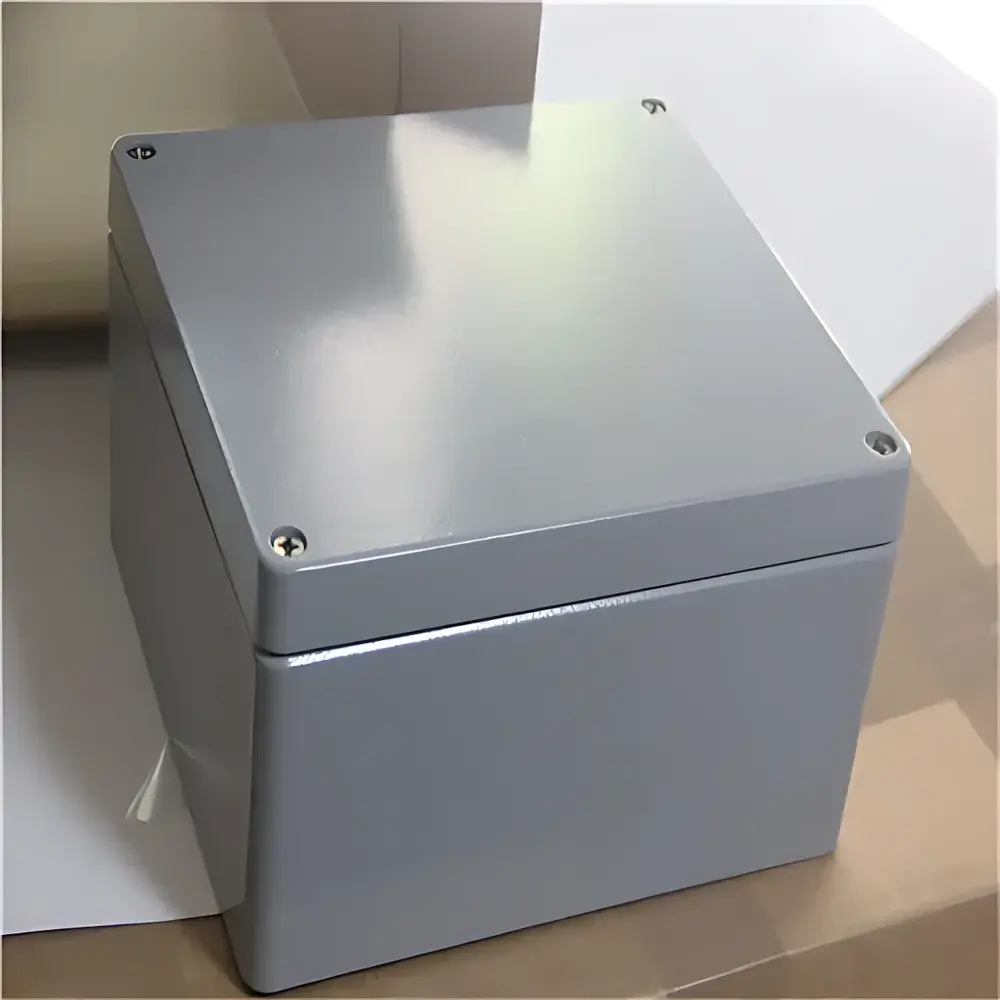
| Housing Material | Waterproof cast aluminum (IP67-rated enclosure) |
| Power Supply | 12 V DC, compatible with 7 Ah lead-acid battery (typical field runtime: 3–4 weeks) |
| Optional Connectivity | GPRS modem module (external) |
| Environmental Requirement | Desiccant-controlled internal humidity (silica gel sachets mandatory) |
| Data Output | MV analog signals and concentration values (e.g., turbidity, conductivity, pH-derived parameters) |
Overview
The Alibillia II River Monitoring Data Logger is a rugged, field-deployable environmental data acquisition system engineered for long-term, unattended operation in fluvial and open-channel monitoring applications. Designed around the Controlord Gigalog S microcontroller architecture, it implements deterministic real-time sampling logic with precise interval control—enabling reliable capture of hydrological and water quality parameters under variable ambient conditions. Its core functionality centers on analog signal digitization (including mV-level outputs from standard sensors such as turbidimeters, conductivity probes, and ion-selective electrodes), time-stamped storage, and local visualization. Unlike cloud-native IoT loggers, the Alibillia II operates as a standalone embedded DOS-based platform, prioritizing data integrity, auditability, and compatibility with legacy sensor infrastructure commonly deployed in municipal water monitoring networks and research-grade river gauging stations.
Key Features
- Ruggedized IP67-rated cast aluminum enclosure—resistant to corrosion, mechanical impact, and prolonged exposure to splashing water and dust.
- 2×16-character backlit LCD display for real-time viewing of sampled values, timestamps, battery status, and file system navigation.
- 2 GB microSD card support with FAT16/FAT32-compatible flash file system—enabling structured logging of time-series datasets in ASCII-delimited format for direct import into MATLAB, Python (pandas), or Excel.
- Adjustable sampling interval (2 s to 15 min) controlled via precision rotary encoder—eliminating reliance on software configuration and reducing setup errors in remote deployments.
- Dedicated analog input channels accepting standard 0–20 mA or 0–5 V signals, with configurable scaling and linearization tables stored in non-volatile memory.
- Optional GPRS communication module (sold separately) supports periodic data upload via SMS or TCP/IP protocols—configured through serial AT command interface for integration with SCADA or telemetry hubs.
- Low-level power management circuitry with brown-out detection and automatic sleep/wake cycling—optimized for off-grid solar-charged 12 V battery systems.
Sample Compatibility & Compliance
The Alibillia II interfaces directly with industry-standard analog-output water quality and flow sensors compliant with IEC 60770-1 and EN 61326-1 electromagnetic compatibility requirements. It supports calibration coefficients stored per channel, enabling traceable conversion of raw mV readings to engineering units (e.g., NTU, µS/cm, mg/L). While not certified to UL 61010-1 or ATEX standards, its housing meets ISO 20653:2013 for protection against water ingress during temporary submersion. The device adheres to GLP principles in data handling: all logged files include header metadata (sensor ID, calibration date, operator code), and no data overwrites occur without explicit user confirmation. Firmware revision history and file creation timestamps are preserved for audit trail reconstruction.
Software & Data Management
Data retrieval occurs via USB 2.0 mass-storage mode—no proprietary drivers required. Each logging session generates dated ASCII text files (.LOG) containing comma-separated timestamp, channel values, and diagnostic flags. The onboard DOS-compatible firmware enables basic file operations (copy, delete, rename) using keyboard-equivalent key combinations. For regulatory environments requiring electronic record integrity, the system supports manual export of full dataset archives prior to battery replacement; however, it does not implement FDA 21 CFR Part 11-compliant digital signatures or automated audit logs. Third-party tools (e.g., Python scripts using pyserial) can automate GPRS-based polling and validation of transmission receipts.
Applications
- Continuous monitoring of surface water quality parameters—including turbidity, dissolved oxygen (via mV-output Clark cells), and specific conductance—in rivers, canals, and reservoir intakes.
- Integration with FL30-type stage-discharge measurement systems where analog level transducer outputs require synchronized temporal logging.
- Baseline environmental surveys supporting ISO 5667-3 (water sampling) and ISO 5667-10 (field measurements) compliance frameworks.
- Educational hydrology labs requiring low-cost, transparent firmware architecture for student-led instrument programming and sensor characterization exercises.
- Temporary deployment during flood response or post-construction runoff monitoring where rapid setup and offline operation are critical.
FAQ
What sensor types are natively supported?
The Alibillia II accepts any analog sensor with 0–20 mA or 0–5 V output and stable mV-level resolution. Common integrations include Hach TU5 Series turbidimeters, YSI 58 Dissolved Oxygen meters (with analog output module), and Campbell Scientific CS451 water level transducers.
Is firmware upgrade possible in the field?
Yes—firmware updates are delivered as .BIN files copied to the root directory of the microSD card; the device auto-detects and installs upon reboot. Version history and checksum verification are documented in the user manual.
Does the logger meet EU RoHS or WEEE directives?
Yes—the unit complies with Directive 2011/65/EU (RoHS2) and Directive 2012/19/EU (WEEE); material declarations and recycling instructions are provided in the technical datasheet.
Can humidity control be automated?
No—desiccant replacement remains manual. Internal RH must be maintained below 40% to prevent condensation on PCB traces; silica gel sachets require quarterly inspection in high-humidity climates.
What is the maximum number of concurrent channels?
Four analog inputs are physically available; channel mapping and scaling are configured individually via the onboard menu system.