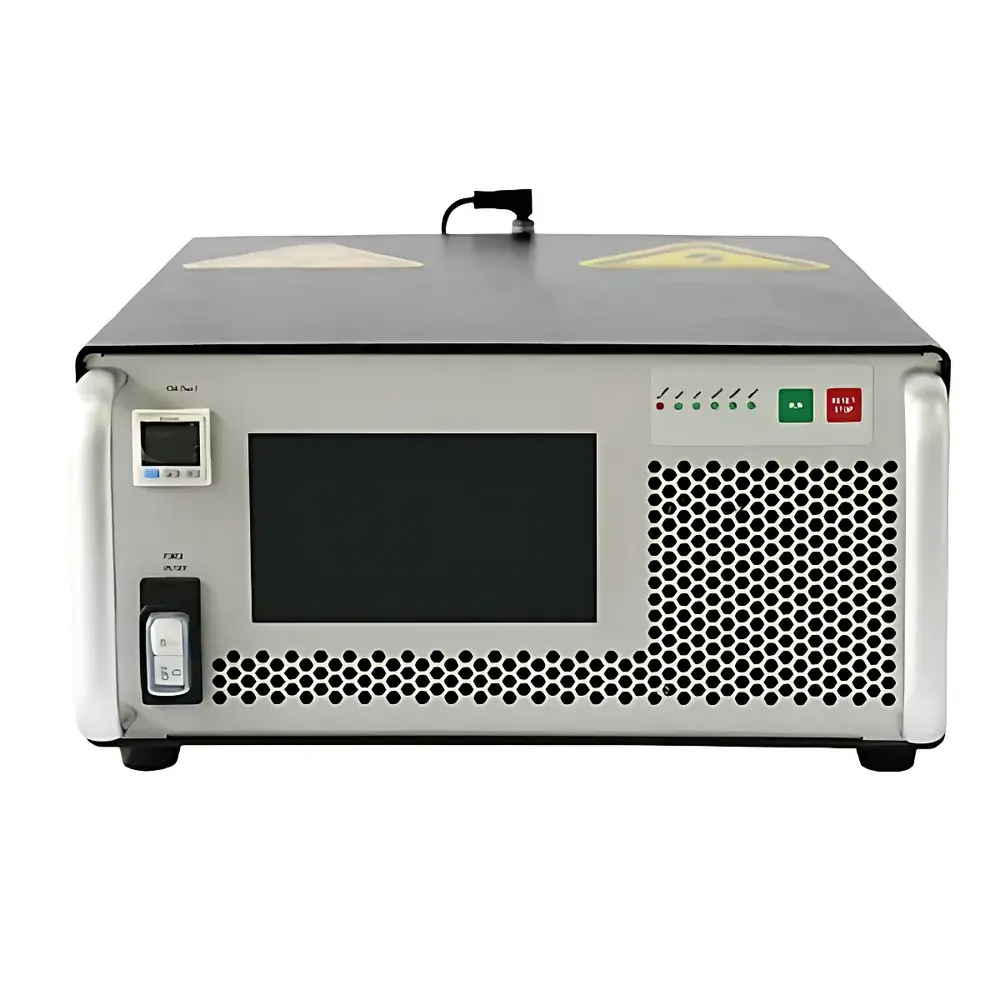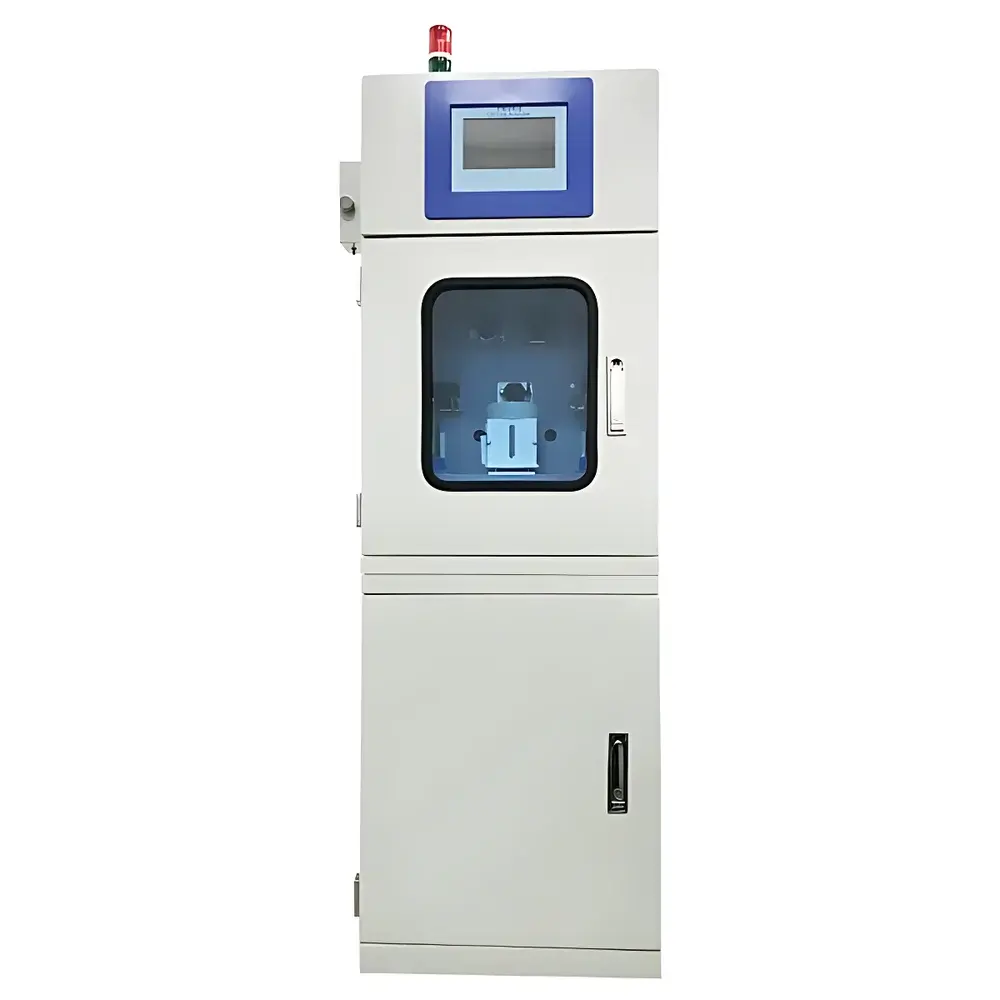
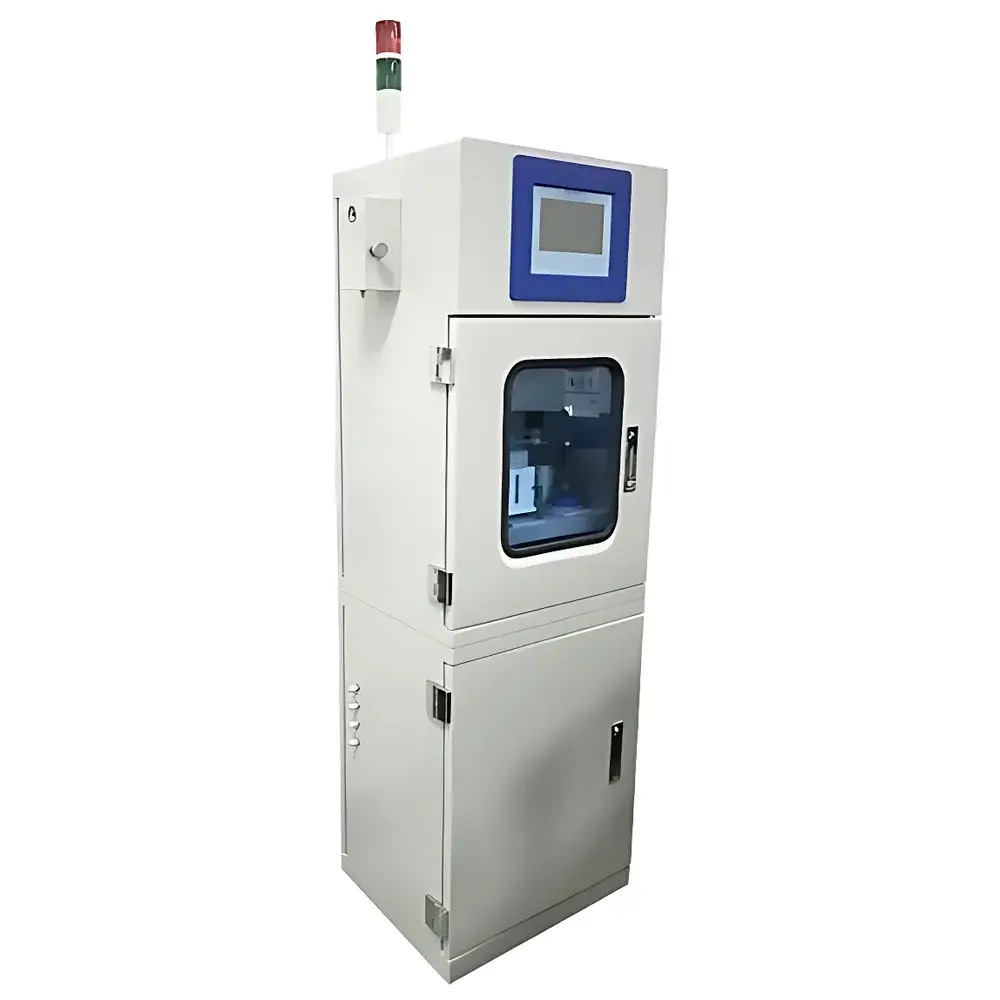
ALT-1-FP Online Reaction Analyzer by HOGON
| Brand | HOGON |
|---|---|
| Origin | Shanghai, China |
| Manufacturer Type | Direct Manufacturer |
| Product Category | Domestic |
| Model | ALT-1-FP |
| Pricing | Available Upon Request |
| Detection Principle | Photometric (Colorimetric) Analysis Based on Lambert-Beer Law & Potentiometric Titration |
| Detection Items | Metal Ion Concentration (e.g., Cu²⁺, Ni²⁺, Fe³⁺, Zn²⁺) |
| Analysis Modes | Colorimetric and Potentiometric |
| Analysis Frequency | Once per 20 Minutes |
| RSD | ≤1% (Potentiometric), ≤2% (Colorimetric) |
| Detection Range | 0.01–10 mol/L (as metal ion) |
| Titration Precision | 1 µL (using 20 mL burette) |
| Alarm Indicators | Dual-Color Status Display (Liquid Level, Out-of-Spec Data, Reagent/Consumable Expiry, System Fault) |
| Output Signals | Modbus TCP, RS-232/RS-485, CAN Bus, 4–20 mA Analog Output |
| Operating Temperature | 5–40 °C |
| Relative Humidity | ≤90% RH (non-condensing at ≥10 °C) |
| Wetted Materials | PTFE/FEP |
| Enclosure Rating | IP55 / IP65 (achieved when door is closed and locked) |
| Dimensions (W×D×H) | 500 × 400 × 1600 mm |
| Power Supply | 100–220 V AC, 50–60 Hz, 200 W |
Overview
The ALT-1-FP Online Reaction Analyzer is a fully automated, industrial-grade process analytical instrument engineered for continuous, real-time monitoring and closed-loop control of metal ion concentration in electroplating, surface finishing, printed circuit board (PCB) manufacturing, and metal recovery process baths. It operates on two complementary analytical principles: photometric (colorimetric) detection—where target metal ions form stable chromogenic complexes with selective reagents, and absorbance is quantified per the Lambert-Beer law—and potentiometric titration, which delivers high-precision endpoint determination via ion-selective or redox electrode response. Designed for unattended operation in demanding production environments, the ALT-1-FP performs autonomous sampling, reagent dosing, reaction incubation, optical or electrochemical measurement, post-analysis cleaning, data logging, and actuator-triggered chemical replenishment—all within a single 20-minute cycle. Its architecture integrates fluidic precision, optical stability, and electrochemical robustness to ensure long-term repeatability under variable temperature and humidity conditions.
Key Features
- Fully integrated dual-mode analysis engine supporting both colorimetric and potentiometric titration workflows—enabling method flexibility for diverse metal species (e.g., Cu²⁺, Ni²⁺, Co²⁺, Fe³⁺, Zn²⁺) without hardware modification.
- High-accuracy micro-dosing system with 1 µL resolution using a calibrated 20 mL glass syringe burette, ensuring reproducible titrant delivery across the full 0.01–10 mol/L dynamic range.
- Automated wet-end maintenance: programmable post-measurement rinse cycles with deionized water and air purge prevent carryover and crystallization, extending sensor lifetime and reducing manual intervention.
- Dual-color visual status indicator provides immediate at-a-glance diagnostics—green/red coding for liquid level integrity, data validity (in-spec/out-of-spec), consumable expiration, and critical fault conditions.
- Industrial-grade enclosure rated IP55 as standard and IP65 when door is secured—validated for installation in humid, chemically aggressive plating line environments with minimal ingress protection requirements.
- Modular reagent cartridge design with RFID-tagged consumables enables traceability, usage tracking, and predictive replacement alerts aligned with GLP-compliant documentation practices.
Sample Compatibility & Compliance
The ALT-1-FP interfaces directly with process streams via standardized 1/4″ Swagelok or NPT fittings and accommodates inlet pressures up to 3 bar. It accepts aqueous-based process solutions containing common complexing agents (e.g., EDTA, citrate, glycine), acid/base stabilizers (H₂SO₄, HCl, NaOH), and surfactants typical in plating baths. All fluid-contact surfaces are constructed from chemically inert PTFE and FEP—resistant to oxidation, hydrolysis, and halide corrosion. The analyzer meets IEC 61000-6-2 (immunity) and IEC 61000-6-4 (emissions) standards for industrial electromagnetic compatibility. Its data handling architecture supports audit-trail generation and user-access controls compatible with FDA 21 CFR Part 11 readiness when deployed with validated software configuration and network authentication protocols.
Software & Data Management
The embedded Linux-based controller runs HOGON’s proprietary ProcessLink™ firmware, offering local web interface access (HTTPS) for configuration, calibration, and real-time trend visualization. Measurement data—including raw absorbance values, titration curves, calculated concentrations, timestamps, and QC flags—are stored internally (8 GB eMMC) with configurable retention policies (default: 90 days). Data export is supported via CSV over USB or Ethernet; native integration with SCADA and MES platforms is enabled through Modbus TCP (function codes 03/04/16) and serial RTU/ASCII protocols. Optional OPC UA server add-on facilitates secure, semantic interoperability with Industry 4.0 architectures. All user actions, calibration events, and alarm triggers are time-stamped and logged with operator ID attribution, satisfying GLP/GMP electronic record requirements.
Applications
- Real-time control of copper sulfate bath concentration in PCB pattern plating lines—reducing scrap rates and improving deposit uniformity.
- Automated nickel concentration management in electroless nickel-phosphorus (ENP) baths to maintain consistent phosphorus co-deposition ratios.
- Closed-loop dosing of accelerator and suppressor additives in damascene copper electroplating based on Cu²⁺ activity feedback.
- Monitoring iron contamination in zinc-nickel alloy baths to trigger filtration or dummy plating interventions before passivation failure.
- Supporting ISO 9001-certified quality systems by providing traceable, timestamped analytical records for batch release documentation.
FAQ
What types of metal ions can the ALT-1-FP quantify?
It is optimized for transition metals commonly found in plating baths—including Cu²⁺, Ni²⁺, Co²⁺, Fe²⁺/Fe³⁺, Zn²⁺, and Sn²⁺—with method-specific reagent kits and electrode configurations.
Is external calibration required between analyses?
No. The system performs automatic zero-point verification using blank solution and internal reference standards prior to each analysis cycle, minimizing drift-related errors.
Can the ALT-1-FP operate in a Class 1 Div 2 hazardous location?
Not natively. While its enclosure meets IP65, intrinsic safety certification (e.g., ATEX, UL 1203) requires third-party evaluation and optional explosion-proof housing retrofit.
How is reagent consumption tracked and reported?
Each reagent cartridge contains an RFID tag storing lot number, expiry date, and nominal volume; the firmware logs actual dispensed volume per analysis and generates low-reagent alerts 72 hours in advance.
Does the system support remote firmware updates?
Yes—via secure HTTPS upload through the web interface or scheduled OTA push deployments using signed firmware packages verified by SHA-256 checksums.
Related Products