
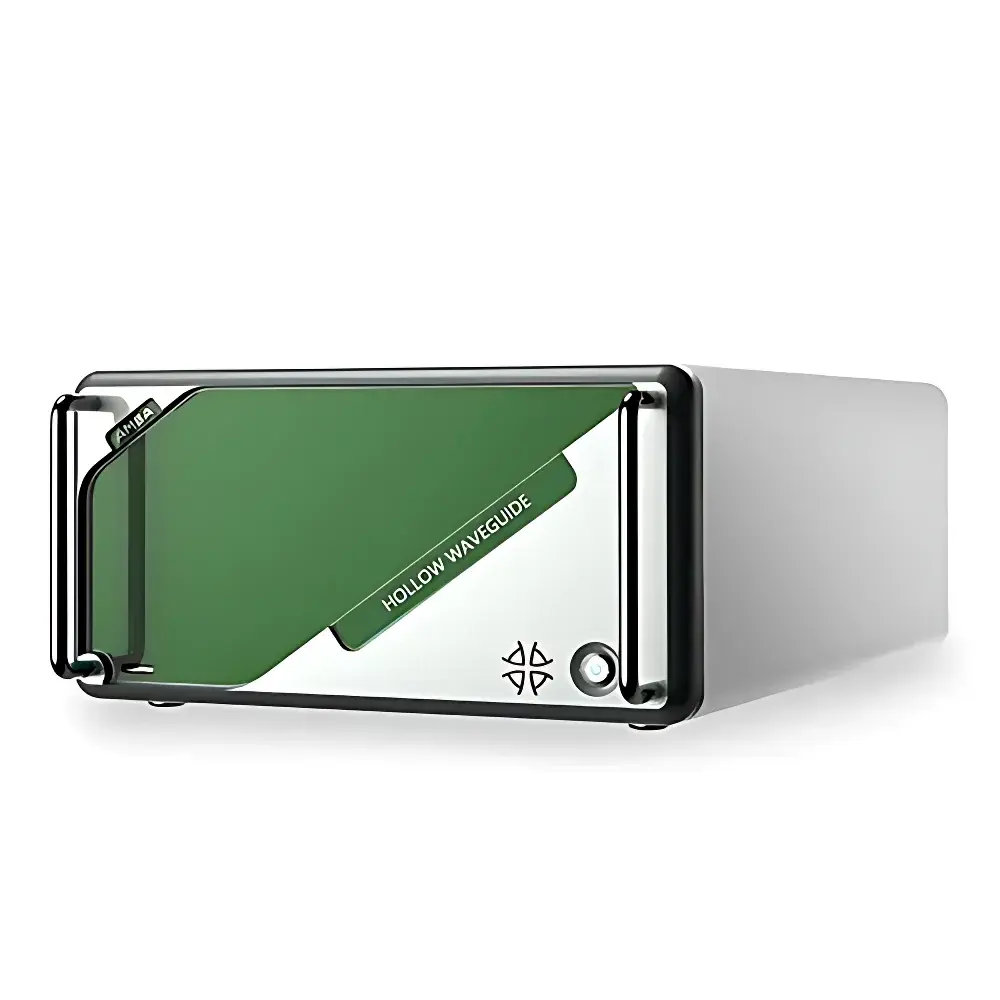
AMBA i3131 Ultra-High-Precision Liquid Water and Water Vapor Isotope Analyzer
| Origin | Netherlands |
|---|---|
| Manufacturer Type | Authorized Distributor |
| Origin Category | Imported |
| Model | i3131 |
| Pricing | Upon Request |
Overview
The AMBA i3131 Ultra-High-Precision Liquid Water and Water Vapor Isotope Analyzer is an advanced cavity-enhanced laser absorption spectrometer engineered for simultaneous, high-accuracy measurement of δ2H (δD), δ18O, δ17O, and Δ17O (17O excess) in both liquid water and ambient water vapor. It employs Linear Cavity Ring-Down Spectroscopy (CRDS) with a folded optical path architecture—optimized for minimal spectral interference, ultra-low memory effect, and exceptional long-term stability. Unlike conventional isotope ratio mass spectrometry (IRMS), the i3131 delivers real-time, continuous isotopic analysis without cryogenic trapping or vacuum line preparation, making it ideal for field-deployable hydrological monitoring, paleoclimate reconstruction, ecohydrological tracing, and atmospheric process studies where temporal resolution and sample throughput are critical.
Key Features
- Dual-channel inlet architecture—separate, independently optimized paths for liquid water and water vapor—reduces cross-contamination and suppresses memory effects to ≤1.5% for δD and ≤1% for δ18O and Δ17O across sequential injections.
- Sub-ppm-level water vapor concentration control (1000–50,000 ppm) with active pressure and flow regulation ensures consistent cavity filling and reproducible line-shape fitting under variable ambient conditions.
- Integrated thermal management system maintains cavity temperature stability within ±0.01 °C over operational ranges (−10 °C to +45 °C for vapor; +10 °C to +35 °C for liquid handling), minimizing thermal drift in absorption baseline and isotopic calibration.
- Compact benchtop form factor (43 × 18 × 40 cm) with ruggedized industrial chassis supports deployment in mobile labs, remote stations, and ISO-classified cleanrooms without requiring external vibration isolation.
- Modular design enables seamless integration of optional accessories—including the 130-position liquid autosampler, 8-/16-position vacuum extraction module (stainless steel), and vapor-phase calibration module—without hardware modification or recalibration.
Sample Compatibility & Compliance
The i3131 accepts native liquid water samples (0.5–2.0 mL volume) and ambient or extracted water vapor streams without derivatization or chemical conversion. It complies with ASTM D8293-21 (Standard Practice for Stable Isotope Analysis of Water by Laser Absorption Spectroscopy) and supports traceability to VSMOW2 and SLAP2 reference standards via dual-point calibration protocols. Data acquisition and instrument control meet GLP/GMP-aligned requirements, including user-accessible audit trails, electronic signatures (via optional software license), and full compliance with FDA 21 CFR Part 11 when configured with secure network authentication and encrypted local storage. All firmware and calibration files are digitally signed and version-controlled to ensure regulatory defensibility.
Software & Data Management
The proprietary AMBA Control Suite v4.x provides real-time spectral visualization, automated peak-fitting with Voigt-line modeling, and integrated δ-value calculation using IUPAC-recommended correction algorithms for mass-dependent fractionation. Raw absorbance spectra, cavity ring-down time decays, and metadata (temperature, pressure, flow rate, injection timestamp) are stored in HDF5 format with embedded provenance tags. Export options include CSV, NetCDF, and direct SQL database push. The software supports scheduled batch runs, remote diagnostics via TLS-secured SSH tunneling, and API-driven integration with LIMS platforms (e.g., LabWare, STARLIMS) through RESTful endpoints. Audit logs record all parameter changes, calibration events, and user actions with UTC timestamps and hashed operator IDs.
Applications
- High-temporal-resolution monitoring of evapotranspiration partitioning in watershed-scale ecohydrology studies.
- Multi-isotope fingerprinting of groundwater recharge sources, including identification of paleo-meteoric vs. modern infiltration signals via Δ17O anomalies.
- Calibration and validation of global climate models (GCMs) using continuous vapor isotope records from boundary layer profiling towers.
- Non-destructive isotopic screening of plant xylem water and leaf transpiration fluxes in controlled-environment phenotyping facilities.
- Quality assurance in pharmaceutical manufacturing—tracking isotopic composition of purified water (PW) and water-for-injection (WFI) per USP and EP 2.2.42 guidelines.
FAQ
What is the minimum detectable Δ17O precision for liquid water samples?
The i3131 achieves a 1σ precision of ≤0.015‰ for Δ17O in liquid water (2 mL injections), measured over 3600 seconds of signal averaging under standard operating conditions (25 °C, 760 Torr, 35 mL/min flow).
Does the system require external gas supplies or consumables for routine operation?
No carrier or purge gases are required. The analyzer operates on ambient air or sample stream only. Optional calibration modules use certified reference waters; no consumable optics or detectors are employed in the optical cavity.
Can the i3131 be operated unattended for multi-day continuous vapor monitoring?
Yes—when paired with the external pump and environmental enclosure, the system supports >168-hour autonomous operation with automated zero-air flushing, scheduled calibration checks, and watchdog-triggered error logging.
Is the liquid autosampler compatible with acidic or saline water matrices?
The PFA/PEEK fluidic path tolerates pH 1–12 and salinities up to 35 g/kg (seawater-equivalent); optional sapphire syringe barrels are available for extended service life in abrasive or high-TDS applications.
How is memory effect quantified and validated during installation qualification (IQ)?
Memory is assessed per ASTM D8293 Annex A3 using alternating injections of VSMOW2 and GISP standards; residual signal decay is modeled exponentially, and the 99% clearance time is reported for each isotope ratio in the IQ/OQ documentation package.



