
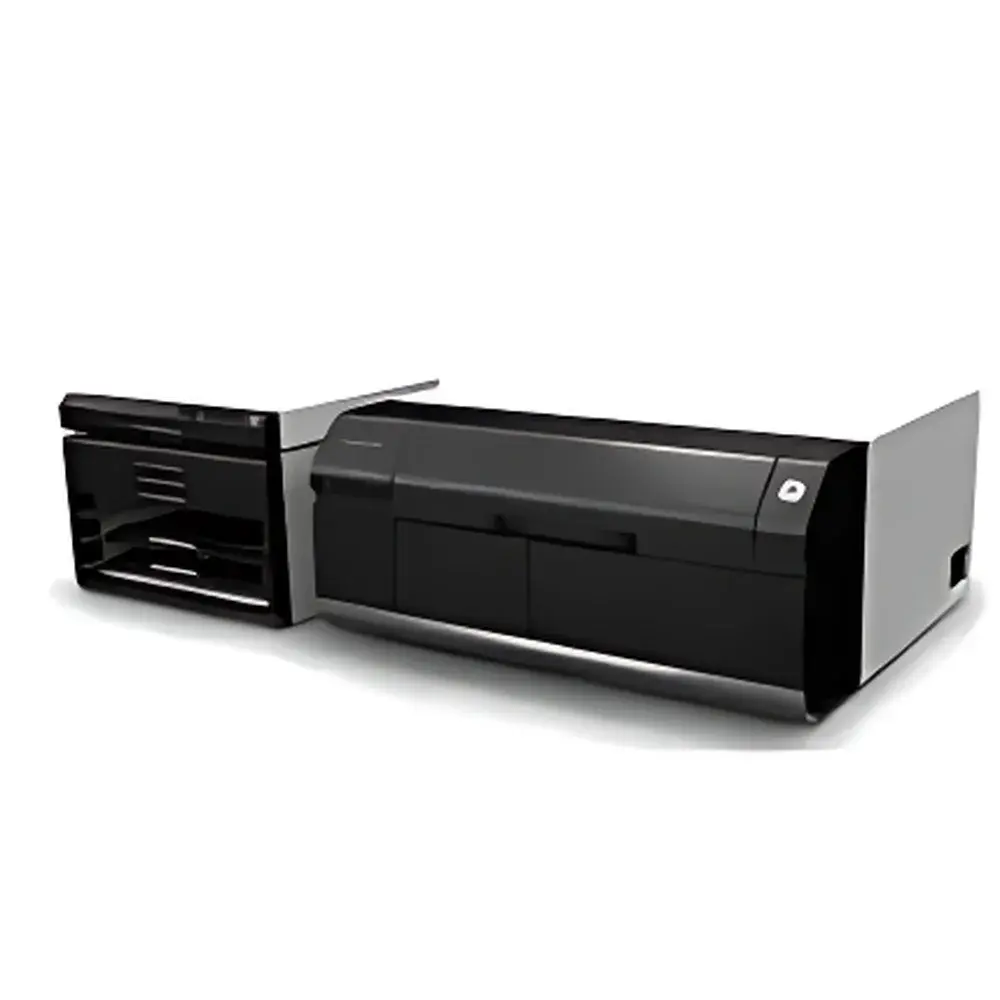
Amersham Typhoon NIR Near-Infrared Laser Scanner
| Brand | Cytiva |
|---|---|
| Origin | USA |
| Model | Amersham Typhoon NIR |
| Excitation Wavelengths | 685 nm & 785 nm (integrated diode lasers) |
| Detection | Dual PMT detectors |
| Dynamic Range | 5 decades |
| Image Depth | 16-bit |
| Scan Area | 40 × 46 cm |
| Pixel Resolution Options | 10, 25, 50, 100, 200 µm (standard) |
| Standard Filters | IRshort 720BP20, IRlong 825BP30 |
| Optional Filters | Cy2 LPB515, Cy3 LPG550, Cy5 LPR660, IP 390BP, Cy2 525BP20, Cy3 570BP20, Cy5 670BP30 |
Overview
The Amersham Typhoon NIR is a high-performance near-infrared (NIR) laser scanner engineered for quantitative fluorescence detection in life science research and molecular imaging applications. Based on confocal scanning architecture with dual photomultiplier tube (PMT) detection, the system utilizes two integrated solid-state diode lasers—685 nm and 785 nm—to excite NIR-compatible fluorophores with minimal background autofluorescence and superior signal-to-noise ratio. Unlike thermal imaging systems, this instrument operates on fluorescence emission principles rather than blackbody radiation detection; it is not an infrared thermal imaging camera but a precision optical imager optimized for biomolecular assays such as Western blotting, microarray analysis, in-gel protein detection, and multiplexed nucleic acid hybridization. Its large-format scanning capability (40 × 46 cm) supports standard electrophoresis gels, blots, membranes, and microplates without tiling or stitching artifacts.
Key Features
- Dual-wavelength excitation (685 nm and 785 nm) enables simultaneous or sequential detection of spectrally distinct NIR dyes—including Cy5.5, Alexa Fluor 700/750, IRDye 680/800, and DyLight 755—minimizing cross-talk and maximizing multiplexing capacity.
- Two independently configurable PMT detectors provide real-time gain optimization per channel, supporting dynamic range extension across five orders of magnitude (10⁵), essential for detecting both low-abundance targets and saturated high-expression bands within a single scan.
- Adjustable pixel resolution from 10 µm to 200 µm (with 1000 µm preview mode) allows users to balance spatial detail with acquisition speed and file size—critical for high-throughput screening environments and archival-quality documentation.
- Modular filter wheel accommodates up to six emission filters; factory-installed IRshort (720BP20) and IRlong (825BP30) filters are optimized for common NIR fluorophore pairs, while optional filters support visible-range dyes (e.g., Cy2, Cy3) for expanded spectral flexibility.
- Robust mechanical design includes temperature-stabilized optics, galvanometer-based beam steering, and motorized stage positioning—ensuring long-term alignment stability and inter-scan reproducibility under routine laboratory conditions.
Sample Compatibility & Compliance
The Typhoon NIR accommodates a wide range of sample formats including nitrocellulose and PVDF membranes, SDS-PAGE and native gels, glass slides, microarrays, and multiwell plates (up to 384-well). All scanning protocols comply with GLP/GMP-aligned data integrity requirements when used with ImageQuant TL software configured for audit trail logging and user access controls. While the platform itself does not carry FDA 21 CFR Part 11 certification out-of-the-box, its software architecture supports electronic signature implementation and secure data export (TIFF, PNG, CSV) compatible with LIMS integration. The system meets IEC 61000-6-3 (EMC emissions) and IEC 61000-6-2 (immunity) standards, and operation adheres to ISO 13485–informed quality practices for diagnostic development workflows.
Software & Data Management
Controlled via ImageQuant TL v8.x or later, the Typhoon NIR supports automated batch scanning, region-of-interest (ROI) quantification, background subtraction algorithms (rolling ball, morphological), and ratiometric normalization across multiple channels. Raw 16-bit TIFF files preserve full dynamic range for downstream statistical analysis in third-party tools (e.g., R, Python SciPy, GraphPad Prism). Export options include annotated PDF reports, Excel-compatible intensity tables, and MIAME-compliant metadata embedding. Software licensing permits concurrent use across networked instruments and supports centralized license management for core facility deployment.
Applications
- Quantitative Western blot analysis using NIR-labeled secondary antibodies, eliminating stripping/reprobing steps and enabling dual-color relative quantification.
- High-sensitivity detection of low-copy-number proteins in 2D gel electrophoresis, particularly in phosphoproteomics and post-translational modification studies.
- Microarray-based gene expression profiling with reduced background interference compared to visible-light scanners.
- In-gel zymography and activity-based protein profiling using activity-sensitive NIR probes.
- Quality control of labeled oligonucleotides and synthetic peptides where spectral purity and labeling efficiency must be verified pre-hybridization or pre-injection.
FAQ
Is the Typhoon NIR suitable for live-cell imaging?
No—it is a stationary, non-invasive scanner designed for fixed samples only. It lacks environmental control (temperature, CO₂, humidity) and real-time acquisition capabilities required for live-cell applications.
Can I use visible-light dyes like FITC or TRITC with this system?
Yes, provided appropriate excitation lasers and emission filters are installed; optional Cy2/Cy3 filter sets enable visible-channel compatibility, though sensitivity is lower than dedicated visible scanners.
What file formats are generated during scanning?
Primary output is uncompressed 16-bit TIFF; additional formats include PNG (lossless compression), JPEG (for presentation), and CSV (quantified intensity values per ROI).
Does the system require external calibration standards?
No—built-in reference stripe and daily auto-alignment routines ensure consistent PMT gain and laser power calibration without user intervention.
Is service and technical support available globally?
Yes—Cytiva provides regional field service engineers, remote diagnostics, and validated preventive maintenance programs aligned with ISO/IEC 17025 traceability requirements.




