
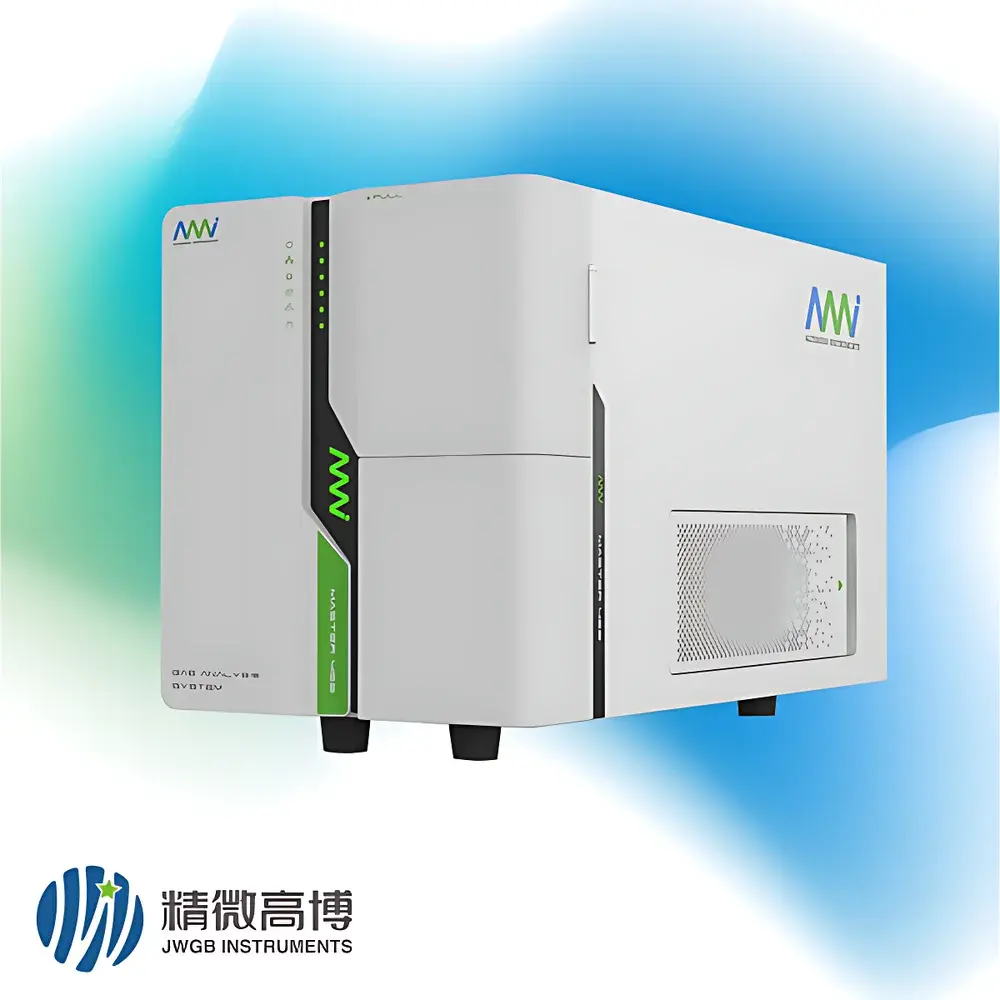
AMI-Master400 Online Mass Spectrometer
| Brand | Altamira Instruments (USA) |
|---|---|
| Origin | USA |
| Model | AMI-Master400 |
| Vacuum System | Turbo-molecular pump + oil-free diaphragm dry pump with full-range vacuum gauge |
| Inlet System | Heated stainless-steel or quartz capillary (ambient–200 °C), dual-stage pressure reduction |
| Mass Analyzer | Quadrupole mass filter with electron impact (EI) ion source |
| Detectors | Dual-mode detection — Faraday cup and electron multiplier |
| Detection Range | 100% to sub-ppb (v/v) |
| Response Time | <100 ms |
| Scan Speed | Millisecond-scale mass scanning |
| Mass Range | 1–300 u (standard), upgradable to 500 u |
| Operating Software | Multi-channel gas analysis suite for Windows 7/10, compliant with GLP/GMP data integrity requirements |
| Bake-out Capability | Mass spectrometer chamber heatable to 200 °C for in-situ outgassing |
| Compliance | Designed to support ASTM D7622, ISO 10156, USP <1251>, and FDA 21 CFR Part 11 audit-trail functionality |
Overview
The AMI-Master400 Online Mass Spectrometer is a benchtop process gas analysis system engineered by Altamira Instruments (USA) for real-time, high-fidelity compositional monitoring of gaseous streams. Based on quadrupole mass spectrometry with electron impact (EI) ionization, the instrument delivers continuous, quantitative molecular speciation across a mass range of 1–300 u (extendable to 500 u), enabling precise identification and concentration tracking of permanent gases, volatile organics, and reactive species. Its architecture integrates vacuum integrity, thermal stability, and signal fidelity to meet the operational demands of catalytic reaction monitoring, reactor effluent profiling, purge gas validation, and in-line purity verification in pharmaceutical, petrochemical, semiconductor, and academic research environments.
Key Features
- Heated inlet system with independent temperature control (ambient to 200 °C) using stainless-steel or quartz capillaries and particulate/condensate filtration—prevents analyte condensation and adsorption losses during transfer.
- UHV-compatible mass spectrometer chamber constructed from electropolished stainless steel, equipped with dedicated heating jacket and bake-out capability up to 200 °C to minimize residual background interference and ensure long-term baseline stability.
- Dual-detector configuration: Faraday cup for high-concentration measurement (0–100% v/v) and electron multiplier for trace-level detection (down to sub-ppb), providing >9 orders of magnitude dynamic range without manual gain switching.
- Millisecond-scale response and scanning kinetics—enabling synchronization with transient processes such as TPD, TPR, pulse chemisorption, and microreactor dynamics.
- Integrated filament pressure interlock safeguards cathode operation under varying inlet pressures, significantly extending emitter lifetime and reducing maintenance frequency.
- Multi-channel analog I/O (4–20 mA, 0–10 V) and digital interfaces (RS-232, Ethernet) for seamless integration with external systems including TGA, TPD/TPR reactors, fixed-bed microreactors, and chemical adsorption analyzers.
Sample Compatibility & Compliance
The AMI-Master400 accepts gas-phase samples directly from ambient-pressure or low-backpressure sources via its pressure-reduced inlet. It supports inert, corrosive (e.g., HCl, NH₃, SO₂), and condensable vapors when paired with appropriate inlet conditioning (e.g., heated filters, cold traps, or catalytic scrubbers). The system adheres to fundamental design principles aligned with ASTM D7622 (standard practice for online mass spectrometric analysis), ISO 10156 (gas cylinder content verification), and USP (residual solvent analysis). Data acquisition and storage comply with ALCOA+ principles; software includes electronic signatures, user access tiers, and 21 CFR Part 11–compliant audit trails for regulated environments operating under GLP or GMP frameworks.
Software & Data Management
The proprietary multi-channel gas analysis software provides synchronized acquisition, peak deconvolution, library-assisted identification (NIST/EPA/Wiley libraries), and calibration-based quantification using internal or external standards. Real-time spectral visualization, time-resolved chromatogram generation, and customizable reporting templates facilitate rapid interpretation of complex gas mixtures. Raw data are stored in vendor-neutral HDF5 format with embedded metadata (timestamp, pressure, temperature, detector mode), ensuring interoperability with LIMS and third-party analytics platforms. Batch processing, automated alarm thresholds, and remote monitoring via secure web interface extend operational flexibility.
Applications
- Catalysis research: In situ monitoring of reaction intermediates, product selectivity, and catalyst deactivation during CO₂ hydrogenation, Fischer–Tropsch synthesis, or ammonia decomposition.
- Materials science: Quantitative analysis of outgassing profiles during thermal aging of polymers, battery electrolytes, or thin-film precursors.
- Pharmaceutical manufacturing: Residual solvent verification in lyophilized products, headspace analysis of blister packaging, and nitrogen purge validation in API drying tunnels.
- Energy sector: Syngas composition tracking in reformer units, biogas methane/CO₂ ratio optimization, and flue gas speciation for carbon capture process control.
- Academic core facilities: Coupled operation with TGA-MS, TPD-MS, and microreactor-MS platforms for mechanistic kinetic modeling and surface science studies.
FAQ
What vacuum level does the AMI-Master400 maintain during operation?
The system sustains a base pressure of ≤5 × 10⁻⁸ mbar in the quadrupole chamber using a hybrid pumping stack (turbo-molecular pump backed by an oil-free diaphragm pump), monitored continuously via a full-range capacitance manometer.
Can the AMI-Master400 be integrated with existing laboratory automation systems?
Yes—its native OPC UA support, Modbus TCP compatibility, and configurable analog/digital I/O enable direct interfacing with PLCs, SCADA systems, and centralized lab automation controllers.
Is method transfer possible between different AMI-Master400 units?
All calibration parameters, spectral libraries, and acquisition protocols are exportable/importable as encrypted XML packages, ensuring reproducible analytical methods across instrument installations.
Does the system support isotopic ratio measurements?
While optimized for qualitative/quantitative process monitoring rather than high-precision isotope ratio mass spectrometry (IRMS), the AMI-Master400 achieves mass resolution sufficient for distinguishing major isotopic peaks (e.g., ¹²CO vs. ¹³CH₄) under standard operating conditions.
What service and support options are available outside the United States?
Altamira Instruments partners with certified regional service providers offering on-site preventive maintenance, remote diagnostics, and application-specific method development support under global service agreements.





