
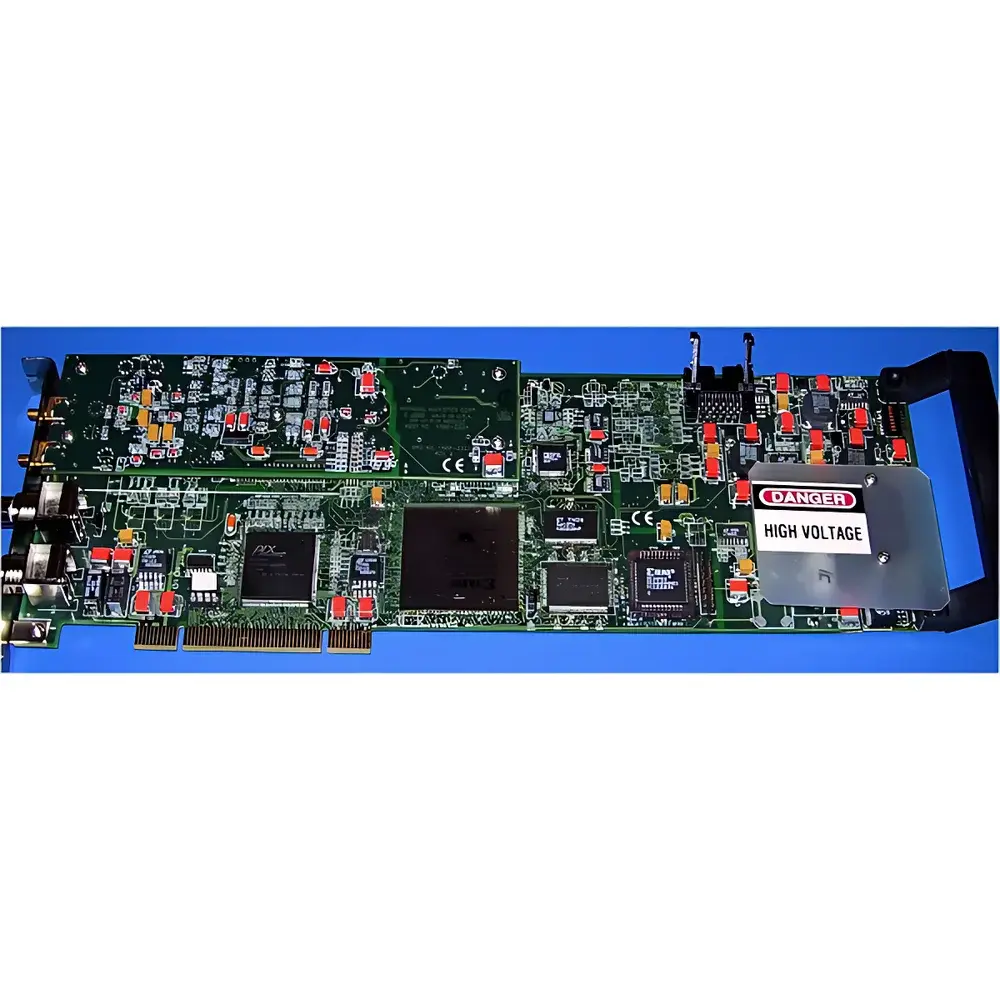
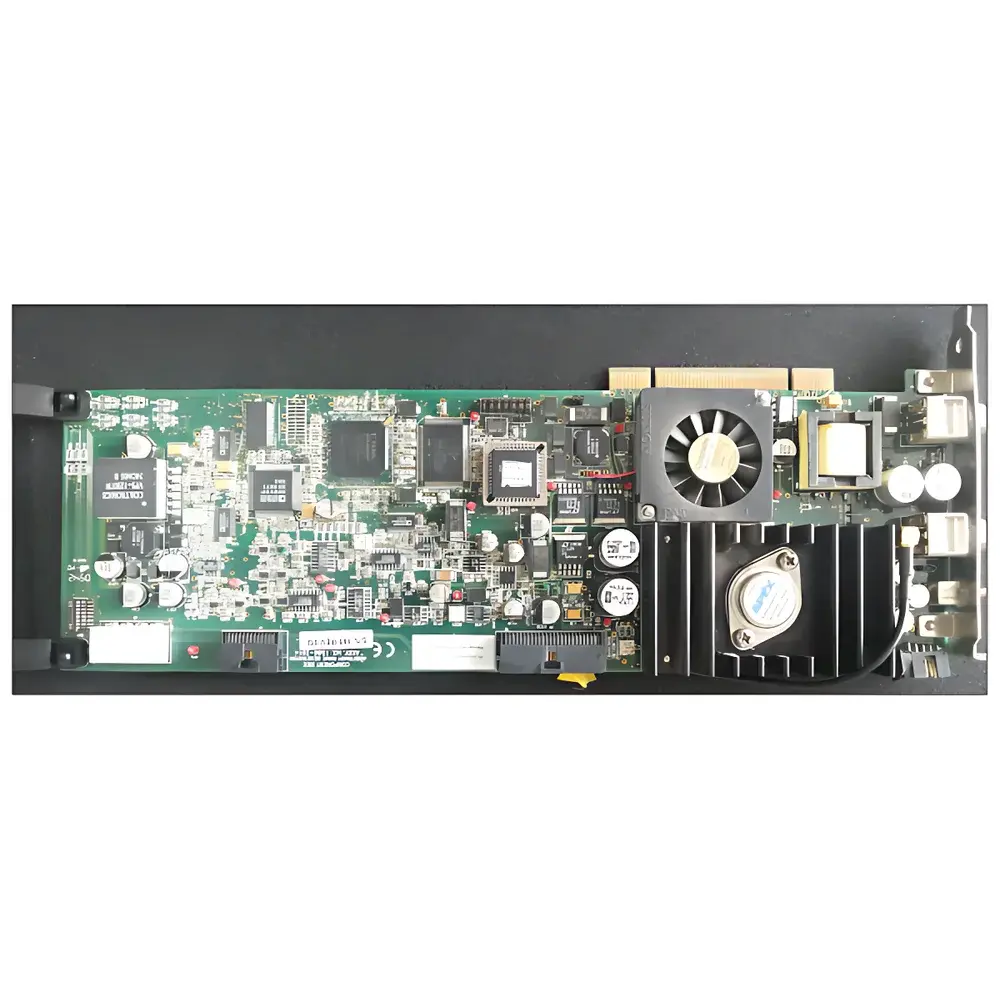
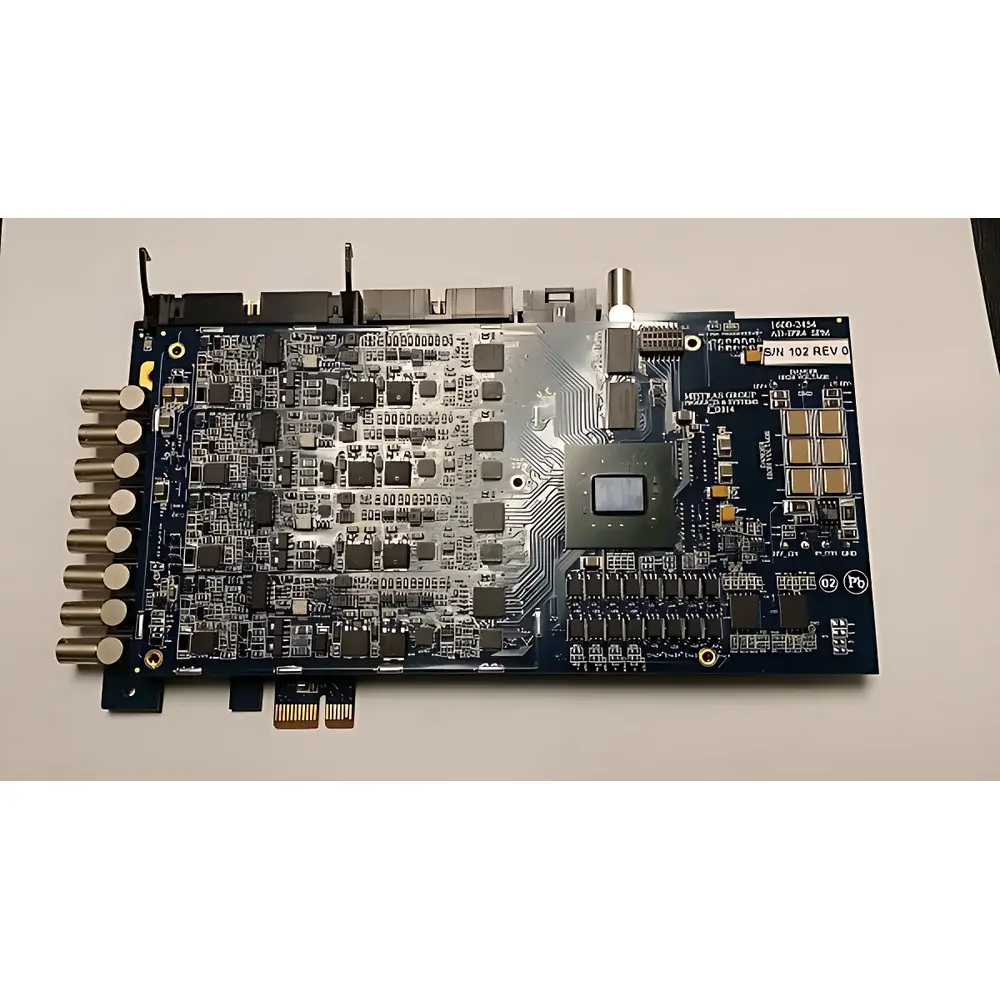
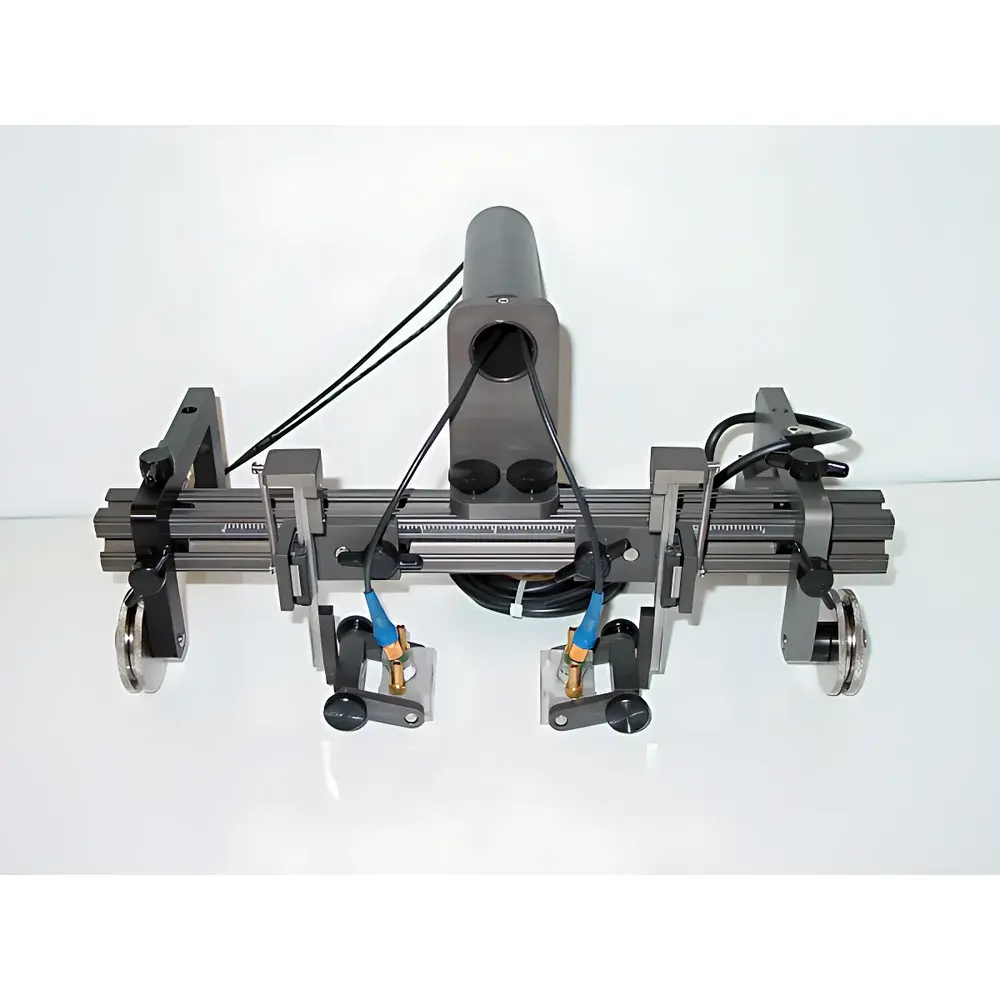
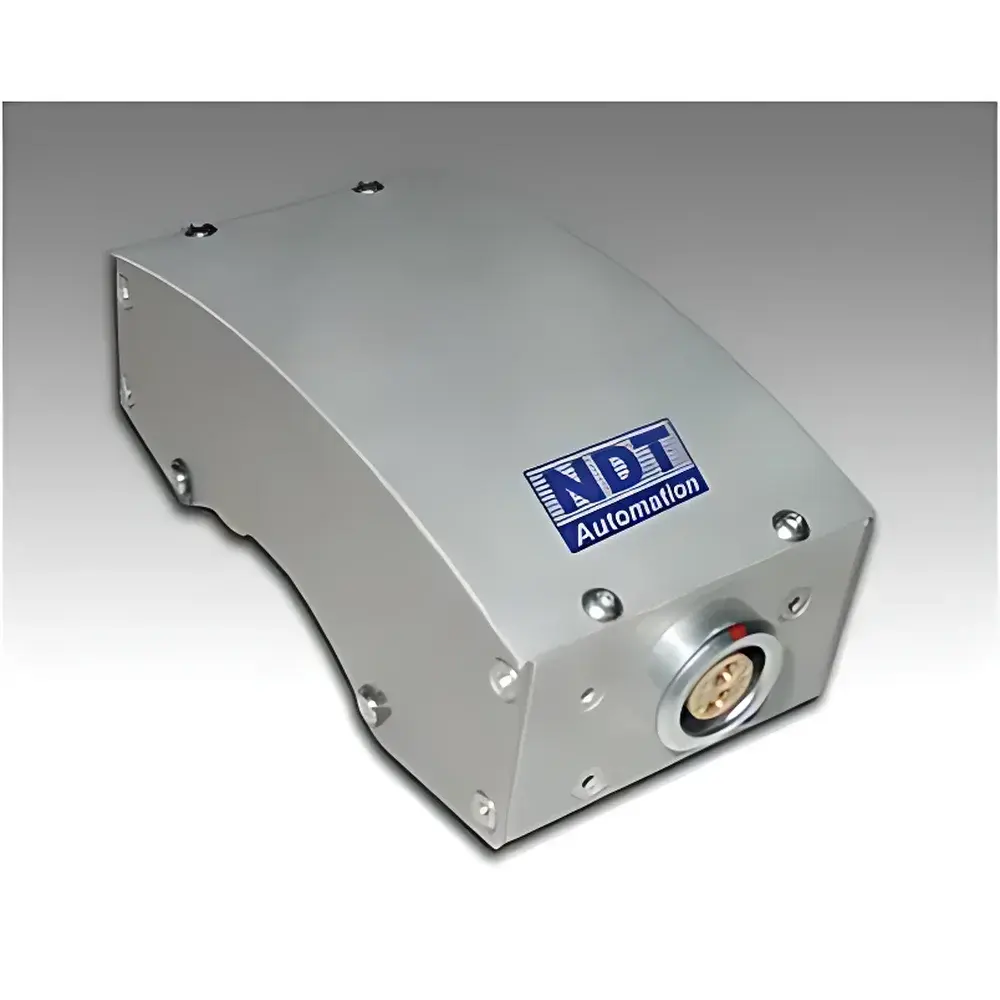
Analysis ARB-IPR-1210 PCI-E High-Performance Ultrasonic Data Acquisition Card
| Brand | Analysis |
|---|---|
| Origin | USA |
| Model | ARB-IPR-1210 (PCI-E) |
| Bus Interface | PCI Express |
| ADC Resolution | 12-bit |
| Sampling Rate | 100 MSPS (selectable: 100/50/25/10/5 MSPS) |
| Input Bandwidth | 0.5–30 MHz (+3 dB) |
| Gain Range | –20 to +80 dB (0.1 dB step) |
| Pulse Generator | Up to 400 V peak (<5 ns rise time), programmable pulse width & damping |
| DAC Memory | 128 KB RAM (64K points) |
| Trigger Modes | Software, external TTL, signal threshold |
| Gate Count | 4 independent gates |
| Time-of-Flight Resolution | 16-bit (10 ns) |
| Amplitude Resolution | 12-bit (488 µV) |
| Operating Temperature | 5–40 °C |
| Form Factor | Full-length PCI-E card |
| Compliance | RoHS, CE, FCC Class A |
| Software Support | LabVIEW and C++ drivers included |
| Standards Compatibility | Designed for ASTM E1158, ISO 12718, and EN 12668-1 compliant ultrasonic testing workflows |
Overview
The Analysis ARB-IPR-1210 PCI-E Ultrasonic Data Acquisition Card is a high-fidelity, low-noise digital instrumentation platform engineered for precision pulsed-echo and through-transmission ultrasonic testing (UT) in research, industrial NDT, and advanced materials characterization. Built upon a robust PCI Express architecture, it integrates high-speed analog-to-digital conversion, programmable pulser-receiver functionality, and real-time signal conditioning into a single compact module. Its core measurement principle relies on time-domain digitization of ultrasonic waveforms generated by piezoelectric transducers—enabling quantitative analysis of acoustic impedance discontinuities, material thickness, flaw depth, and microstructural attenuation. Unlike legacy PCI-based cards, the ARB-IPR-1210 leverages PCIe Gen2 x4 bandwidth (up to 2 GB/s theoretical throughput) to sustain continuous high-frame-rate acquisition without host memory bottlenecks—critical for phased array beamforming, guided wave monitoring, and full-matrix capture (FMC) applications.
Key Features
- 12-bit ADC with selectable sampling rates up to 100 MSPS per channel, supporting flexible trade-offs between temporal resolution and memory footprint
- Ultra-low input-referred noise floor (<150 µVRMS) across the 0.5–30 MHz operational bandwidth, optimized for high-sensitivity detection of weak backwall echoes or micro-defects
- Programmable pulser with dual voltage modes: 300 V (≤10 ns rise) and optional 400 V (≤5 ns rise), enabling excitation of broadband transducers from 0.5 MHz to 20 MHz
- Independent high-pass and low-pass filter banks (6 settings each), allowing precise spectral shaping to suppress electrical noise or isolate specific resonance modes
- Four fully configurable digital gates with nanosecond-level delay and width control (10–655,350 ns), supporting multi-zone defect evaluation and layered-material analysis
- Onboard DAC-based Distance-Amplitude Correction (DAC) curve generation with 0.1 dB resolution and 128 KB dedicated RAM for real-time gain compensation
- Comprehensive trigger architecture: software-triggered, external TTL-synchronized, or adaptive threshold-triggered acquisition with post-trigger delay up to 2.62 ms
- Native LabVIEW API and ANSI C/C++ SDK for deterministic, low-latency integration into custom inspection frameworks or automated test systems
Sample Compatibility & Compliance
The ARB-IPR-1210 supports standard 50 Ω coaxial interfaces (BNC and SMB) and is compatible with industry-standard contact, immersion, and EMAT transducers operating within its specified bandwidth. It accommodates both single-element and linear array probes used in ASTM E1158-compliant weld inspection, ISO 12718-certified composite laminate screening, and EN 12668-1 Level 2 instrument validation protocols. The card’s hardware design meets RoHS Directive 2011/65/EU and carries CE marking for electromagnetic compatibility (EN 61326-1) and safety (EN 61010-1). Its firmware architecture supports audit-trail logging and user-access controls required for GLP/GMP-aligned NDT laboratories conducting qualification-critical measurements.
Software & Data Management
The card ships with a modular driver suite supporting Windows 10/11 (64-bit) and real-time OS extensions. All acquired waveforms are timestamped with hardware-synchronized UTC clocks and stored in IEEE 754-compliant binary format for interoperability with MATLAB, Python (NumPy/HDF5), and commercial UT analysis platforms such as CIVA and GAGE. The SDK includes examples demonstrating gated amplitude tracking, TOF mapping, and envelope detection—enabling rapid development of application-specific algorithms. For regulated environments, optional firmware modules provide 21 CFR Part 11-compliant electronic signatures, role-based access control, and immutable acquisition logs with SHA-256 hash integrity verification.
Applications
- High-resolution ultrasonic scanning microscopy (C-SAM) requiring sub-micron axial resolution and long-duration waveform capture
- Guided wave structural health monitoring (SHM) of pipelines, rails, and aircraft fuselages using dispersion-corrected mode extraction
- Multi-channel phased array beamforming for real-time sectorial scanning in aerospace component certification
- Material property mapping via velocity-of-sound and attenuation coefficient profiling in ceramics, CFRP, and additive-manufactured alloys
- Calibration traceability for AE sensors and reference standards per ISO 12713 and ASTM E1316 Annex A3
- Research-grade acoustic emission source localization using time-difference-of-arrival (TDOA) triangulation across synchronized multi-card systems
FAQ
What is the maximum sustained data throughput achievable with this card?
The ARB-IPR-1210 achieves up to 800 MB/s sustained transfer rate over PCIe Gen2 x4 when configured at 100 MSPS with 12-bit packing—sufficient for continuous acquisition of 4096-sample waveforms at 20 kHz PRF.
Can this card be used in a multi-card synchronized configuration?
Yes. Hardware synchronization is supported via external clock distribution and trigger fan-out; phase alignment accuracy is maintained within ±2 ns across up to 8 cards using the optional SyncMaster timing module.
Does the card support real-time digital filtering during acquisition?
No. Filtering is applied post-acquisition in host memory to preserve raw data fidelity; however, analog anti-aliasing filters are fixed per selected bandwidth setting.
Is Linux driver support available?
A community-supported open-source kernel module and userspace library are provided under GPLv3; certified enterprise Linux drivers require an extended support agreement.
How does the DAC curve implementation comply with ASME Section V Article 4 requirements?
The onboard DAC generator produces logarithmic gain profiles meeting ASME-defined “reference level + 2/4/6 dB” point spacing criteria, with calibration traceability documented in the included NIST-traceable certificate of conformance.



