
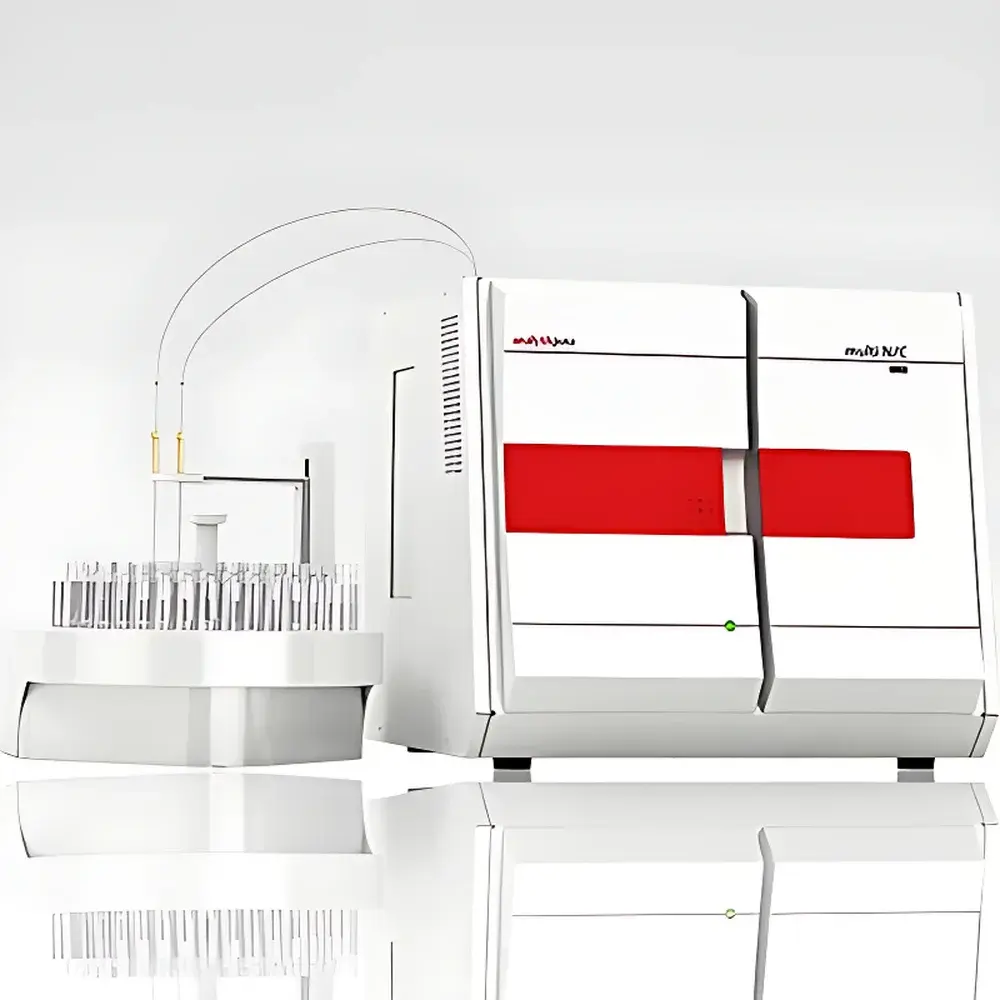
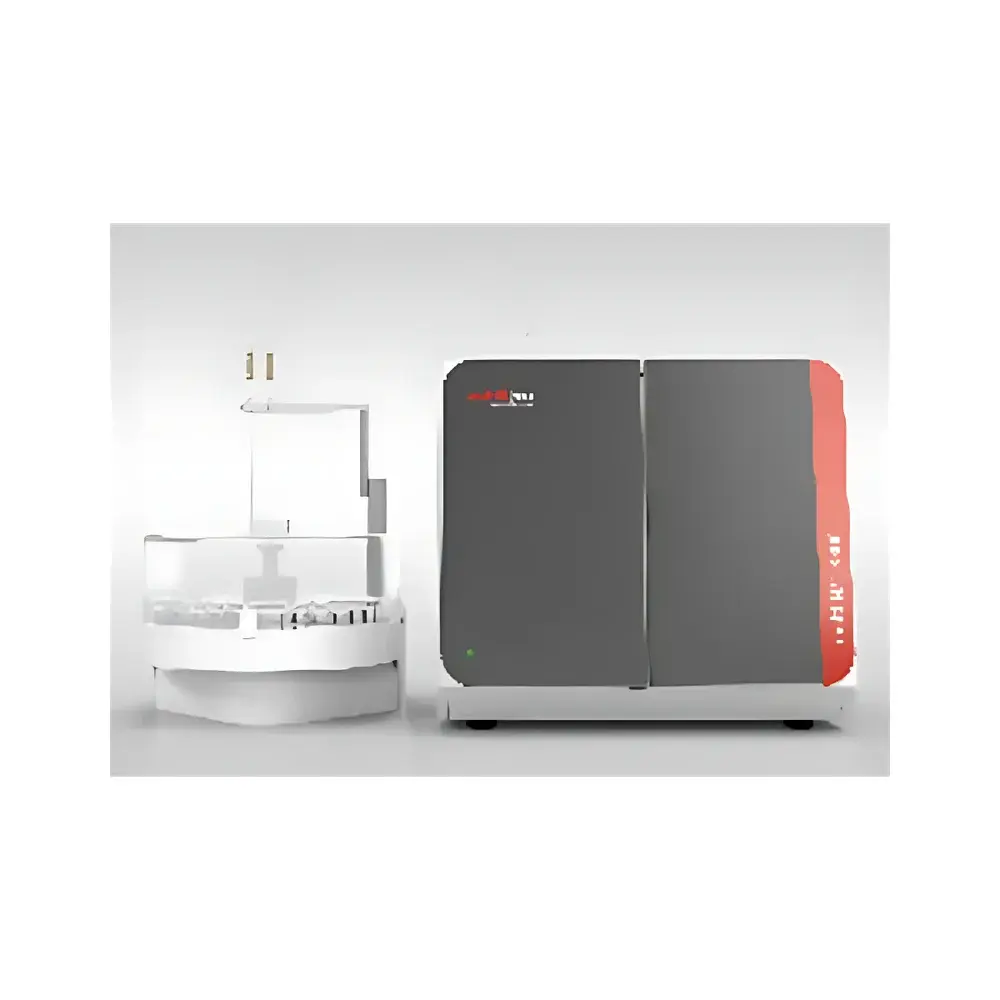
Analytik Jena multi N/C 3100 Total Organic Carbon and Total Nitrogen Analyzer
| Brand | Analytik Jena |
|---|---|
| Origin | Germany |
| Model | multi N/C 3100 |
| Instrument Type | Laboratory TOC/TN Analyzer |
| Detection Principle | Non-Dispersive Infrared (NDIR) Absorption |
| Oxidation Method | High-Temperature Catalytic Combustion |
| Measurement Range | 0–30,000 ppm C or N |
| Accuracy | ±2% of reading |
| Resolution | 0.001 ppb C |
| Detection Limit | 4 ppb C |
| Repeatability | ≤1% RSD |
Overview
The Analytik Jena multi N/C 3100 is a dual-channel laboratory analyzer engineered for simultaneous, high-precision quantification of total organic carbon (TOC), total nitrogen (TNb), total inorganic carbon (TIC), non-purgeable organic carbon (NPOC), purgeable organic carbon (POC), and total carbon (TC) in aqueous samples. Its core measurement architecture integrates two independent detection modalities: a high-stability non-dispersive infrared (NDIR) detector for CO2 quantification following catalytic combustion oxidation, and a chemiluminescence detector (CLD) or conductometric detector (ChD) for nitrogen oxides (NOx) generated during high-temperature thermal decomposition. This dual-detection strategy enables trace-level, matrix-resilient analysis across complex environmental, pharmaceutical, and regulatory water matrices—including ultrapure water, wastewater effluents, drinking water, and process streams—without mandatory sample dilution across the full 0–30,000 ppm dynamic range.
Key Features
- Patented VITA Flow Control Technology: Variable Intelligent Thermal Adjustment dynamically regulates carrier gas flow rate and thermal gradients in real time, minimizing baseline drift and enhancing signal-to-noise ratio for improved long-term stability and measurement reproducibility (≤1% RSD).
- High-Efficiency Oxidation System: Dual-mode oxidation—high-temperature catalytic combustion at up to 1,000 °C combined with dual-wavelength (185/254 nm) high-intensity UV photolysis—ensures complete mineralization of refractory organics and nitrogenous compounds, including nitrate, nitrite, and dissolved organic nitrogen (DON).
- Easy Cal Calibration Protocol: Single-point calibration using one certified standard solution establishes linear response curves for both carbon and nitrogen channels; validated stability exceeds 72 hours under routine operation without recalibration.
- SCS Safety Check System: Integrated hardware-level self-diagnostic routines continuously monitor furnace temperature, gas pressure, catalyst bed integrity, and detector saturation—automatically halting analysis and alerting users upon parameter deviation beyond ISO/IEC 17025-defined operational tolerances.
- Modular Architecture: Configurable inlet modules support liquid autosampling (up to 120 positions), solid sample introduction (via optional solid combustion module), and acid sparging for TIC removal—all controlled via unified firmware and compliant with ASTM D5997, ISO 8245, and USP workflows.
Sample Compatibility & Compliance
The multi N/C 3100 accepts aqueous samples with salinity up to 8.5% (w/v) NaCl and suspended solids ≤50 mg/L without filtration. It meets critical regulatory requirements for environmental and pharmaceutical water testing, including EPA Method 415.3, ISO 20674:2021 (water quality — determination of TOC), and pharmacopoeial standards (USP , EP 2.2.44, JP 2.07). Data integrity complies with FDA 21 CFR Part 11 through audit-trail-enabled software, electronic signatures, and role-based access control. All calibration, maintenance, and error logs are timestamped and immutable per GLP/GMP documentation protocols.
Software & Data Management
Control and data acquisition are managed via the proprietary aquaSoft™ 5.0 platform, which supports method-driven workflows, automated QC checks (e.g., system suitability tests per USP ), and customizable reporting templates aligned with LIMS integration (via ASTM E1384-compliant ASCII or XML export). Raw detector signals, peak integration parameters, and instrument status metadata are stored in encrypted SQLite databases with version-controlled backups. Audit trails record all user actions—including method edits, calibration events, and result overrides—with full traceability for regulatory inspections.
Applications
- Regulatory compliance monitoring of surface water, groundwater, and wastewater treatment plant influent/effluent per EU Water Framework Directive and U.S. Clean Water Act requirements.
- Pharmaceutical water system validation (PW, WFI, SW) and routine release testing in accordance with ICH Q5C and Annex 1 guidelines.
- Research applications in biogeochemistry, including DOC/DON flux studies in estuarine and marine systems.
- Process water characterization in semiconductor manufacturing, where sub-ppb TOC detection limits directly correlate with wafer yield metrics.
- Method development and verification for emerging contaminants (e.g., PFAS precursors, microplastic leachates) requiring robust carbon mass balance closure.
FAQ
What oxidation methods does the multi N/C 3100 employ for TOC and TN analysis?
It uses high-temperature (up to 1,000 °C) catalytic combustion for TOC and TN, supplemented by dual-wavelength UV photolysis (185/254 nm) for enhanced oxidation of recalcitrant nitrogen species.
Is the instrument compliant with FDA 21 CFR Part 11 for electronic records?
Yes—through aquaSoft™ 5.0’s built-in audit trail, electronic signature capability, and secure user authentication architecture.
Can the system analyze solid samples?
Not natively; however, an optional solid combustion module can be integrated to extend functionality to soils, sludges, and filter membranes.
What is the typical analysis time per sample?
Standard TC/TOC/TN analysis requires 5–8 minutes per injection, depending on matrix complexity and required detection sensitivity.
Does the multi N/C 3100 require external gas supplies?
Yes—it operates with high-purity oxygen (≥99.999%) for combustion and synthetic air or helium as carrier gas; all supply lines interface via standardized DIN/ISO fittings with integrated pressure regulation and leak detection.
Related Products







