
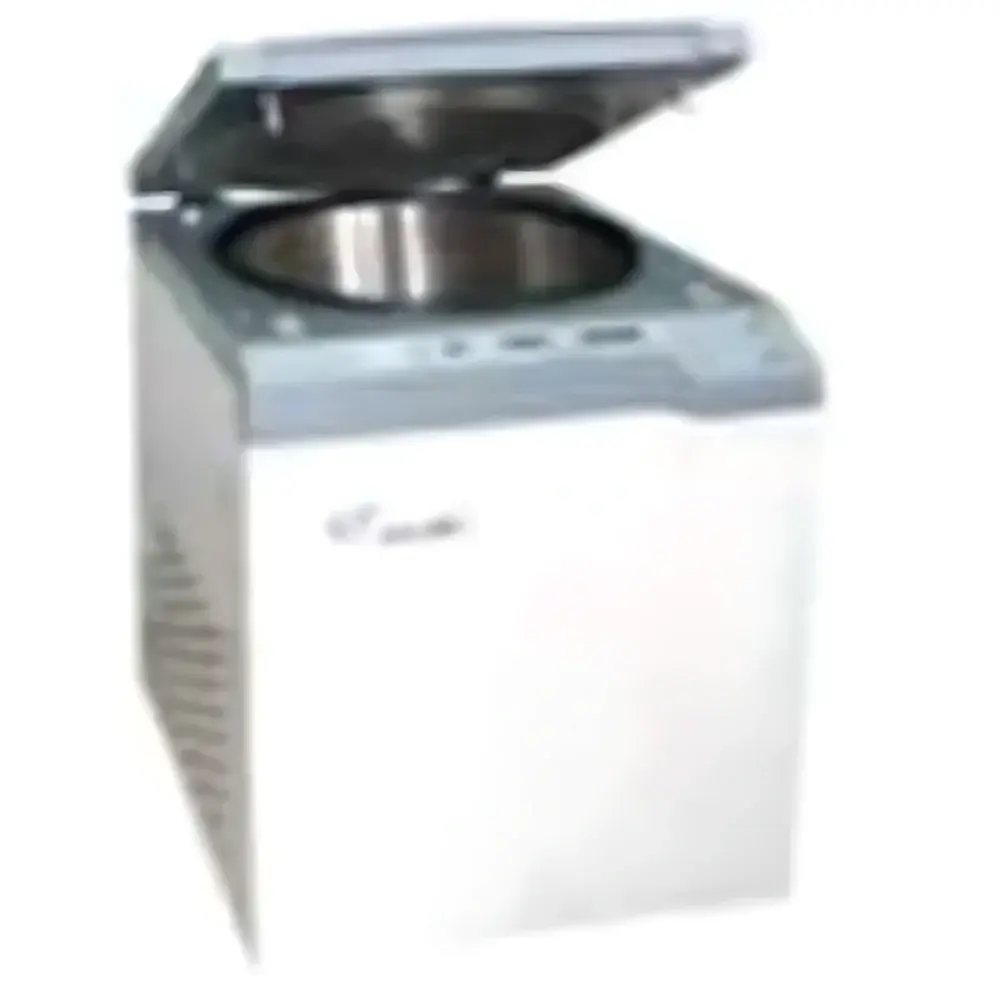
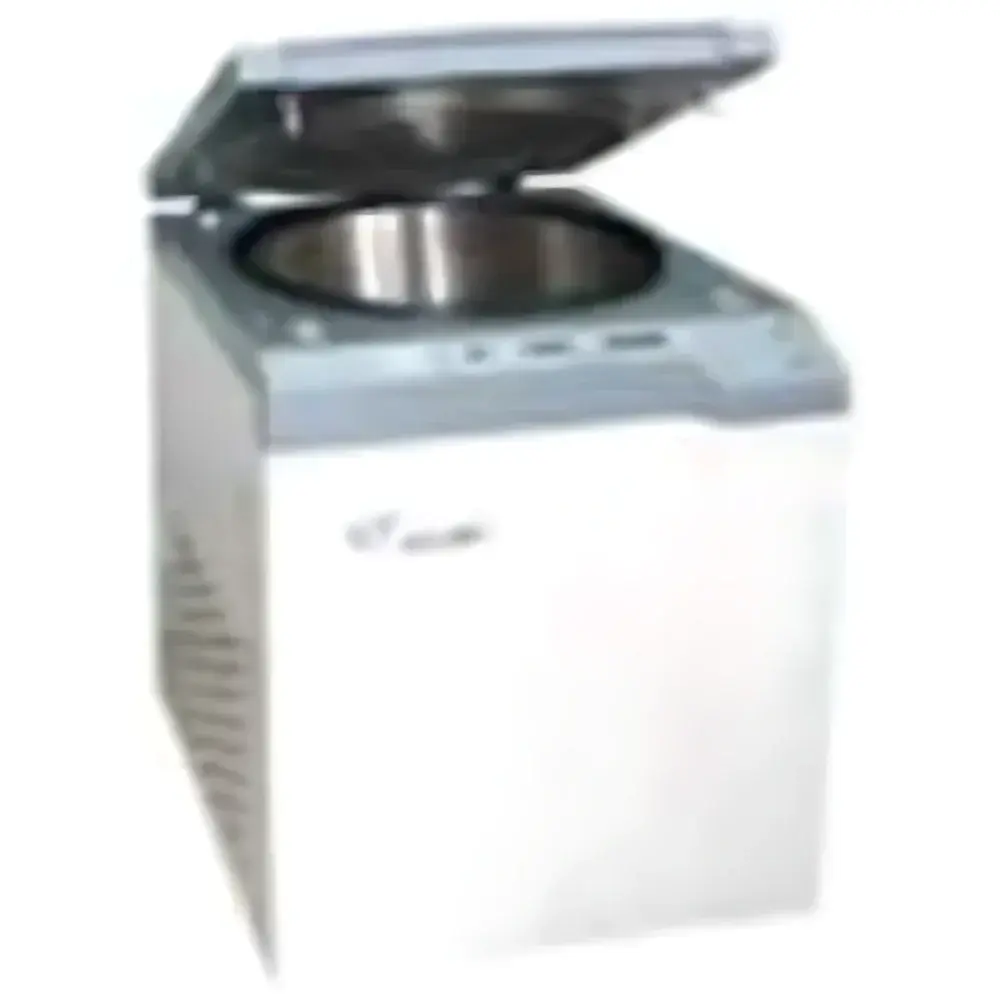
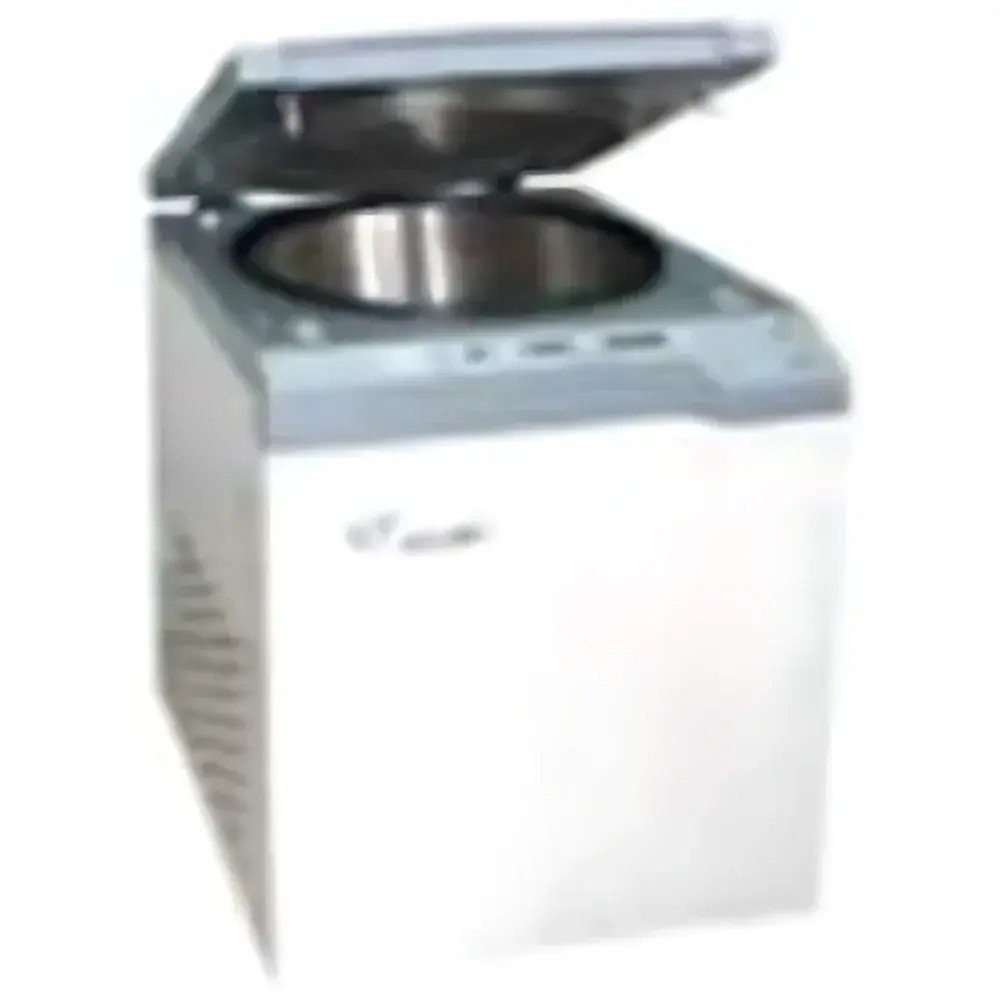
AnTing DL-5000B-II Low-Speed Refrigerated Centrifuge
| Brand | AnTing |
|---|---|
| Origin | Shanghai, China |
| Model | DL-5000B-II |
| Type | Benchtop Refrigerated Centrifuge |
| Max. Speed | 5000 rpm |
| Max. RCF | 5000 × g |
| Max. Capacity | 250 mL × 4 (horizontal rotor) |
| Temperature Range | −20 °C to +30 °C |
| Temp. Accuracy | ±2 °C |
| Timer Range | 0–99 min |
| Power Supply | 220 V, 50 Hz, 1.5 kW |
| Dimensions (L×W×H) | 460 mm × 510 mm × 680 mm |
| Net Weight | 245 kg |
| Rotor Type | Horizontal (swing-out) |
| Construction | Reinforced polymer housing |
Overview
The AnTing DL-5000B-II is a benchtop low-speed refrigerated centrifuge engineered for routine separation tasks in clinical laboratories, biotechnology QC environments, and academic research settings where temperature-sensitive sedimentation of cells, organelles, or precipitated macromolecules is required. It operates on the principle of sedimentation centrifugation under controlled thermal conditions—utilizing horizontal (swing-out) rotor geometry to generate uniform gravitational force distribution across all sample positions during rotation. Unlike high-speed or ultracentrifuges, the DL-5000B-II is optimized for gentle yet effective pelleting of whole blood components, yeast, mammalian cells, and coarse particulates without inducing excessive shear stress or thermal denaturation. Its integrated refrigeration system maintains sample integrity by actively cooling the chamber during operation, with precise electronic temperature regulation between −20 °C and +30 °C—critical for preserving enzyme activity, membrane fluidity, and nucleic acid stability during prolonged runs.
Key Features
- Reinforced polymer chassis offering structural rigidity while minimizing operational vibration and acoustic noise—ensuring long-term mechanical stability and operator comfort.
- Microprocessor-controlled temperature regulation with ±2 °C accuracy across the full operating range; independent cooling circuit prevents compressor overload during extended use.
- Electronic door interlock with safety latch ensures rotor containment at all speeds and automatically halts acceleration if lid is opened mid-run—compliant with IEC 61010-2-020 safety standards for laboratory centrifuges.
- Intuitive digital interface with backlit LCD display showing real-time rpm, RCF, elapsed time, remaining time, and chamber temperature—supporting programmable ramp-up/down profiles for sensitive samples.
- Horizontal swing-out rotor configuration (250 mL × 4 capacity) enabling balanced loading of standard polypropylene or glass centrifuge bottles; rotor imbalance detection triggers automatic deceleration if deviation exceeds tolerance thresholds.
- Energy-efficient brushless DC motor delivering consistent torque output across speed range (0–5000 rpm), with low maintenance requirements and extended service intervals.
Sample Compatibility & Compliance
The DL-5000B-II accommodates common labware including conical-bottom tubes (15–50 mL), centrifuge bottles (up to 250 mL), and microtiter plate carriers (optional accessory). It supports protocols aligned with ISO 15189 medical laboratory accreditation requirements for pre-analytical sample processing, as well as CLSI EP05-A3 guidelines for centrifuge performance verification. While not certified for GLP/GMP production environments per se, its reproducible RCF delivery, traceable temperature logging (via optional RS-232/USB data export), and audit-ready run records make it suitable for regulated QC workflows in pharmaceutical stability testing or raw material qualification. The unit meets CE marking directives (2014/30/EU EMC, 2014/35/EU LVD) and conforms to RoHS 2011/65/EU restrictions on hazardous substances.
Software & Data Management
The DL-5000B-II operates via embedded firmware without external PC dependency. All run parameters—including speed, time, temperature setpoint, and rotor identification—are stored in non-volatile memory for up to 100 program presets. Optional data logging modules enable timestamped export of session metadata (start/stop time, final RCF, average temperature, error codes) in CSV format for integration into LIMS or ELN systems. Though lacking native FDA 21 CFR Part 11-compliant electronic signatures, the device supports user-accessible audit trails when paired with validated third-party middleware—a configuration commonly deployed in contract research organizations handling clinical trial biospecimens.
Applications
- Preparation of platelet-poor plasma (PPP) and serum from whole blood specimens in clinical diagnostics.
- Sedimentation of bacterial cultures prior to DNA extraction or protein expression analysis.
- Clarification of crude lysates in recombinant protein purification workflows.
- Isolation of mitochondria and nuclei from tissue homogenates using differential centrifugation protocols.
- Processing of environmental water samples for suspended solids quantification (e.g., EPA Method 160.1).
- Routine quality control of vaccine suspensions, colloidal drug carriers, and emulsion-based formulations.
FAQ
What is the maximum permissible imbalance tolerance for the horizontal rotor?
The system detects mass imbalances exceeding 10 g per tube position and initiates immediate deceleration to prevent bearing wear or rotor deformation.
Can the centrifuge maintain −20 °C during continuous 99-minute operation?
Yes—the compressor and heat exchanger are rated for sustained operation at minimum setpoint; ambient temperature must remain below 25 °C for optimal thermal performance.
Is rotor calibration required before first use?
No factory calibration is needed; however, users must verify rotor identification code against the instrument’s firmware menu to ensure correct RCF calculation.
Does the unit support external trigger signals for synchronized start/stop?
Not natively—but TTL-compatible dry-contact inputs can be added via OEM interface expansion kits upon request.
Are replacement rotors supplied with individual serial-numbered certification documents?
Yes—each rotor includes a manufacturer-issued certificate of conformity listing angular velocity limits, material composition, and balance test results per ISO 21501-4.



