
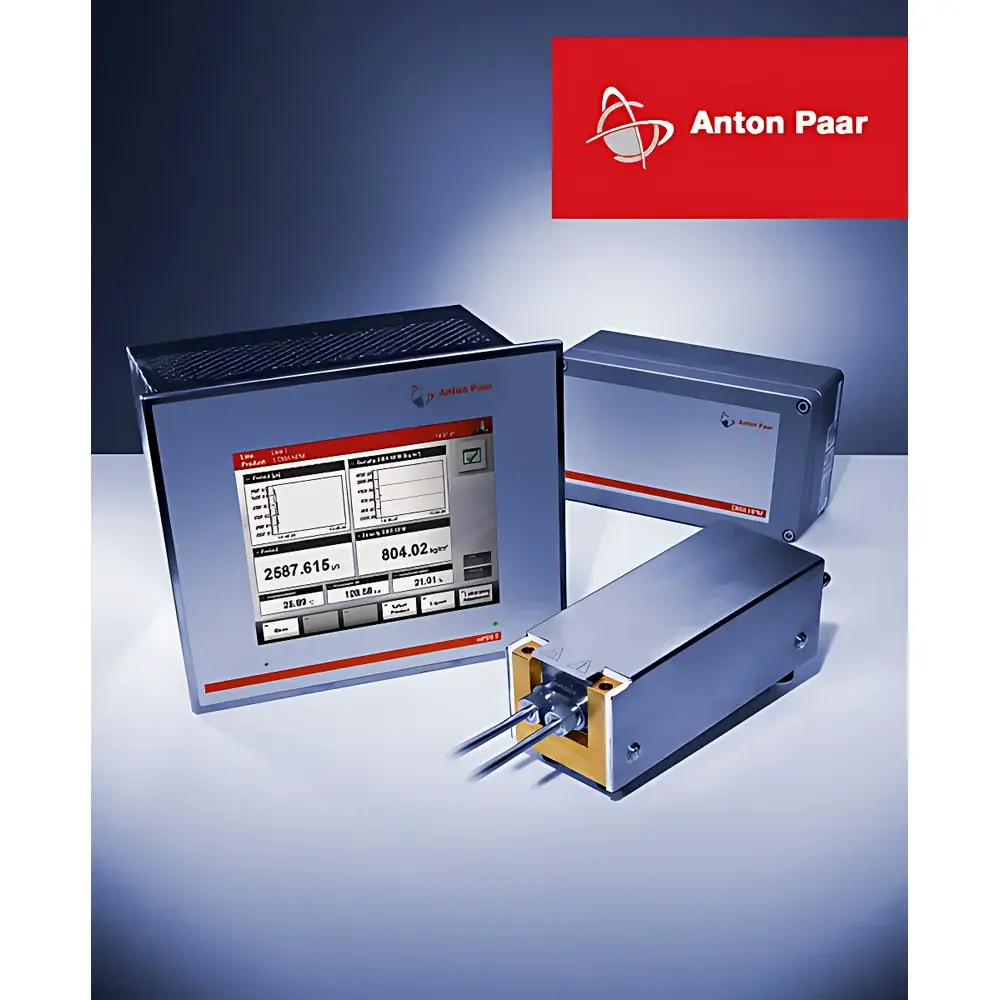
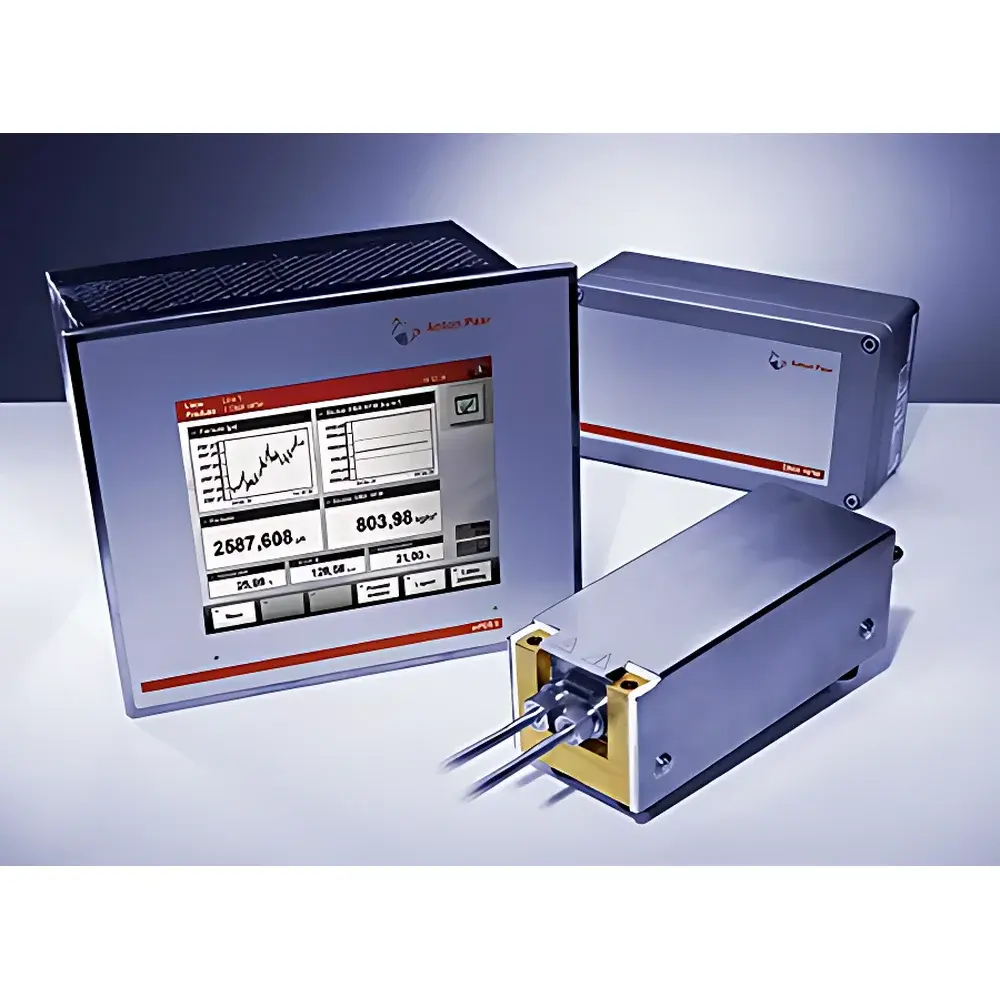
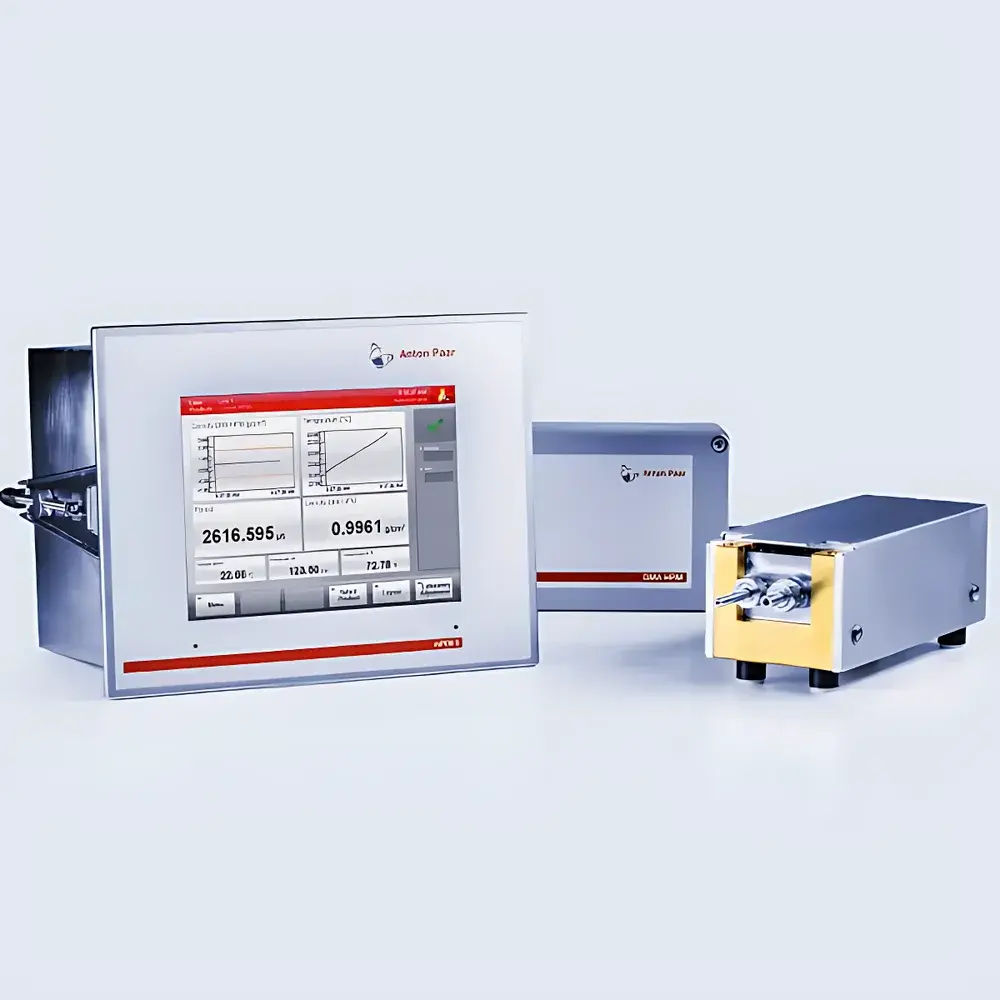
Anton Paar DMA HPM High-Pressure and High-Temperature Density Meter
| Brand | Anton Paar |
|---|---|
| Origin | Austria |
| Manufacturer Type | Original Equipment Manufacturer (OEM) |
| Origin Category | Imported |
| Model | HPM |
| Instrument Type | Oscillating U-tube Densimeter |
| Form Factor | Benchtop Laboratory Instrument |
| Sample Phase | Liquid |
| Density Range | 0–3 g/cm³ |
| Density Accuracy | ±0.0001 g/cm³ |
| Density Repeatability | ≤0.00001 g/cm³ (standard deviation) |
| Temperature Range | −10 to +200 °C |
| Pressure Range | 0–1400 bar (0–20,300 psi) |
| Minimum Sample Volume | ~2 mL |
| Cell Material | Hastelloy C-276 |
| Digital Resolution | 0.00001 g/cm³ |
| Interface | 1/4″ metal tubing compression fittings |
Overview
The Anton Paar DMA HPM is a high-precision oscillating U-tube densimeter engineered for real-time density measurement of liquids under extreme thermodynamic conditions—specifically designed for upstream petroleum applications, process monitoring, and high-pressure fluid characterization. It operates on the fundamental principle of measuring the resonant frequency of a precisely machined, temperature- and pressure-stabilized U-shaped glass or metal tube filled with sample fluid. Since the natural oscillation period of the tube is inversely proportional to the square root of the sample’s density, the instrument calculates density with traceable metrological rigor. Unlike ambient-condition densimeters, the DMA HPM integrates active thermal control and hydraulic pressure regulation to maintain stable, user-defined setpoints across its full operational envelope—from cryogenic starting points (−10 °C) up to 200 °C and pressures reaching 1400 bar. This enables direct correlation of density behavior with reservoir conditions, phase envelope modeling, and PVT (pressure-volume-temperature) analysis without extrapolation.
Key Features
- High-stability oscillating U-tube sensor fabricated from corrosion-resistant Hastelloy C-276, ensuring long-term integrity in aggressive hydrocarbon and sour fluid environments.
- Integrated P/T control architecture with independent PID-regulated heating and high-fidelity pressure transduction, enabling simultaneous stabilization at user-specified temperature and pressure points.
- Density resolution of 0.00001 g/cm³ and repeatability ≤0.00001 g/cm³ (1σ), validated per ISO 12185 and ASTM D4052 protocols under controlled laboratory intercomparison conditions.
- Compact modular design: DMA HPM interface module (210 × 78 × 86 mm) mounts directly onto flow-through systems or standalone high-pressure loops, supporting continuous inline operation at flow rates of 10–100 L/h.
- Minimal sample requirement (~2 mL active cell volume) reduces consumption during method development, calibration, and transient condition testing.
- Full compliance with mechanical safety standards including PED 2014/68/EU and ASME B31.4/B31.8 for integration into certified process instrumentation loops.
Sample Compatibility & Compliance
The DMA HPM is validated for use with crude oils, refined distillates, liquefied petroleum gases (LPG), CO₂-rich mixtures, aqueous brines, and synthetic drilling fluids. Its Hastelloy C-276 wetted parts provide resistance to chloride-induced stress corrosion cracking and H₂S exposure, meeting NACE MR0175/ISO 15156 requirements for sour service. All firmware and hardware configurations adhere to IEC 61508 SIL2 functional safety principles where deployed in safety-critical process control environments. Calibration traceability is maintained to NIST SRM 1829 (density standards) and EURAMET cg-18 guidelines. The system supports audit-ready documentation per FDA 21 CFR Part 11 when operated with Anton Paar’s mPDS software suite.
Software & Data Management
The DMA HPM interfaces natively with Anton Paar’s proprietary mPDS (modular Process Data System) software, which provides real-time visualization, automated sequence execution, and timestamped data logging with embedded metadata (T, P, flow rate, sensor diagnostics). Raw oscillation periods, calculated densities, and statistical metrics (e.g., standard deviation over 10 consecutive cycles) are exported in CSV or XML formats compatible with third-party PVT simulators (e.g., PVTi, MBAL, ECLIPSE). Data integrity safeguards include electronic signatures, change history tracking, and role-based access control—fully aligned with GLP and GMP documentation frameworks. Optional OPC UA server integration allows seamless connection to DCS or SCADA platforms for enterprise-level process analytics.
Applications
- Reservoir fluid characterization: Direct measurement of live oil and gas condensate densities at reservoir T/P conditions for EOS tuning and saturation pressure validation.
- Refinery process optimization: Online density feedback for fractionation column interface detection, blend stock verification, and custody transfer metering support.
- Carbon capture and storage (CCS): Quantification of CO₂–brine–hydrocarbon phase behavior and density gradients in geological sequestration modeling.
- Enhanced oil recovery (EOR) screening: Monitoring density shifts during surfactant flooding or low-salinity water injection to infer interfacial tension changes.
- Standards laboratories: Primary reference measurements for certification of density standards across extended P/T domains.
FAQ
What is the maximum allowable operating pressure and temperature?
The DMA HPM is rated for continuous operation up to 1400 bar and +200 °C, with pressure containment verified per ASME Section VIII Div. 1 and temperature stability maintained within ±0.02 °C at setpoint.
Can the DMA HPM be integrated into an existing high-pressure loop?
Yes—it features standardized 1/4″ metal tubing compression fittings and supports both dead-end and continuous-flow configurations; integration kits and mounting brackets are available upon request.
Is calibration traceable to international standards?
All factory calibrations are traceable to NIST-certified reference materials and documented in accordance with ISO/IEC 17025 requirements.
Does the system comply with regulatory data integrity requirements?
When used with mPDS v3.2 or later and configured with audit trail and electronic signature modules, it meets FDA 21 CFR Part 11, EU Annex 11, and PIC/S GMP Annex 11 expectations.
What maintenance intervals are recommended for routine operation?
Preventive maintenance—including sensor inspection, pressure seal verification, and thermal calibration check—is recommended every 12 months or after 2000 operating hours, whichever occurs first.



