
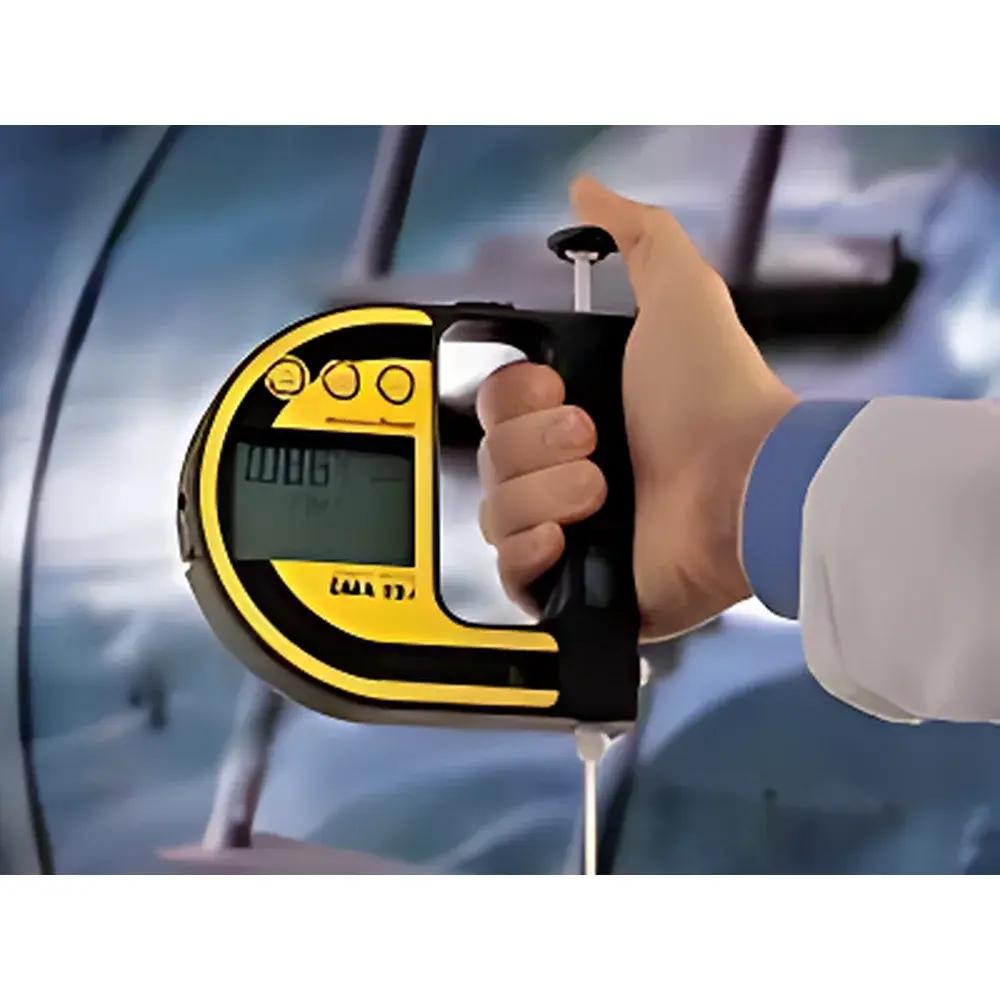
Anton Paar DMA35N Portable Digital Density Meter
| Origin | Austria |
|---|---|
| Manufacturer Type | Authorized Distributor |
| Origin Category | Imported |
| Model | DMA35N |
| Accuracy | ±0.001 g/cm³ |
| Measurement Range | 0 to 1.999 g/cm³ |
| Temperature Range | 0 to 40 °C (operational), sample temperature up to 100 °C |
| Minimum Sample Volume | 2 mL |
| Weight | 275 g |
| Power Supply | Rechargeable battery |
| Interface Options | RS232 or infrared |
| Data Storage Capacity | 1024 measurements |
| Built-in Concentration Tables | H₂SO₄, Brix, % alcohol (v/v and w/w), API gravity, others |
| Automatic Temperature Compensation | Yes |
| Pump Type | Integrated high-performance micro-pump |
Overview
The Anton Paar DMA35N is a handheld digital density meter engineered for field-deployable, high-precision liquid density analysis using the oscillating U-tube principle—a method first commercialized by Anton Paar in 1968. This technique relies on the precise measurement of the resonant frequency of a hermetically sealed, evacuated glass U-tube filled with the sample; since the oscillation period is directly related to the mass of the sample (and thus its density), the instrument calculates density with metrological rigor traceable to SI units. Designed for real-time decision-making outside the lab, the DMA35N delivers laboratory-grade accuracy (±0.001 g/cm³) in environments ranging from refinery gate inspections and pharmaceutical batch release checks to beverage formulation verification and customs inspection workflows. Its compact form factor, integrated sampling pump, and battery-powered operation eliminate dependency on fixed infrastructure—making it suitable for use on production floors, storage tanks, delivery trucks, or remote field sites.
Key Features
- Ultra-lightweight design (275 g) enabling true one-handed operation without fatigue during extended use
- High-resolution backlit LCD display with user-selectable parameter views (density, concentration, temperature, measurement ID)
- Integrated high-efficiency micro-pump capable of drawing viscous or volatile liquids (e.g., ethanol, glycerol, crude oil fractions) with minimal operator effort
- Automatic temperature compensation (ATC) based on built-in Pt100 sensor, ensuring density values are reported at standardized reference temperatures (e.g., 20 °C or 25 °C)
- Onboard memory storing up to 1024 complete measurement records—including timestamp, temperature, density, derived concentration, and user-defined ID
- Pre-programmed concentration conversion tables compliant with industry standards: Brix (ISO 21527-1), % alcohol (OIML R 22, USP & EU Pharmacopoeia), sulfuric acid (DIN 1343), API gravity (ASTM D1298), and custom user-defined formulas
- Optional communication interfaces: RS232 for direct connection to LIMS or legacy printers; infrared (IrDA) for wireless data transfer to PCs or mobile devices
Sample Compatibility & Compliance
The DMA35N accommodates a broad range of homogeneous liquids—from aqueous solutions and hydrocarbons to alcohols, acids, and emulsions—with viscosity limits up to 200 mPa·s (at 20 °C). Samples as small as 2 mL are sufficient for full characterization, minimizing waste and enabling rapid turnaround. The instrument complies with ISO 12084 (density determination of liquids by oscillating densimeters), ASTM D4052 (standard test method for density, relative density, and API gravity of liquids by digital density meter), and supports GLP/GMP documentation requirements through audit-trail-ready data export. All internal calibration routines follow Anton Paar’s certified traceability chain to national metrology institutes (e.g., PTB, NIST), and firmware updates maintain alignment with evolving regulatory expectations including FDA 21 CFR Part 11 when used with validated software configurations.
Software & Data Management
Measurements are stored internally with full metadata: date/time stamp, ambient and sample temperature, measured density, selected concentration unit, and optional operator ID. Data export via RS232 or infrared enables seamless integration into enterprise quality systems. When paired with Anton Paar’s optional PC software (e.g., Density Software Suite), users gain access to advanced reporting templates, statistical process control (SPC) charts, automated report generation (PDF/CSV), and secure user authentication protocols. Audit trails record all configuration changes, calibration events, and data exports—supporting compliance with ISO/IEC 17025, ISO 9001, and pharmaceutical quality systems requiring electronic record integrity.
Applications
The DMA35N serves critical roles across regulated and industrial sectors: in petrochemical terminals, verifying fuel density and API gravity prior to custody transfer; in pharmaceutical manufacturing, confirming excipient solution concentrations during formulation; in food & beverage QA, validating Brix levels in fruit juices or % alcohol in spirits; in customs laboratories, performing rapid screening of imported solvents or chemical intermediates; and in academic or contract testing labs, supporting method development for novel liquid formulations where portability and repeatability are essential. Its ability to operate reliably between 0–40 °C ambient conditions—and accept samples up to 100 °C—further extends utility in hot-process environments such as distillation columns or steam-condensate lines.
FAQ
What measurement principle does the DMA35N use?
It employs the oscillating U-tube method, where the sample-filled tube’s natural frequency of oscillation is inversely proportional to its density.
Is calibration required before each measurement?
No—factory calibration is stable over time; however, daily verification with air and water (or certified reference materials) is recommended per ISO 17025 guidelines.
Can the DMA35N measure slurries or suspensions?
No—it is designed exclusively for homogeneous liquids; particulates or bubbles will compromise measurement accuracy and risk tube contamination.
How is temperature control managed during measurement?
The instrument measures sample temperature in real time and applies algorithmic correction to report density at user-specified reference temperatures (e.g., 20 °C); no external thermostat is needed.
Does the device support multi-language UI and regulatory reporting formats?
Yes—the interface supports English, German, French, Spanish, Chinese, and Japanese; exported data files conform to ASTM E1382 and ISO/IEC 17025-compliant structured formats.



