
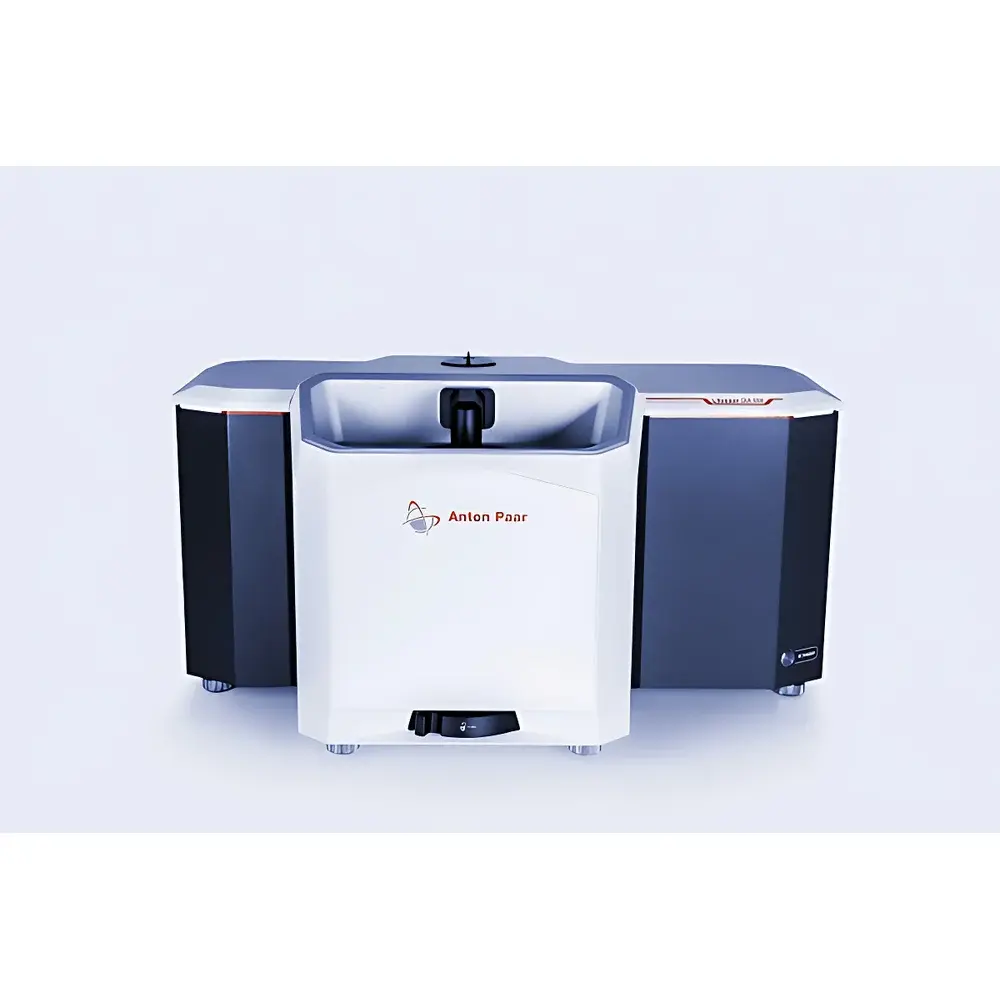
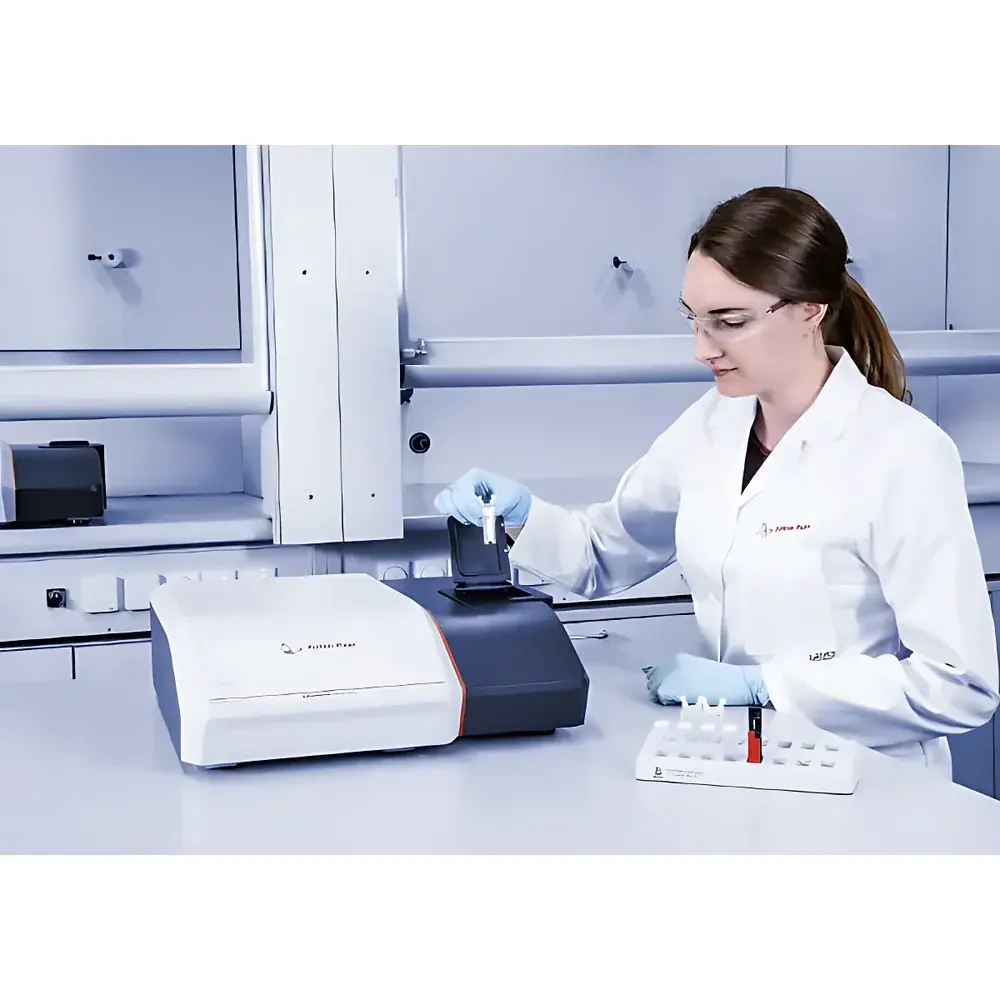
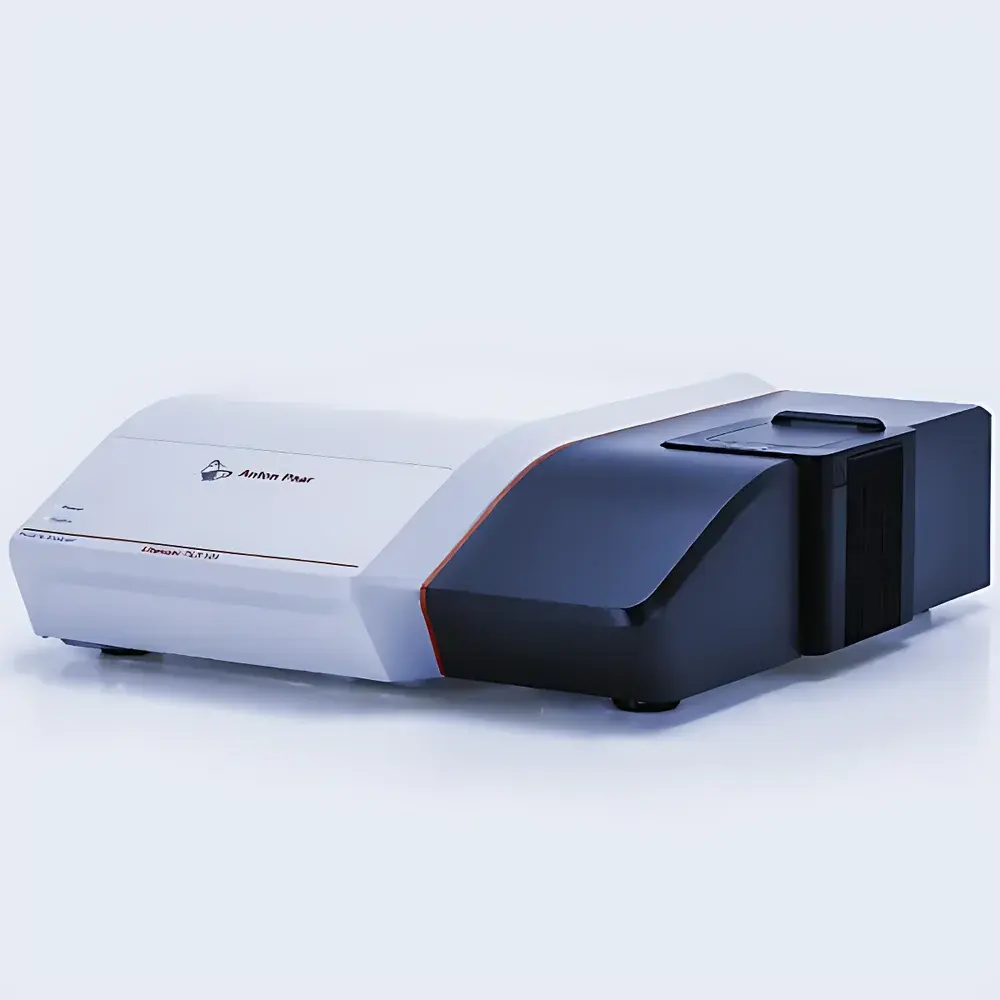
Anton Paar Litesizer DLS 101 Nanoparticle Size Analyzer
| Brand | Anton Paar |
|---|---|
| Origin | Austria |
| Manufacturer | Anton Paar GmbH |
| Product Type | Imported Instrument |
| Model | Litesizer DLS 101 |
| Particle Size Range | 0.3 nm – 12 µm |
| Size Measurement Reproducibility | ±2% |
| Temperature Control Range | 0–120 °C |
| Temperature Stability | ±0.1 °C |
| Laser Frequency | 455 THz (658 nm diode laser) |
| Measurement Principle | Dynamic Light Scattering (DLS) |
| Sample Concentration Range | up to 50% w/v |
| Minimum Sample Volume | 1.5 µL |
| Zeta Potential Range | –500 mV to +500 mV |
| Typical Measurement Time | <1 min |
| Molecular Weight Range | 1 kDa – 20 MDa |
Overview
The Anton Paar Litesizer DLS 101 is a benchtop nanoparticle size analyzer engineered for precision, robustness, and regulatory compliance in routine and research-grade colloidal characterization. It employs dynamic light scattering (DLS), a well-established technique based on the analysis of temporal fluctuations in scattered laser intensity caused by Brownian motion of particles suspended in liquid media. By measuring the autocorrelation function of the scattered signal at a fixed angle of 175° (near-backscattering), the instrument delivers high-sensitivity hydrodynamic diameter distributions for particles ranging from 0.3 nm to 12 µm. This angular configuration minimizes multiple scattering effects in turbid or highly concentrated samples while preserving resolution for sub-5 nm species—critical for protein aggregates, liposomes, polymeric micelles, and inorganic nanocolloids. The system integrates a temperature-controlled cuvette chamber with ±0.1 °C stability across a full 0–120 °C range, enabling kinetic studies of aggregation, thermal denaturation, or formulation stability under physiologically or industrially relevant conditions.
Key Features
- 175° near-backscattering optical geometry optimized for high-concentration and turbid samples without dilution
- Real-time transmittance monitoring during measurement to detect sedimentation, flocculation, or aggregation events
- Dual-polarization and fluorescence filter options: vertical/horizontal polarizers for anisotropy studies and fluorescence suppression filters to eliminate interference from fluorescent dyes or intrinsic tryptophan emission
- Low-volume capability: as little as 1.5 µL required for size analysis; 12 µL minimum for standard DLS measurement; 1 mL for refractive index calibration
- Integrated Zeta potential module using phase analysis light scattering (PALS), supporting electrophoretic mobility measurements from –500 mV to +500 mV
- High-power 658 nm semiconductor laser (40 mW) with <6 min warm-up time and stable output at 455 THz frequency
- Refractive index measurement capability (range: 1.28–1.50) with ±0.5% accuracy for precise size calculation in non-aqueous media
Sample Compatibility & Compliance
The Litesizer DLS 101 accommodates a broad spectrum of sample types—including proteins, peptides, antibodies, viral vectors, exosomes, polymer nanoparticles, metal oxides, quantum dots, and surfactant-stabilized emulsions—across concentration ranges from 0.1 mg/mL (lysozyme) to 50% w/v (depending on optical density and particle morphology). Its transmittance monitoring function continuously assesses optical path integrity, flagging deviations that may indicate instability prior to data acquisition. The instrument meets key international standards for analytical instrumentation used in regulated environments: it supports audit trails, electronic signatures, and role-based access control via Kalliope software compliant with FDA 21 CFR Part 11. All raw correlation data, parameter settings, and metadata are stored immutably. System suitability checks align with ISO 22412:2017 (DLS methodology) and USP guidance for subvisible particle assessment where applicable.
Software & Data Management
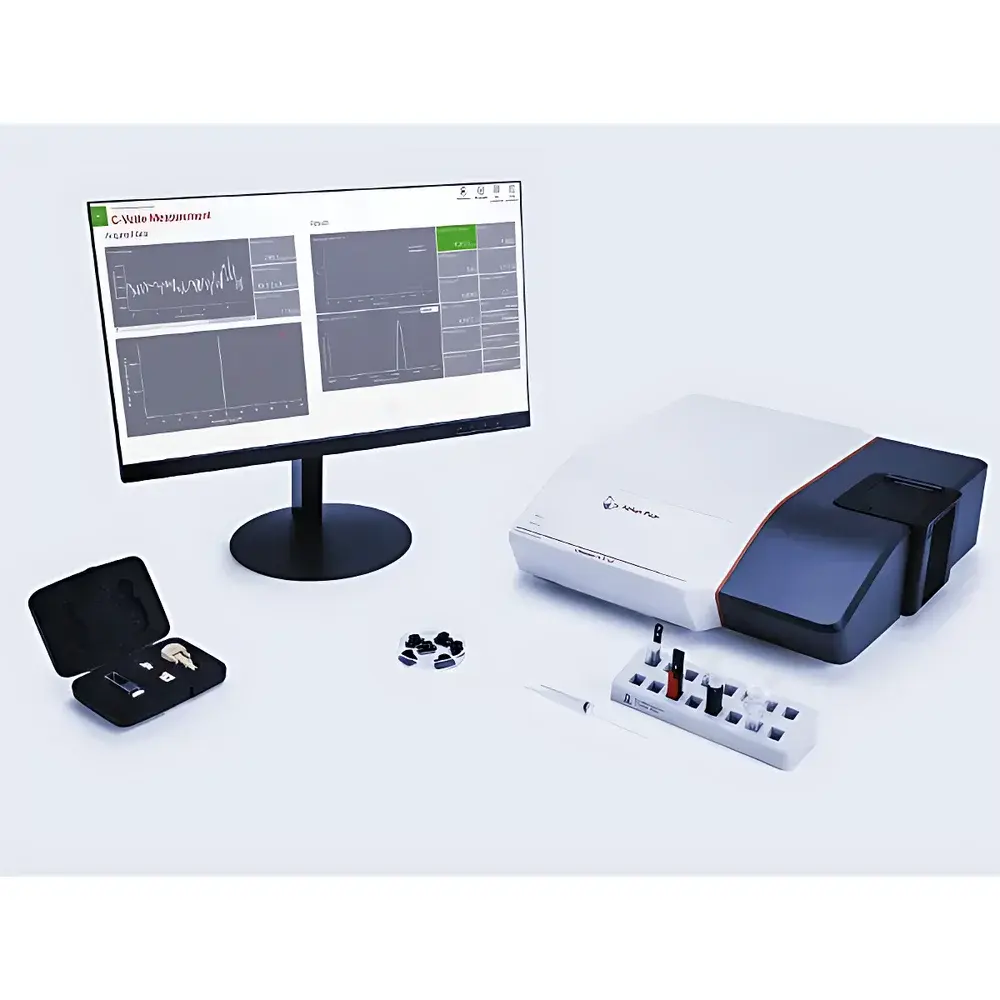
Kalliope software provides a unified, single-page interface designed for operational efficiency and traceability. Measurement initiation requires only three mouse clicks: select method, load parameters, start acquisition. Real-time visualization includes live correlation curves, transmittance traces, and size distribution histograms synchronized during acquisition. Preconfigured report templates generate standardized outputs for QC release or GLP documentation, while customizable report builders support advanced statistical overlays, batch comparisons, and trend analysis. Raw data export to Excel (.xlsx) preserves all intermediate processing steps—including baseline correction, regularization algorithms (CONTIN or NNLS), and cumulant analysis results. Full audit trail functionality logs user actions, parameter changes, and instrument status events with timestamps and operator IDs—ensuring full data integrity for GMP, ISO 17025, or pharmaceutical development workflows.
Applications
- Stability assessment of biopharmaceutical formulations (e.g., monoclonal antibodies, mRNA-LNPs) under accelerated stress conditions
- Batch-to-batch consistency testing of nanocarriers for drug delivery (liposomes, polymeric NPs, dendrimers)
- Characterization of protein aggregation kinetics during thermal ramping or pH titration
- Zeta potential mapping for colloidal stability prediction and surface charge optimization
- Quality control of industrial nanomaterials including catalysts, pigments, and functional coatings
- Method development and validation per ICH Q5A(R2) and Q5C guidelines for biological products
FAQ
What is the minimum sample volume required for a reliable DLS measurement?
The Litesizer DLS 101 supports size analysis with as little as 1.5 µL of sample; however, for optimal signal-to-noise ratio and reproducibility, 12 µL is recommended for standard DLS measurements.
Can the instrument measure both size and zeta potential in the same run?
No—size (DLS) and zeta potential (PALS) measurements are performed sequentially in separate modes, but both utilize the same sample cell and temperature-controlled environment without manual intervention.
Is Kalliope software validated for use in FDA-regulated environments?
Yes—Kalliope is fully compliant with 21 CFR Part 11, featuring electronic signatures, audit trails, and secure user authentication protocols required for GxP applications.
How does the 175° detection angle improve measurement reliability?
The near-backscattering geometry reduces path-length-dependent attenuation and suppresses contributions from multiply scattered photons—particularly beneficial for opaque, viscous, or highly concentrated dispersions where traditional 90° or 90°+ geometries fail.
Does the system support refractive index calibration for organic solvents?
Yes—the integrated refractive index module covers 1.28–1.50 with ±0.5% accuracy, enabling accurate hydrodynamic diameter calculations in ethanol, chloroform, DMF, and other common non-aqueous media.



